Morton’s neuroma can turn every step into a sharp, burning reminder that something’s wrong between your toes. Finding the best shoes for Morton’s neuroma makes a real difference in managing that nerve pain, but with hundreds of options claiming to help, knowing where to start isn’t easy.
At Achilles Foot and Ankle Center, our podiatrists treat patients with Morton’s neuroma every week across our Central Virginia clinics. We know which shoe features actually reduce pressure on that irritated nerve and which ones fall short. Wide toe boxes and adequate cushioning aren’t just nice to have, they’re non-negotiable for real relief.
We’ve compiled our top five shoe recommendations for 2026 based on what we suggest to our own patients. Each pick prioritizes the structural features that matter most, helping you walk comfortably again without aggravating your symptoms.
Here is what we look for in every shoe on this list:
- A wide toe box. Your toes need room to spread. Pinch the front of the shoe. If it squeezes your forefoot, it will squeeze your nerve.
- Cushioning under the ball of your foot. A thick midsole absorbs the impact that hits the nerve between your metatarsal heads.
- A low or moderate heel. High heels shift your body weight onto the forefoot and make neuroma pain worse.
- A slight rocker or smooth transition. A shoe that rolls you forward means your forefoot bends less with each step.
- Width options. Many of these models come in wide and extra-wide sizes, and most have women’s versions built on a women’s last. If your forefoot feels tight in your normal width, size up in width before you size up in length.
A quick note on terms. Morton’s neuroma is a thickened, irritated nerve between the toes, usually the third and fourth. It is not the same thing as Morton’s toe, which describes a second toe that is longer than the big toe. The shoe advice below is for the nerve problem, though a wide toe box helps with both.
All five picks are athletic shoes, so they work as everyday sneakers, walking shoes, and running shoes. That matters because most of our patients want one pair that handles errands, work shifts, and exercise. Brands refresh these models every year. If a newer version of a shoe on this list is on the shelf when you shop, check the fit and toe box in person. Last year’s version is often discounted, and it is usually a very good option too.
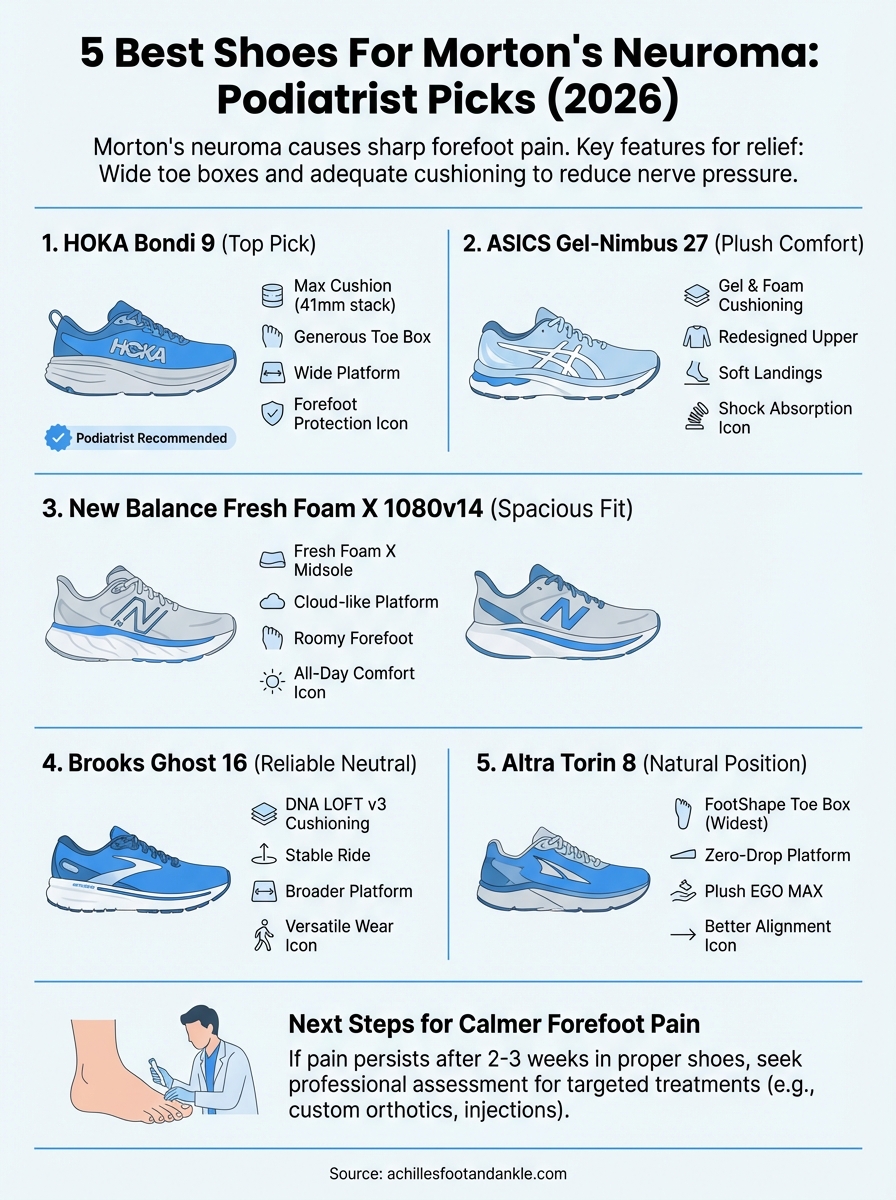
1. HOKA Bondi 9
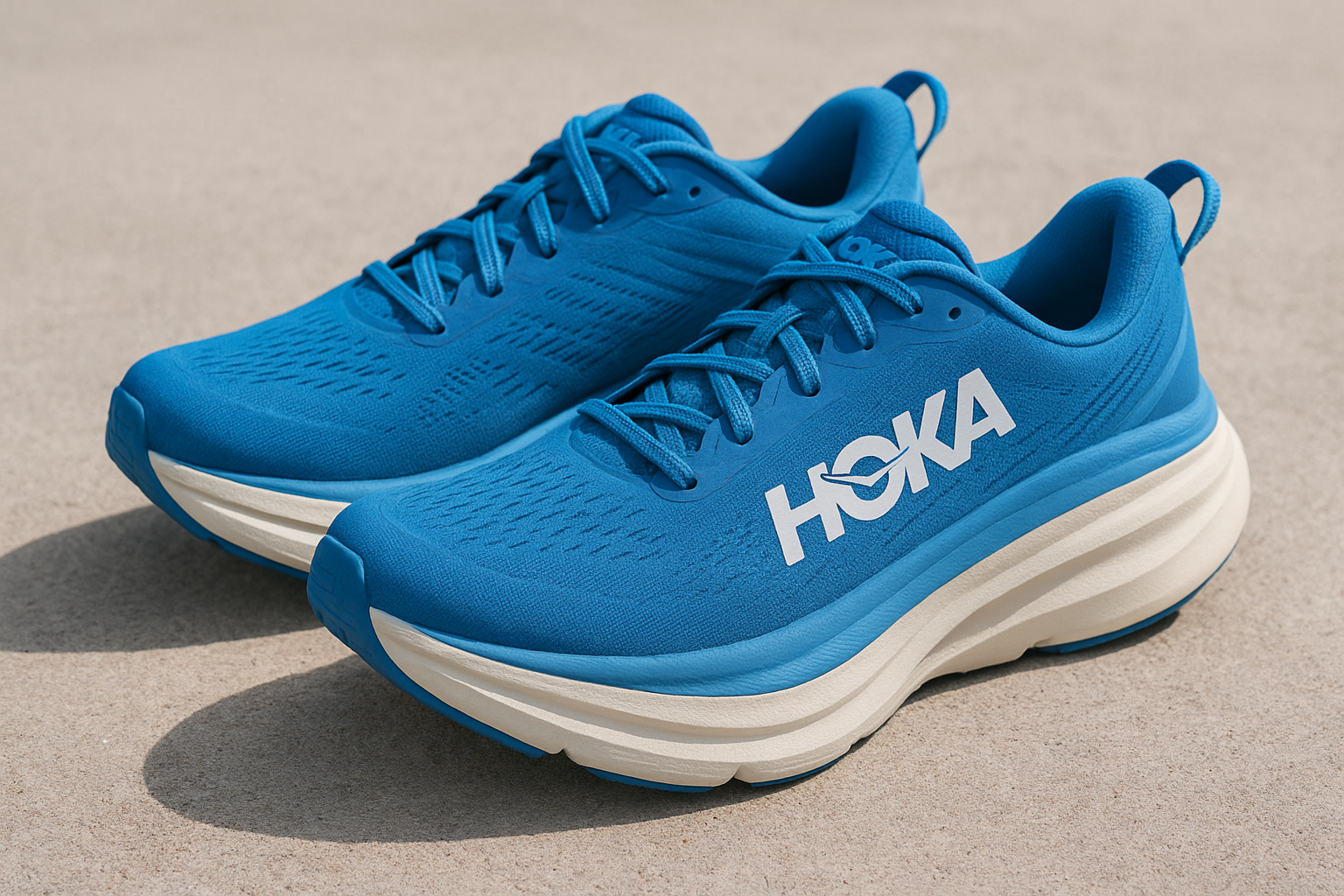
The HOKA Bondi 9 sits at the top of our list for good reason. This maximum-cushioned road shoe delivers the kind of forefoot protection your irritated nerve needs while maintaining stability through each step. You get a generous toe box that lets your toes spread naturally, reducing the squeeze that triggers Morton’s neuroma pain.
Why it helps Morton’s neuroma
HOKA engineered the Bondi 9 with 41mm of stack height, creating substantial distance between your foot and the ground. That thick midsole absorbs impact before it reaches the sensitive nerve between your metatarsals. The wider platform distributes pressure more evenly across your forefoot instead of concentrating it in that painful spot.
The rocker-style sole helps too. It rolls you through each step, so your forefoot bends less and your nerve gets less irritation at toe-off.
The Bondi 9’s extra cushioning doesn’t just feel soft, it actively reduces the compression forces that aggravate Morton’s neuroma.
Best for
You’ll appreciate this shoe most if you walk or run on hard surfaces regularly. The Bondi 9 excels for daily training runs, long walks around town, or standing through work shifts. Your forefoot stays protected whether you’re covering three miles or thirteen. It is also our go-to walking shoe for patients who spend hours on concrete floors, such as nurses, teachers, and retail workers.
Fit and sizing notes
The Bondi 9 runs true to size for most wearers. HOKA designed this model with a roomier toe box than previous versions, so you won’t need to size up unless you have particularly wide feet. HOKA also sells a wide version, which is worth trying if the standard width still feels snug across the ball of your foot. The plush interior molds to your foot after a few wears. Women should look at the women’s Bondi 9, which is built for a narrower heel and keeps the same cushioning.
What to watch out for
This shoe carries more weight than minimalist options, which some runners find tiring on longer distances. The thick sole also sits you higher off the ground, potentially affecting your balance if you have ankle instability.
Price range and where to buy
The Bondi 9 retails between $165 and $185 depending on colorways. You can find it at specialty running stores or through Amazon with frequent availability in most sizes. If you want something less clinical looking, the Bondi comes in a wide range of colors, including neutral and all-black options that pass for casual wear.
2. ASICS Gel-Nimbus 27
The ASICS Gel-Nimbus 27 combines legendary cushioning with a redesigned upper that gives your toes breathing room. This shoe brings soft landings and smooth transitions that keep pressure off the painful nerve tissue between your metatarsals. Your forefoot stays cushioned through every mile without sacrificing responsiveness.
Why it helps Morton’s neuroma
ASICS loaded the Gel-Nimbus 27 with FF Blast Plus Eco foam, creating a plush platform that absorbs shock before it reaches your inflamed nerve. The wider toe box lets your metatarsal heads spread naturally, reducing the compression that triggers sharp pain. You get gel cushioning in both heel and forefoot for targeted protection where Morton’s neuroma hurts most.
The combination of gel technology and soft foam creates a buffer zone that protects your sensitive nerve with every step.
Best for
This shoe works best if you log high weekly mileage or need all-day comfort during work. The Nimbus 27 handles pavement pounding exceptionally well for runners dealing with neuroma pain. Your feet stay protected through long training runs and recovery days alike. If you are looking for the best running shoes for Morton’s neuroma, this and the Bondi are the two we hand out most often, because they combine deep cushioning with enough width up front.
Fit and sizing notes
The Nimbus 27 fits true to size for most runners. ASICS expanded the toe box width compared to version 26, so you won’t feel squeezed. The engineered mesh upper adapts to your foot shape during the break-in period. ASICS offers wide and extra-wide sizes in the Nimbus line, and both men’s and women’s versions are available.
What to watch out for
Some runners find the Nimbus 27 runs warm during summer months due to the thick cushioning layer. The premium materials also mean this shoe needs replacing after 400 miles of use.
Price range and where to buy
Expect to pay $160 to $180 for the Gel-Nimbus 27. You can purchase it through Amazon or specialty running retailers that stock ASICS products. ASICS has released newer versions of the Nimbus, and the 27 is often marked down as stores clear stock. Either version is a solid choice as long as the toe box feels roomy when you try it on.
3. New Balance Fresh Foam X 1080v14
The New Balance Fresh Foam X 1080v14 delivers plush comfort wrapped in a spacious fit that Morton’s neuroma sufferers need. This shoe balances soft cushioning with enough structure to keep your foot stable, protecting that sensitive nerve without letting your forefoot collapse inward.
Why it helps Morton’s neuroma
New Balance built the 1080v14 with Fresh Foam X midsole technology that creates a cloud-like platform under your forefoot. The wider toe box design gives your metatarsals room to spread naturally, reducing the squeeze that inflames your neuroma. You get superior shock absorption that prevents harsh impacts from reaching the nerve tissue between your toes.
Best for
This shoe excels if you need all-day comfort during standing work or prefer moderate-pace runs. The 1080v14 handles recovery miles particularly well when your feet need gentle treatment. It is also one of the best walking shoes for Morton’s neuroma in our experience, and it is a favorite among women patients who want a softer, roomier fit in a clean-looking sneaker.
Fit and sizing notes
New Balance runs true to size with this model. The roomy forefoot accommodates most foot shapes without sizing up, though the heel cup fits snug for better lockdown. New Balance is known for offering multiple widths, so you can usually find wide and extra-wide options in both men’s and women’s sizing. That makes it the easiest brand on this list if standard widths never fit you.
What to watch out for
The soft midsole compresses faster than firmer options, typically showing wear around 350 miles. Some runners find the cushioning too soft for faster training paces.
Price range and where to buy
The 1080v14 costs between $155 and $175. You can purchase it through Amazon or authorized New Balance retailers. Newer versions of the 1080 may be on shelves, so look for discounts on the v14 if you find it in your size.
4. Brooks Ghost 16
The Brooks Ghost 16 stands out as a reliable neutral shoe that brings consistent cushioning to forefoot pain. This updated version features a softer DNA LOFT v3 midsole that absorbs impact while maintaining the stable ride Morton’s neuroma patients need. Your forefoot gets protection without the bulky feel of maximum cushioning shoes.
Why it helps Morton’s neuroma
Brooks engineered the Ghost 16 with 20% more cushioning than previous models, creating a protective layer between your irritated nerve and hard surfaces. The broader forefoot platform reduces pressure concentration around your metatarsal heads, giving that painful nerve tissue room to calm down. You get smooth transitions that prevent jarring movements from aggravating your symptoms.
The Ghost 16’s balanced cushioning protects your forefoot without compromising the ground feel that helps you move naturally.
Best for
This shoe works best if you want versatile daily wear that handles both casual walking and moderate running. The Ghost 16 manages varied surfaces well when your routine includes sidewalks, tracks, and occasional trails. If you want a neuroma-friendly shoe that looks like a normal sneaker, this is a good fit. It is also a reliable pick for women who want a classic athletic look.
Fit and sizing notes
Brooks sizes run true to length with a medium-width toe box. Most wearers find the fit accommodates standard foot shapes without needing width adjustments. If your forefoot feels tight, order the wide version instead of sizing up in length. Brooks sells the Ghost in several widths for both men and women.
What to watch out for
The moderate cushioning might feel firm if you’re coming from maximum cushioned options like the Bondi 9.
Price range and where to buy
The Ghost 16 costs $140 to $160. Find it through Amazon or Brooks running specialty stores. Brooks has since released newer Ghost versions, so you may find the 16 on sale.
5. Altra Torin 8
The Altra Torin 8 takes a different approach to protecting your forefoot with its signature FootShape toe box and zero-drop platform. This design philosophy gives your toes maximum room to spread naturally, eliminating the squeeze that triggers Morton’s neuroma pain. Your foot sits flat from heel to toe, promoting better alignment through each stride.
Why it helps Morton’s neuroma
Altra’s wide toe box creates the most spacious forefoot environment among the best shoes for Morton’s neuroma. The Altra EGO MAX midsole delivers plush cushioning that absorbs shock before it reaches your irritated nerve. Your metatarsals spread naturally without compression, giving that inflamed tissue space to heal.
The zero-drop design combined with maximum toe room creates an ideal environment for reducing nerve pressure.
Best for
This shoe works best if you prefer natural foot positioning or already walk with minimal heel elevation. The Torin 8 handles road running and extended walks when you need forefoot relief. If standard running shoes always feel tight across the front of your foot, start here.
Fit and sizing notes
Altra runs true to size with generous width throughout. The FootShape design eliminates the need to size up for toe room. Women’s versions are built on a women’s last, so the heel fits snugly while the toe box stays wide.
What to watch out for
The zero-drop platform requires adjustment if you’re transitioning from traditional shoes. Start with shorter distances to adapt. Zero drop loads your calves and Achilles tendon more than a raised heel does, so ease in over two to three weeks.
Price range and where to buy
The Torin 8 costs $150 to $170. Purchase through Amazon or Altra specialty retailers.
Next steps for calmer forefoot pain
Finding the best shoes for morton neuroma marks your first step toward relief, but footwear alone doesn’t always solve persistent nerve pain. Your symptoms might improve within two to three weeks of wearing properly cushioned shoes with adequate toe room. Track your pain levels during this period to gauge whether your current approach works.
A few habits make the new shoes work better:
- Retire the shoes that caused the problem. High heels, pointed dress shoes, narrow flats, and tight cleats all squeeze the forefoot. If you need a dressier option, look for a rounded, wide toe box and a heel under an inch and a half.
- Try shoes on in the afternoon. Your feet swell during the day, so a shoe that fits at noon is more likely to fit at 5 p.m.
- Wear them with the right socks. Choose seamless socks with a roomy toe area. Tight socks can undo the benefit of a wide shoe.
- Break them in slowly. Wear the new pair for a few hours a day at first, and rotate with your old shoes only if the old ones are comfortable.
- Skip going barefoot on hard floors. Walking barefoot or in thin flip-flops offers no cushioning for your nerve.
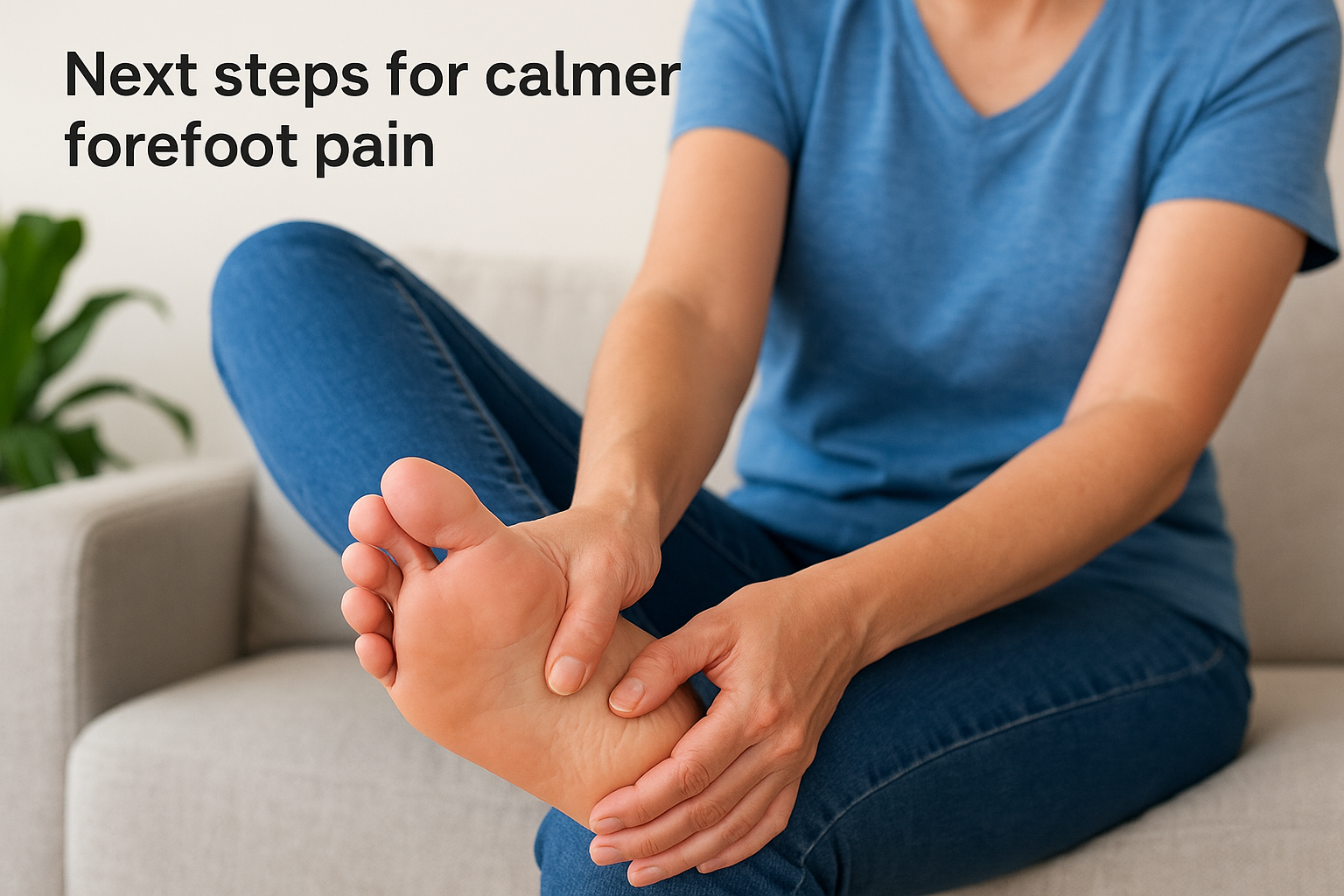
When shoe changes don’t provide enough relief, you need professional assessment. Your podiatrist can evaluate your specific nerve compression pattern and recommend targeted treatments like custom orthotics, padding modifications, or injection therapy. Morton’s neuroma treatment usually starts with the conservative steps: better shoes, metatarsal pads placed just behind the painful spot, and orthotics that offload the forefoot. If those don’t work, corticosteroid injections can calm the nerve. Some cases require more advanced interventions that address the root cause of your neuroma, including minimally invasive options and surgery to relieve or remove the affected nerve.
Our team at Achilles Foot and Ankle Center treats Morton’s neuroma daily across our Central Virginia locations. We offer comprehensive evaluations that identify why your nerve stays irritated and create treatment plans that match your lifestyle. Schedule a same-day appointment with one of our podiatrists to get personalized care that goes beyond shoe recommendations.