

A toenail infection happens when bacteria or fungi invade the skin around your toenail or the nail itself. It can start after an ingrown toenail, a minor injury, tight shoes, or exposure to damp public areas. Redness, swelling, warmth, pain, drainage, discoloration, or thickening can signal an infection. Without treatment, infections can spread deeper into surrounding tissue and damage the toenail permanently. Some clear up quickly, while others become ongoing problems that need medical care.
This guide explains toenail infection symptoms before they worsen, how bacterial infections differ from fungal toenail infections, and when home care is not enough. It focuses on toe and foot concerns; a painful or infected fingernail or cuticle is usually better evaluated by primary care or a hand specialist. You’ll also find prevention steps for healthier feet and clear signs that mean it is time to schedule a podiatry appointment. Recognizing warning signs early gives you the best chance for a quick recovery and healthy toenails.
Why early toenail infection symptoms matter
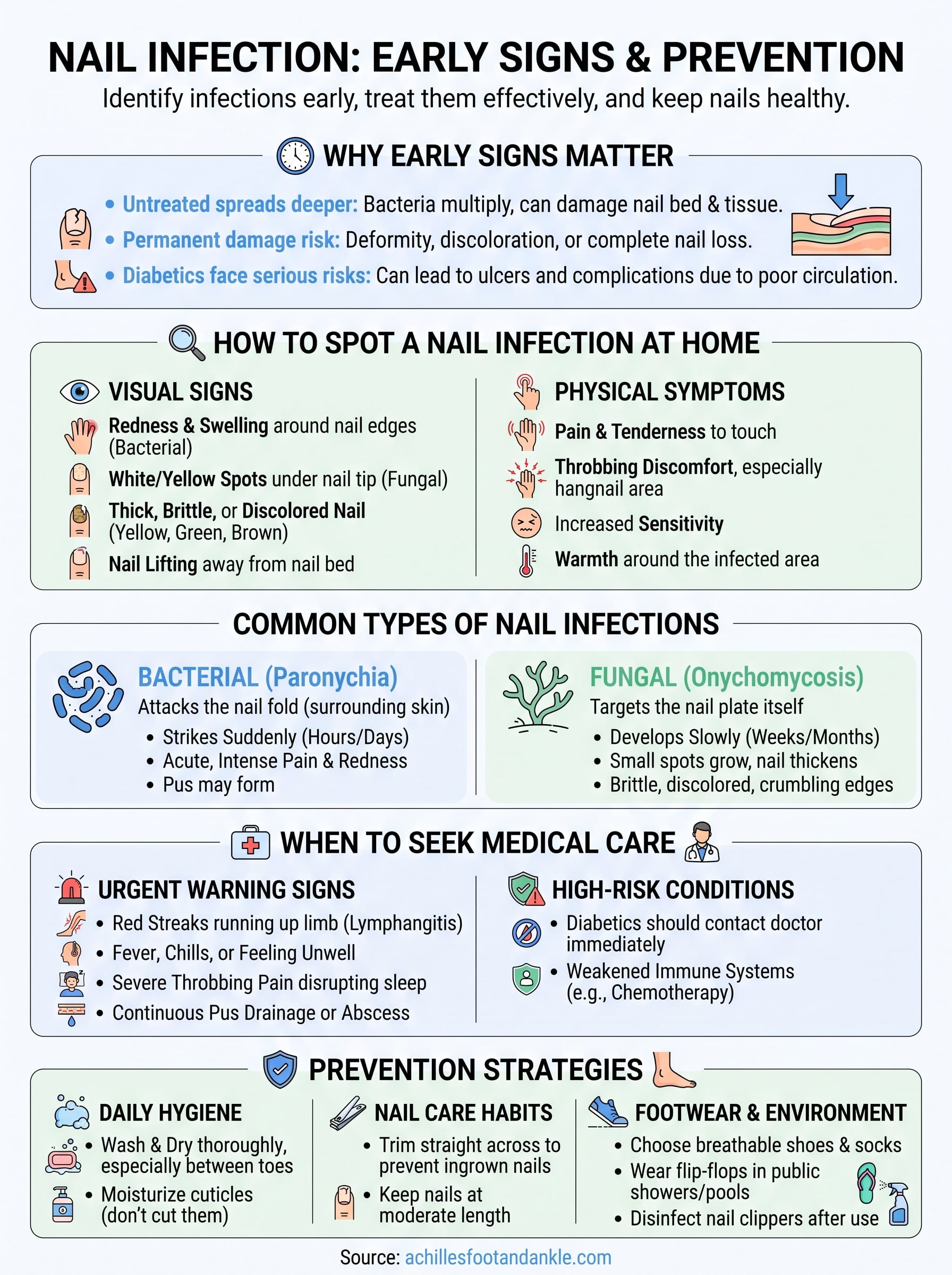
Catching signs of nail infection early saves you from weeks of discomfort and potential complications. Untreated infections spread deeper into your nail bed and surrounding tissue, making treatment harder and recovery longer. What starts as minor redness around your cuticle can progress to permanent nail damage, including deformity, discoloration, or complete nail loss. Early treatment with antibiotics or antifungal medication typically clears bacterial infections within days, while waiting allows bacteria to multiply and form pus-filled abscesses that may require drainage procedures.
Early intervention prevents simple infections from becoming chronic problems that affect your daily activities.
Diabetics face serious risks from delayed treatment, as nail infections can lead to ulcers and potentially limb-threatening complications when combined with poor circulation, which is why foot care for people with diabetes matters so much. People with weakened immune systems also need prompt medical attention since infections spread faster in their bodies. Recognizing early warning signs lets you start treatment before the infection damages your nail matrix, the tissue responsible for nail growth. This means your nail regrows normally instead of developing permanent ridges, thickness, or separation from the nail bed.
How to spot a toenail infection at home
Your toenails give clear signals when infection sets in, and knowing what to look for helps you catch problems early. Start by examining the skin around your toenail, called the nail fold, where many infections begin. Normal, healthy nail folds appear smooth and match your regular skin tone, while infected areas show distinct changes in color, texture, and temperature. Check all of your toenails in good lighting, comparing the affected toenail with healthy ones to spot differences more easily.
Visual signs to check first
Look for redness and swelling around the nail edges, which typically appear within hours of bacterial infections starting. The skin may feel warm when you touch it, and you might notice the area looks shiny or tight from fluid buildup. White or yellow spots under your nail tip signal fungal infections, though these develop more slowly than bacterial ones. Your nail itself may start looking different: it could become thick, brittle, or develop an unusual yellow, green, or brown tint, and it helps to know what causes nail discoloration. Sometimes the infection sits directly under the nail plate rather than around it, a condition often called a nail bed infection or infection under the nail. Look for discoloration spreading from the base of the nail outward, or fluid pooling beneath the nail that looks white, yellow, or greenish. Pressing down on the nail causes sharp, localized pain when the infection sits in the nail bed, and you may see the nail lifting slightly away from the skin beneath it.
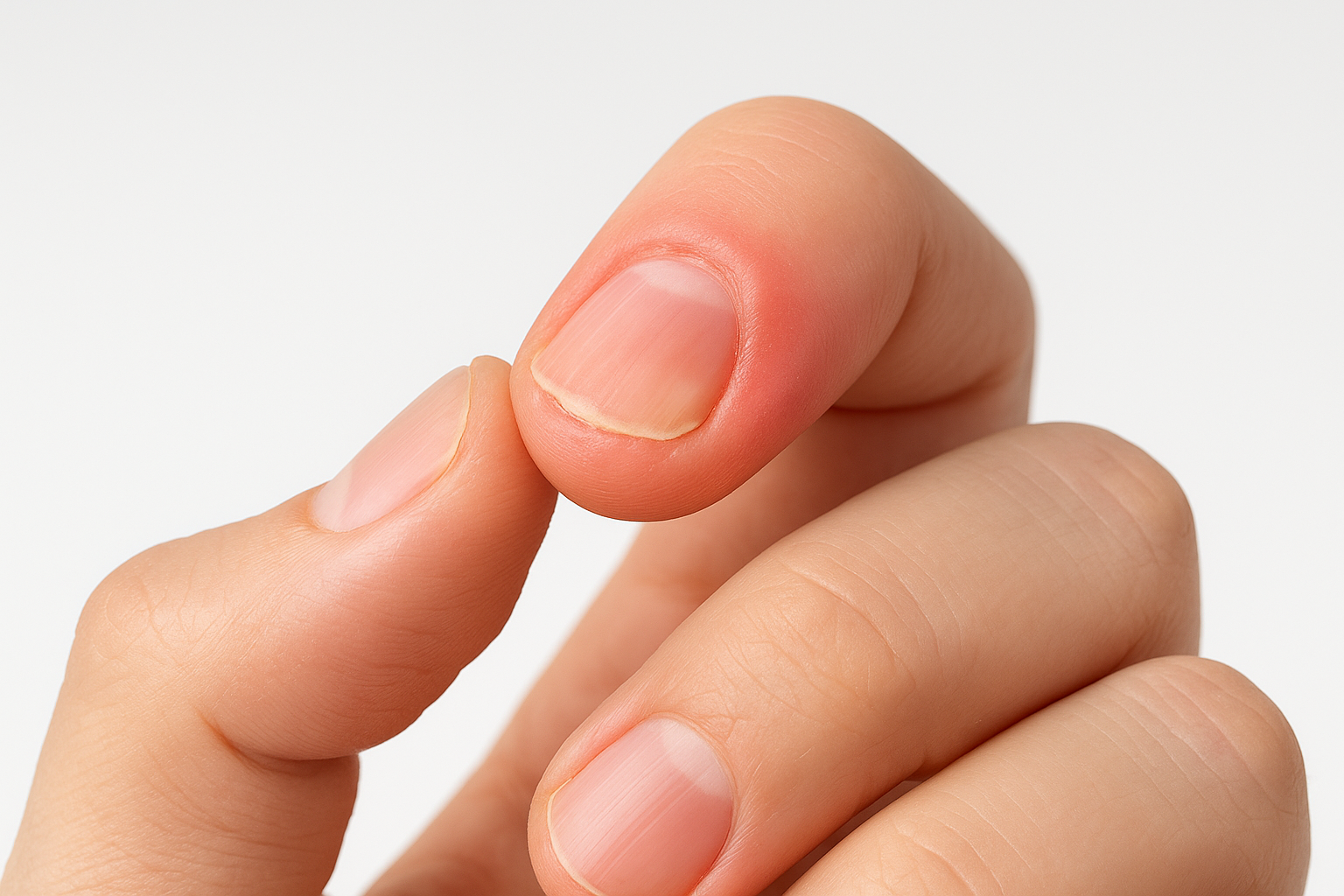
Pus formation around your nail indicates the infection has progressed and bacteria are actively multiplying.
Physical symptoms you’ll feel
Pain ranks as the most common early symptom, ranging from mild tenderness when you press the area to throbbing discomfort that bothers you constantly. The pain often worsens when water touches the infected nail or when you wear tight shoes pressing against toenails. You’ll notice increased sensitivity around the nail fold, making routine activities like walking uncomfortable. Signs of nail infection also include a pulsing sensation that matches your heartbeat, especially when the infected toe hangs down below your heart level. This throbbing, sometimes described as hangnail infection throbbing or paronychia throbbing pain, signals that bacteria are multiplying beneath the skin surface. Your entire toe may look swollen around the nail rather than just the immediate nail fold, which distinguishes a more advanced infection from a simple hangnail.
Common types of toenail infections
Two main categories of infection affect your toenails: bacterial infections (paronychia) and fungal infections (onychomycosis). Each type develops differently, shows distinct signs of nail infection, and requires specific treatment approaches. Bacterial infections typically strike suddenly and cause acute pain within hours or days, while fungal infections develop slowly over weeks or months. Understanding which type you’re dealing with helps you choose the right treatment and know when professional care becomes necessary.
Bacterial infections (paronychia)
Paronychia attacks the nail fold, the skin surrounding your nail, when bacteria enter through small breaks in your skin. Many people simply call this an infected cuticle or cuticle infection, since the cuticle area is where the swelling and pain concentrate. Staphylococcus aureus causes most bacterial nail infections, though Streptococcus pyogenes can also trigger them. You’ll notice symptoms appear quickly: intense redness, swelling, and pain concentrate around the nail edges and cuticle area. The infected skin feels warm to touch and may develop a pus-filled pocket that looks white or yellow.
Acute paronychia can start after an ingrown toenail or an injury to the skin around the toenail. Protect the nail fold from injury and avoid cutting or picking at the surrounding skin.
Bacterial nail infections respond quickly to treatment when caught early, often clearing within days of starting antibiotics.
Fungal infections (onychomycosis)
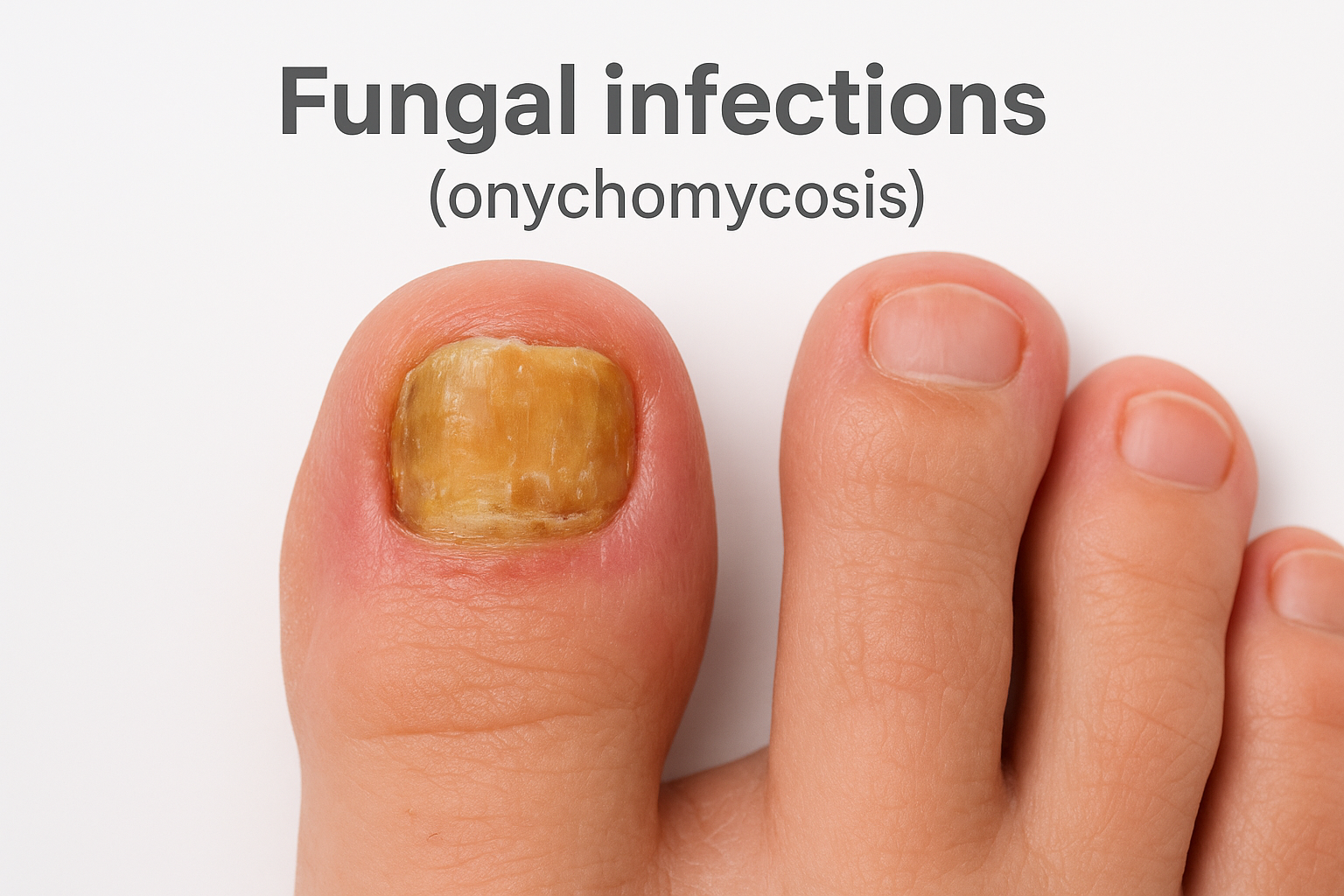
Fungal infections target the nail itself rather than the surrounding skin, caused primarily by dermatophyte fungi, though yeast and molds sometimes contribute, and fungal toenail treatment addresses exactly this problem. These infections begin with small white or yellow spots under your nail tip, then gradually spread toward the cuticle as the fungus grows. Your nail becomes thick, brittle, and discolored over time, often turning yellow, brown, or green. As the infection advances, you might notice your nail crumbling at the edges, developing white streaks across its surface, or giving off a faint foul odor. The nail can also lift away from the nail bed, leaving a gap where debris collects and the infection worsens.
Fungi thrive in warm, moist environments, including damp shoes and socks. You increase your risk by wearing tight shoes that trap moisture, walking barefoot in public showers or pools, or having damaged nails. Treatment takes months because you must wait for the infected nail to grow out completely while medication kills the fungus.
When a toenail infection needs medical care
Most mild signs of nail infection respond to home treatment within 48 hours, but certain symptoms signal you need professional evaluation. Schedule an appointment with a podiatrist when redness and swelling worsen despite soaking your nail in warm water several times daily, and review the signs it’s time to see a podiatrist for toenail fungus. Pain that increases rather than improves, spreading redness that extends beyond the nail fold, or pus that continues building up all indicate the infection needs prescription antibiotics. Your nail pulling away from the nail bed or developing thick ridges also requires medical assessment to prevent permanent damage.
Urgent warning signs
Seek immediate medical care when infection symptoms intensify rapidly or affect your entire toe. Red streaks running up your foot toward your body mean the infection has entered your bloodstream, a serious condition called lymphangitis. Fever, chills, or feeling generally unwell alongside nail infection symptoms require urgent evaluation. Severe throbbing pain that keeps you awake at night or pus that drains continuously signals an abscess needing professional drainage.
Infections spreading beyond the nail area can lead to bone involvement if left untreated.
High-risk conditions needing prompt care
Diabetics should contact their doctor immediately when they notice any nail infection symptoms, since poor circulation and nerve damage slow healing and increase complication risks. People taking immunosuppressant medications, undergoing chemotherapy, or living with conditions that weaken immune function need rapid treatment before infections spread. Your podiatrist can drain abscesses, prescribe appropriate antibiotics, and monitor healing to prevent serious complications.
Preventing toenail infections and protecting feet
Simple daily habits keep your nails healthy and prevent infections before they start. Prevention costs less time and money than treating established infections, and the steps fit easily into your routine. Focus on protecting your nails from injury and creating an environment where bacteria and fungi can’t thrive. These strategies focus on protecting your toenails, which need extra attention because they spend time in warm, moist shoes.
Daily hygiene practices
Wash your feet regularly with gentle soap as part of a solid foot hygiene routine, then dry them completely, paying special attention to the areas between your toes. Trim your nails straight across rather than rounding the corners, which stops ingrown toenails before they start and removes entry points for bacteria. Keep your nails at a moderate length since long nails trap more dirt and break more easily. Moisturize your cuticles daily with lotion to prevent dryness and cracking, but avoid cutting cuticles since this opens wounds where bacteria enter, as our at-home nail care guide explains.
Clean, dry nails create an environment where infections struggle to develop.
Footwear and environment choices
Choose shoes made from breathable materials that allow air circulation and prevent moisture buildup. Change your socks daily and select moisture-wicking fabrics if your feet sweat heavily. Wear flip-flops in public showers, locker rooms, and pool areas where fungi spread easily from person to person, one of several ways to keep toenail fungus from starting. Disinfect nail clippers after each use and never share them with others. Replace old shoes that may harbor fungus, learn how to clean shoes after toenail fungus, and rotate between different pairs to let shoes dry completely between wears. These habits dramatically reduce your risk of developing signs of nail infection.
Protect your toenail health
Recognizing signs of nail infection early gives you control over your nail health and prevents minor problems from becoming serious complications. Quick action at the first symptom means shorter treatment times, less pain, and better outcomes for your nails. Keep monitoring your nails regularly, practice good hygiene habits, and protect your feet from environments where infections thrive. Home care works for mild infections, but medical treatment becomes essential when symptoms worsen or you face higher risk factors like diabetes.
Your feet deserve professional attention when problems arise that home remedies can’t fix. Schedule a same-day visit for nail infection treatment with Achilles Foot and Ankle Center for expert diagnosis and treatment. Our podiatrists provide comprehensive care across multiple Central Virginia locations, offering same-day appointments when you need urgent relief. Proper treatment today prevents permanent nail damage and gets you back to comfortable, healthy feet faster.