
Toenail fungus is one of those conditions that starts small, a faint discoloration, a slight thickening, and then gradually takes over if you let it. Once it sets in, it can take months of treatment to fully resolve. That’s exactly why knowing how to prevent toenail fungus before it starts is so much easier than dealing with it after the fact.
The good news? Prevention mostly comes down to everyday habits, things like how you care for your feet, what shoes you wear, and where you walk barefoot. Small, consistent changes make a real difference. At Achilles Foot and Ankle Center, our podiatrists across Central Virginia treat fungal nail infections regularly, and the patterns we see are remarkably predictable. Most cases trace back to a handful of avoidable risk factors.
Below, we’re sharing six podiatrist-approved tips to help you keep your toenails clear and healthy, whether you’ve never had a fungal infection or you’re trying to make sure a previous one doesn’t come back. These are the same recommendations our team gives patients in the clinic every day.
1. See a podiatrist early if you spot changes
Most people wait too long. By the time toenail fungus looks obvious, the infection has usually been growing for months, making it harder to treat and more likely to spread. Catching changes early, before the nail thickens or crumbles, gives you the best shot at a fast, complete recovery.
What early treatment prevents
Early podiatry care stops a minor infection from becoming a stubborn, nail-destroying problem. Prescription antifungal treatments work much better when the infection hasn’t spread across the full nail plate. Your podiatrist can also identify whether you’re dealing with fungus or something else entirely, which prevents weeks of treating the wrong condition with over-the-counter products that simply won’t work.
The sooner a confirmed fungal infection is treated, the less likely it is to spread to other nails or to people in your household.
Signs that point to toenail fungus vs other issues
Not every nail change is fungal, and treating the wrong condition wastes time. Here are the most common signs that separate toenail fungus from other nail problems:
- Toenail fungus: yellow, white, or brown discoloration; thickened, brittle, or crumbling nail; nail separating from the nail bed; slight odor
- Trauma: dark discoloration under the nail following an injury; pain immediately after impact
- Psoriasis: pitting on the nail surface; nail changes alongside skin plaques elsewhere on the body
What to expect at a podiatry visit
Your podiatrist will examine the nail visually and may take a small nail sample to confirm the diagnosis with a lab test. This matters because treatment varies by fungal strain. You’ll leave with a clear plan, whether that’s a topical antifungal, an oral medication, or laser therapy, based on how far the infection has progressed.
Who needs prompt care due to higher risk
People with diabetes, poor circulation, or a weakened immune system should see a podiatrist at the first sign of any nail change. These conditions make fungal infections far harder to clear and raise the risk of serious complications that go well beyond the nail. Knowing how to prevent toenail fungus matters even more when your body’s ability to fight infection is already under pressure.
2. Keep feet clean, dry, and low-sweat
One of the most reliable ways how to prevent toenail fungus is managing moisture around your feet every single day. Fungus thrives in warm, damp environments, and your feet spend most of the day trapped inside shoes where sweat and heat build up quickly.
Why moisture drives fungal growth
Fungi need warmth and humidity to multiply. Sweat that sits against your skin and nails creates exactly the conditions dermatophytes need to take hold and spread.
The longer your feet stay damp inside your shoes, the higher your risk of a fungal nail infection becoming established.
A simple daily wash and dry routine that works
Wash your feet with soap and water every day, and give careful attention to the spaces between your toes where moisture hides. After washing, dry each area thoroughly with a clean towel before you put on socks. Skipping that drying step is one of the most common ways people unknowingly create conditions for fungal growth.
How to manage sweaty feet during work and workouts
If your feet sweat heavily throughout the day, change your socks midday when you can. After any workout, remove wet socks and shoes right away and let your feet air out fully before pulling on fresh socks. Letting sweat sit against your skin for extended periods is one of the clearest risk factors for fungal infections.
Skin care that reduces cracks fungi can enter
Cracked skin around your heels and nail edges gives fungi a direct entry point into your tissue. Apply a gentle moisturizer to your soles and heels daily, but keep it away from the spaces between your toes where trapped moisture can work against you. Intact skin is one of your strongest natural barriers against infection.
3. Wear the right socks and shoes every day
What you put on your feet each morning has a direct impact on how to prevent toenail fungus throughout the day. Socks and shoes that trap heat and moisture create the exact environment fungus needs to grow, while the right choices actively work against it.
Socks that help prevent fungus
Choose socks made from moisture-wicking materials like merino wool or synthetic blends rather than cotton, which holds sweat against your skin. Changing your socks daily is non-negotiable, and swapping to a fresh pair after any workout cuts your risk significantly.
Shoe features that reduce heat and humidity
Look for shoes with breathable mesh uppers and enough room in the toe box so your nails don’t press against the shoe. Tight, narrow shoes increase pressure on the nails and reduce airflow, both of which make fungal growth more likely.
A shoe that fits well and breathes well is one of the most practical daily defenses against a fungal nail infection.
How to rotate and dry shoes to cut reinfection risk
Never wear the same pair of shoes two days in a row. Rotating between at least two pairs gives each one time to dry out fully between uses. Pull out the insoles overnight and leave shoes in a well-ventilated area to air completely.
When to use antifungal powder or spray
If your feet sweat heavily, antifungal powder or spray applied inside your shoes each morning adds a reliable extra layer of protection. Sprinkle it directly into the shoe and onto your feet and toes before pulling on your socks.
4. Protect your feet in shared wet areas
Shared wet spaces are where fungal spores spread most easily. Public pools, locker rooms, and communal showers create warm, damp surfaces where spores pass between people. Knowing how to prevent toenail fungus here comes down to a few consistent habits.
Where toenail fungus spreads most often
Fungal spores thrive on wet tile floors, shower drains, and pool decking where barefoot traffic is constant. These spaces are risky because people with active infections walk through them daily, leaving spores on surfaces you step on.
What to wear in locker rooms, pools, and showers
Waterproof sandals or flip-flops are your most effective tool in any shared wet area. Wear them from the moment you leave your towel until you’re back on dry private ground. Never walk barefoot on communal shower floors or locker room tiles.
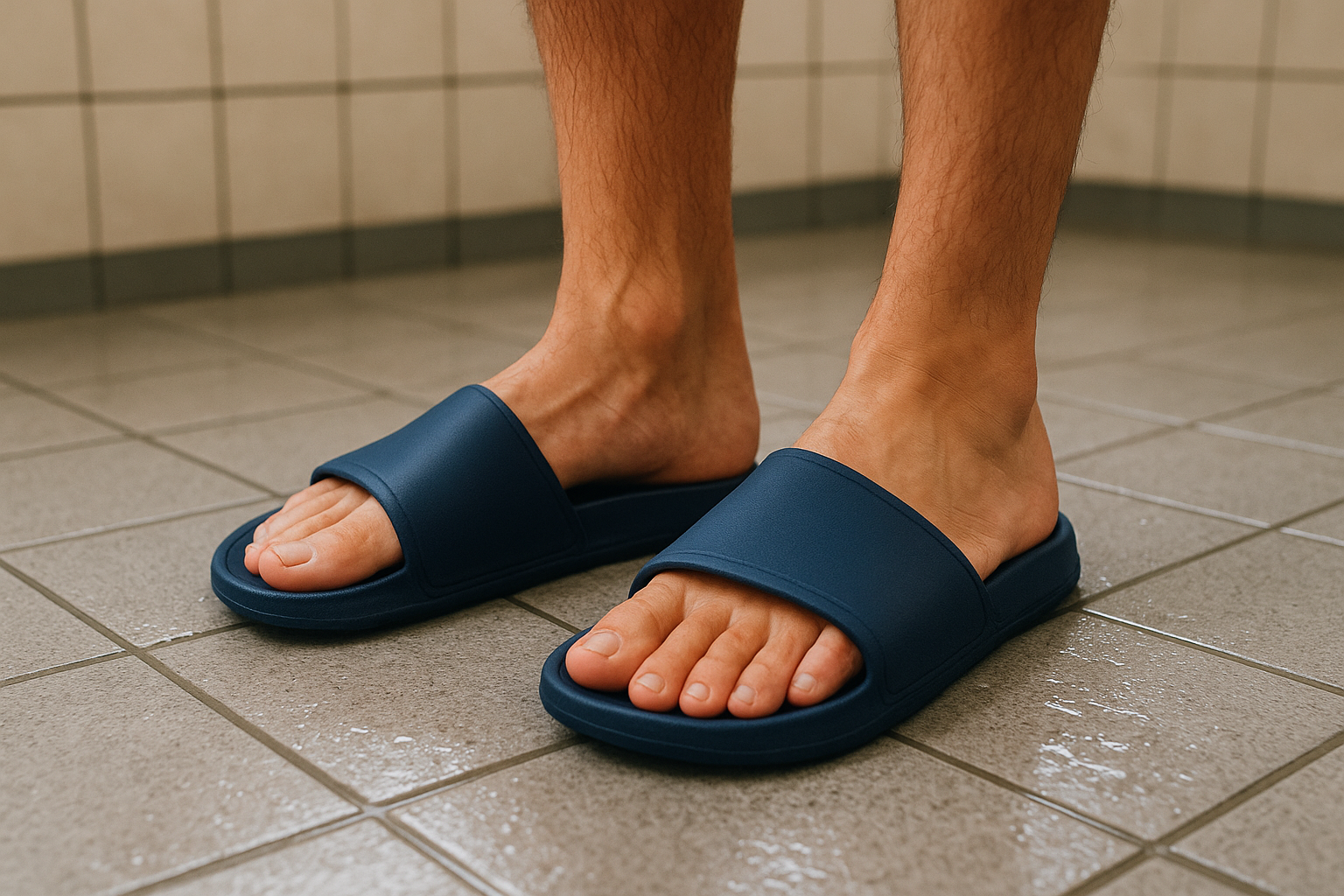
A pair of waterproof sandals kept in your gym bag can save you months of fungal nail treatment.
How to handle gym mats, rental shoes, and pedicure foot baths
Gym mats carry sweat and skin cells from many users; wipe them down and wash your feet afterward. At nail salons, ask how often they disinfect foot baths between clients. For rental shoes, wear your own socks and treat the inside with antifungal spray.
What to do if you went barefoot by mistake
Wash and dry your feet thoroughly as soon as possible. Apply an antifungal spray or powder between your toes right after any accidental barefoot exposure.
5. Trim nails correctly and disinfect your tools
Nail care habits play a bigger role in how to prevent toenail fungus than most people realize. Improper trimming and contaminated tools can directly introduce fungi to the nail bed or create the conditions where an infection quietly takes hold.
How nail length and shape affect infection risk
Long nails trap debris and moisture underneath them, giving fungi a warm, protected space to grow. Short nails trimmed straight across keep that pocket minimal and reduce the surface area where spores can settle.
How to trim toenails safely and consistently
Cut your nails straight across rather than rounding the corners, which reduces ingrown nails that break your skin barrier. Trim every two to three weeks using sharp clippers so your nails never grow long enough to press against your shoe or catch on socks.
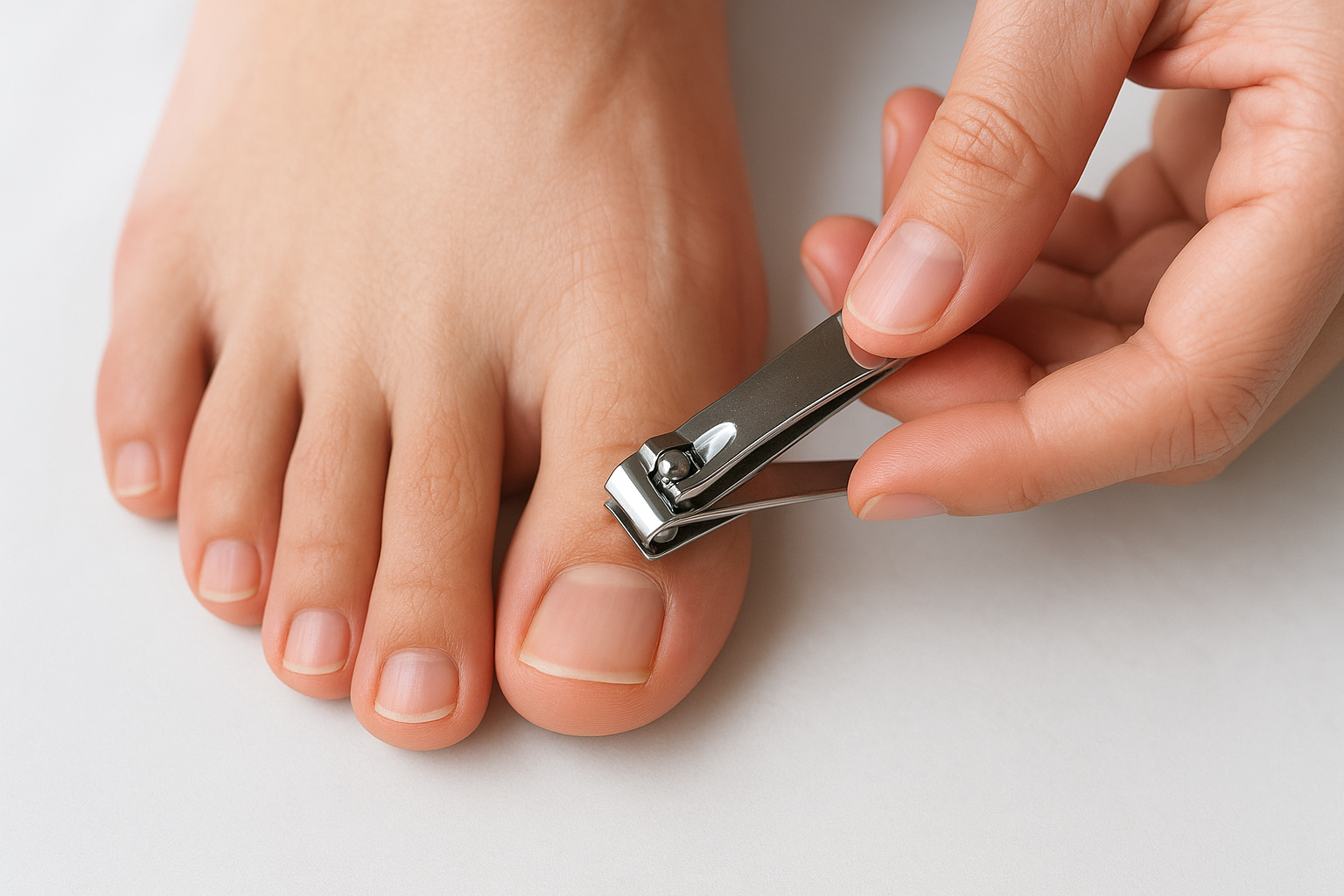
Straight, short nails remove one of the most common entry points for a fungal nail infection.
How to disinfect clippers and files at home
Wipe your tools with 70% isopropyl alcohol after every use and let them air dry fully before storing. Never share clippers or files with anyone in your home, even family members who show no visible nail changes.
Nail salon safety checklist before you sit down
Ask your salon how they sterilize tools between clients before you sit down. Look for:
- Autoclave sterilization or hospital-grade disinfectant for all metal tools
- Freshly drained and scrubbed foot baths between every client
- The option to bring your own clippers if you have any concerns
6. Stop reinfection at home and treat athlete’s foot fast
Clearing a fungal infection once doesn’t guarantee it stays gone. Reinfection is extremely common when you return to the same environment that caused the first infection. Understanding how to prevent toenail fungus from coming back starts with breaking that cycle inside your own home.
How athlete’s foot and toenail fungus connect
Athlete’s foot is a fungal skin infection caused by the same dermatophytes responsible for nail fungus. Left untreated, it spreads from the skin directly to the nail bed, giving the fungus a clear path inward. Treat any itching, scaling, or redness between your toes immediately with an over-the-counter antifungal cream before it reaches your nails.
Untreated athlete’s foot is one of the most direct routes to a recurring toenail fungal infection.
How to clean socks, towels, and bath surfaces
Wash socks and towels in hot water (140°F or above) to kill fungal spores. Scrub your shower floor and bath mat weekly with a disinfecting cleaner, and keep these habits consistent:
- Change towels after every use until your infection fully clears
- Never share towels with anyone in your household
When to replace or disinfect shoes after an infection
Shoes hold live fungal spores long after your nails clear up. Spray the inside of each pair with antifungal spray and let them air dry completely before wearing them again. Replace heavily worn pairs that you cannot properly disinfect.
How to prevent spread to family members
Never share socks, shoes, nail clippers, or towels with anyone in your household. Wear footwear in shared bathroom spaces until your infection fully clears to avoid leaving spores on floors your family walks on barefoot.
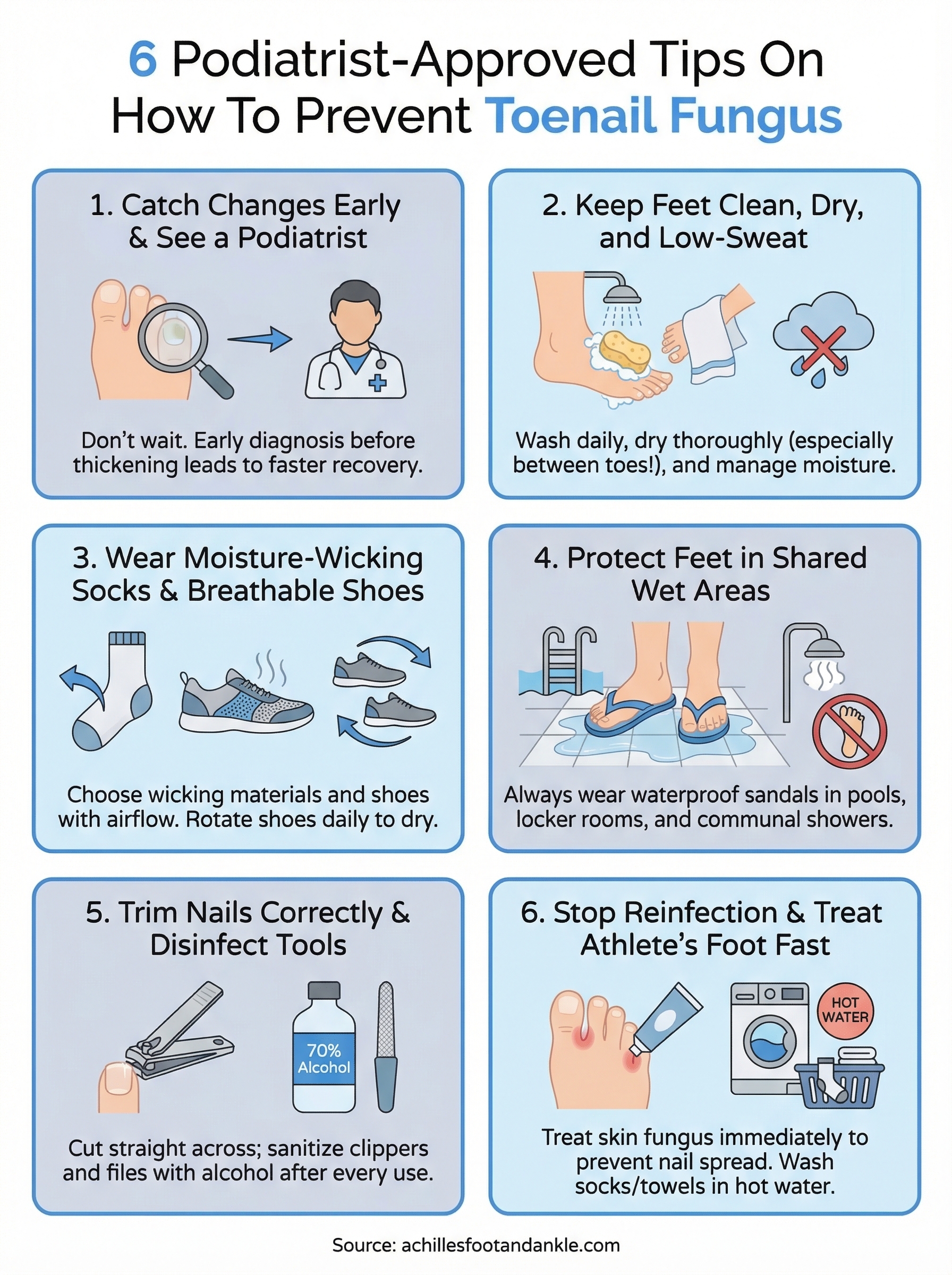
Keep it from coming back
The six tips above cover everything you need to know about how to prevent toenail fungus from taking hold or returning after treatment. Consistency is what separates people who clear an infection for good from those who deal with it repeatedly. Daily hygiene, smart footwear choices, and quick action when you spot early changes all work together to keep your nails healthy long-term.
Your feet carry you through everything, and protecting them doesn’t require a complicated routine. Small, repeatable habits maintained every single day are far more effective than any single product or treatment on the market. If you notice nail changes that concern you, or if a previous infection has come back, seeing a podiatrist early gives you the best possible outcome. Book a same-day appointment with our team at Achilles Foot and Ankle Center and get a clear, personalized plan in place before the problem gets harder to treat.