

You’ve treated the toenail fungus, maybe with medication, maybe with a procedure, and things are finally clearing up. But here’s what many people overlook: your shoes may still be harboring the same fungal spores that caused the infection in the first place. Without proper disinfection, reinfection is almost inevitable. Knowing how to clean shoes after toenail fungus is just as important as the treatment itself.
Fungal spores are stubborn. They can survive inside footwear for months in warm, dark, moist environments, exactly the conditions inside most shoes. That’s why our podiatrists at Achilles Foot and Ankle Center frequently remind patients that treatment doesn’t end when the nail starts looking healthy again. Shoe and sock hygiene plays a direct role in whether the fungus stays gone.
In this guide, we’ll walk you through proven methods to disinfect your shoes and socks, recommend products that actually work against fungal spores, and share practical habits to reduce your risk of reinfection. Whether you’re wrapping up treatment or just getting started, these steps will help protect your progress and keep your feet healthy long-term.
Why shoes and socks can cause reinfection
Treating toenail fungus without addressing your shoes is like washing your hands but drying them on a dirty towel. Dermatophytes, the fungi responsible for most toenail infections, shed spores into your footwear every single time you wear them. Those spores can survive for months inside shoes, waiting for the right conditions to reinfect your nails or surrounding skin.
How fungal spores survive inside footwear
Your shoes create an ideal environment for fungal growth. Warmth, darkness, and accumulated moisture from daily sweat combine to give spores everything they need to stay viable long after you’ve finished treatment. Research indicates that fungal spores can remain active in footwear for up to 20 months under suitable conditions, which means a pair you wore during your infection is still a legitimate risk even now.
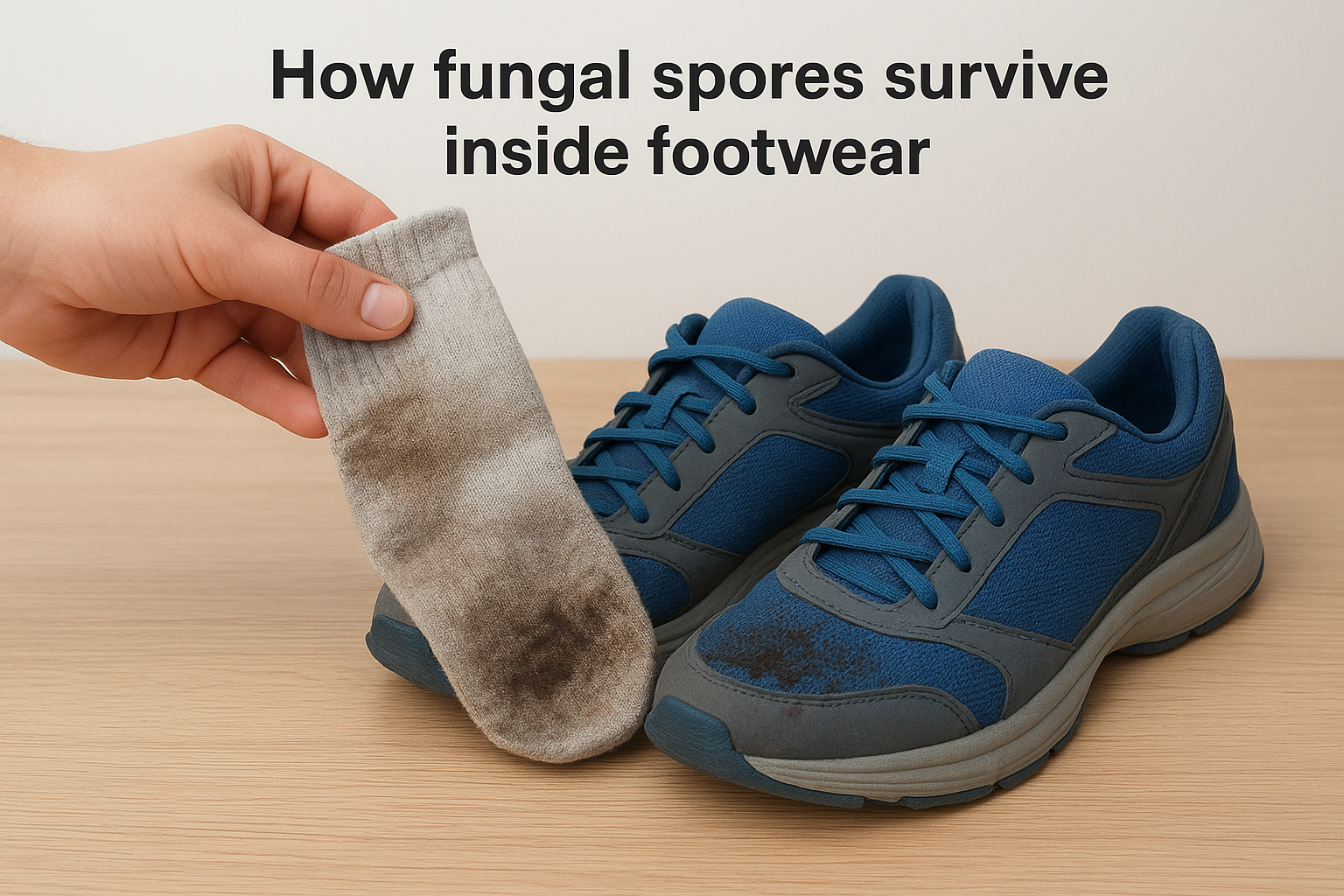
Spores concentrate most heavily in the toe box and insole areas, exactly where your nails make direct contact with the shoe material.
Socks act as a transfer layer
Socks pick up shed skin cells and spores from your infected nails and distribute them throughout your shoe with every step you take. Wearing the same pair without proper washing means you’re reintroducing fungal material on a daily basis, which can easily undo weeks of treatment.
Non-breathable synthetic materials trap moisture against your skin and raise the risk that remaining spores will thrive and spread. Understanding both sources together is why learning how to clean shoes after toenail fungus must also cover your laundry routine and sock choices, not just the shoes themselves.
Step 1. Sort shoes, laces, and inserts first
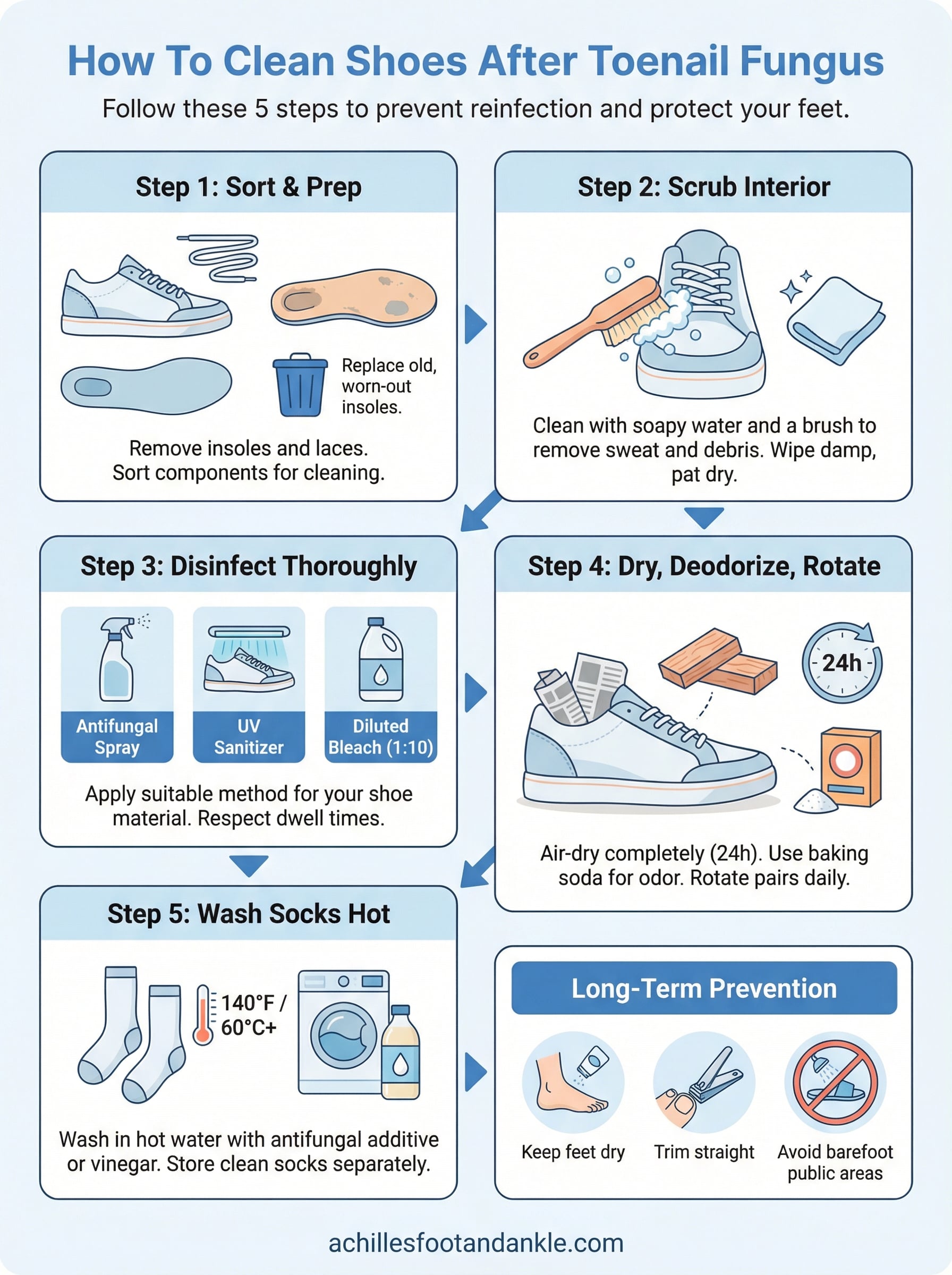
Before applying any disinfectant, separate your footwear into categories so you can treat each component correctly. Pull out the removable insoles and laces from every pair you wore during your infection. These parts trap sweat, shed skin cells, and fungal spores at a higher rate than the shoe shell itself, and each one needs individual attention rather than a quick overall spray.
Insoles are typically the most contaminated component in the shoe, so treat them as a priority before moving to the rest of the upper.
Decide what to keep and what to replace
Old, worn insoles are rarely worth salvaging. Porous foam absorbs spores deep into the material, where surface disinfectants cannot reach effectively. Replace them with fresh antimicrobial insoles available at most pharmacies or sporting goods stores. For laces, toss heavily soiled pairs and buy replacements since they cost very little. If your laces are still in reasonable shape, set them aside for machine washing, which you will handle in a later step when learning how to clean shoes after toenail fungus completely.
Step 2. Clean away sweat, skin, and debris
Before disinfectants can work, you need to remove the physical layer of sweat, dead skin, and debris coating the inside of your shoes. Sprays and UV devices cannot penetrate organic material, so skipping this step reduces their effectiveness. Wipe down the interior with a damp cloth or old toothbrush to loosen residue from the toe box and side walls.
A disinfectant applied over dirt and sweat residue will neutralize before reaching the fungal spores underneath.
How to scrub the interior properly
Use a small brush dipped in warm, soapy water to scrub the interior lining of each shoe. Work the bristles into the toe box where spore concentration is highest. This scrubbing step is central to learning how to clean shoes after toenail fungus correctly. After scrubbing, wipe the interior with a clean damp cloth, then pat dry before disinfection. Follow this order for each pair:
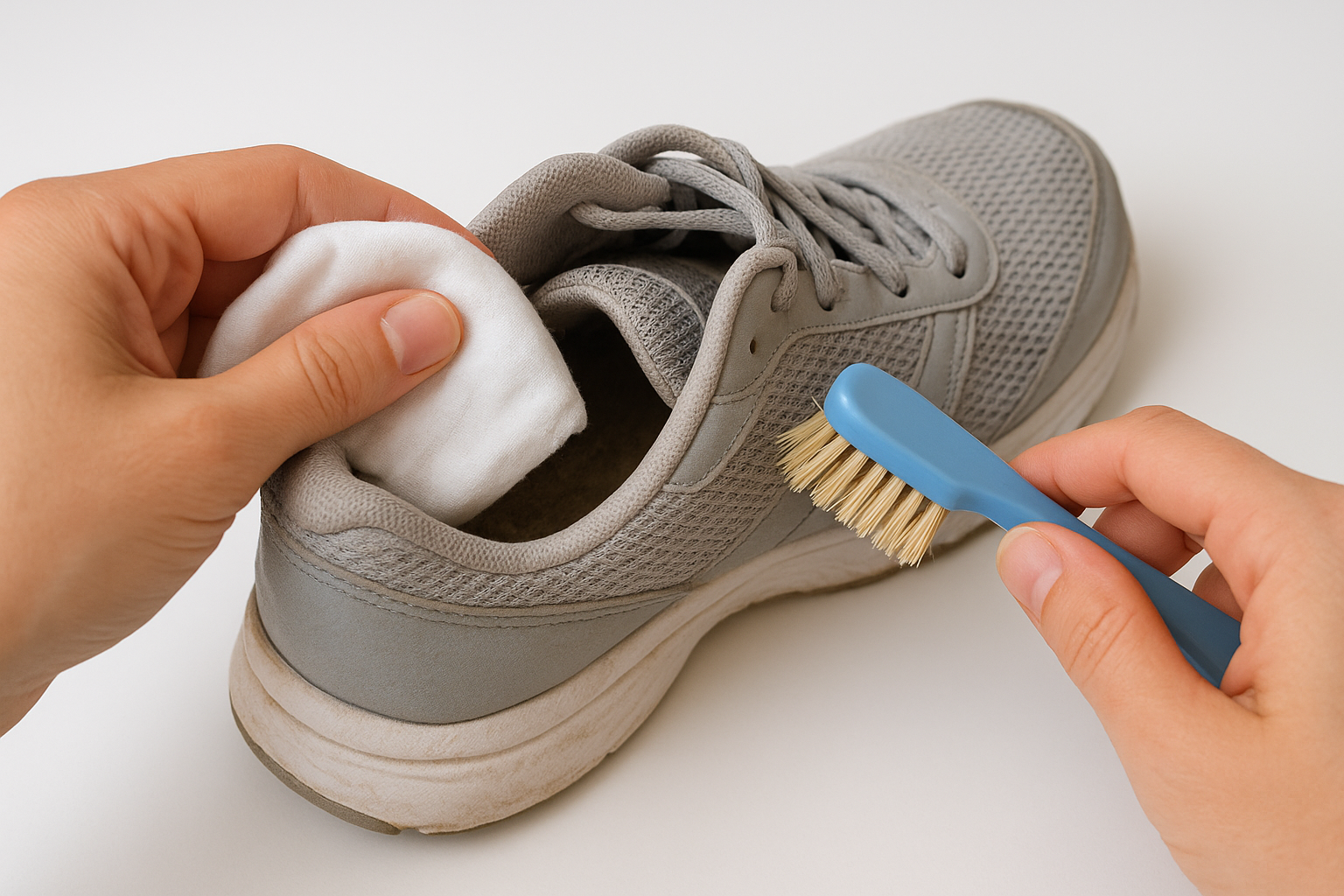
- Brush loose debris from the interior with a dry cloth
- Scrub with warm, soapy water using a small brush
- Wipe clean with a damp cloth, then pat dry
Step 3. Disinfect shoes with the right method
Now that the interior is clean, you can apply a targeted disinfectant. Three proven methods work well against dermatophytes: antifungal sprays, UV shoe sanitizers, and diluted bleach solutions. Choosing the right one for how to clean shoes after toenail fungus depends on your shoe material and how much moisture the construction can tolerate.
UV sanitizers penetrate fabric without introducing moisture, making them ideal for leather and dress shoes that would warp or stain with a liquid treatment.
Comparing your disinfection options
Each method has clear strengths depending on what you own. Pick the option that matches your shoe material, apply it thoroughly to the toe box and lining, and respect the dwell time before wearing the shoes again.
| Method | Best for | Dwell time |
|---|---|---|
| Antifungal spray | Athletic, canvas shoes | 5-10 minutes |
| UV sanitizer | Leather, dress shoes | Per device instructions |
| Diluted bleach (1:10 with water) | Rubber soles, plastic linings | 5 minutes |
Step 4. Dry, deodorize, and rotate footwear
After disinfecting, moisture management becomes your next priority. A damp shoe interior restarts the cycle by giving any surviving spores the conditions they need to grow. Air-dry your shoes completely for at least 24 hours in a well-ventilated area before you wear them again. Stuffing them with newspaper or cedar shoe trees speeds up the process by drawing out residual moisture from the lining and toe box.
Never put shoes in a sealed bag or closet immediately after disinfection, since trapped moisture will undermine the entire process.
Deodorize and rotate pairs consistently
Baking soda is one of the most effective, low-cost deodorizers you can use. Sprinkle a generous amount inside each shoe and let it sit overnight before shaking it out. This step is part of how to clean shoes after toenail fungus properly and keeps moisture in check between wears.
Rotating between at least two pairs gives each shoe a full 24 hours to dry out completely between sessions. This habit reduces the warm, damp conditions that fungal spores need to survive.
Step 5. Wash socks and protect clean laundry
Your socks carry the same fungal spores as your shoes, and washing them incorrectly means recontamination is still possible even after all the shoe work you’ve done. Use hot water at 140°F (60°C) or higher to kill dermatophytes during the wash cycle. Adding a cup of white vinegar or a dedicated antifungal laundry additive to the wash provides an extra layer of protection.
Washing socks at temperatures below 140°F leaves a significant portion of fungal spores intact, which can reset your progress entirely.
Separate and store clean socks correctly
Never mix clean socks with potentially contaminated ones during sorting. Once your socks are washed and dried, store them away from anything worn during your infection period. This step is part of how to clean shoes after toenail fungus completely, not just the footwear itself.
Choose breathable, moisture-wicking materials like merino wool or cotton blends going forward, since they reduce the warm, damp conditions fungal spores need to survive. Look for these features when replacing socks:
- Moisture-wicking fabric (merino wool, bamboo, or cotton blends)
- Reinforced toe boxes that minimize friction and nail trauma
- Antibacterial treatment built into the fiber
Keep toenail fungus from coming back
Cleaning your shoes and socks removes the immediate threat, but long-term prevention requires consistent daily habits. Keep your feet dry throughout the day by changing socks after workouts and sprinkling absorbent foot powder in shoes you wear regularly. Trim your nails straight across and inspect them often so you catch early reinfection signs before they progress.
Knowing how to clean shoes after toenail fungus gives you the tools to break the reinfection cycle, but the work doesn’t stop there. Avoid walking barefoot in locker rooms, public pools, and gym showers where fungal spores concentrate. Replace old footwear that has absorbed years of moisture and cannot be fully disinfected no matter what method you use.
If your nails show changes in color, thickness, or texture, don’t wait to seek care. Book a same-day appointment at Achilles Foot and Ankle Center and let a specialist evaluate your feet before the infection takes hold again.