

You glance down at your fingernails or toenails and notice something off. Maybe there’s a dark streak running through one nail, a yellowish tint spreading across several toes, or white patches appearing where your nails used to look healthy. These changes can catch you off guard, and suddenly you’re left wondering whether it’s harmless or something more serious.
Nail discoloration happens for dozens of reasons. Some causes are minor, like a bruise from stubbing your toe or residue from dark nail polish. Others signal infections that need treatment or, in rare cases, underlying health conditions that affect your entire body. The challenge is knowing which changes you can monitor at home and which ones require professional evaluation. This article walks you through seven distinct types of nail discoloration you shouldn’t ignore, explains what each one might mean, and helps you understand when to schedule an appointment with a podiatrist.
1. Get expert care at Achilles Foot and Ankle
When you notice unusual nail discoloration, getting the right diagnosis from the start saves you time and worry. Achilles Foot and Ankle Center offers the specialized expertise you need to understand what causes nail discoloration and how to treat it effectively. With thirteen locations across Central Virginia, you can find a podiatrist near you in Central Virginia who sees nail changes every day and knows which conditions need urgent attention and which respond well to conservative care.
Why starting with a podiatrist matters
Podiatrists train specifically in conditions affecting your feet and nails. They understand the differences between fungal infections, bacterial growth, trauma-related bruising, and systemic illnesses that first show up in your nails. A podiatrist can perform an on-site examination and order diagnostic tests like nail cultures or biopsies without sending you elsewhere for referrals, so you get answers faster and start treatment sooner.
Starting with a foot and ankle specialist gives you access to advanced diagnostic tools and treatment options that general practitioners may not offer in their offices.
Nail discoloration conditions they diagnose
The team at Achilles Foot and Ankle provides skin and nail treatments for a wide range of nail conditions, including fungal nail infections (onychomycosis), bacterial paronychia, melanonychia caused by trauma or melanoma, and color changes linked to circulation problems or kidney disease, along with less common causes like psoriasis, lichen planus, and drug-induced pigmentation.
How Achilles Foot and Ankle treats nail problems
Treatment begins with an accurate diagnosis. Your podiatrist may prescribe topical or oral antifungal medications, perform minor procedures to drain infections, or use laser therapy for stubborn fungus. For suspected melanoma, they coordinate biopsies and referrals to dermatology or oncology specialists.
When to call for an appointment
Call for an appointment if you notice dark streaks, sudden color changes, pain, swelling, or discharge around your nails. Achilles Foot and Ankle offers same-day appointments for urgent problems, so you don’t wait weeks with a worsening condition.
2. Dark streaks or black spots in a nail
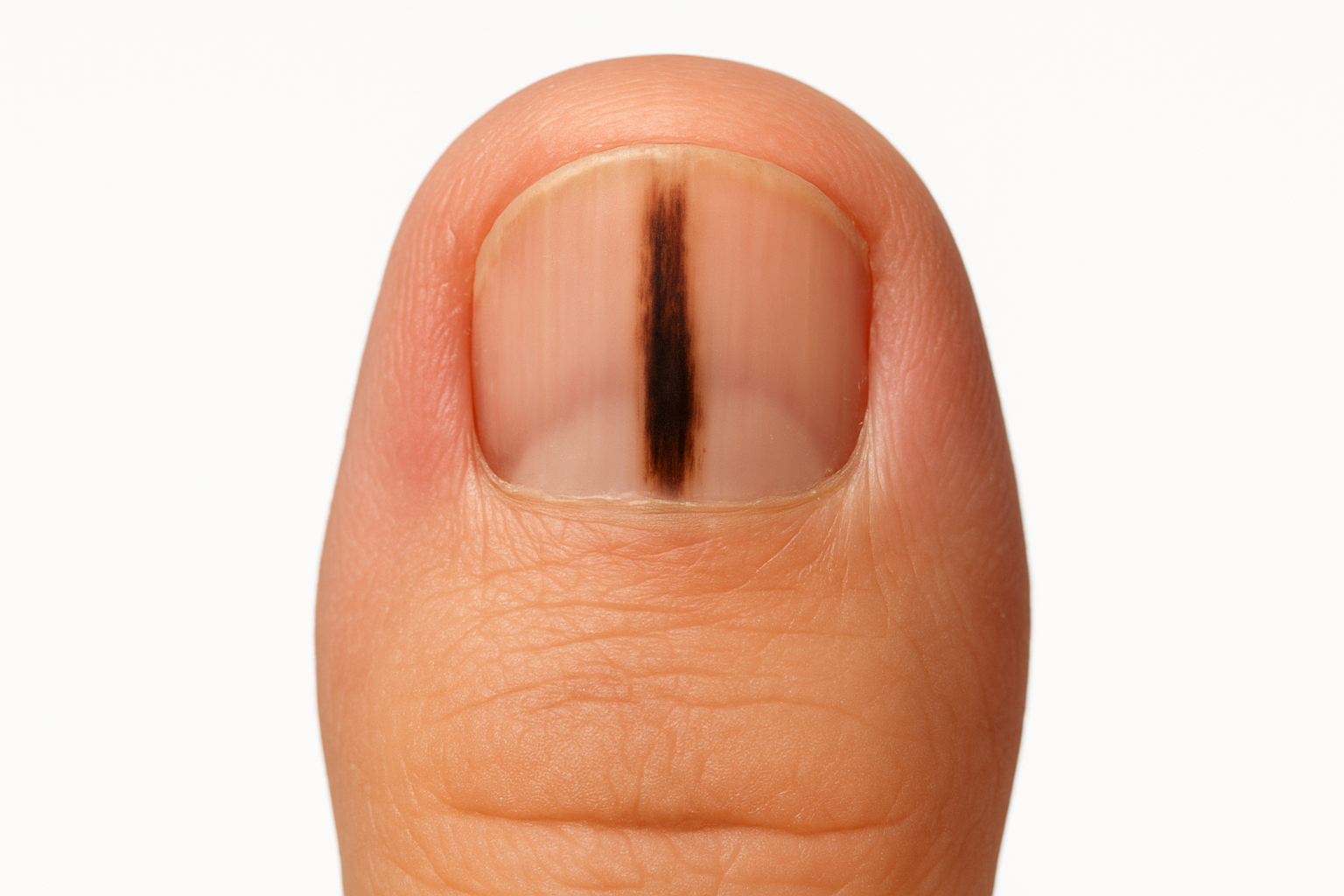
A dark line running vertically through your fingernail or toenail might seem like a minor cosmetic flaw, but it deserves careful attention. Dark streaks or black spots can result from harmless causes like trauma, but they can also signal melanoma, the most dangerous form of skin cancer. Understanding what causes nail discoloration in these darker shades helps you decide when to seek evaluation and when you can simply monitor the change at home.
What this nail change looks like
Dark discoloration in your nail typically appears as a vertical brown or black line running from your cuticle to the tip. Some people see a single narrow streak, others develop wider bands or multiple lines across different nails, and the color can range from light brown to deep black. Melanonychia is the medical term for this pigmentation, which happens when melanin deposits in your nail plate. The discoloration may stay consistent as your nail grows, or it could fade, darken, or expand depending on the cause.
Possible causes from bruise to melanoma
Trauma causes many dark streaks in nails. If you stubbed your toe, dropped something heavy on your hand, or wore tight shoes, the resulting bleeding under your nail creates a bruise that looks like a dark spot or line, and this type of discoloration usually grows out with your nail over several months. Other benign causes include moles (nevi) in the nail bed, age-related pigmentation changes, and certain medications like chemotherapy drugs or antimalarials. Fungal infections can also create dark discoloration, especially when debris collects under the nail. The most serious cause is subungual melanoma, a rare skin cancer that develops in the nail bed and produces a dark streak as it grows.
Warning signs that suggest skin cancer
Watch for specific red flags that increase the likelihood of melanoma. A dark streak that gets wider over time, especially if it spreads into the surrounding skin (Hutchinson’s sign), requires immediate evaluation. You should also worry if the pigmentation appears blurry or irregular at the edges, affects only one nail rather than multiple nails symmetrically, or develops after age 50 without an obvious injury. Pain, nail lifting, or bleeding around the streak adds further concern. People with darker skin tones naturally develop benign melanonychia more often, but any new or changing streak still needs professional assessment.
Any dark streak that widens, blurs at the edges, or develops without trauma should be examined by a podiatrist or dermatologist to rule out melanoma.
Diagnosis and treatment options
Your podiatrist will examine the affected nail using dermoscopy, a handheld microscope that reveals patterns in the pigmentation, and may take a nail clipping for laboratory analysis or perform a biopsy if melanoma is suspected. Treatment depends entirely on the diagnosis: trauma-related bruises simply grow out on their own, fungal infections respond to antifungal medication, and benign moles may need no treatment beyond monitoring. If a biopsy confirms melanoma, your podiatrist coordinates urgent referral to a surgical specialist for complete removal of the affected tissue.
3. Yellow thick or crumbly toenails
Yellow toenails that feel thick, crumbly, or distorted represent one of the most common nail problems podiatrists treat. This discoloration usually starts at the tip of your toenail and spreads toward the cuticle, making the nail look dull, opaque, and unhealthy. The affected nail may lift away from the nail bed, collect debris underneath, and become difficult to trim with regular clippers. While yellow thick nails occasionally result from repeated trauma or nail polish staining, the overwhelming majority stem from fungal infections that require professional fungal toenail treatment to resolve completely.
What yellow thick nails usually mean
Yellow discoloration paired with thickening almost always indicates onychomycosis, a fungal infection of the nail. The fungus invades through tiny cracks in your nail or the space between your nail and nail bed, then spreads slowly over months or years. As the infection progresses, your nail becomes brittle, crumbly, and distorted. You might notice white or yellow patches, increased thickness that makes wearing shoes uncomfortable, and a slightly musty odor. This infection rarely causes pain unless the thickened nail presses against your shoe or adjacent toes.
Fungal nail infection and risk factors
Several factors increase your chance of developing fungal toenails. Older adults face higher risk because nails grow more slowly with age, giving fungus more time to establish. Walking barefoot in public showers, locker rooms, or pool decks exposes your feet to fungal spores, which is why podiatrist-approved tips for avoiding toenail fungus focus on shared surfaces. Having athlete’s foot, diabetes, poor circulation, or a weakened immune system makes you more vulnerable, and wearing tight shoes or damp socks for extended periods creates the warm, moist environment where fungus thrives.
Fungal nail infections affect approximately 10% of adults and up to 50% of people over age 70, making it one of the most prevalent nail conditions podiatrists treat.
When yellow nails suggest systemic disease
In rare cases, yellow thick nails signal underlying health problems beyond fungal infection. Yellow nail syndrome causes slow-growing, thick nails that separate from the nail bed and sometimes indicates lung disease, lymphedema, or rheumatoid arthritis. Psoriasis can produce yellow-brown discoloration with pitting and nail separation. Thyroid disorders occasionally manifest as yellow brittle nails.
Treatment options and recovery timeline
Your podiatrist may prescribe oral antifungal medication (terbinafine or itraconazole) for 12 weeks to several months as part of toenail thickening treatment, depending on infection severity. Topical treatments work for mild cases but penetrate thick nails poorly. Laser therapy destroys fungus with heat while preserving healthy tissue. Complete nail clearing takes 9 to 12 months because you must wait for the entire nail to grow out after the fungus dies.
4. Green or black nails with odor
Green or black nail discoloration combined with an unusual smell signals a different type of infection than yellow fungal toenails. When you notice green pigmentation spreading across your nail bed or a dark black area with a musty or foul odor, you’re likely dealing with a bacterial infection rather than fungus, and knowing the early symptoms of a nail infection helps you act sooner. These infections develop when bacteria colonize the space between your nail plate and nail bed, producing distinctive colored compounds as they multiply. Toenails face higher risk than fingernails due to the warm, enclosed environment inside shoes.
How green or black discoloration develops
Bacterial nail infections typically start after trauma, moisture exposure, or damage to the seal between your nail and skin, letting bacteria enter through tiny openings and grow in the moist pocket underneath your nail. Pseudomonas aeruginosa, the most common culprit behind green nails, produces pigments called pyocyanin and pyoverdin that create the characteristic green color. Black discoloration usually results from subungual hematoma (blood trapped under the nail) or chronic bacterial overgrowth.
Bacterial infections linked to green nails
Pseudomonas bacteria thrive in water-rich environments and commonly infect nails that stay wet for long periods. Healthcare workers, dishwashers, swimmers, and people who frequently get manicures face increased risk. The infection often develops after your nail partially lifts from the nail bed, creating space where bacteria can grow. Green nail syndrome describes this specific Pseudomonas infection.
Pseudomonas bacteria produce distinctive green pigments that stain your nail plate, making bacterial infections visually different from fungal infections.
When injury or pressure under the nail is to blame
Trauma causes black discoloration when blood collects beneath your nail after stubbing your toe, dropping objects on it, or wearing shoes that squeeze your toes. Repetitive pressure from sports can create similar bleeding, which is how black toenails from running usually develop. These hematomas may become infected if bacteria enter the damaged area, combining black blood discoloration with secondary bacterial growth.
Medical treatments to clear the infection
Your podiatrist will clean the affected area, remove any loose or damaged nail portions, and prescribe topical or oral antibiotics targeting the specific bacteria. Keeping your nails dry and avoiding prolonged water exposure speeds recovery. Severe infections may require partial nail removal to allow proper drainage and antibiotic penetration.
5. White or pale nails and half and half nails
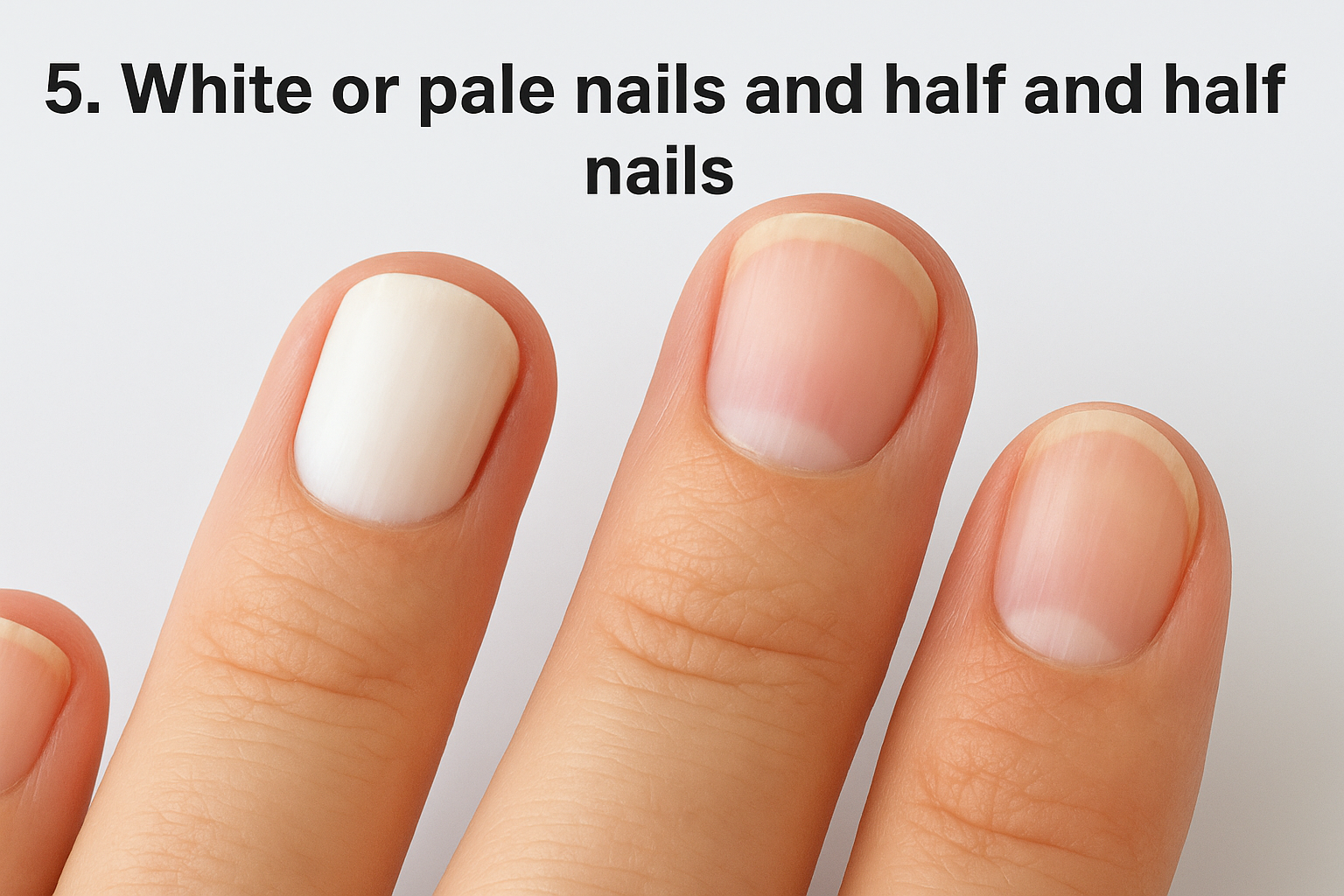
White or pale nails present in several distinct patterns that help your podiatrist determine what causes nail discoloration in these lighter shades. You might notice your entire nail turning opaque white, small white spots scattered across the surface, or a striking pattern where half your nail looks pink and the other half white. These changes range from harmless cosmetic issues to warning signs of serious internal disease. Understanding which type of white discoloration you have guides whether you need simple monitoring, topical treatment, or coordination with your primary care physician.
Types of white or pale nail discoloration
Leukonychia describes the medical term for white nails, and it appears in three main forms. True leukonychia affects your nail plate itself and moves forward as your nail grows, usually caused by trauma or inherited conditions. Apparent leukonychia makes your nail bed look white while the nail plate stays clear, often linked to systemic disease. Terry’s nails show white coloring across most of the nail with a narrow pink band at the tip, while half and half nails display white proximal halves and brown or pink distal halves.
Local causes such as trauma and fungus
Injury causes most white spots and streaks in healthy nails. Minor trauma from bumping your finger, aggressive manicuring, or biting your nails creates tiny white marks that grow out within weeks, so gentler at-home nail care habits prevent most of them. Superficial fungal infections can produce white patches on your nail surface that scrape off easily. Allergic reactions to nail polish, hardeners, or artificial nails sometimes create temporary white discoloration that resolves after you stop using the irritating product.
Systemic illnesses linked to pale or half white nails
White nails signal internal health problems when they affect multiple nails simultaneously without obvious trauma. Liver disease, particularly cirrhosis, commonly produces Terry’s nails. Kidney disease causes half and half nails in many patients undergoing dialysis. Severe anemia makes your entire nail bed look pale due to reduced blood flow. Congestive heart failure, diabetes, and malnutrition can all manifest as widespread nail pallor before other symptoms become obvious.
Half and half nails appear in approximately 40% of patients with chronic kidney disease and serve as a clinical marker that helps doctors monitor disease progression.
When podiatry and primary care should team up
Your podiatrist recognizes when white nail changes require blood work or internal medicine evaluation. Through patient care coordination, they document your nail appearance, order baseline testing, and refer you to specialists who can investigate liver function, kidney health, or blood disorders while continuing to monitor your nail changes as treatment progresses.
6. Blue purple or red nails that concern you
Blue, purple, or red nail discoloration points toward problems with your blood circulation, oxygen levels, or tiny blood vessels beneath your nail bed. Unlike the infections and fungal conditions that create yellow or green nails, these color changes often reflect how well oxygen-rich blood reaches your extremities or indicate bleeding under your nail surface. When you see blue-tinged nails, purple nail beds, or dark red streaks, you need to understand what causes nail discoloration in these shades and whether the change demands immediate medical attention.
How low oxygen and poor circulation change nail color
Your nail beds contain dense networks of tiny blood vessels that show through your translucent nail plate, giving healthy nails their natural pink color. When your blood carries insufficient oxygen, a condition called cyanosis turns your nail beds blue or purple. Poor circulation from peripheral artery disease, Raynaud’s phenomenon, or cold exposure reduces blood flow to your fingers and toes, creating similar color changes. You might notice the discoloration worsens in cold weather or improves when you warm your hands and feet.
If you notice purple discoloration specifically at your cuticle or across your nail beds without any injury, this pattern often points to Raynaud’s phenomenon, where small blood vessels in your fingers and toes clamp down in response to cold temperatures or stress. The purple tint typically appears symmetrically on multiple fingers or toes, intensifies in cold rooms, and fades back to normal pink once you warm up. This circulation-based discoloration moves and changes with temperature, which sets it apart from a fixed dark spot caused by trauma, a fungal infection, or a bruise growing out with your nail.
Heart lung and blood conditions tied to blue nails
Chronic obstructive pulmonary disease, asthma attacks, and other respiratory disorders can cause persistent blue nails when your lungs struggle to oxygenate your blood properly. Congenital heart defects that mix oxygen-poor blood with oxygen-rich blood produce chronic cyanosis from birth. Severe anemia reduces your blood’s oxygen-carrying capacity enough to create pale or slightly blue nails.
Blue or purple nails that persist even in warm conditions suggest your blood oxygen levels have dropped low enough to require immediate medical evaluation.
Red or brown streaks and splinter hemorrhages
Thin red or dark brown vertical lines beneath your nail resemble splinters stuck under your skin, earning the name splinter hemorrhages. These develop when tiny blood vessels burst from trauma, psoriasis, or endocarditis, a dangerous heart valve infection. Multiple splinter hemorrhages across several nails raise concern for systemic conditions.
Urgent signs that require same day evaluation
Call for immediate care if you develop sudden blue discoloration with chest pain, shortness of breath, or confusion. New splinter hemorrhages combined with fever suggest possible bacterial endocarditis that needs urgent treatment. Purple or black discoloration spreading rapidly from under your nail may indicate severe infection or gangrene requiring emergency intervention.
Next steps for healthier nails
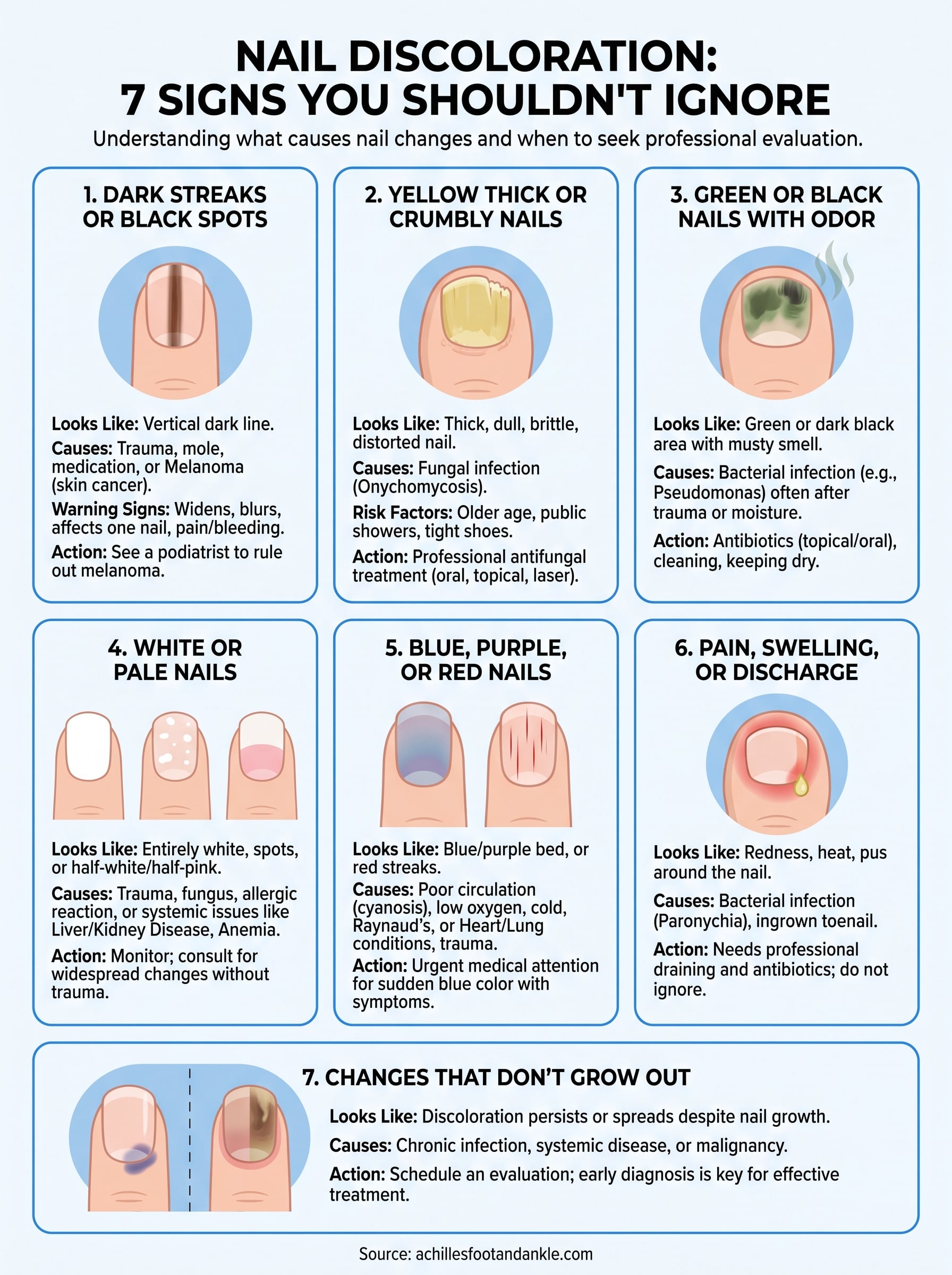
You now understand what causes nail discoloration and recognize the seven warning signs that require professional evaluation. Dark streaks, yellow thickening, green bacterial growth, white pallor, and blue or purple tones each tell different stories about your nail health and sometimes your overall wellness. Some changes grow out on their own after minor trauma, while others need prescription medications, procedures, or coordination with other medical specialists to address underlying systemic conditions.
Waiting rarely works when infection or disease drives the color change. Your nails continue to deteriorate without proper diagnosis and treatment, making recovery longer and more difficult. Early intervention gives you the best chance for complete healing and helps catch serious conditions like melanoma or heart disease before they progress.
Schedule a nail discoloration evaluation with our podiatrists when you notice persistent color changes that worry you. Their board-certified podiatrists examine your nails thoroughly, run necessary diagnostic tests, and create treatment plans tailored to your condition. With thirteen convenient locations across Central Virginia and same-day appointments available, you get the expert care your nails need without unnecessary delays.