

Choosing a podiatrist is a decision that directly affects your mobility and quality of life. Before scheduling an appointment, most people want to know what actual patients have experienced, and that’s exactly why Achilles Foot and Ankle reviews matter.
At Achilles Foot and Ankle Center, we’ve treated thousands of patients across our thirteen Central Virginia locations. From routine checkups to complex reconstructive surgeries, our team has built a track record that speaks through the words of those we’ve helped. But we’re not here to tell you how great we are, your neighbors and fellow patients already have.
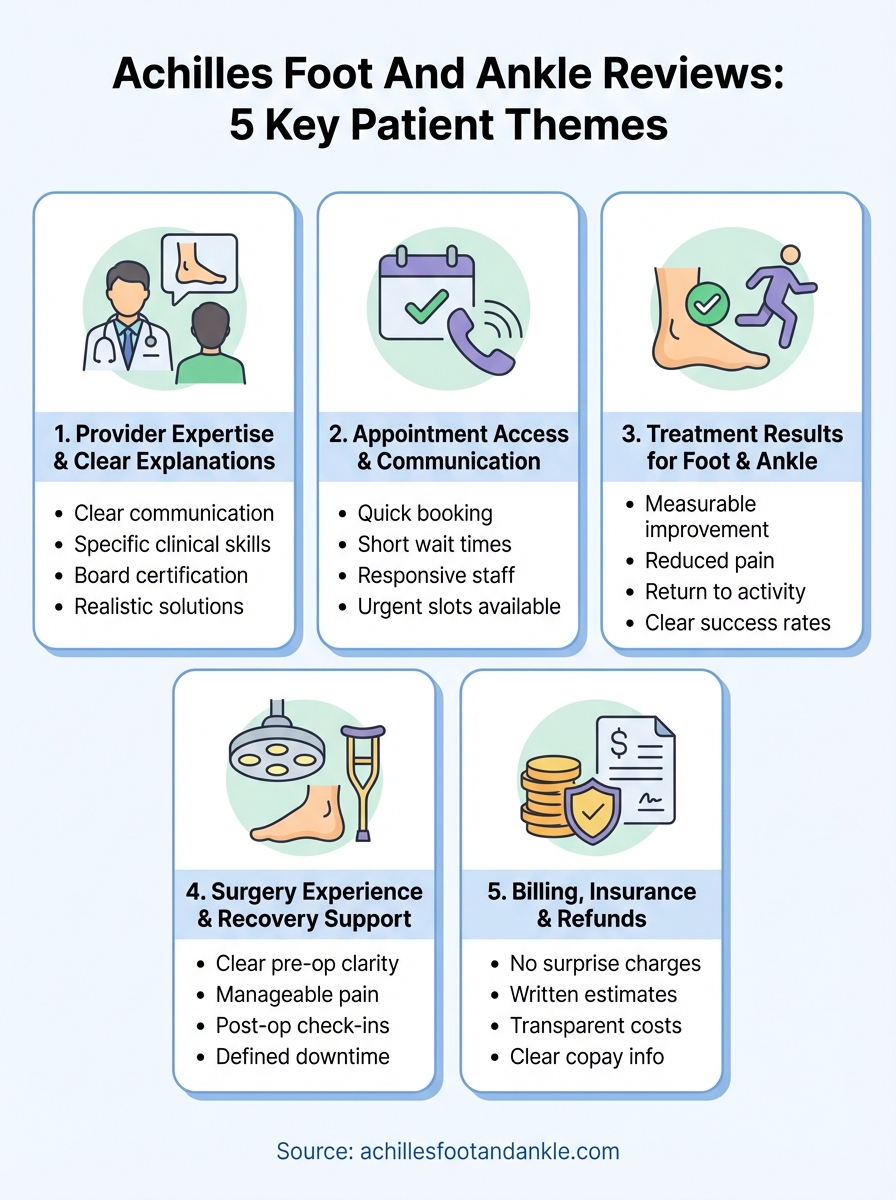
We’ve gathered the most common themes that appear in patient feedback. Whether you’re dealing with chronic heel pain, a sports injury, or diabetic foot concerns, these five points will help you understand what to expect when you walk through our doors.
1. Provider expertise and clear explanations
When you scan Achilles foot and ankle reviews, one theme surfaces repeatedly: patients want doctors who explain what’s wrong and how to fix it. You’re not just paying for a diagnosis, you’re trusting someone with your mobility, and that requires clear communication from the first handshake to the final follow-up.
What patients usually mean when they mention expertise
Patients typically reference specific clinical skills when they praise a provider’s expertise. They describe how a doctor identified a problem that others missed, or how a surgeon performed a procedure with precision and minimal scarring. You’ll see reviews that mention board certification, years in practice, and whether the doctor stays current with newer techniques like minimally invasive surgery or regenerative therapies.
"Expertise isn’t just about credentials on a wall; it’s about how confidently a provider can explain your condition and map out realistic solutions."
What to look for in review details
Strong reviews include concrete examples rather than vague compliments. Look for mentions of how the doctor explained imaging results, walked through treatment options, or answered follow-up questions without rushing. Red flags appear when patients report feeling dismissed or receiving inconsistent information from multiple visits.
Questions to ask at your first visit
Ask your provider how many times they’ve treated your specific condition and what their typical outcomes look like. Request a breakdown of both conservative and surgical options if applicable. Confirm whether they use advanced diagnostics like ultrasound or fluoroscopy in the office, and ask how quickly they can interpret results.
How to verify credentials and specialties
Check board certifications through the American Board of Foot and Ankle Surgery or similar governing bodies. Verify surgical privileges at local hospitals and surgery centers. Many providers list their training, fellowships, and areas of focus on their practice website, which you can cross-reference with publicly available licensing databases.
2. Appointment access and front-desk communication
Getting through to a practice and securing an appointment shouldn’t feel like a barrier to care. When scanning Achilles foot and ankle reviews, you’ll notice patients frequently comment on how quickly they could book a visit and whether the front-desk staff treated them with respect or frustration.
What patients usually mean when they mention scheduling
Patients care about wait times for new appointments and whether the office offers flexible hours. They mention whether staff answered calls promptly, accommodated urgent requests, and provided clear directions or paperwork instructions before the visit.
What to look for in review details
Strong reviews describe specific timelines, such as "I called Monday and was seen Wednesday," or note whether the office followed up on cancellations. Warning signs include repeated mentions of unreturned messages or difficulty reaching anyone during business hours.
Questions to ask before you book
Ask how soon new patients are typically seen and whether same-day slots exist for acute issues. Confirm office hours across all locations and whether you can communicate through a patient portal for non-urgent questions.
How to handle urgent issues and same-day needs
Clarify the office’s protocol for emergencies like severe ankle sprains or sudden foot infections. Ask whether they reserve slots for urgent cases and what number to call outside regular hours.
3. Treatment results for common foot and ankle problems
Patients reading Achilles foot and ankle reviews often focus on whether their specific condition improved after treatment. You want to know if that plantar fasciitis disappeared, whether the bunion surgery restored normal walking, or if the diabetic wound actually healed. Results matter more than bedside manner when your daily life depends on pain-free movement.

What patients usually mean when they mention results
Patients describe measurable improvements like reduced pain scores, return to sports, or elimination of recurring infections. They reference how long it took to notice changes and whether the problem stayed resolved after six months or a year. Positive reviews often include statements like "I can walk without limping" or "I’m back to running marathons."
What to look for in review details
Strong reviews include timeframes and specifics: "My heel pain was gone in three weeks with orthotics," or "The nerve pain stopped after two injections." Watch for patterns where multiple patients report similar outcomes for conditions like hammertoes or ankle instability.
Questions to ask about conservative vs surgical care
Ask your provider what success rates look like for both non-surgical and surgical approaches to your diagnosis. Request examples of patients with your exact condition and how they progressed through treatment stages.
"Understanding both conservative and surgical success rates helps you make informed decisions about your treatment path."
What outcomes to expect and typical timelines
Expect your provider to outline realistic recovery windows for your specific problem. Conservative treatments like physical therapy often require six to twelve weeks before you see improvement, while surgical repairs may need three to six months for full function return.
4. Surgery experience and recovery support
When surgery becomes necessary, patients scanning Achilles foot and ankle reviews pay close attention to how others describe the actual procedure day and the weeks that follow. You need to know whether the surgical team communicated clearly, whether pain was manageable, and whether someone actually called to check on your recovery. These details determine whether you feel supported or abandoned during a vulnerable time.

What patients usually mean when they mention surgery
Patients describe the pre-op consultation where the surgeon explained what would happen step by step, including how long the procedure would take and what type of anesthesia they’d receive. They reference whether the surgical center felt clean and organized, and whether staff treated them with care rather than indifference.
What to look for in review details
Strong reviews mention specific surgical outcomes like improved range of motion or eliminated pain after bunion correction. Look for descriptions of how the surgeon handled complications or unexpected findings during the procedure.
Questions to ask about anesthesia, pain, and downtime
Ask your surgeon what pain management protocol they follow and whether you’ll receive prescriptions before leaving the facility. Confirm the expected timeline before you can bear weight or return to work.
"Understanding your post-operative restrictions ahead of time prevents setbacks that could delay healing."
What good post-op follow-up looks like
Expect scheduled check-ins where your provider removes sutures, evaluates healing, and adjusts your rehabilitation plan. Quality practices provide direct phone access for concerns between appointments.
5. Billing, insurance, and refunds
Financial surprises can sour an otherwise positive medical experience. When you scan Achilles foot and ankle reviews, billing complaints often stand out because they catch patients off guard weeks after treatment. You deserve transparency about costs before committing to care, whether that’s a simple office visit or a complex surgical procedure.
What patients usually mean when they mention billing
Patients reference unexpected charges that arrived months after their appointment or procedures billed under codes their insurance didn’t cover. They describe confusion over what their copay versus deductible should have been, or frustration when the practice quoted one price and the final bill showed another.
What to look for in review details
Strong reviews mention whether the office provided itemized estimates upfront and whether billing staff answered questions without defensiveness. Warning signs include patterns of patients reporting surprise balance bills or difficulty getting refunds for overpayments.
Questions to ask your insurer and the office
Ask your insurance company whether the practice is in-network and what your specific plan covers for the proposed treatment. Request a written estimate from the office that breaks down facility fees, surgeon fees, and any equipment costs.
"Getting written estimates before treatment protects you from billing disputes that can drag on for months."
How to reduce surprises with estimates and documentation
Save all pre-authorization letters from your insurer and confirmation emails from the practice. Request that the office submit authorization requests before your procedure and confirm approval status in writing.
Next steps
Reading Achilles foot and ankle reviews gives you insight into what other patients experienced, but your own visit will answer questions no review can. You now know the five areas that matter most: provider expertise, appointment access, treatment results, surgical experience, and billing transparency. Use these themes to evaluate any podiatry practice you consider.
Before you commit to care, verify that the practice accepts your insurance and maintains convenient locations. Ask about same-day availability for urgent problems and whether you can access your records through a patient portal. Most importantly, trust your instincts during that first consultation, a provider who listens to your concerns and explains options clearly usually delivers better outcomes.
We’ve built Achilles Foot and Ankle Center around these principles because we understand mobility affects every part of your life. If you’re ready to address that persistent foot pain or ankle issue, schedule a same-day appointment with our team across Central Virginia.