Diabetic foot wounds don’t wait, and neither should your treatment. When a small cut or blister turns into a non-healing ulcer, finding a diabetic wound care clinic near me becomes urgent. Proper wound care can mean the difference between full recovery and serious complications like infection or amputation.
At Achilles Foot and Ankle Center, we’ve seen firsthand how quickly diabetic wounds can progress when left untreated, and how effectively they heal with the right care. Our Advanced Wound Care & Limb Salvage program serves patients across Central Virginia, but we also know that having options matters when your health is on the line.
This guide covers five diabetic wound care clinic options that can help you start healing today. Whether you’re managing a new wound or dealing with a stubborn ulcer that won’t close, you’ll find actionable information to connect with specialized care in your area.
1. Achilles Foot and Ankle Center
Our Advanced Wound Care & Limb Salvage program specializes in treating diabetic wounds that refuse to heal with standard care. We operate Central Virginia‘s only Foot and Ankle Ambulatory Surgery Center, combining advanced technology with experienced podiatric specialists who understand the complexities of diabetic wound healing.
When to choose this option
You should consider Achilles Foot and Ankle Center when your diabetic wound shows no improvement after two weeks of basic care, or when you notice signs of infection like increased redness, warmth, or drainage. Our team handles everything from early-stage ulcers to complex cases requiring limb salvage procedures.
Our same-day appointment availability means you can start specialized treatment without dangerous delays.
What the team treats and why it matters
Our specialists address diabetic foot ulcers, infected wounds, and non-healing surgical sites with protocols designed specifically for diabetic patients. We treat underlying issues like peripheral neuropathy and poor circulation that prevent normal healing, not just the wound surface.
What happens at your first visit
Your initial appointment includes comprehensive wound assessment with digital imaging and vascular testing to check blood flow. We evaluate your diabetes management, footwear, and daily wound care routine to identify factors slowing your recovery.
Treatments you may receive
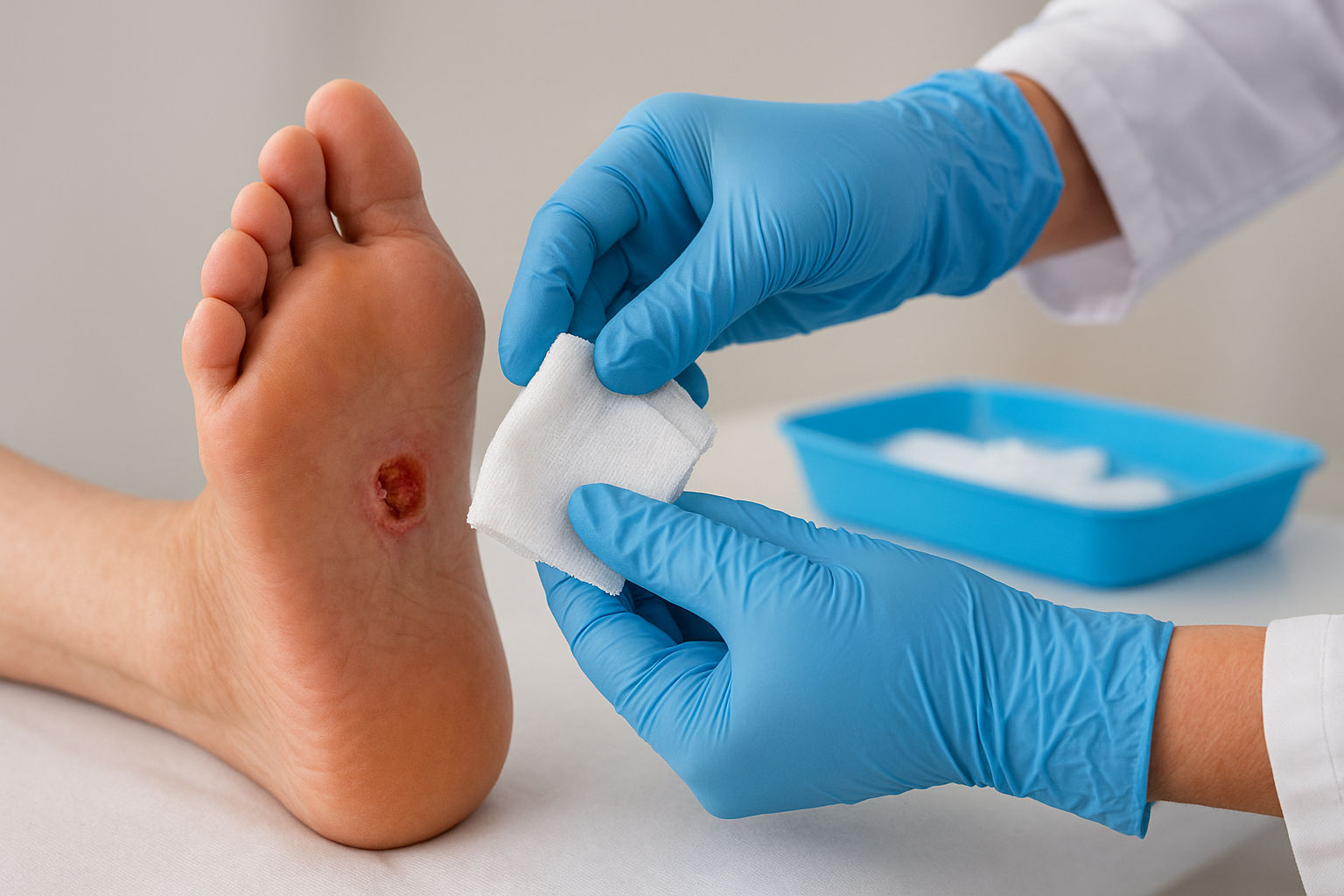
Treatment options include debridement to remove dead tissue, advanced wound dressings, custom diabetic shoes, offloading devices, and fluoroscopy-guided injections. Severe cases may require surgical intervention or reconstructive procedures performed at our on-site surgery center.
How to book and what to bring
Call any of our thirteen Central Virginia locations or use the Healow Patient Portal to schedule. Bring your current medications list, diabetes records, insurance card, and any previous wound care documentation from other providers.
Insurance and cost questions to ask
We accept all major insurance plans including Medicare and Medicaid. Ask about your specific coverage for wound care supplies, diabetic shoes, and surgical procedures if needed. Our team can verify benefits before your appointment and discuss payment options.
2. Hospital-based wound care centers
Major hospitals operate dedicated wound care centers staffed by certified wound specialists who treat complex diabetic wounds alongside other chronic wounds. These centers provide advanced treatments and monitoring that outpatient offices cannot match, making them valuable resources when searching for a diabetic wound care clinic near me with comprehensive capabilities.
When to choose this option
You should choose a hospital-based center when your wound shows signs of deep infection or requires daily specialized treatments. These facilities work best for severe cases needing intensive monitoring or patients with multiple health complications requiring coordinated hospital resources.
Services these centers usually offer
Hospital wound centers provide advanced debridement, specialized dressings, and negative pressure therapy. Most offer hyperbaric oxygen therapy, bioengineered skin substitutes, and advanced infection management with intravenous antibiotics when needed.
What to expect during intake and follow-ups
Your intake includes complete medical history review and wound photography to track healing progress. Follow-up visits typically occur weekly or twice weekly, with each session including wound measurement, dressing changes, and treatment adjustments based on healing rates.
Red flags that signal you need a hospital setting
Seek hospital-based care immediately if you notice fever, red streaking from the wound, or foul-smelling drainage. Wounds exposing bone or tendon, rapid spreading of infection, or uncontrolled blood sugar above 300 mg/dL with an open wound require hospital-level intervention.
Hospital wound centers can admit you directly if your condition deteriorates during treatment.
Insurance and referral requirements
Most hospital wound centers require physician referrals and prior authorization from your insurance. Medicare typically covers treatments, but verify your specific plan’s coverage for hyperbaric therapy and advanced biologics before starting care.
3. Multidisciplinary diabetic foot clinics
Multidisciplinary diabetic foot clinics bring multiple specialists together in one location to address every factor affecting your wound healing. These team-based programs coordinate care between podiatrists, endocrinologists, vascular surgeons, and infectious disease specialists who work from a shared treatment plan.
When to choose this option
You should consider a multidisciplinary clinic when your diabetic wound involves multiple complications like infection, poor circulation, and uncontrolled blood sugar. These clinics excel at treating wounds that haven’t responded to single-specialty care or when you need coordinated management of complex health issues.
Which specialists you may see and what each does
Your care team typically includes a podiatric surgeon who manages the wound directly, an endocrinologist who optimizes your diabetes control, and a vascular specialist who addresses circulation problems. Infectious disease doctors treat resistant infections, while nutritionists develop meal plans that support healing.
Typical testing and imaging
These clinics perform comprehensive vascular studies including ankle-brachial index and arterial Doppler ultrasound. You’ll receive regular blood work monitoring A1C levels, plus X-rays or MRI scans to check for bone infection when warranted.
How these clinics prevent amputation
The team identifies early warning signs of tissue death and intervenes before amputation becomes necessary. Coordinated care ensures proper offloading, infection control, and blood flow restoration happen simultaneously rather than in sequence.
Multidisciplinary clinics reduce amputation rates by addressing all healing barriers at once.
How to coordinate care with your primary doctor
Request that the clinic send treatment summaries to your primary physician after each visit. Your primary doctor should receive medication updates and blood sugar targets so they can adjust your diabetes management between specialist appointments.
4. Hyperbaric oxygen therapy centers
Hyperbaric oxygen therapy centers specialize in healing stubborn diabetic wounds by delivering pure oxygen in a pressurized chamber. This treatment increases oxygen levels in your blood and tissues, promoting wound healing that standard care cannot achieve. Some centers operate as standalone facilities, while others function within hospitals or diabetic wound care clinic near me programs.
When to choose this option
You should consider hyperbaric oxygen therapy when your diabetic wound hasn’t healed after 30 days of standard wound care. This treatment works best for wounds with adequate blood supply that need increased oxygen at the cellular level to close properly.
Which wounds may qualify for hyperbaric therapy
Medicare covers hyperbaric oxygen for diabetic wounds of the lower extremities classified as Wagner grade III or higher. Your wound must show no improvement despite recommended treatment including debridement, infection management, and offloading for at least 30 days.
What a hyperbaric treatment course looks like
Treatment typically requires 20 to 40 daily sessions lasting 90 to 120 minutes each. You lie in a clear acrylic chamber breathing pure oxygen while pressure increases to 2 to 3 times normal atmospheric levels.
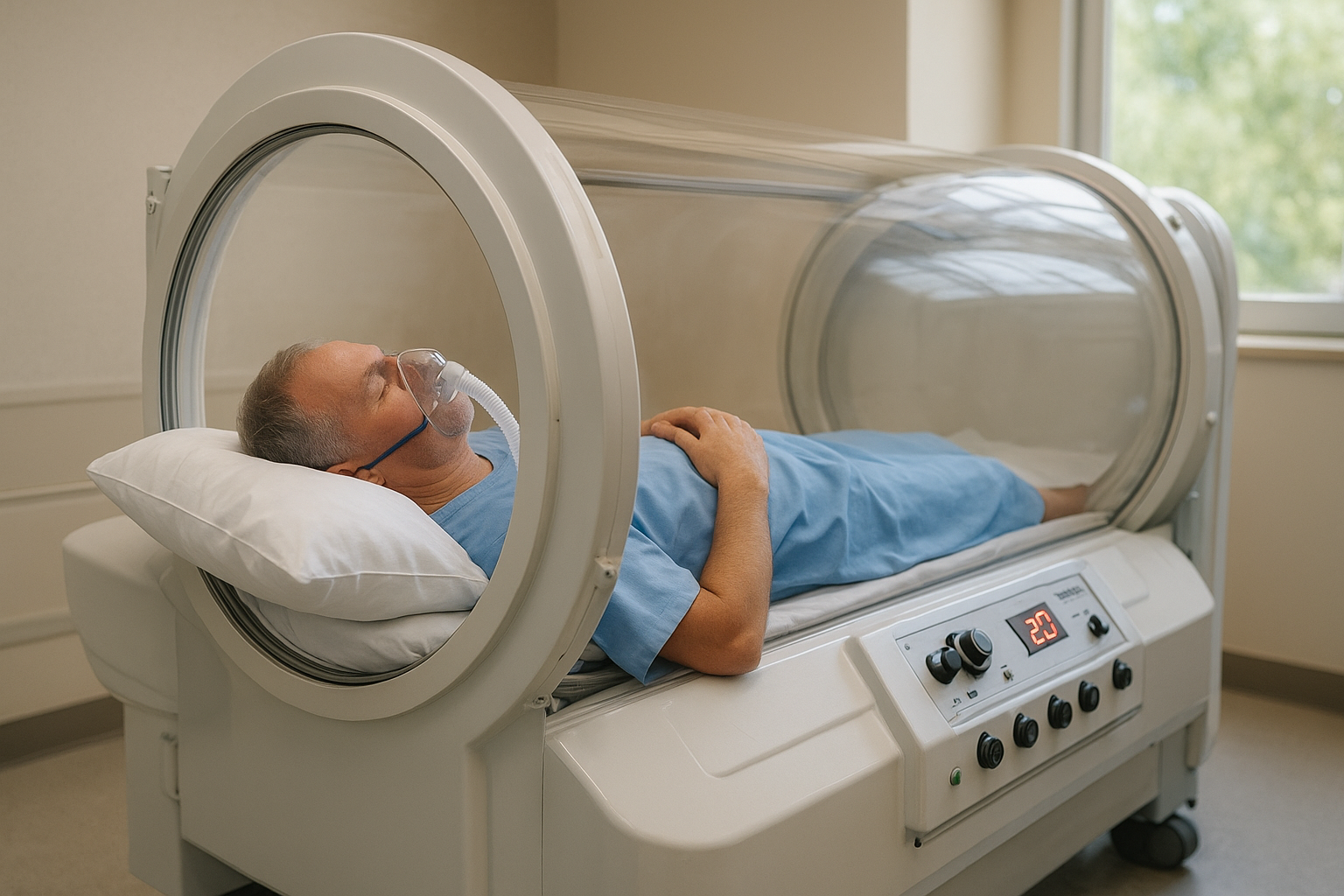
Daily treatments over several weeks require significant time commitment but often save limbs.
Safety considerations and common reasons people cannot use it
You cannot receive hyperbaric oxygen if you have untreated pneumothorax or certain lung conditions. Active chemotherapy, uncontrolled seizures, and certain ear or sinus problems also disqualify patients from treatment.
Coverage basics and documentation clinics often need
Insurance requires detailed wound measurements, photographs, and failed treatment documentation spanning at least 30 days. Your provider must submit transcutaneous oxygen measurements and proof that standard wound care protocols produced insufficient healing.
5. Vascular surgery and limb salvage clinics
Vascular surgery and limb salvage clinics focus on restoring blood flow to diabetic wounds that won’t heal due to circulation problems. These specialized programs combine diagnostic vascular testing with surgical interventions to save limbs when reduced blood supply prevents healing. Finding a diabetic wound care clinic near me with vascular expertise becomes critical when your wound shows signs of inadequate circulation.
When to choose this option
You should seek vascular surgery evaluation when your diabetic wound remains stalled despite proper wound care and good blood sugar control. These clinics specialize in complex cases where circulation problems block the oxygen and nutrients your tissues need to repair themselves.
Signs your wound may involve poor circulation
Watch for absent pedal pulses, cold feet, or skin that appears shiny and hairless. Pain that worsens when you elevate your leg or wounds that develop black or purple edges signal inadequate blood flow requiring immediate vascular assessment.
Vascular testing you may receive
Vascular specialists perform ankle-brachial index measurements and arterial Doppler ultrasound studies. Advanced cases require CT angiography or traditional angiogram imaging to map blockages in your leg arteries.
Restoring blood flow often triggers healing in wounds that looked impossible to save.
Procedures that improve blood flow and healing
Treatment options include angioplasty to open narrowed arteries and stent placement to maintain blood vessel diameter. Severe blockages may require bypass surgery using your own vein or synthetic grafts to route blood around damaged arteries.
How vascular care works with podiatry and wound care
Vascular surgeons partner with podiatrists who manage wound debridement and infection control while circulation improves. Your wound care team adjusts dressings and offloading strategies as restored blood flow enables tissue regeneration.
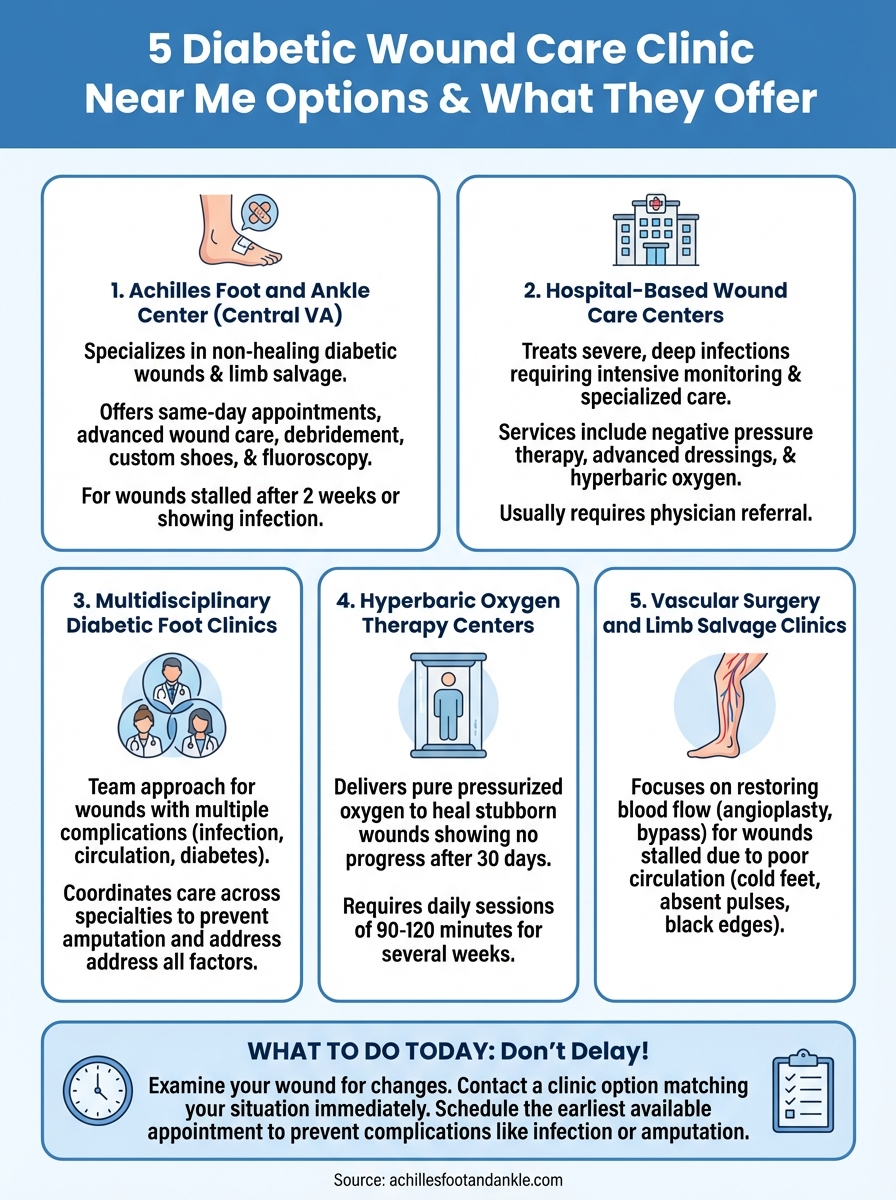
What to do today
Your diabetic wound needs professional attention now, not next week. Each day you wait increases your risk of infection and complications that can lead to hospitalization or worse outcomes. Start by examining your wound carefully and noting any changes in size, drainage, or surrounding skin that signal worsening infection.
Contact a diabetic wound care clinic near me option from this guide that matches your specific situation. Schedule your appointment for the earliest available time slot, and gather your medical records, insurance information, and a list of current medications before you go. Take photos of your wound to track healing progress once treatment begins.
You can schedule a same-day appointment at Achilles Foot and Ankle Center if you’re in Central Virginia and need immediate specialized care. Our Advanced Wound Care & Limb Salvage program has helped countless patients avoid amputation through early intervention and comprehensive treatment plans. Don’t let another day pass with an untreated diabetic wound.