
Noticing your parent’s ankles puffing up by evening or watching your own feet strain against your shoes can be unsettling. Elderly swollen feet causes range from simple factors like sitting too long to serious conditions that need prompt attention. The challenge is knowing which category your symptoms fall into.
Swelling in the feet and ankles, medically called edema, affects a significant portion of adults over 65. Sometimes it’s a temporary nuisance; other times, it signals heart, kidney, or vascular problems that require immediate care. Understanding the difference can genuinely impact your health outcomes.
At Achilles Foot and Ankle Center, our podiatrists evaluate and treat foot and ankle swelling across our Central Virginia locations every day. This guide covers the most common reasons seniors experience swollen feet, the warning signs that warrant a same-day visit, and practical strategies that actually help reduce discomfort and prevent complications.
Why swelling in seniors deserves attention
Your body handles fluid differently as you age. Blood vessels become less efficient, your heart may pump with less force, and your kidneys may process fluids more slowly. These changes mean that swelling often signals an underlying condition rather than just a normal part of getting older. What appears as harmless puffiness can actually be your body’s warning that something needs attention.
Age-related changes that increase risk
The natural aging process creates a perfect environment for fluid retention. Your venous valves weaken over time, making it harder for blood to flow back up from your feet to your heart against gravity. Muscle mass decreases with age, which reduces the natural pumping action your legs provide to move fluid upward. Your kidneys also become less efficient at regulating sodium and water balance, causing your body to hold onto excess fluid that pools in the lowest parts of your body.
Medications you take for other conditions can compound these issues. Calcium channel blockers for blood pressure, anti-inflammatory drugs, and certain diabetes medications all list swelling as a side effect. When you combine these medication effects with normal aging changes, you create a situation where elderly swollen feet causes multiply and overlap in ways that wouldn’t affect younger adults.
Even mild swelling that seems harmless can progress to serious complications if the underlying cause goes untreated.
The domino effect of untreated swelling
Ignoring persistent swelling sets off a chain reaction of problems. Stretched skin becomes fragile and prone to tears, which heal slowly in seniors and can easily become infected. Chronic swelling damages the tiny lymphatic vessels responsible for draining fluid, making future swelling worse and harder to control. Your mobility decreases as shoes become uncomfortable and walking grows difficult, which then reduces the muscle pumping action you need to prevent more swelling.
The complications extend beyond your feet. Decreased mobility leads to muscle weakness and falls, while chronic swelling can mask serious conditions like heart failure or blood clots until they reach dangerous stages. Your quality of life suffers as simple activities like grocery shopping or visiting family become physically challenging tasks you’d rather avoid.
Medical causes of swollen feet in older adults
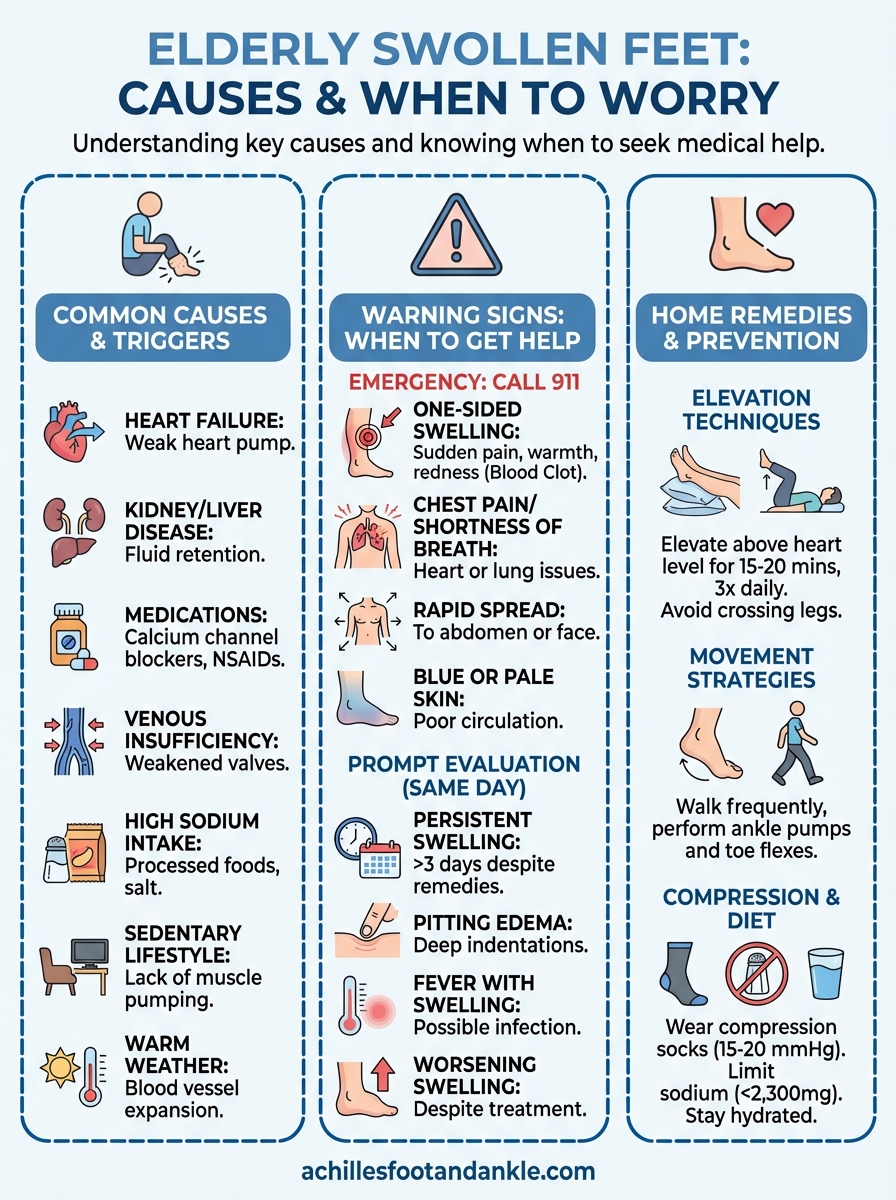
Your feet collect fluid when your body’s major organs struggle to regulate circulation and fluid balance. Heart failure tops the list of elderly swollen feet causes because your weakened heart can’t pump blood efficiently from your extremities back to your chest. Blood backs up in your legs and feet, forcing fluid into surrounding tissues. Congestive heart failure often shows up first as swelling that starts in your ankles and gradually moves up your calves as the condition worsens.
Heart and circulation problems
Your heart pumps roughly 2,000 gallons of blood daily, but cardiac conditions reduce this efficiency dramatically. When your heart weakens, blood pools in your lower extremities during the day and creates noticeable swelling by evening. Deep vein thrombosis presents differently than heart failure because it typically affects just one leg and comes with warmth, redness, and pain. This condition requires immediate medical attention since blood clots can travel to your lungs and become life-threatening.
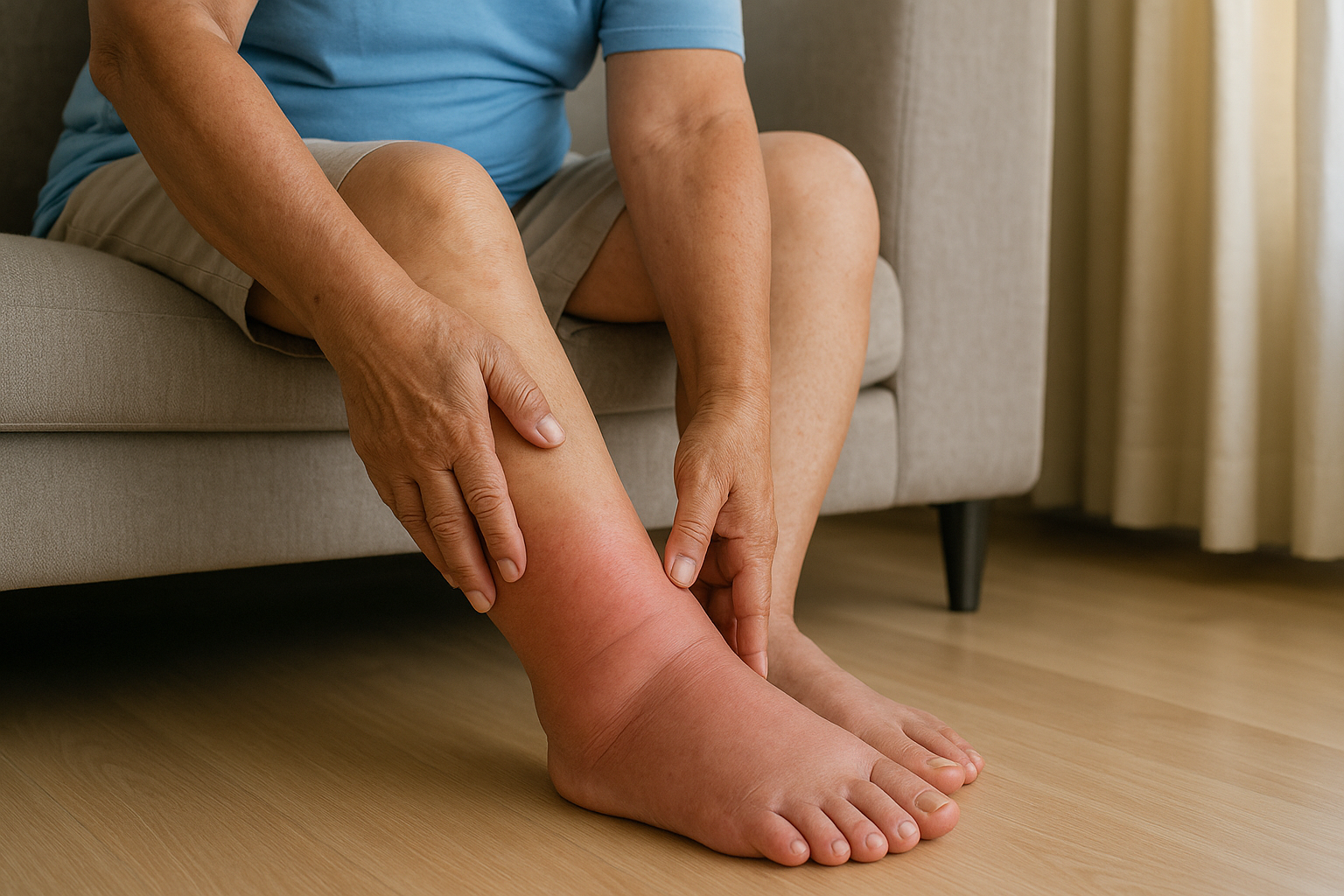
Heart-related swelling usually affects both feet equally, while blood clots typically cause one-sided swelling with distinct pain and warmth.
Kidney and liver dysfunction
Your kidneys filter about 50 gallons of blood each day, removing waste and balancing fluid levels. Kidney disease disrupts this balance, causing your body to retain sodium and water that settles in your feet and ankles. Liver disease creates swelling through a different mechanism by reducing protein production, which lowers the blood’s ability to hold onto fluid in your vessels. The fluid then leaks into surrounding tissues, creating persistent swelling that responds poorly to elevation alone.
Nonmedical triggers that can make swelling worse
Beyond medical conditions, your daily habits and environment play a substantial role in elderly swollen feet causes. What you eat, how you move, and even the temperature outside directly affect how much fluid accumulates in your lower legs. Understanding these triggers gives you practical ways to reduce swelling without medication or medical intervention.
Dietary habits and sodium intake
Your body holds onto water when you consume too much salt, and processed foods contain hidden sodium that quickly exceeds healthy limits. A single frozen dinner can pack 1,500 milligrams of sodium, nearly your entire daily recommended amount. Restaurant meals typically contain two to three times more salt than home-cooked versions of the same dishes, making your feet swell within hours of eating out.
Your fluid intake matters just as much as salt consumption. Drinking too little water paradoxically causes your body to retain fluid as a protective measure, while excessive alcohol consumption leads to dehydration and subsequent swelling. Coffee and tea act as mild diuretics that can help reduce swelling when consumed in moderation, but they worsen dehydration if they replace water in your diet.
What you eat for dinner tonight can determine whether your ankles fit comfortably in your shoes tomorrow morning.
Lifestyle factors and physical activity
Sitting for extended periods prevents your leg muscles from pumping fluid upward, allowing it to pool in your feet and ankles. Long car trips, airplane travel, and sedentary hobbies like television watching all contribute to significant swelling. Heat expands your blood vessels and increases fluid leakage into surrounding tissues, which explains why your feet swell more during summer months or in poorly ventilated spaces.
When to worry and get medical help
Your swelling tells a story about what’s happening inside your body, and certain patterns signal serious problems that need immediate attention. Most elderly swollen feet causes resolve with simple interventions, but specific symptoms indicate emergencies that can’t wait for a regular appointment. Knowing which warning signs demand urgent care can literally save your life or prevent permanent damage.
Emergency warning signs
Call 911 immediately if you experience chest pain, severe shortness of breath, or sudden swelling in one leg accompanied by warmth and pain. These symptoms suggest blood clots or heart failure requiring emergency treatment. Swelling that spreads rapidly into your abdomen or face indicates possible kidney or liver failure that needs hospital-level care. Your skin turning blue or extremely pale signals poor circulation that can lead to tissue death within hours.
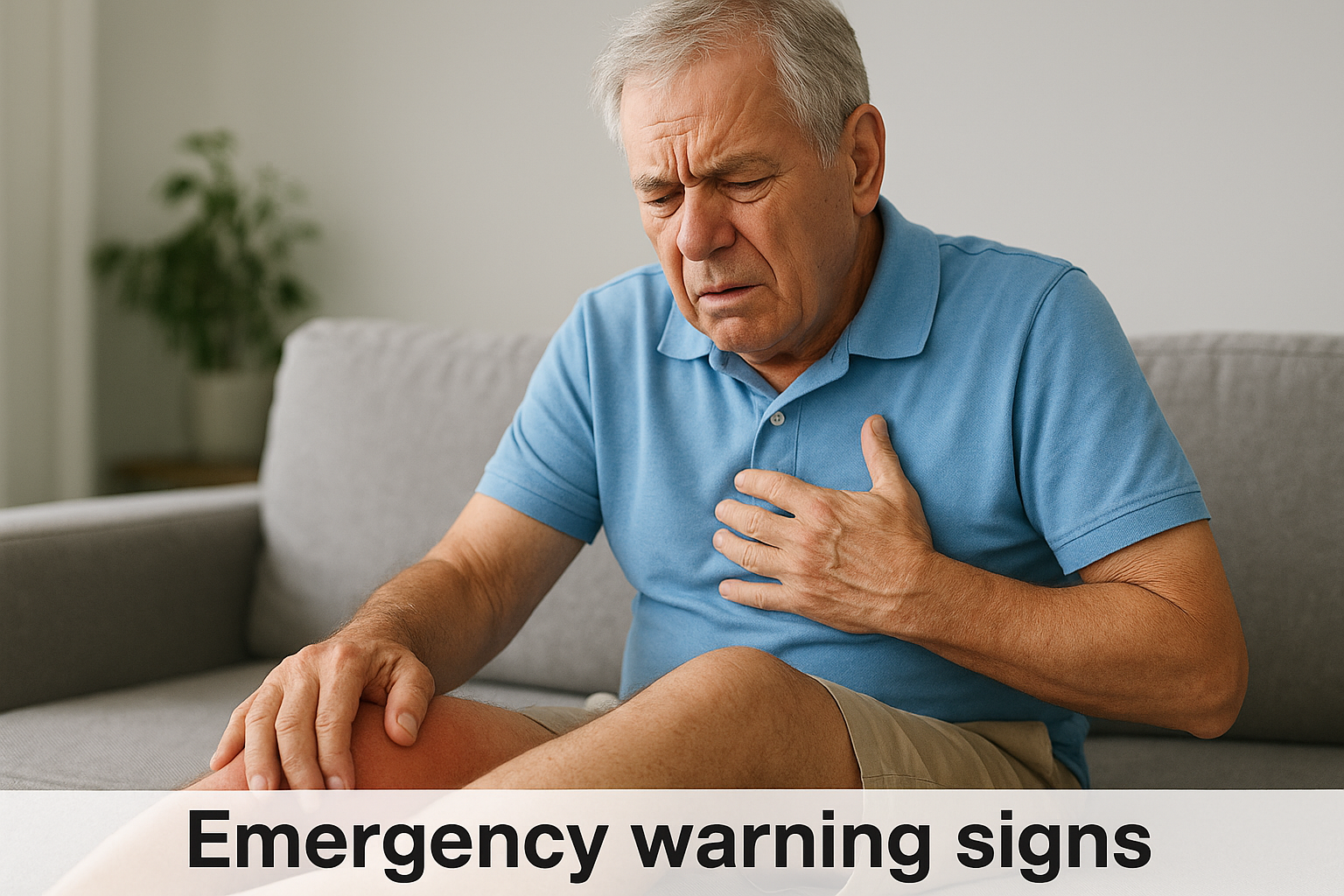
Sudden one-sided leg swelling with pain and warmth requires emergency evaluation for blood clots, which can travel to your lungs and become fatal.
Symptoms that need prompt evaluation
Schedule a same-day appointment if your swelling persists for more than three days despite home remedies like elevation and reduced salt intake. Swelling that leaves deep pits when you press your finger into your skin suggests fluid retention from heart, kidney, or medication issues. Contact your doctor if you develop fever with swelling, since this combination often indicates infection that can spread rapidly in seniors. Your swelling worsening despite following previous treatment recommendations also warrants immediate medical reassessment to adjust your care plan.
How to relieve swollen feet at home and prevent it
You can manage most elderly swollen feet causes effectively through consistent daily habits that target fluid accumulation. Simple interventions work best when you practice them regularly rather than waiting until severe swelling develops. The strategies below address both immediate relief and long-term prevention, giving you control over your comfort and mobility.
Simple elevation techniques
Elevate your feet above heart level for 15 to 20 minutes three times daily to encourage fluid drainage through gravity. Prop your legs on pillows while lying down, ensuring your ankles sit higher than your hips and heart. Avoid crossing your legs or ankles during elevation since this position restricts blood flow and defeats the purpose of the exercise. You’ll notice the most dramatic reduction in swelling if you elevate your feet in the morning, mid-afternoon, and before bed.
Consistent daily elevation prevents fluid from accumulating rather than just treating swelling after it appears.
Movement and compression strategies
Walking for 10 to 15 minutes every two hours activates your calf muscles, which pump fluid upward from your feet naturally. Simple ankle circles and toe flexes while sitting provide similar benefits when walking isn’t possible. Compression socks rated 15 to 20 mmHg support fluid movement without being uncomfortably tight for most seniors. Put these socks on first thing in the morning before swelling starts, and remove them before bed to allow your skin to breathe overnight.
Reduce your sodium intake to less than 2,300 milligrams daily by choosing fresh foods over processed options. Drink six to eight glasses of water throughout the day to help your kidneys flush excess sodium from your system efficiently.
What to do next
Understanding elderly swollen feet causes puts you in control of your foot health and helps you recognize when professional care becomes necessary. Start by implementing the elevation and movement strategies outlined above, and track how your swelling responds over the next week. Keep a simple log noting when your swelling appears worst and which activities seem to trigger it.
Contact your doctor if home remedies don’t reduce your swelling within three days or if you notice any warning signs discussed earlier. Your symptoms deserve professional evaluation to rule out serious conditions and develop a treatment plan tailored to your specific situation.
Our podiatrists at Achilles Foot and Ankle Center evaluate foot and ankle swelling across thirteen Central Virginia locations. We offer comprehensive diagnostic testing to identify the underlying cause of your swelling and create targeted treatment plans. Schedule a same-day appointment if your swelling concerns you or interferes with your daily activities.