

When you’re considering total ankle replacement surgery, one question rises above the rest: how long does an ankle replacement last? It’s a fair concern. You’re weighing a significant procedure against years of chronic pain or limited mobility, and you deserve a clear answer before moving forward. The good news is that modern ankle implants have come a long way, with current data showing 80-90% of replacements functioning well at the 10-year mark.
But that number tells only part of the story. Your implant’s actual lifespan depends on several factors, your activity level, body weight, bone quality, and how well you follow post-surgical guidelines. Some patients see their ankle replacement last 15 to 20 years or longer, while others may need a revision sooner.
At Achilles Foot and Ankle Center, our surgeons perform ankle replacement procedures at Central Virginia’s only Foot and Ankle Ambulatory Surgery Center. We’ve guided hundreds of patients through this decision, helping them understand what realistic expectations look like for their specific situation. This article breaks down the factors that influence implant longevity, what the research actually shows, and how to maximize the life of your replacement.
What a total ankle replacement is and what it replaces
Total ankle replacement (TAR) is a surgical procedure that removes damaged portions of your ankle joint and replaces them with artificial components. Your surgeon takes out the worn cartilage and bone surfaces in your tibiotalar joint (where your shin bone meets your talus bone) and substitutes them with metal and polyethylene implants that glide against each other. This recreates the natural up-and-down motion your ankle needs for walking, climbing stairs, and other daily activities. The procedure addresses severe arthritis that hasn’t responded to conservative treatments like bracing, injections, or physical therapy.
The components of the implant system
Your ankle replacement consists of three main components that work together to restore joint function. The tibial component attaches to the bottom of your tibia (shinbone) with a stem that extends into the bone canal. A polyethylene bearing sits between the tibial and talar components, acting as the new cartilage surface. The talar component caps the top of your talus bone, creating a smooth gliding surface. Modern implants use materials like cobalt-chromium alloy or titanium for the metal parts, while the plastic bearing uses ultra-high-molecular-weight polyethylene designed to withstand millions of cycles of motion.
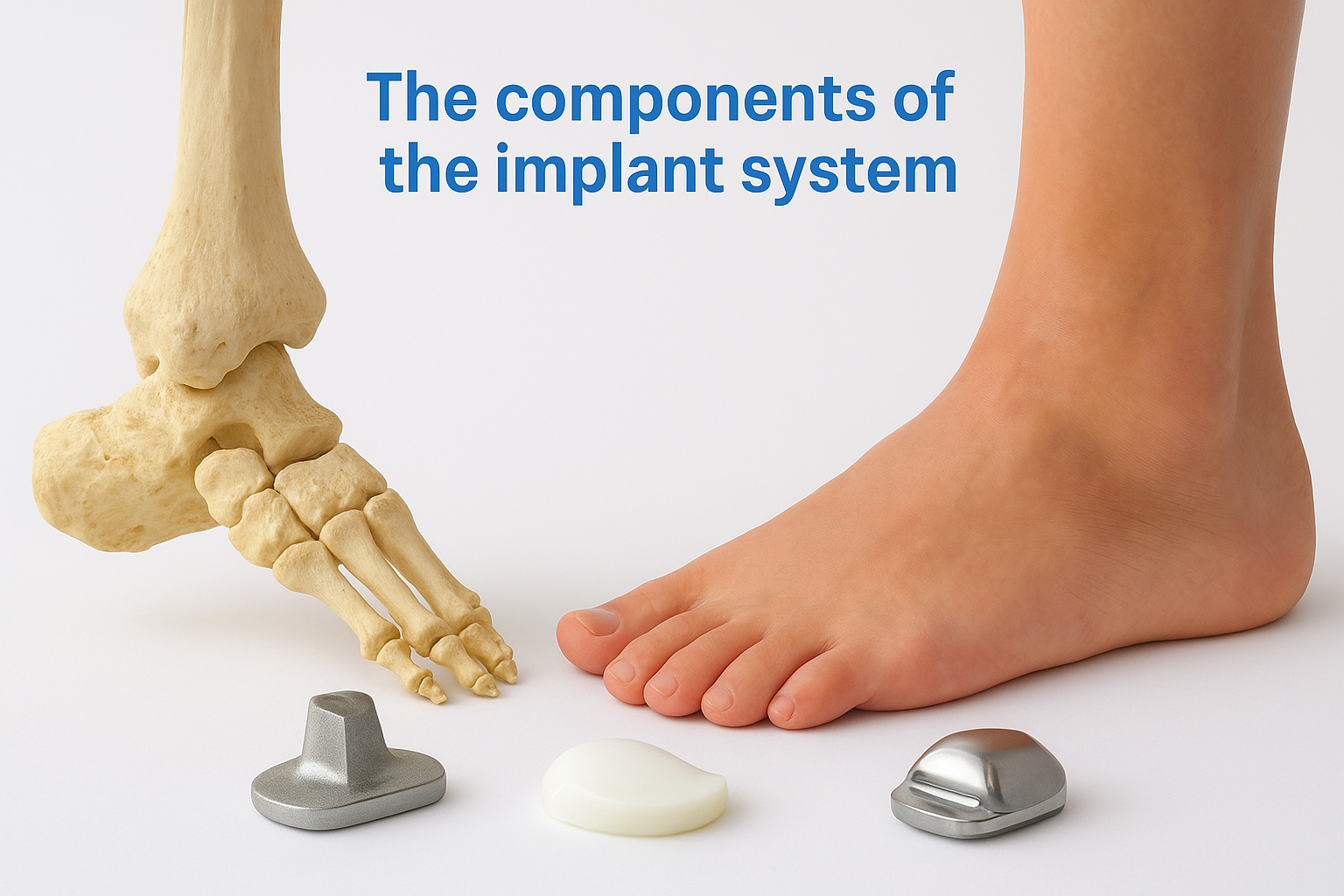
"The artificial components mirror the natural anatomy of your ankle, preserving motion while eliminating bone-on-bone contact that causes pain."
What gets removed and why
During the procedure, your surgeon removes several millimeters of damaged bone from both the tibia and talus. This includes all the worn cartilage that once cushioned your joint, plus any bone spurs or deformed areas that developed from arthritis. The removal creates flat, prepared surfaces that accept the implant components. Your surgeon preserves as much healthy bone as possible while ensuring proper alignment and fit. Unlike joint replacements in other areas, ankle replacement also maintains the surrounding ligaments and soft tissues that stabilize your ankle, which helps the implant function naturally with your body’s mechanics.
How it differs from ankle fusion
Ankle fusion (arthrodesis) eliminates your ankle joint entirely by permanently joining the tibia and talus bones together. While fusion stops pain by preventing movement, it also restricts your ability to walk on uneven surfaces and places extra stress on surrounding joints. Replacement surgery takes a different approach: it preserves motion at your ankle joint while eliminating the arthritis pain. You maintain a more natural gait pattern, which reduces wear on your midfoot, hindfoot, and knee. Understanding how long does an ankle replacement last compared to fusion outcomes helps you choose the right procedure. Fusion is permanent but limits function, while replacement offers mobility with the trade-off of potential future revision if the implant wears out.
Typical lifespan and survival rates
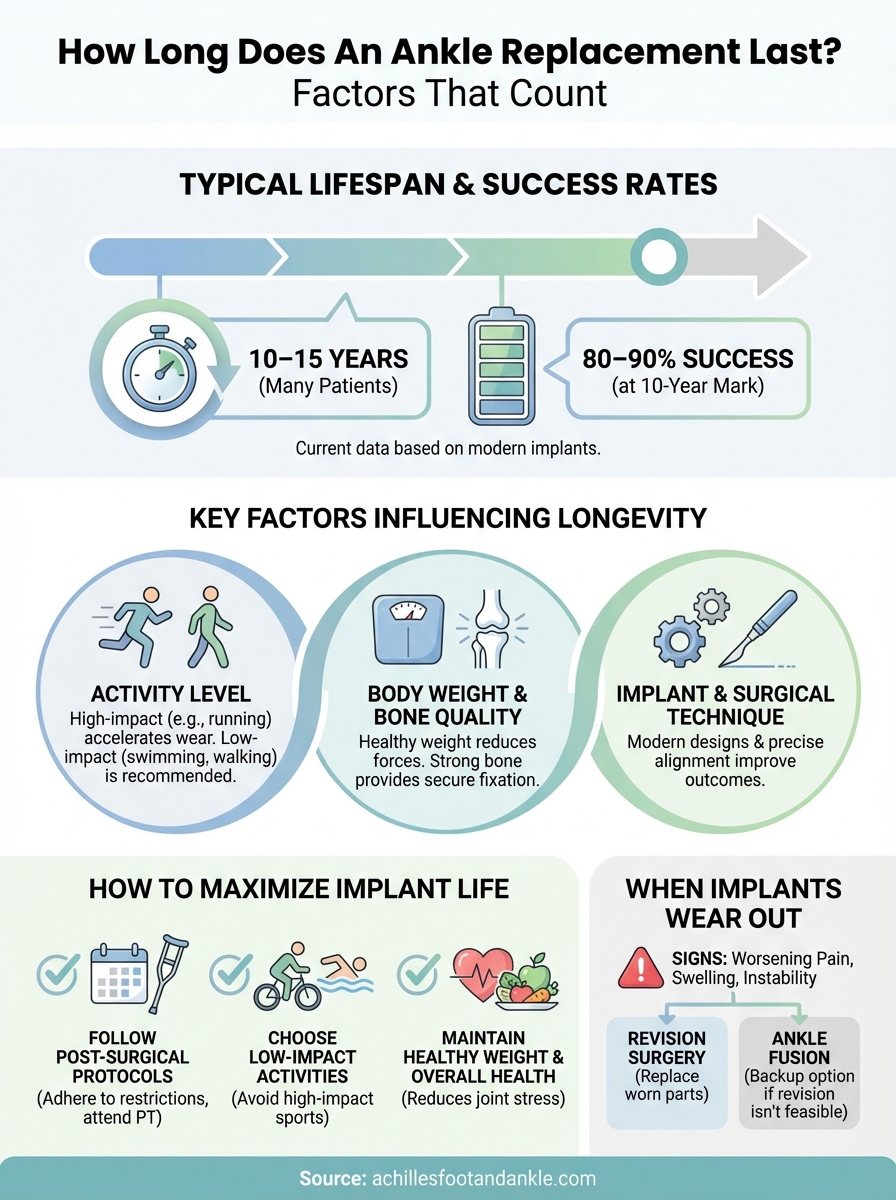
The question of how long does an ankle replacement last has a data-driven answer based on thousands of procedures tracked over decades. Modern ankle implants show impressive longevity, with most patients experiencing pain-free function for 10 to 15 years or longer. These numbers come from registry studies that follow patients after surgery, measuring when implants remain in place and functioning versus when they require revision. Your individual results depend on multiple variables, but the overall statistics give you a realistic baseline for expectations.
What the research shows
Current studies report that 80 to 90 percent of ankle replacements survive beyond 10 years without needing revision surgery. At the five-year mark, survival rates climb even higher, typically reaching 90 to 95 percent. Some research indicates that well-designed implants can function for 15 to 20 years in many patients, particularly those who maintain healthy body weight and avoid high-impact activities. These figures have improved significantly over the past two decades as implant designs evolved and surgical techniques became more refined.

"Third-generation ankle implants demonstrate survival rates that now rival hip and knee replacements in certain patient populations."
Registry data from countries with comprehensive tracking systems shows that younger, more active patients face higher revision rates than older, less active individuals. If you receive an ankle replacement in your 50s or 60s, your implant may outlast your most active years. Patients who undergo the procedure in their 40s or earlier should expect a possible revision surgery later in life as the implant components wear out.
How survival rates are measured
When researchers talk about survival rates, they mean the percentage of implants still in place and functioning at a specific time point after surgery. A failed implant doesn’t necessarily mean catastrophic breakdown. It means the device required removal or revision due to loosening, wear, infection, or pain that returns. The statistics exclude patients who need revision for reasons unrelated to the implant itself, like new trauma from an accident. Understanding this definition helps you interpret what a 90 percent survival rate actually means: nine out of ten patients keep their original implant working well for at least a decade.
What affects how long an ankle replacement lasts
Multiple factors determine whether your ankle replacement reaches the 10-year mark or requires earlier revision. Some variables you can control through lifestyle choices, while others depend on your body’s natural characteristics or the technical aspects of your surgery. Understanding these influences helps you set realistic expectations and take steps to maximize your implant’s functional life. The answer to how long does an ankle replacement last isn’t universal because each patient brings a unique combination of these elements to their recovery.
Your activity level and body mechanics
High-impact activities place excessive stress on your implant components. Running, jumping, or participating in contact sports accelerates polyethylene wear and increases the risk of loosening at the bone-implant interface. Your surgeon will recommend low-impact exercises like swimming, cycling, or walking instead. The way you walk also matters. If you have a significant limp or abnormal gait pattern, uneven loading can cause premature failure on one side of the implant. Physical therapy that corrects these patterns protects your investment.
"Every step you take creates forces that either preserve or degrade your implant, making daily movement choices critical to longevity."
Body weight and bone quality
Carrying excess weight increases the forces transmitted through your ankle joint with every step. Patients who maintain a healthy body mass index see better implant survival rates because lower loads mean less wear on the plastic bearing surface. Your bone density and quality also play a role. Strong, healthy bone provides secure fixation for the metal components, while osteoporotic or weakened bone increases the risk of subsidence (the implant sinking into softer bone). Conditions like diabetes or rheumatoid arthritis that affect bone healing can compromise long-term stability.
Implant design and surgical technique
Newer implant designs with improved bearing surfaces and fixation methods demonstrate better survival rates than older models. Your surgeon’s experience level affects outcomes too. Precise alignment during surgery ensures proper weight distribution across the joint, while technical errors like misalignment or component malposition lead to earlier failure. The choice between cemented and uncemented fixation also influences longevity, with each approach offering advantages depending on your bone quality and activity demands.
How to make an ankle replacement last longer
Taking active steps to protect your implant significantly extends its functional life. While the answer to how long does an ankle replacement last depends partly on factors beyond your control, your daily choices and habits play a substantial role in reaching or exceeding that 10 to 15-year benchmark. The strategies below focus on practical actions you can implement immediately after surgery and maintain throughout your implant’s lifetime. Following these guidelines reduces wear on your artificial joint and minimizes the risk of complications that lead to early revision.
Follow post-surgical protocols carefully
Your surgeon provides specific instructions for the weeks and months following your procedure. Adhering to weight-bearing restrictions during the initial healing phase prevents loosening or displacement of the implant components before bone grows into the metal surfaces. Attending all scheduled physical therapy sessions strengthens the muscles around your ankle, which stabilizes the joint and reduces stress on the implant itself. Skipping therapy or pushing too hard too soon compromises your long-term outcome.
"The first 12 weeks after surgery set the foundation for decades of implant function, making patience during recovery your most valuable asset."
Choose the right activities
Low-impact exercise preserves your implant while keeping you active and healthy. Swimming, cycling, elliptical training, and walking provide cardiovascular benefits without subjecting your ankle to excessive forces. Golf and doubles tennis typically work well once you’ve fully recovered. You should avoid high-impact activities like running, basketball, or activities requiring jumping. Your ankle can handle normal daily activities including stairs, uneven terrain, and moderate hiking, but extreme sports or heavy lifting place loads that accelerate component wear.
Monitor your weight and overall health
Maintaining a healthy body weight directly reduces the forces transmitted through your ankle with each step. Extra pounds mean extra wear on the polyethylene bearing surface. Managing conditions like diabetes through proper medication and blood sugar control ensures optimal bone health and healing capacity, which keeps your implant securely fixed in place. Regular follow-up appointments with your surgeon catch potential problems early, before they require major intervention.
When implants wear out and revision options
Even well-functioning ankle replacements eventually reach the end of their usable life. The components experience gradual wear from millions of steps over years or decades, particularly the polyethylene bearing that sits between the metal pieces. Knowing what to watch for and understanding your options when problems arise helps you make informed decisions about your care. The reality of how long does an ankle replacement last means most patients who receive the procedure in their 50s or younger should anticipate the possibility of revision surgery at some point in their lifetime.
Signs your implant needs attention
Pain that returns or worsens signals a potential problem with your implant. You might notice swelling, stiffness, or instability that wasn’t present during your successful recovery period. Difficulty walking or bearing weight often indicates loosening of the components from the bone. Your surgeon uses X-rays and clinical examination to determine whether the bearing has worn through, the implant has shifted position, or infection has developed around the hardware. Catching these issues early improves your revision options and outcomes.
"New pain after years of comfortable function deserves immediate evaluation, not a wait-and-see approach that risks bone loss or infection."
What revision surgery involves
Revision replaces the worn or failed components with new implants. Your surgeon removes the old hardware, addresses any bone loss or damage, and installs revised components designed for second procedures. The operation typically takes longer than your initial replacement because removing well-fixed implants requires careful work to preserve remaining bone. Recovery mirrors your first surgery, with protected weight-bearing and physical therapy. Some patients need bone grafting if significant bone stock has been lost since the original procedure.
Alternatives when revision isn’t feasible
Patients with extensive bone loss or failed revisions may not qualify for another replacement. Ankle fusion remains a reliable backup option that eliminates pain by permanently joining the ankle bones together. You lose motion at that joint, but the procedure provides stability and pain relief. Some surgeons use custom implants or specialized techniques for complex revisions, though these approaches require specific expertise that limits where you can have them performed.
Next steps for your ankle pain
Understanding how long does an ankle replacement last helps you make an informed decision about your treatment path. If chronic ankle arthritis limits your daily activities, you don’t need to accept pain as permanent. Modern ankle replacement offers predictable outcomes with proper patient selection and post-surgical care. Statistics show most implants function well for a decade or longer, giving you years of improved mobility and reduced pain that makes the procedure worthwhile.
Your individual situation determines whether ankle replacement makes sense now or if other treatments should come first. Diagnostic imaging, physical examination, and discussion of your activity goals give our surgeons the information needed to recommend the best approach. Some patients benefit from trying conservative options first, while others have reached the point where surgery offers the most effective relief.
Schedule a same-day appointment at Achilles Foot and Ankle Center to explore your options. Our team evaluates ankle pain at multiple Central Virginia locations, helping you understand whether replacement, fusion, or conservative treatment fits your lifestyle and health goals.