You bought new shoes, laced them up, and within an hour your heels are raw. Sound familiar? Figuring out how to break in new shoes without blisters is one of those problems that seems minor, until you’re limping through your day with painful friction wounds on your feet.
Blisters form when repeated rubbing separates layers of skin, and stiff new footwear is one of the most common culprits. At Achilles Foot and Ankle Center, our podiatrists across Central Virginia treat blister complications more often than you’d think, from infections in diabetic patients to gait changes caused by people avoiding pressure on tender, damaged skin.
The good news: a little strategy goes a long way. Below, we’ve pulled together six podiatry-backed tips to soften up new shoes, protect your skin during the break-in window, and keep blisters from forming in the first place. No gimmicks, just practical methods that actually work.
1. Get a podiatrist fit check before you force it
Most people skip this step entirely, but poor fit is the single biggest cause of blisters in new shoes. Before you try any other tip for how to break in new shoes without blisters, confirm the shoes actually fit your feet correctly. A podiatrist fit assessment catches sizing problems, width mismatches, and structural incompatibilities that no amount of breaking in will fix.
What to do
Visit a podiatrist or a specialty shoe store where trained staff can measure both foot length and width while you are standing, not sitting. Feet spread under body weight, so a standing measurement gives you the most accurate size. Bring the type of socks you plan to wear with the shoes, and try both shoes on, since most people have one foot slightly larger than the other.
Walk around for at least five minutes before deciding. Pay attention to any pressure points, pinching, or heel slippage during that short test walk. These sensations will only intensify with longer wear, so if you feel discomfort in the store, the shoe is wrong for your foot.
Why it prevents blisters
Shoes that are too narrow create constant pressure on the sides of your toes, and shoes that are too long let your foot slide forward and collide with the toe box on each step. Both scenarios produce repetitive friction that strips away the upper layers of skin. A correct fit means the shoe contacts your foot evenly, with no concentrated pressure points that can develop into open blisters.
A shoe that fits well from the start dramatically shortens the break-in period and lowers your blister risk.
Quick checklist
Use this before you buy any new pair:
- One thumb’s width of space between your longest toe and the front of the shoe
- No pinching across the widest part of your foot
- Heel sits firmly in the cup without lifting when you walk
- Arch support lines up with your actual arch position
- Both shoes feel equally comfortable from step one
When to get medical help
If you notice numbness, tingling, or persistent redness after even a brief fitting session, do not assume the shoe will stretch into comfort. These are signs the shoe is compressing nerves or restricting blood flow.
Patients with diabetes or peripheral neuropathy face a higher risk because reduced sensation can hide serious skin damage that progresses quickly to infection. Book an appointment with a podiatrist before attempting to wear those shoes again.
2. Use short wear sessions and a ramp-up plan
Even a well-fitted shoe needs time to conform to your foot’s unique shape. Jumping into a full day of wear with brand-new footwear is a reliable way to end up with blisters. A structured ramp-up plan is one of the most effective strategies for how to break in new shoes without blisters.
What to do
Start by wearing your new shoes for 30 to 45 minutes on the first day, ideally at home where you can remove them quickly if discomfort builds. Add 20 to 30 minutes each subsequent day until you reach a full day of comfortable wear. Track how your feet feel after each session, and alternate with a trusted pair to give your skin recovery time.
Why it prevents blisters
Your skin needs time to toughen gradually at friction points. Short sessions apply limited stress, which lets the shoe material soften slightly while your skin builds tolerance without breaking down. Jumping straight into a long walk gives no recovery window, and raw skin has no chance to adapt before the next round of friction hits.
Gradual exposure is how your feet and your shoes learn to work together without damage.
Quick checklist
- Wear new shoes for no more than 45 minutes on day one
- Increase wear time by 20 to 30 minutes each day
- Alternate with a trusted pair to allow skin recovery between sessions
- Stop immediately if you feel heat or sharp pressure in any spot
When to get medical help
If your feet develop persistent redness or open skin even during short sessions, see a podiatrist. Recurring blisters in the same location may signal an underlying structural issue like a bunion or hammertoe that needs professional evaluation before you continue wearing those shoes.
3. Protect hotspots before they turn into blisters
Knowing where your feet tend to rub is half the battle when figuring out how to break in new shoes without blisters. Before you take a single step in new footwear, pre-treating common friction zones gives your skin a physical barrier that intercepts damage before it starts.
What to do
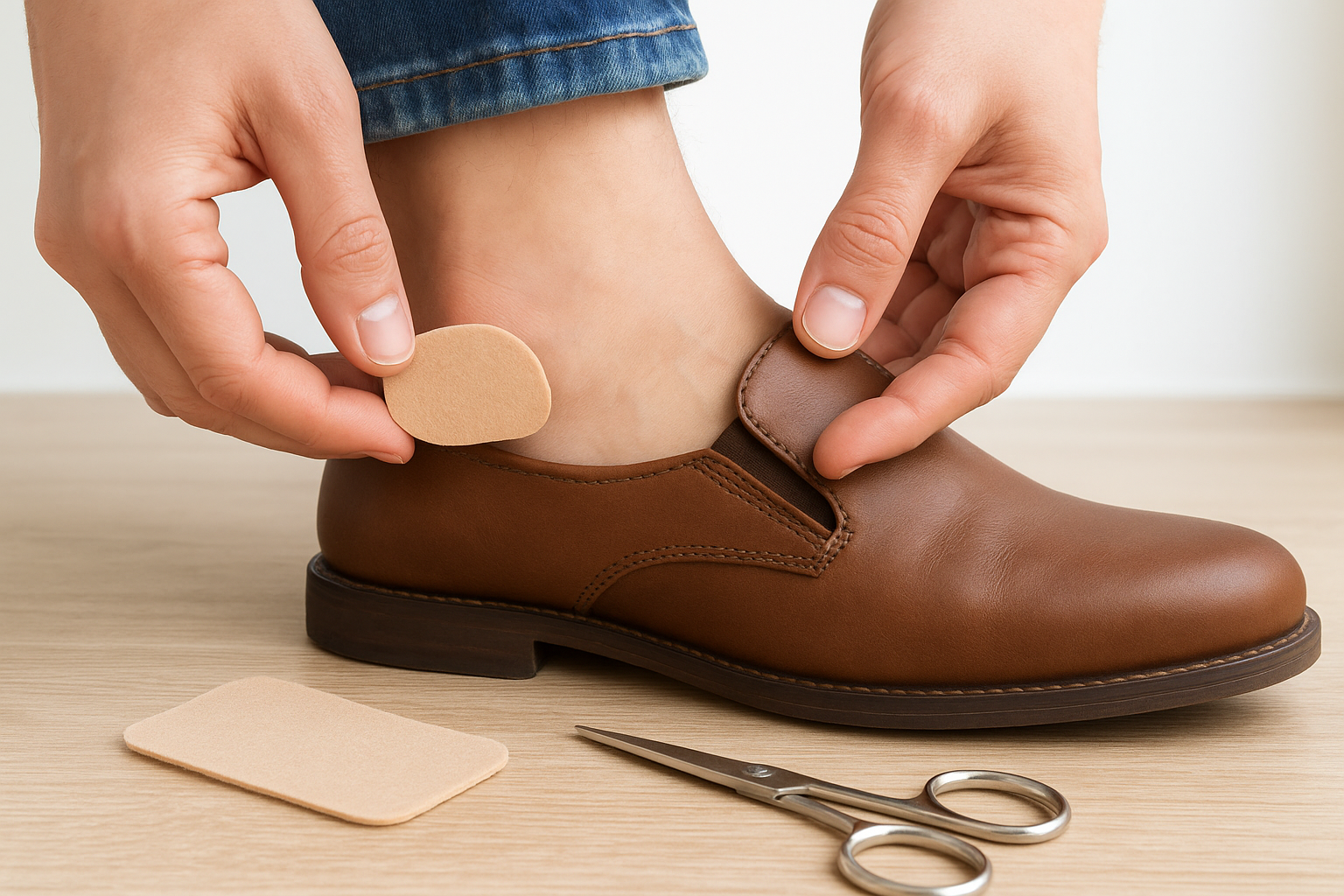
Apply moleskin padding or blister prevention balm to areas that typically rub first: the back of the heel, the sides of the big toe joint, and the tops of any prominent toe knuckles. You can find moleskin at most pharmacies and cut it to size with scissors. Blister balms and anti-friction sticks reduce surface drag directly on the skin and work well when combined with padding on higher-risk spots.
Protecting hotspots before you feel any pain is far easier than treating a blister that has already formed.
Why it prevents blisters
Padding creates a cushioned buffer between your skin and the stiff shoe material, so friction spreads across a wider surface instead of concentrating on one small area. Balms reduce the coefficient of friction between skin and shoe lining, which means less shear force reaches the skin layers that separate and fill with fluid.
Quick checklist
- Apply blister balm or moleskin to heel, toe joints, and little toe edges before wearing
- Replace padding if it shifts or peels during wear
- Reapply balm during long wear sessions as needed
When to get medical help
If a hotspot develops repeated blisters in the same location despite protection, that pattern points to an underlying pressure issue. A podiatrist can evaluate whether a structural foot condition is driving the problem and recommend custom orthotics or corrective footwear.
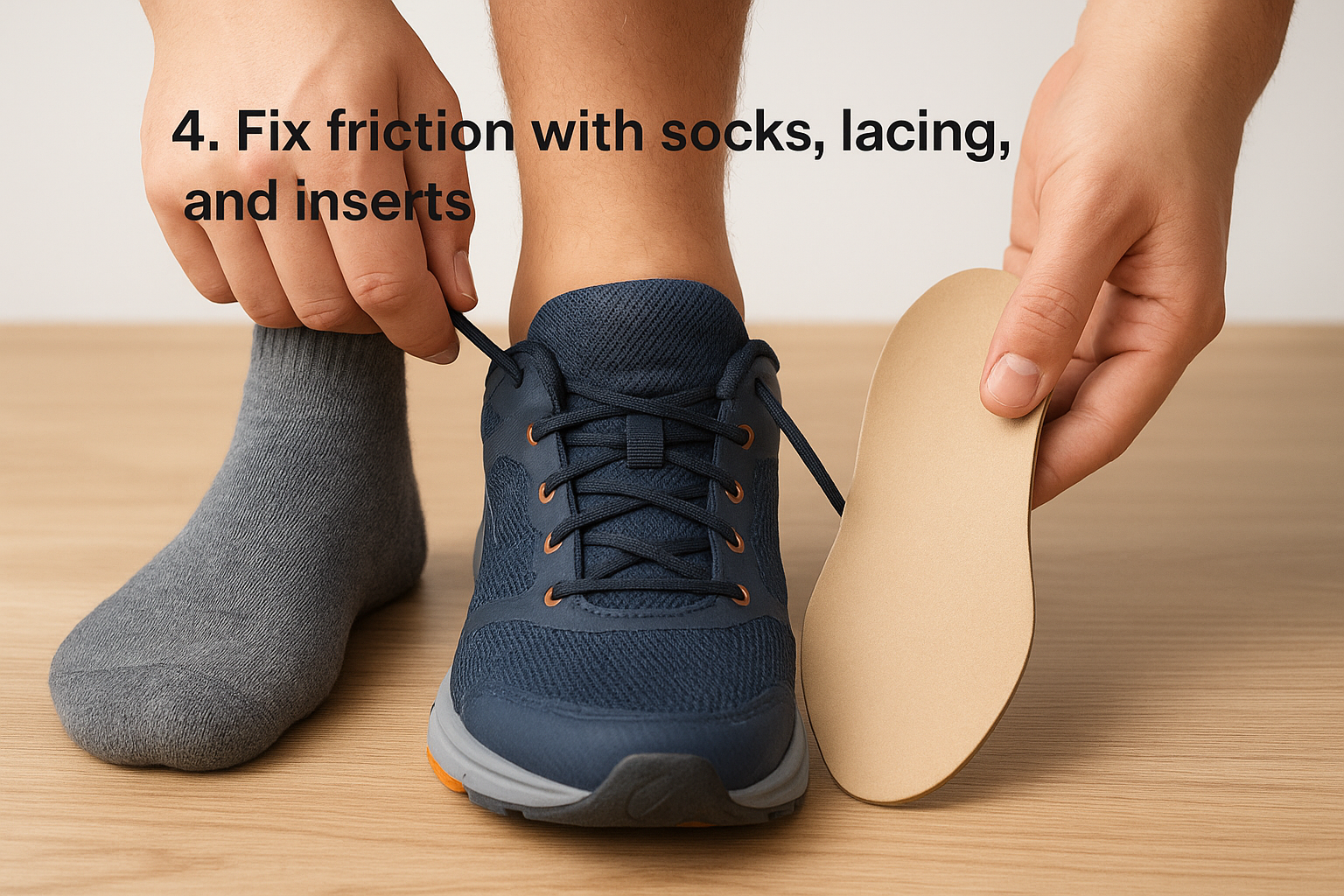
4. Fix friction with socks, lacing, and inserts
Three variables you control completely are your socks, your lacing pattern, and any inserts you add to the shoe. Adjusting all three before you start wearing new footwear is a straightforward approach to how to break in new shoes without blisters that costs very little effort.
What to do
Choose moisture-wicking socks made from merino wool or synthetic blends rather than cotton. Cotton absorbs sweat and stays wet, which softens skin and makes it far more vulnerable to friction damage. Double-layer socks add a second surface that slides against itself instead of against your skin, cutting shear force significantly.
For lacing, try a heel-lock technique by threading the lace through the top two eyelets to form a loop on each side, then crossing through both loops before tying. This anchors your heel and stops it from lifting and rubbing. Adding a thin aftermarket insole can also lift your foot slightly and redistribute pressure away from the areas the shoe material contacts most aggressively.
Small changes to socks and lacing often eliminate friction faster than any product applied directly to the shoe.
Why it prevents blisters
Moisture increases skin friction dramatically, which is why wet feet blister faster than dry ones. Proper socks keep the skin surface drier, and a stable heel reduces the back-and-forth sliding that strips away skin tissue over time.
Quick checklist
- Wear moisture-wicking socks every time you put on new shoes
- Use a heel-lock lacing pattern to secure the heel
- Add a thin insole if the factory footbed leaves pressure gaps
When to get medical help
If you consistently blister at the heel despite heel-lock lacing and proper socks, a podiatrist can check for Haglund’s deformity or Achilles tendon issues that change how your heel sits inside footwear.
5. Stretch tight spots safely and know when to stop
When a shoe fits well overall but pinches in one specific spot, targeted stretching can fix the problem without ruining the shoe’s structure. This approach to how to break in new shoes without blisters works best when you apply steady, controlled pressure rather than trying to force the material to expand quickly.
What to do
Pick up a handheld shoe stretcher at a shoe repair shop or online retailer and insert it into the tight area overnight. For leather shoes, apply a small amount of leather conditioner to the exterior of the pinch point first so the material softens and expands without cracking. For canvas or synthetic shoes, wearing them around the house with thick socks for short sessions achieves the same gradual stretch.
Forcing rapid expansion tears the shoe material and often creates new pressure points that are worse than the original problem.
Why it prevents blisters
A tight spot directs all of the shoe’s resistance onto a small patch of skin, producing intense friction with every step. Stretching spreads that resistance over a larger surface, so no single area takes enough force to separate skin layers and form a blister.
Quick checklist
Staying consistent with these steps keeps the process safe and effective:
- Use a shoe stretcher rather than forcing the material by hand
- Apply leather conditioner before stretching leather shoes
- Work in multiple short sessions rather than one aggressive stretch
When to get medical help
If the same area keeps rubbing despite stretching, book an appointment with a podiatrist. Structural conditions like a tailor’s bunion or hammertoe can drive persistent tightness that no amount of stretching will resolve on its own.
Your next step
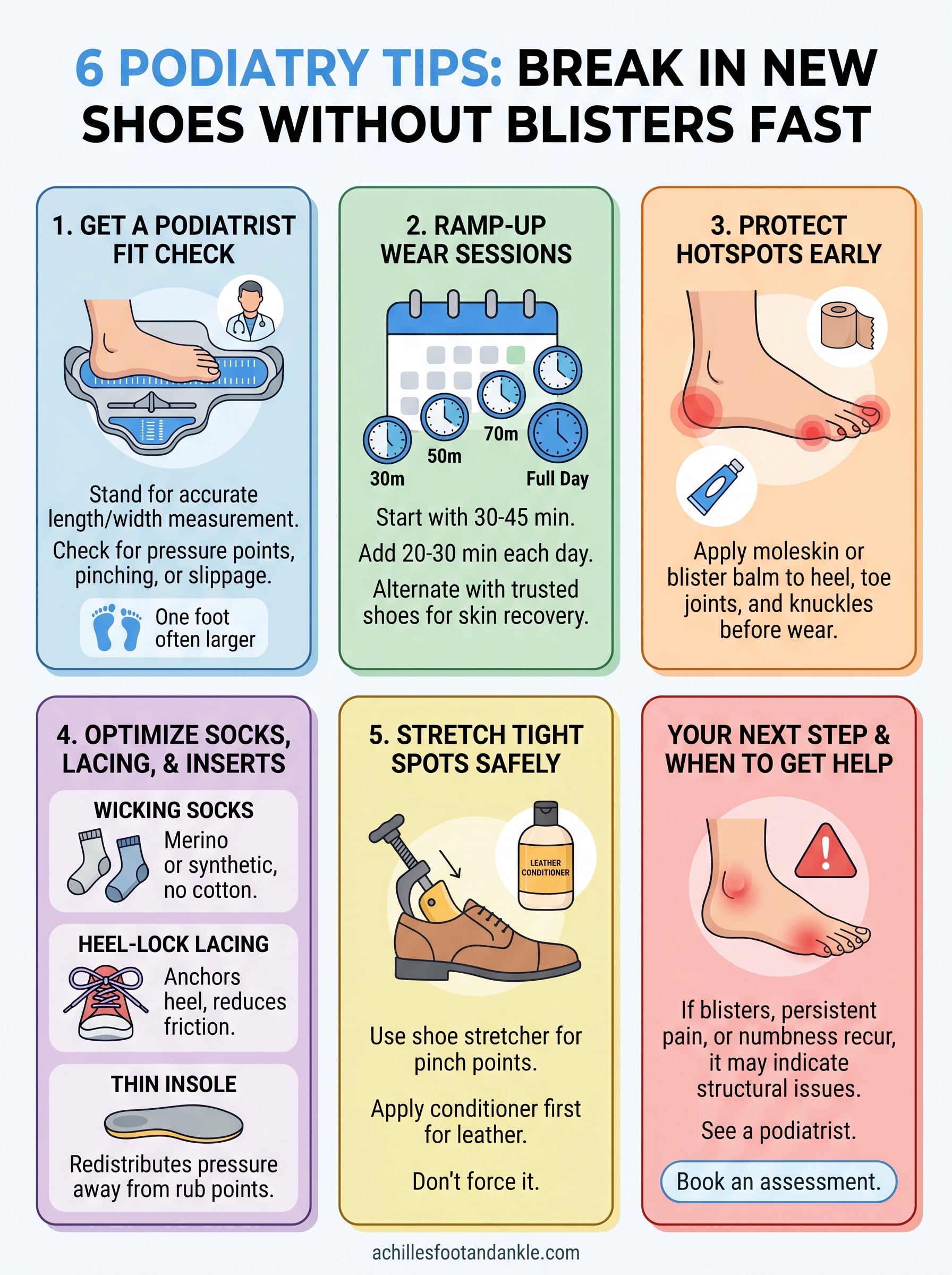
The six tips above give you a complete system for how to break in new shoes without blisters without guesswork. Start with a proper fit check, ramp up wear time gradually, protect your hotspots early, dial in your socks and lacing, and stretch only what needs stretching. Most blisters are preventable when you treat the cause rather than waiting for the damage to appear.
If you follow these steps and still develop recurring blisters, persistent pain, or skin that breaks down quickly, your feet are telling you something more is going on. Conditions like bunions, hammertoes, or diabetic foot complications need a professional evaluation before they turn into a bigger problem. The podiatrists at Achilles Foot and Ankle Center across Central Virginia are ready to help. Book a same-day appointment and get your feet assessed by a specialist who can give you a real answer.