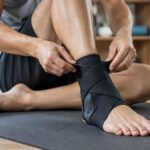
You felt it halfway through your run, a sharp, nagging ache right through the arch that forced you to stop and walk home. Runner foot arch pain is one of the most common complaints we see at Achilles Foot and Ankle Center, and it’s also one of the most undertreated. Too many runners push through it, adjust their stride awkwardly, or just take a few days off and hope it resolves. That approach almost always makes the underlying problem worse.
The arch of your foot absorbs and distributes force with every stride. When something disrupts that process, whether it’s a structural issue, overuse, or the wrong pair of shoes, pain follows. The good news is that most causes of arch pain in runners are treatable without surgery, especially when identified early. Our podiatrists across thirteen Central Virginia locations work with runners at every level, from weekend joggers to competitive athletes, to diagnose exactly what’s going on and build a recovery plan that actually holds up.
This article breaks down the most common causes of arch pain in runners, the treatments that work, and the steps you can take to prevent it from coming back. Whether you’re dealing with a fresh flare-up or a problem that’s been lingering for months, you’ll walk away with a clear understanding of your options and when it’s time to see a specialist.
What causes arch pain in runners
Runner foot arch pain rarely comes from a single source. The arch is a complex structure built from tendons, ligaments, muscles, and bones working together under significant load. When you run, each foot strike sends a force through your arch equal to two to three times your body weight, and doing that thousands of times per mile leaves little margin for error. Identifying the specific cause matters because the treatment for one condition can be entirely wrong for another.
Getting the diagnosis right from the start is the most important step. Treating plantar fasciitis like a stress fracture, or vice versa, delays recovery and risks turning a manageable injury into a chronic one.
Plantar fasciitis
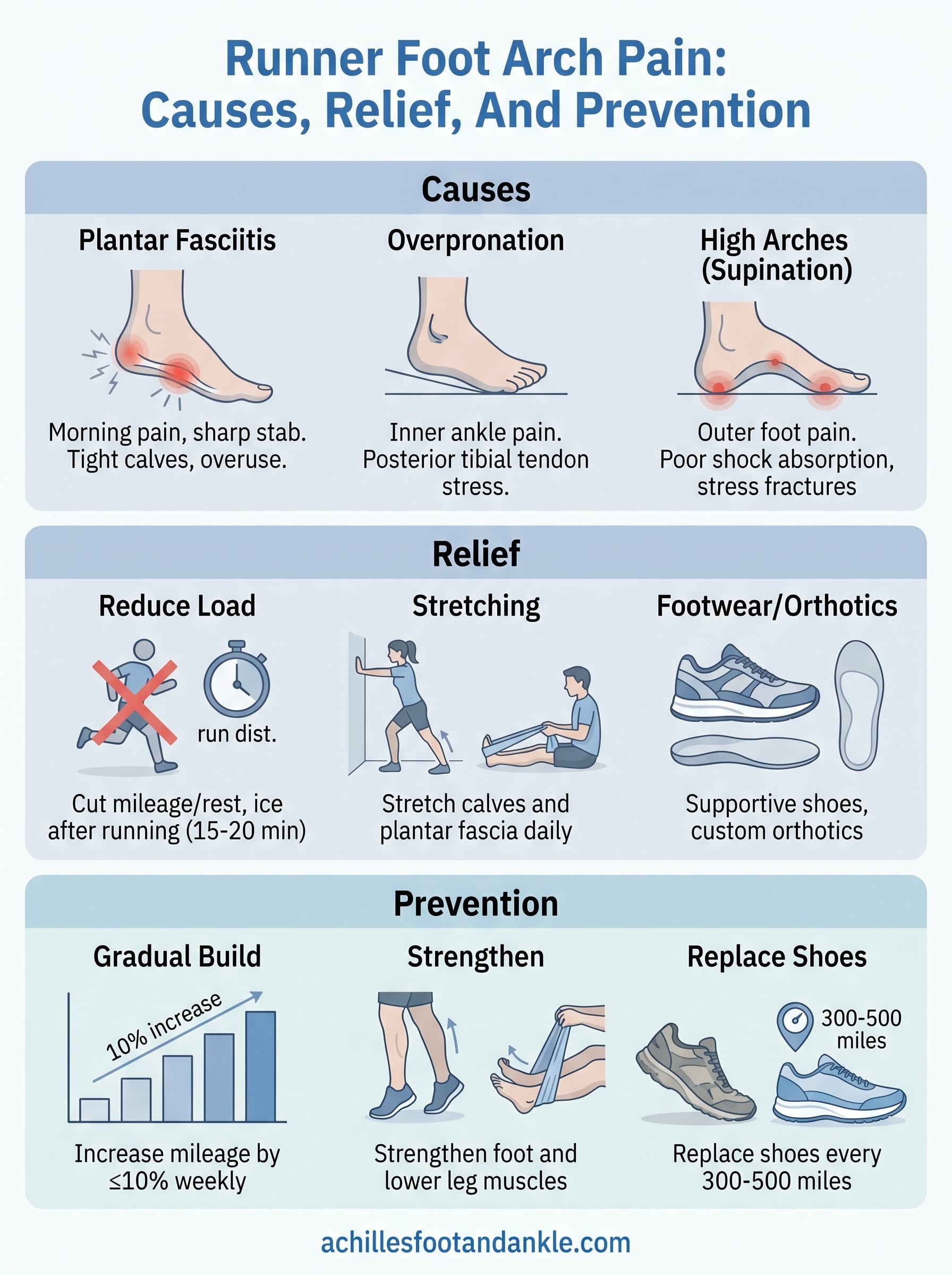
Plantar fasciitis is the most common cause of arch pain in runners. The plantar fascia is a thick band of tissue that runs along the bottom of your foot, connecting your heel bone to the base of your toes. Repetitive stress causes small tears in this tissue, producing sharp, stabbing pain that is typically worst with your first steps in the morning or after long periods of sitting. Runners who rapidly increase mileage or switch to minimal footwear are especially vulnerable.
Tight calf muscles and a shortened Achilles tendon put extra strain on the plantar fascia with every stride. Many runners focus only on the arch itself when the real restriction is actually higher up the leg, which is why stretching and strengthening work targeting the calves is a core part of effective plantar fasciitis recovery.
Overpronation, flat feet, and high arches
If your foot rolls inward excessively when it lands, you are overpronating. Overpronation increases rotational stress on the arch and the structures that support it, particularly the posterior tibial tendon, which runs along the inner ankle and holds the arch up during push-off. Runners with flat feet tend to pronate more, placing repetitive strain on this tendon until fatigue and inflammation produce a dull, persistent ache along the inside of the arch.
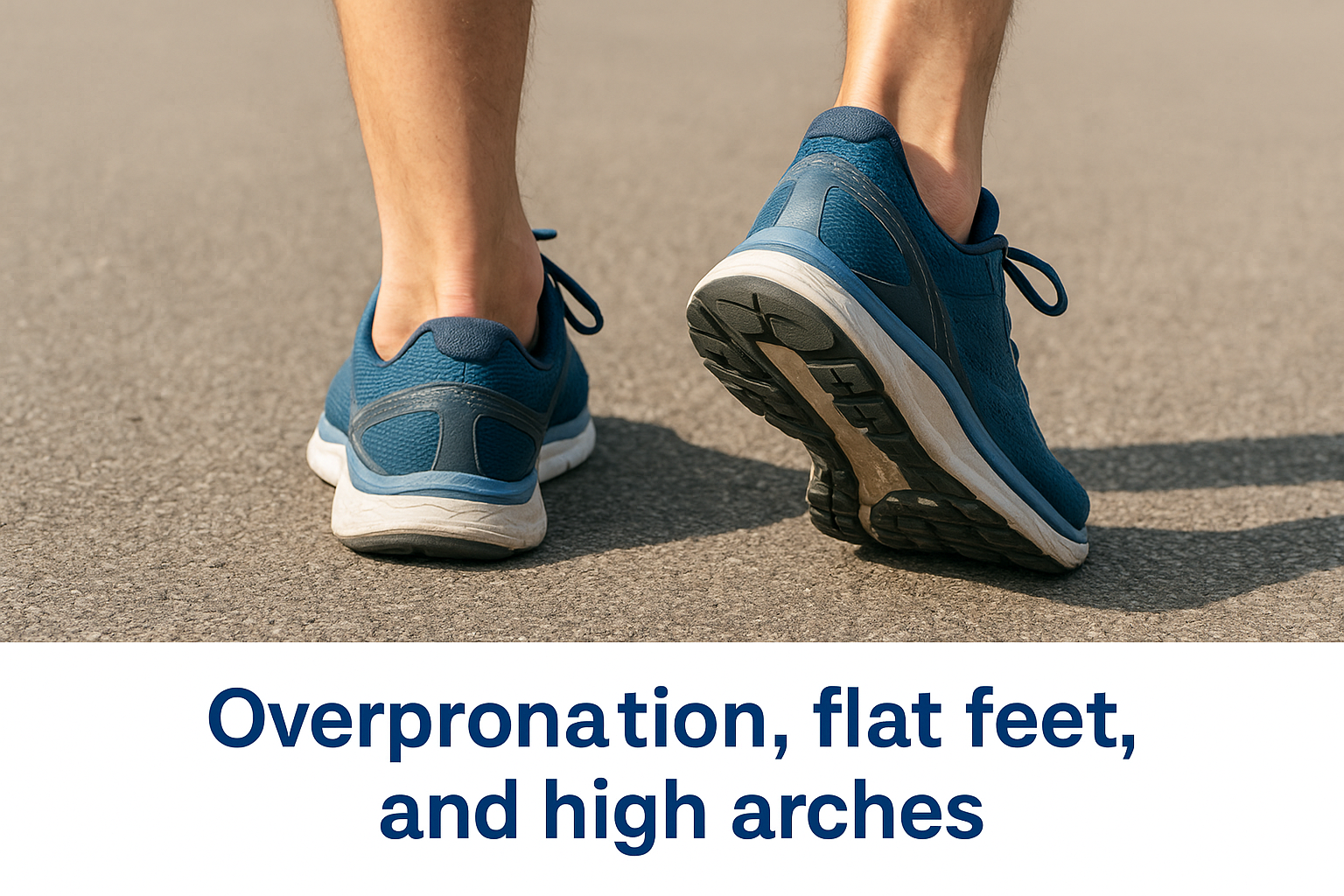
Runners with high arches face the opposite problem. A rigid, high arch does not absorb shock well, concentrating ground forces on the heel and the ball of the foot rather than spreading them across the arch. Underpronation, also called supination, can lead to stress fractures in the smaller foot bones and chronic arch pain that does not respond to standard plantar fasciitis treatments because the mechanics driving it are completely different.
How to narrow down the likely cause
When you’re dealing with runner foot arch pain, where it hurts and when it hurts are two of the most useful pieces of information you can gather before seeing a doctor. Pain in different parts of the arch, or at different points during your run, points to different structures and different problems. Paying attention to these details before your appointment makes the diagnostic process significantly faster.
Taking five minutes after each run to note the exact location of your pain and whether it eased or worsened as the run progressed can help a podiatrist identify the source far more quickly.
Location and timing of your pain
Sharp pain on the bottom of your heel or inner arch that is worst with your first steps in the morning usually points to plantar fasciitis. If the ache runs along the inside of your ankle and builds during longer efforts, the posterior tibial tendon is more likely involved. A deep, achy pain in the middle of the arch that grows steadily during a run and lingers for hours afterward can signal a stress fracture, particularly if pressing on one specific point produces intense tenderness.
Burning or tingling alongside the arch pain suggests nerve involvement, such as tarsal tunnel syndrome, rather than a tendon or bone problem. Each of these patterns calls for a different treatment approach, so noting exactly what type of sensation you feel is just as important as noting where.
Your foot type and recent training changes
Your arch height and foot mechanics are strong clues. Flat feet combined with inside-ankle pain typically indicate overpronation issues, while high arches with outer-foot discomfort suggest supination and poor shock absorption. Look at your running shoes too. Heavy inner-heel wear points toward overpronation; wear along the outer edge suggests supination.
Training changes matter just as much. If you recently increased weekly mileage by more than 10 percent, added speed work or hill sessions, or switched to a lower-drop shoe, that change is likely connected to the onset of your pain and gives you a concrete starting point for diagnosis.
How to relieve runner arch pain
Relieving runner foot arch pain starts with reducing the load on the irritated structure and giving it a realistic chance to heal. Continuing to run through significant pain almost always extends your total recovery time, so the first step is to cut your mileage or take a short break depending on how severe your symptoms are. Ice the arch for 15 to 20 minutes after activity to bring down inflammation, and avoid walking barefoot on hard floors during the acute phase, since that removes all cushioning from the plantar fascia and surrounding tissues.
Stretches that directly target the arch
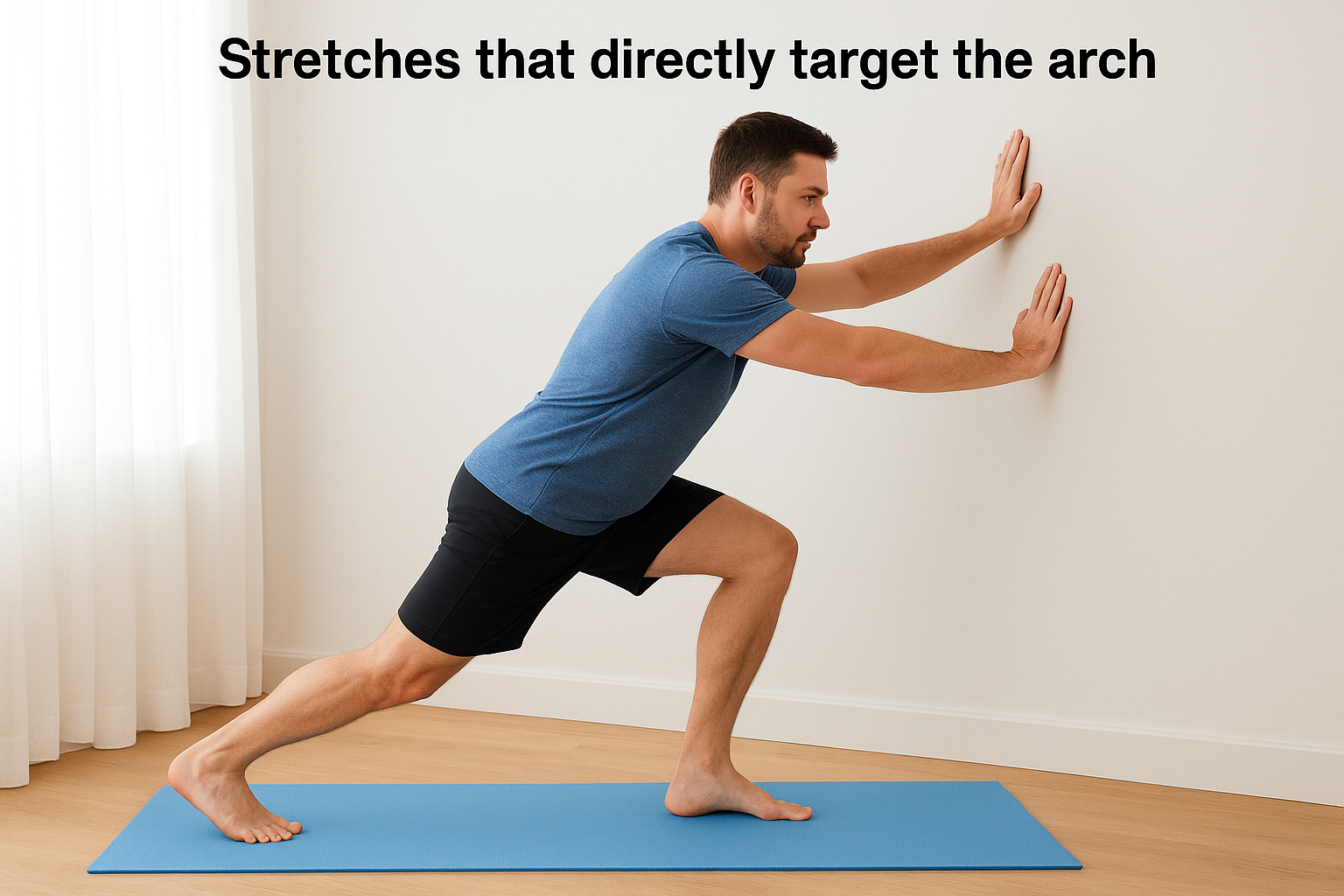
Tight calves are a major driver of arch pain, and stretching them consistently produces real, lasting relief. Stand facing a wall, place one foot behind the other, keep the back knee straight, and press the heel firmly to the floor for 30 seconds. Repeat with a bent back knee to stretch the deeper soleus muscle, which is often overlooked. Do this sequence three times on each side before your first step in the morning and again before bed.
A towel stretch also helps. Loop a resistance band or towel around the ball of your foot while sitting with your leg extended, pull the toes gently toward you, and hold for 30 seconds. This directly lengthens the plantar fascia from the other end.
Doing these stretches before your first steps in the morning matters because the fascia tightens overnight, and loading it cold dramatically increases the risk of micro-tears.
Footwear and orthotics
Supportive shoes with adequate arch support and cushioning take stress off the plantar fascia immediately. Avoid worn-out shoes where the midsole has compressed, since they offer far less shock absorption than they appear to from the outside.
Custom orthotics prescribed by a podiatrist go further by correcting the specific mechanical imbalance driving your pain. Whether that issue is overpronation, supination, or a structural leg-length difference, orthotics address the root cause rather than just managing symptoms.
How to prevent arch pain from coming back
Once you’ve worked through the acute phase of runner foot arch pain, the goal shifts to keeping it from returning. Most recurrences happen because runners go back to full mileage too quickly or skip the maintenance work that keeps the arch and its supporting structures strong. Prevention is not complicated, but it does require consistency.
Build mileage gradually
The 10 percent rule exists for good reason. Increasing your weekly mileage by no more than 10 percent each week gives your tendons, ligaments, and bones enough time to adapt to rising training loads. Runners who ignore this guideline after a period of forced rest are among the most common repeat visitors for arch problems.
Returning from an injury is not the same as starting fresh. Your cardiovascular fitness recovers faster than your connective tissue, which means your lungs feel ready long before your arch structures actually are.
Strengthen the foot and lower leg
Foot and calf strengthening exercises are the most overlooked component of injury prevention for runners. Single-leg calf raises, towel toe curls, and short-foot exercises activate the intrinsic foot muscles and build the active support system around your arch. Doing these two to three times per week significantly reduces the mechanical stress that leads to recurrence.
Replace shoes on schedule
Running shoes lose their shock-absorbing capacity well before they look worn out. Most shoes hold up for 300 to 500 miles, after which the midsole compresses and your arch absorbs far more ground impact than the shoe is designed to handle. Track your mileage and replace footwear on a regular schedule rather than waiting until the upper shows visible damage.
When to see a podiatrist right away
Self-treatment works well for mild runner foot arch pain caught early, but some symptoms signal a problem that stretches, ice, and rest alone will not fix. Waiting too long to get a proper evaluation turns treatable injuries into chronic conditions that require more aggressive intervention. If any of the warning signs below apply to you, book an appointment rather than waiting to see how the next run feels.
Warning signs you should not ignore
Sudden, sharp pain that comes on mid-run without any gradual buildup can indicate a stress fracture, particularly if pressing on one specific point on your arch or foot produces intense localized tenderness. Bruising, visible swelling, or an inability to bear weight after a run all demand same-day attention. Pain that has not improved after two weeks of reducing mileage, stretching, and supportive footwear is also a clear signal that the underlying cause needs professional diagnosis rather than more home management.
Burning or tingling that runs from your arch down into your toes points to nerve compression, such as tarsal tunnel syndrome, which will not respond to standard plantar fasciitis treatments at all.
What a podiatrist can do that self-treatment cannot
A podiatrist brings diagnostic tools to your evaluation that you simply do not have access to at home. Digital imaging and ultrasound can confirm whether you are dealing with a stress fracture, a torn ligament, or tendon damage, all of which require different treatment plans. Beyond diagnosis, a podiatrist can prescribe custom orthotics, corticosteroid injections, physical therapy referrals, or advanced regenerative treatments depending on the severity and specific nature of your injury, giving you a direct path back to running rather than an extended guessing game.
Next steps
Runner foot arch pain follows a predictable pattern: it starts small, gets dismissed, and then becomes a problem that sidelines you for weeks or months. The good news is that most cases respond well to early, accurate treatment, whether that means better footwear, consistent stretching, custom orthotics, or a short course of physical therapy. The key is knowing what you are actually dealing with before you decide how to manage it.
If your arch pain has lasted more than two weeks, comes with swelling or tingling, or keeps returning after short breaks, self-treatment is no longer enough. Our podiatrists at Achilles Foot and Ankle Center work with runners across thirteen Central Virginia locations to identify the exact cause and build a plan that gets you back on the road without guessing. Book a same-day appointment and get a clear answer instead of another week of hoping it resolves on its own.