
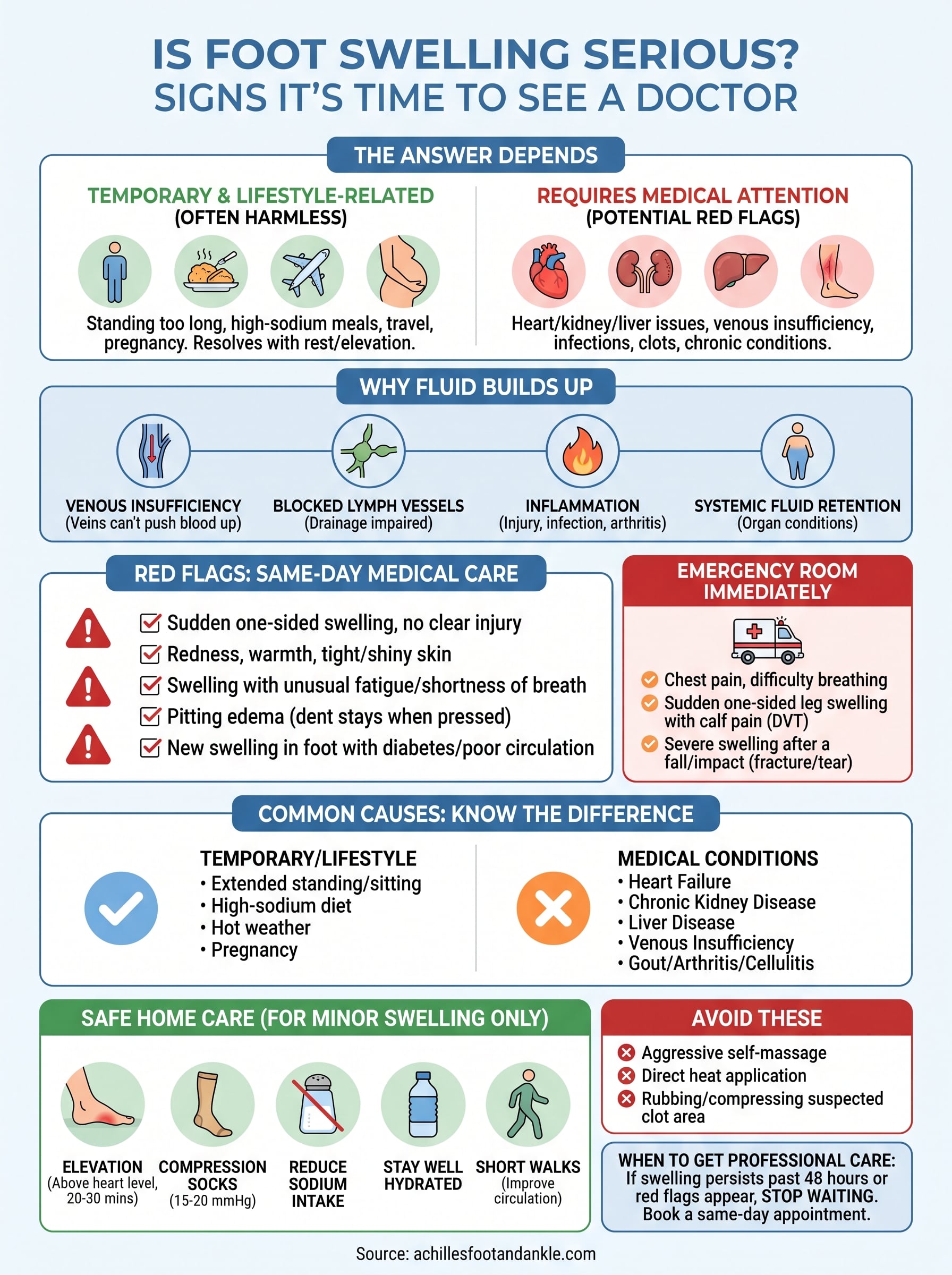
Your feet swell up after a long day, and you wonder: is foot swelling serious, or can you just ignore it? The honest answer is that it depends. Some swelling is temporary and harmless, the result of standing too long, eating salty food, or a minor twist. But in other cases, swollen feet signal something that needs medical attention right away, from blood clots and infections to heart, kidney, or liver problems.
The challenge is knowing the difference. Swelling alone doesn’t tell you much. What matters are the details: how quickly it came on, whether it affects one foot or both, and what other symptoms show up alongside it. Certain warning signs should prompt you to call a doctor that same day, while others mean you should head straight to the emergency room. Recognizing these red flags early can make a real difference in your outcome.
At Achilles Foot and Ankle Center, our podiatrists across Central Virginia evaluate and treat foot and ankle swelling every day, from straightforward cases to complex ones. This article breaks down the common and serious causes of foot swelling, walks you through the symptoms that matter most, and helps you decide when it’s time to get professional care.
Why foot swelling can signal a problem
Your feet sit at the bottom of your circulatory system, which makes them especially prone to fluid buildup. Gravity works against your blood and lymph fluid all day, and when something disrupts the normal return flow, fluid leaks into surrounding tissue and creates that puffy, tight sensation you notice. Whether swelling is minor or serious depends entirely on what is causing that disruption, and that is why the same symptom can mean very different things from one person to the next.
How fluid builds up in your feet
Veins and lymphatic vessels work constantly to push fluid back up toward your heart. When that system functions the way it should, excess fluid gets cleared efficiently, and any swelling that appears resolves quickly with rest or elevation. But when the system is overwhelmed or damaged, fluid accumulates faster than your body can remove it, and swelling either lingers or gradually gets worse over days and weeks.
Several different mechanisms can drive this process:
- Venous insufficiency: Veins lose the ability to push blood upward, so it pools in the lower legs and feet.
- Blocked lymph vessels: Lymphedema occurs when lymph drainage is impaired, leading to stubborn, chronic swelling.
- Inflammation: Injury, infection, or arthritis triggers localized swelling as your immune system responds to the affected area.
- Systemic fluid retention: Heart, kidney, or liver conditions cause your body to hold on to excess sodium and water, which frequently shows up first in the feet.
When swelling connects to a bigger health issue
If you have ever asked yourself is foot swelling serious, the answer often comes down to which organ system is involved. Heart failure reduces your heart’s pumping efficiency, so fluid backs up into the legs and feet. Kidney disease disrupts how your body filters waste and regulates fluid balance, while liver disease impairs the production of proteins that normally keep fluid inside your blood vessels. In all three cases, swollen feet are a downstream sign of a system that is not working properly.
Swelling in both feet with no clear cause, especially when it comes alongside shortness of breath or unusual fatigue, warrants same-day medical evaluation.
Infections carry a different but equally urgent risk. Cellulitis, a bacterial skin infection, can spread rapidly through foot tissue, and in people with diabetes or compromised circulation, that progression can become limb-threatening within hours if left untreated.
How to tell if foot swelling is serious
Figuring out is foot swelling serious starts with paying attention to the details around it. Swelling that appears gradually in both feet after long hours on your feet typically has a benign explanation. But specific combinations of symptoms shift the picture quickly and should change how urgently you act.
Red flags that point to same-day care
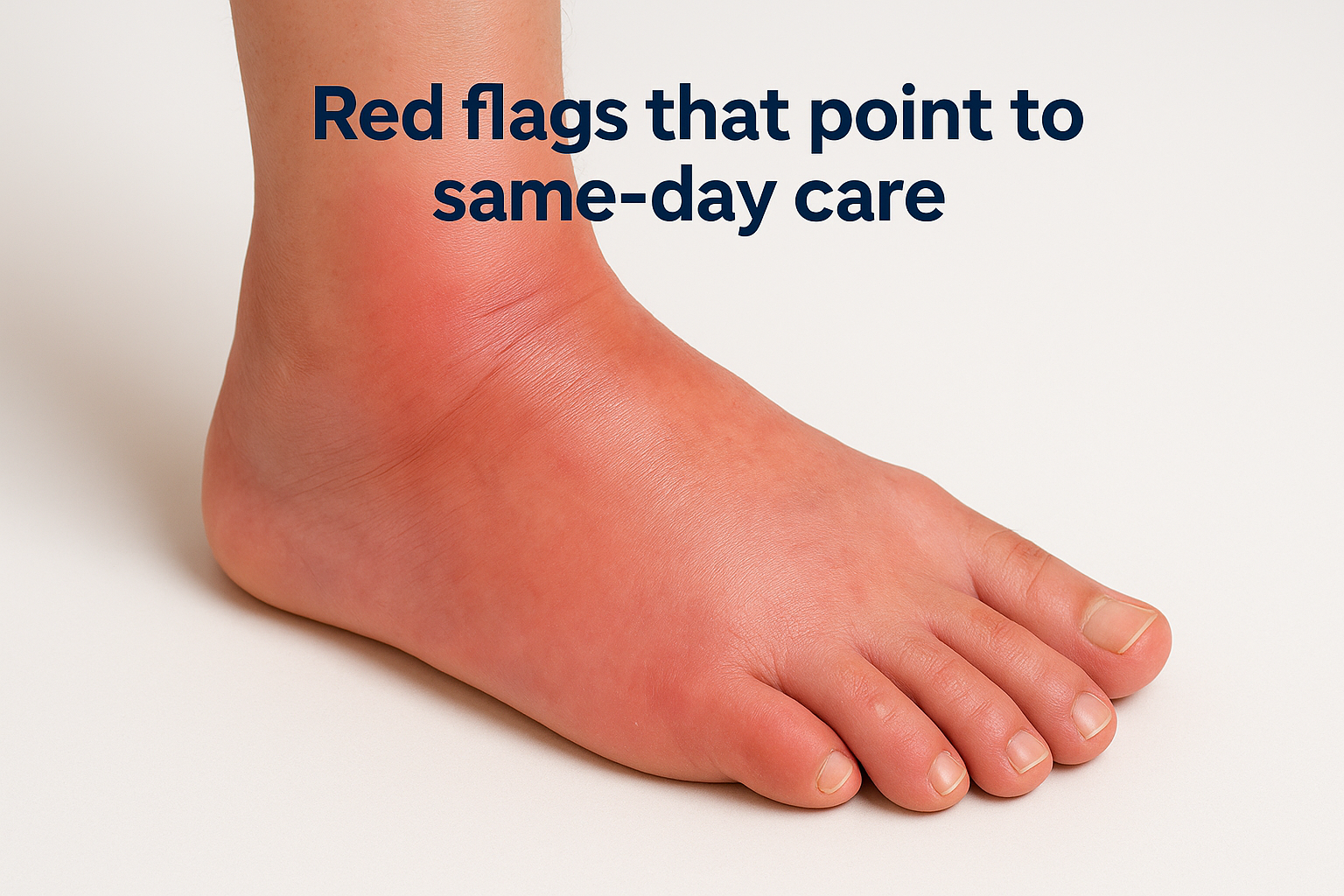
Some symptoms alongside swelling suggest an underlying condition that needs evaluation before it worsens. Contact your doctor the same day if you notice any of the following:
- Swelling that appears suddenly in one foot with no clear injury
- Redness, warmth, or skin that looks tight and shiny over the swollen area
- Swelling paired with unusual fatigue or shortness of breath
- Pitting edema, where pressing your skin leaves a dent that stays for several seconds
- New swelling in a foot with a history of diabetes or poor circulation
When to go to the emergency room
Some scenarios skip the call-your-doctor step entirely. Go to the ER immediately if your swollen foot is accompanied by chest pain, difficulty breathing, or sudden one-sided leg swelling with calf pain. That combination can indicate a deep vein thrombosis or pulmonary embolism, both of which are medical emergencies.
One-sided leg swelling with pain in the calf is a serious warning sign that requires emergency evaluation, not a wait-and-see approach.
Severe swelling following a fall or impact also warrants urgent care, since fractures and ligament tears are easy to dismiss as simple sprains without imaging.
Common causes of foot swelling
Understanding why your feet swell helps you figure out whether the cause is minor or worth investigating further. Some causes clear up within hours. Others are signs of conditions that require treatment to prevent the swelling from becoming a recurring or worsening problem.
Temporary and lifestyle-related causes
Short-term swelling often traces back to everyday habits and circumstances that put extra demand on your body’s fluid management. Standing or sitting for extended periods, eating a high-sodium meal, long flights, and hot weather all contribute. Pregnancy is another common driver, as the growing uterus adds pressure to veins in the pelvis, slowing blood return from the legs and feet. In these cases, the swelling typically resolves with rest, elevation, and time.
Medical conditions that cause persistent swelling
When swelling sticks around or keeps coming back, a medical condition is often responsible. Heart failure, chronic kidney disease, and liver disease all cause the body to retain fluid, and the feet are usually the first place it accumulates. Venous insufficiency, where leg veins struggle to push blood back to the heart, leads to swelling that worsens as the day goes on and never fully resolves without treatment.
If you find yourself asking is foot swelling serious every morning because the puffiness never clears overnight, that pattern points toward a systemic cause worth evaluating.
Gout, rheumatoid arthritis, and infections like cellulitis also cause localized foot swelling, though these typically come with additional symptoms such as joint pain, redness, or fever that help distinguish them from fluid retention.
What you can do at home safely
Before deciding is foot swelling serious in your specific case, there are practical steps you can take at home to reduce minor swelling and track whether it improves. These measures apply to temporary, lifestyle-related swelling without accompanying red flags. If you have any of the warning signs described above, skip home remedies and call your doctor or go to the ER instead.
Simple steps that actually help
Elevation and compression are the two most reliable home tools for reducing foot swelling. Prop your feet above heart level for 20 to 30 minutes several times daily so gravity helps drain fluid back toward your core. Pair that with graduated compression socks rated at 15 to 20 mmHg, which gently squeeze the lower leg and support your veins in pushing blood upward. Short walks throughout the day keep circulation moving and prevent fluid from pooling in one place.

If elevation and rest do not reduce your swelling within 24 to 48 hours, contact your doctor rather than waiting longer.
Cutting sodium from your diet can reduce fluid retention noticeably within a day or two when diet is the primary driver. Staying well hydrated seems counterintuitive, but drinking enough water helps your kidneys flush excess sodium and reduces the hormonal signals that cause your body to hold on to fluid.
What to avoid
Aggressive self-massage and direct heat application can make certain types of swelling worse, particularly when infection or injury is involved. If you suspect a blood clot based on the symptoms described above, avoid rubbing or compressing the area, since that pressure can dislodge the clot and create a life-threatening emergency.
What to expect at a foot and ankle visit
If you are still wondering is foot swelling serious after monitoring it at home, a foot and ankle specialist can give you a clear answer based on a thorough physical exam and your medical history. Knowing what happens during that visit can reduce any hesitation you might feel about scheduling one.
What your podiatrist evaluates
Your podiatrist starts by asking about the timeline and pattern of your swelling: when it started, whether one foot or both are affected, and what makes it better or worse. They will also review any existing conditions like diabetes, heart disease, or circulation problems that influence how they interpret your symptoms.
From there, the physical exam focuses on skin color, temperature, tenderness, and how quickly the skin rebounds after gentle pressure. This tells the provider whether the swelling is localized inflammation, pitting edema, or something that points toward a vascular or systemic problem.
Your appointment will move faster and be more productive if you bring a list of current medications, since several common drugs cause fluid retention as a side effect.
How treatment is determined
Once your podiatrist identifies the likely cause, they will recommend a treatment plan that matches the severity and source of the swelling. Mild cases from venous insufficiency or overuse often respond to compression therapy, orthotics, and targeted exercises. When imaging is needed, digital X-rays or ultrasound can be performed during the same visit at Achilles Foot and Ankle Center, so you leave with answers rather than more waiting.
Next steps
Foot swelling is not something you should have to guess your way through. Now that you understand the warning signs, common causes, and what a podiatrist evaluates, you have a clear framework for deciding is foot swelling serious in your specific situation. If you spotted any red flags in this article, or if your swelling has not improved with home care after 48 hours, that is your signal to stop waiting.
Achilles Foot and Ankle Center serves patients across thirteen locations in Central Virginia, and same-day appointments are available for situations that feel urgent. Your podiatrist can examine your foot, run imaging on-site if needed, and give you a concrete diagnosis rather than more uncertainty. You do not need to spend another day wondering whether your swelling is something to worry about. Book a same-day appointment and get a direct answer from a specialist who treats this every day.