

You rolled your ankle on the trail, the stairs, or the basketball court, and now you’re standing in front of the freezer wondering if ice is still the right call or if it’s time to switch things up. Most people default to ice because that’s what they’ve always heard, but heat for sprained ankle treatment has a real place in recovery, just not on day one. Knowing when to make the switch matters more than most patients realize.
The short answer: ice controls swelling in the first 48 to 72 hours, while heat therapy takes over once the acute inflammation calms down, loosening stiff tissue and improving blood flow so your ankle can finish healing. Confusing the two, or applying heat too early, can actually prolong swelling and slow you down instead of speeding recovery.
In this article, we’ll walk through exactly how a hot and cold treatment plan should unfold day by day, what signs tell you your ankle has moved past the swelling phase, and how our podiatrists at Achilles Foot and Ankle Center approach sprains that don’t improve with home care alone.
Why heat matters in sprained ankle recovery
Ankle ligaments tear in one of three grades, and every grade moves through the same three healing stages: inflammation, repair, and remodeling. Sprained ankle treatment works best when you match your therapy to the stage you’re actually in, not the stage you wish you were in. During the first few days, your body floods the area with fluid and immune cells to clean up damaged tissue, and that’s exactly why ice, not heat, wins early on. Push heat too soon and you widen blood vessels right when you need them constricted, which only feeds more swelling into an already congested joint.
The inflammation window closes, then tissue needs something different
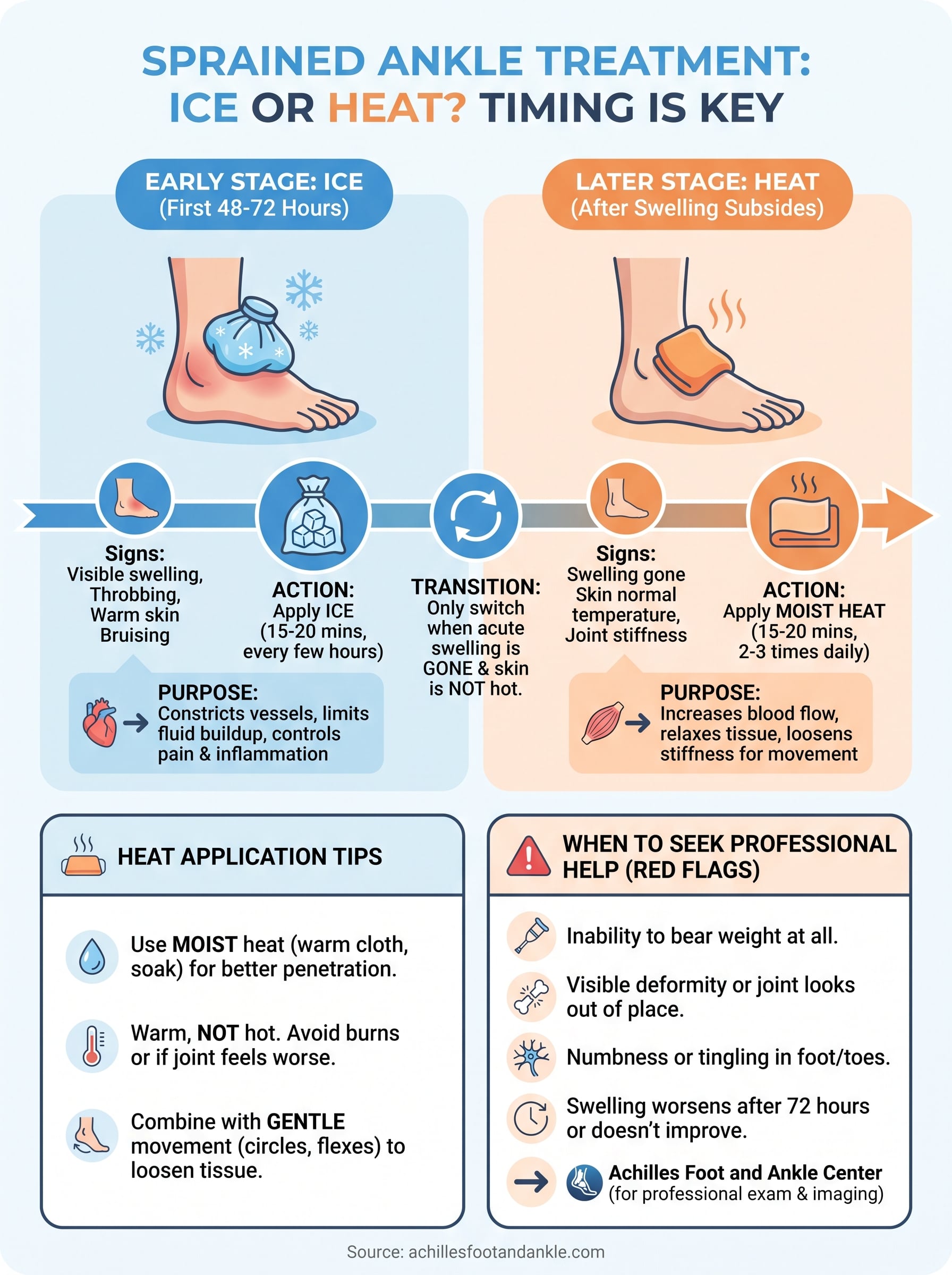
Once you’re past 48 to 72 hours, most sprains shift from active inflammation into repair mode. Ice treatment for sprained ankle injuries handled bleeding and swelling control, but repair mode has different needs: collagen fibers are knitting together, and the joint often feels stiff rather than hot or throbbing. This is where heat earns its place. Warmth relaxes tight muscles around the ankle, softens stiff connective tissue, and pulls fresh, oxygen-rich blood into the area to support the rebuilding ligament fibers.
Ice fights swelling; heat feeds the healing that happens after swelling is gone.
Why timing the switch actually changes your recovery
Applying heat at the right moment isn’t just comfort, it changes outcomes. Guidance from the American Academy of Orthopaedic Surgeons points to controlled inflammation early, followed by graded mobility and warmth later, to restore range of motion after a ligament injury. Skipping straight to heat before swelling resolves can trap fluid in the joint capsule, leading to a puffy, stiff ankle weeks after the original injury. Staying on ice long after the acute phase, on the other hand, leaves tissue tight and under-perfused, which slows the very repair process you’re trying to speed up. Getting the sequence right, ice first, heat later, gives torn ligament fibers the blood supply and flexibility they need to rebuild strength instead of scar tissue that reinjures easily.
How to apply heat therapy to a sprained ankle
Waiting for the right window matters, but knowing how to apply heat matters just as much. Treatment for sprained ankle heat works best as moist heat rather than dry, because moisture penetrates deeper into muscle and connective tissue without scorching skin. A warm washcloth, a moist heating pad, or a short soak in warm water all do the job well, and none require special equipment.
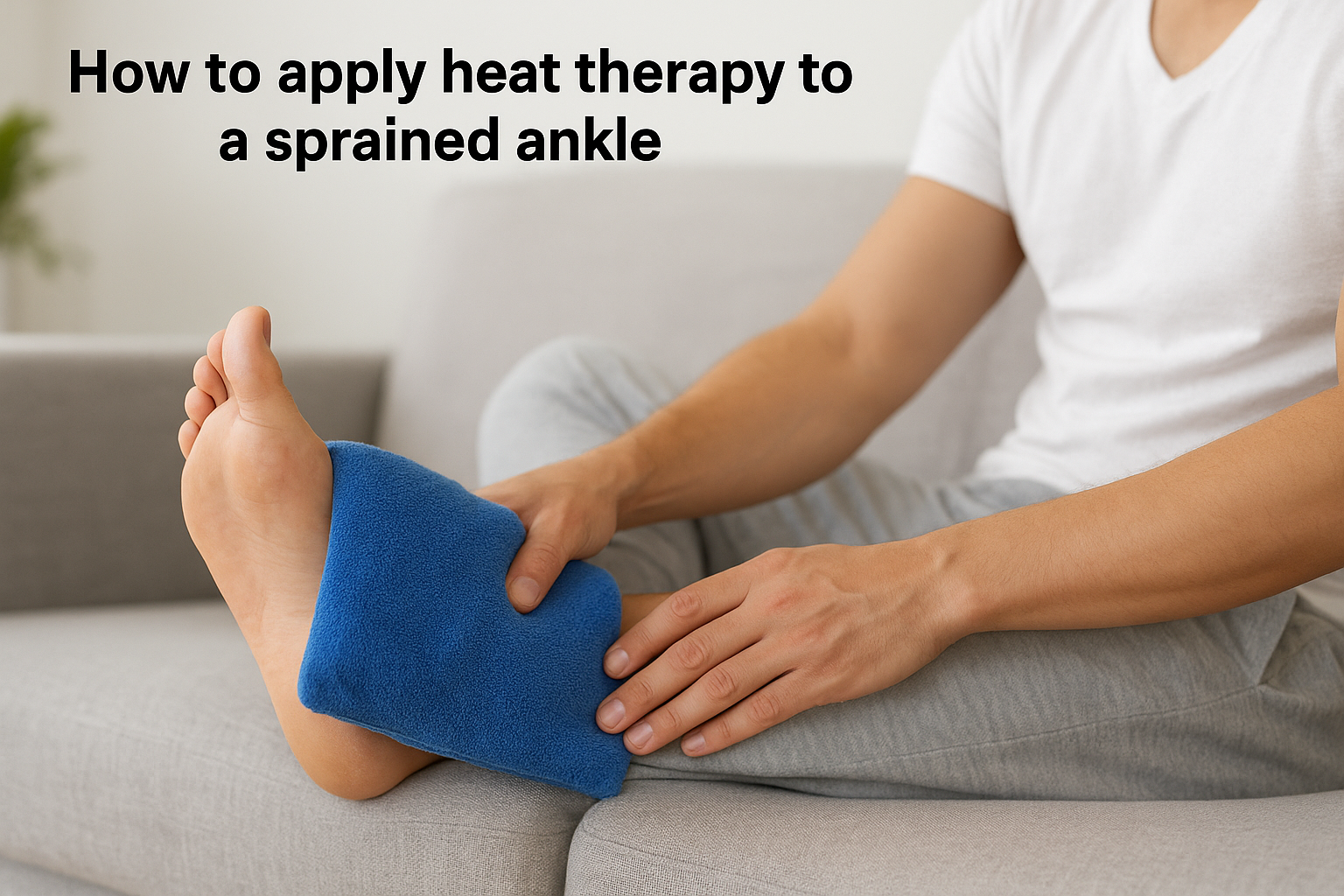
A simple routine that works
Follow these steps once you’ve confirmed the acute swelling has settled:
- Check the ankle first. Confirm swelling has gone down and skin isn’t warm to the touch before starting heat.
- Apply for 15 to 20 minutes. Longer sessions raise the risk of skin irritation without adding benefit.
- Keep the source warm, not hot. You want a comfortable warmth you could tolerate on your forearm, not a temperature that stings.
- Combine with gentle movement. Circle your ankle or point and flex your toes while the heat is on to loosen stiff tissue.
- Repeat two to three times daily as you work back into normal activity.
Heat works best paired with movement, not as a passive fix on its own.
What to avoid
Never fall asleep with a heating pad against your skin, since that risks burns even at moderate settings. Skip heat entirely if the ankle looks swollen, feels hot, or throbs, since those are signs inflammation hasn’t fully resolved yet. Sprained ankle treatment heat should feel soothing, never painful, and if warmth makes your ankle feel worse, stop and go back to ice for another day before trying again.
Ice or heat: making sense of hot and cold treatment
Confusion between ice or heat for sprained ankle care usually comes from mixing up two separate jobs. Ice calms an angry, swollen joint by narrowing blood vessels and numbing pain signals, while heat loosens tissue that’s already past the danger zone. Thinking of sprained ankle treatment cold and hot as sequential steps, rather than interchangeable options, clears up most of the guesswork. The mistake most people make isn’t picking the wrong therapy, it’s picking the right one at the wrong time.
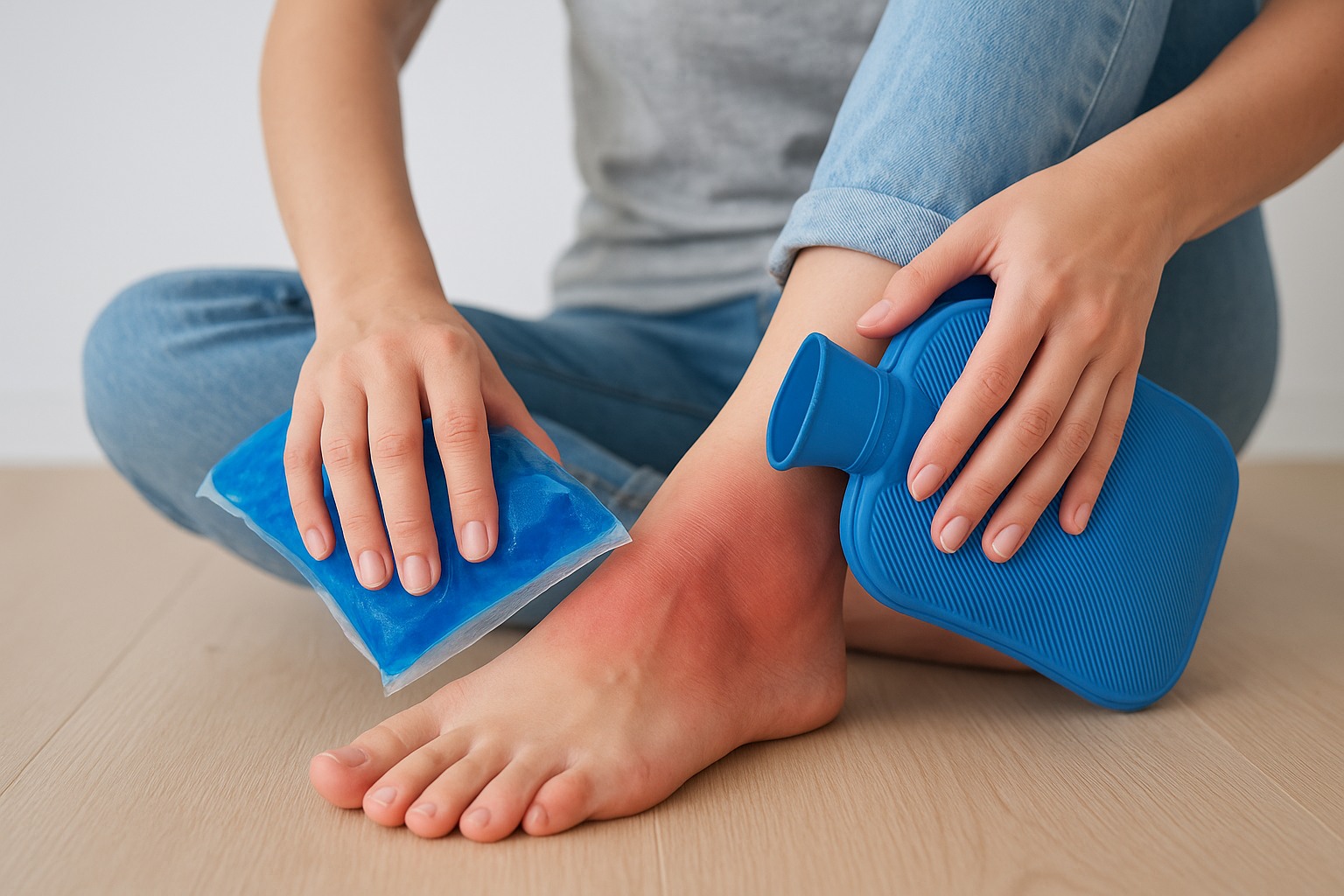
Quick reference: ice vs heat
Use this table when you’re standing over your ankle trying to decide what to reach for.
| Situation | Best choice | Why |
|---|---|---|
| First 48-72 hours, visible swelling | Ice | Constricts vessels, limits fluid buildup |
| Skin warm, throbbing, or bruised | Ice | Signals active inflammation |
| Swelling gone, joint feels stiff | Heat | Increases blood flow, relaxes tissue |
| Preparing for stretching or exercise | Heat | Warms tissue before movement |
| Pain flares after activity later in recovery | Ice | Manages irritation from overuse |
When in doubt, ice controls; heat prepares.
Deciding between sprained ankle treatment heat or cold gets easier once you check the table above against how your ankle actually looks and feels that day, not how many days have passed on the calendar. Some sprains linger in the inflammation phase longer than others, so trust the skin’s appearance and swelling level over a fixed schedule.
When a sprain needs more than home care
Some sprains don’t follow the neat ice-then-heat timeline, and that’s your cue to stop guessing at home. Sprained ankle treatment ice or heat only works when the underlying injury is a straightforward ligament sprain, not a fracture, a full ligament tear, or joint instability hiding under the swelling. If your pain hasn’t eased after a week of proper icing and rest, or if heat makes the joint feel worse instead of better, that’s a signal worth listening to.
Red flags that call for a professional exam
Watch for these warning signs, since any one of them means home care alone isn’t enough:
- Inability to bear weight at all, even briefly, on the injured ankle
- Visible deformity or a joint that looks out of place
- Swelling or bruising that gets worse after 72 hours instead of improving
- Numbness or tingling in the foot or toes
- Repeated ankle rolling even after the original sprain seems healed
Pain that doesn’t respond to proper ice and heat timing usually points to something ice and heat can’t fix.
What a podiatrist checks that you can’t at home
Our podiatrists at Achilles Foot and Ankle Center use digital imaging to rule out fractures and ultrasound to check ligament integrity, something no amount of home icing can tell you. Grading the sprain accurately changes the whole plan, since a Grade III tear often needs bracing, physical therapy, or in some cases surgical repair to restore stability. Left untreated, unstable ankles tend to reinjure again and again, turning one bad step into a chronic problem.
Getting back on steady feet
Getting the sequence right matters more than which product sits in your freezer or on your heating pad. Ice for the first 48 to 72 hours, then heat once swelling drops and stiffness sets in, gives torn ligament fibers what they actually need at each stage instead of working against your body’s own repair process. Home care handles most straightforward sprains just fine, but watch for the red flags we covered: swelling that worsens instead of improving, numbness, or an ankle that keeps giving out on you.
If your sprain isn’t following the script, or you’re not sure which stage you’re in, don’t guess for another week and risk turning a simple sprain into a chronic instability problem. Our podiatrists can grade the injury accurately and build a plan around what your ankle actually needs. Schedule a same-day appointment and get back on steady feet sooner.