Every step feels like you’re stepping on a bruise, and it usually hits worst first thing in the morning. If you’re searching for the best running insoles for heel pain, you already know that generic drugstore inserts don’t cut it once plantar fasciitis or heel spurs set in. You need real arch support and heel cushioning built for the pounding that running puts on your feet.
This list answers that search directly. We ranked ten insoles based on arch support quality, heel cup design, and how well they hold up over hundreds of miles, not just marketing claims. Each pick targets the mechanics that actually cause heel pain, so you can stop guessing and start running comfortably again.
As podiatrists at Achilles Foot and Ankle Center, we fit patients across Central Virginia with custom orthotics and off-the-shelf insoles every week, and we’ve seen which ones actually reduce heel strain versus which ones just feel soft in the store. Below, you’ll find our honest picks, who each insole works best for, and when it’s time to see a specialist instead of trying another insert.
1. Why heel pain flares up when you run
Every time your foot strikes pavement while running, your heel absorbs a force equal to two to three times your body weight. Do that 1,500 times per mile, and you start to understand why heel pain shows up in runners far more than in walkers. The plantar fascia, a thick band of tissue running from your heel bone to your toes, acts like a shock absorber and tension cable with every stride. When it gets overloaded, tiny tears form near the heel attachment, and that’s the sharp, stabbing pain most runners describe when they first get out of bed.
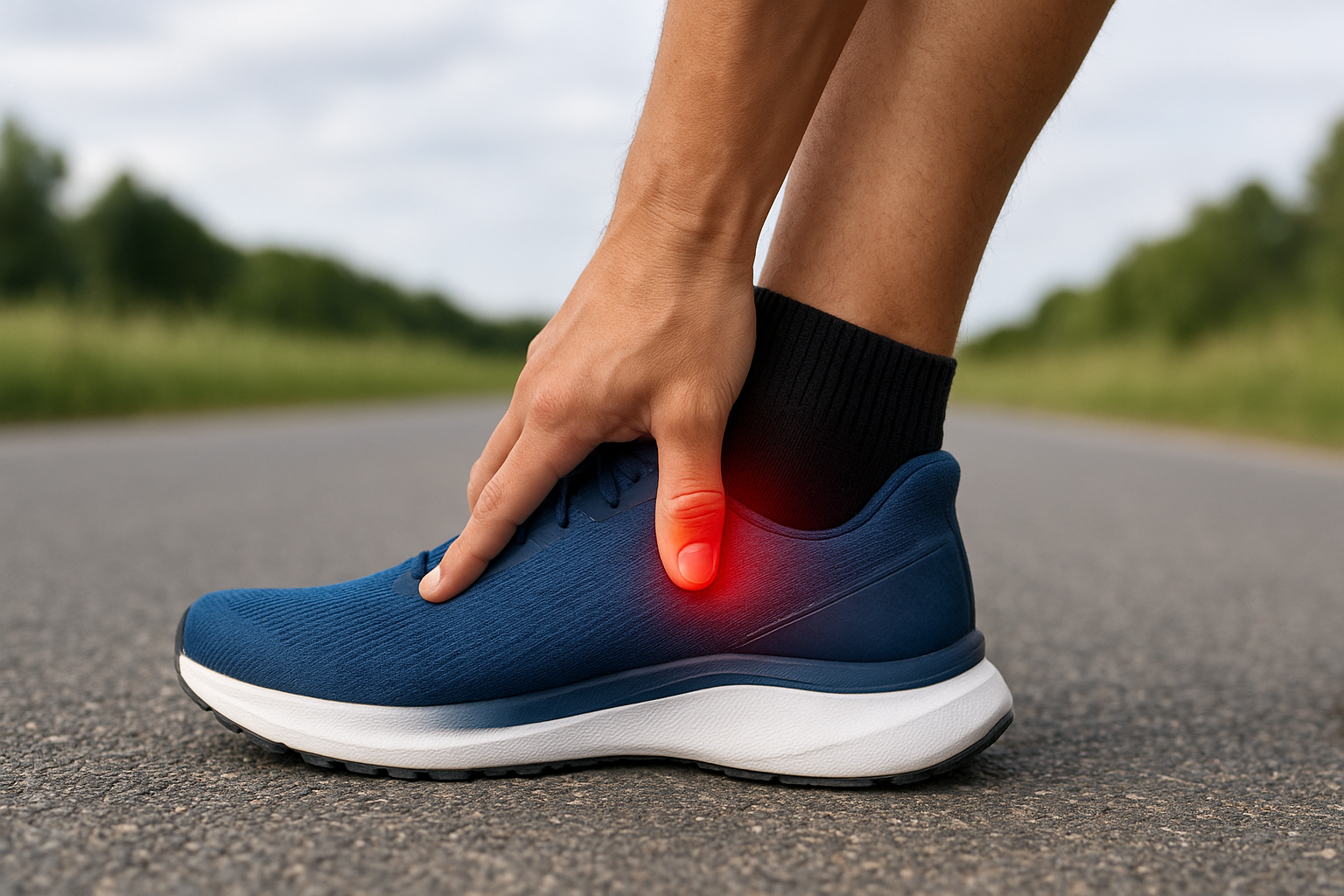
Mechanics matter more than most runners realize. Overpronation, where your foot rolls inward too much after landing, stretches the plantar fascia with every step instead of letting your arch absorb the load properly. Supination, the opposite pattern, concentrates impact on the outer heel and often shows up in runners with naturally high arches. Worn-out shoes make both problems worse. Once the midsole cushioning compresses past a certain point, usually around 300 to 500 miles, your foot loses the support it was designed to rely on, and the heel takes the hit directly.
Heel pain in runners almost always comes down to one thing: repeated impact hitting a foot that isn’t absorbing shock the way it should.
A few other factors we see constantly in our Central Virginia clinics:
- Tight calf muscles and Achilles tendons, which limit ankle flexibility and force the plantar fascia to stretch further with each step
- Sudden mileage increases, especially jumping from 15 to 25 miles a week without a gradual build
- Running on hard surfaces like concrete sidewalks instead of asphalt or trails
- Excess body weight or a recent weight gain, which increases the load on the heel with every landing
- Age-related fat pad thinning under the heel, common in runners over 40
Heel spurs get blamed a lot, but the spur itself usually isn’t the pain source. It’s the inflamed fascia pulling on the bone that hurts. This distinction matters because it’s exactly why the right insole can help so much. A well-designed insole doesn’t just cushion the heel, it corrects the mechanical fault causing the overload in the first place. That’s the difference between temporary relief and actually fixing the problem behind your running insoles for heel pain search.
2. What to look for in insoles for heel pain
Most insole shopping goes wrong at the arch support step. People grab whatever feels softest under a store’s fluorescent lights, but a mushy insole compresses fast and stops supporting your arch exactly when you need it most, mile eight of a long run. What you actually want is a firm arch support that matches your foot type, paired with a deep heel cup that cradles the fat pad instead of letting it splay out sideways on impact.
Material matters just as much as shape. Dual-density foam or a rigid polypropylene shell holds its structure over hundreds of miles, while cheap foam flattens within weeks. Check the heel cup depth, anything under 15mm won’t stabilize the heel fat pad enough to reduce shock transfer to the plantar fascia.
The right insole for heel pain isn’t the softest one, it’s the one that still supports your arch after 300 miles.
Run through this checklist before you buy:
- Arch height match: low, medium, or high, based on your actual foot shape
- Heel cup depth of at least 15-17mm for real stability
- Firm support material that resists compression over time
- Moisture-wicking top cover to prevent blisters on long runs
- Shoe compatibility, since running shoes have less volume than everyday sneakers
- Trim-to-fit sizing so the insole doesn’t bunch or slide inside the toe box
One more thing we tell patients constantly: an insole should reduce pain within two to three weeks of consistent use. If it doesn’t, the problem likely isn’t the insole, it’s the underlying mechanics, and that’s when a proper gait evaluation makes more sense than trying insert number four.
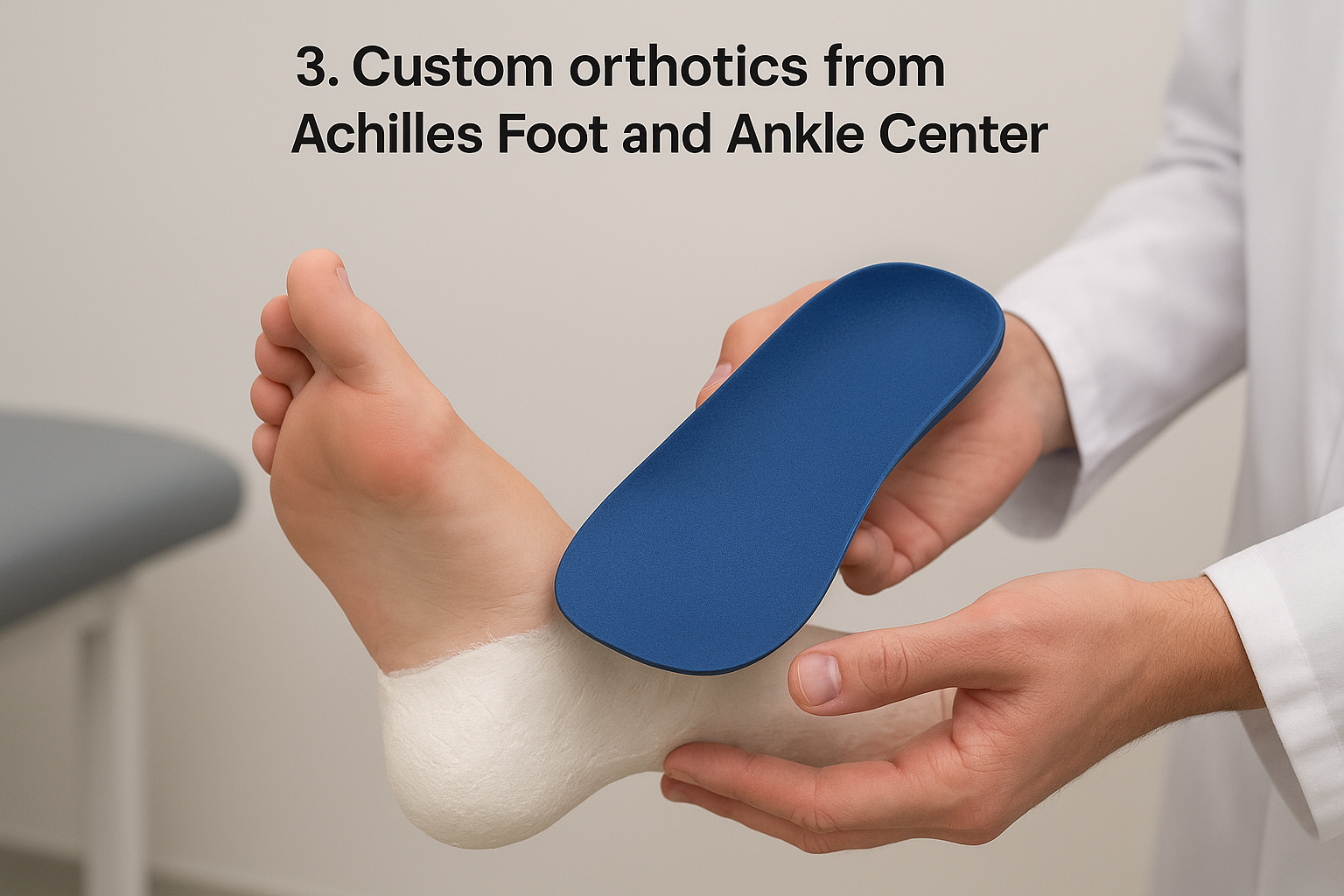
3. Custom orthotics from Achilles Foot and Ankle Center
When off-the-shelf insoles stop working, custom orthotics built from an actual mold of your foot are the next logical step, and it’s what we prescribe most often at Achilles Foot and Ankle Center for runners with stubborn plantar fasciitis. Unlike mass-produced insoles, these devices get built from a 3D scan or plaster cast taken in-clinic, then manufactured to correct your specific pronation pattern, arch height, and heel strike. That level of precision is why patients who’ve tried five drugstore insoles finally get relief with a device made for their foot alone.
Key features
- 3D foot scanning or casting for an exact mechanical match
- Rigid polypropylene or carbon fiber shell for durability across running mileage
- Adjustable heel posting to correct overpronation or supination
- Physician follow-up to fine-tune fit after the first few runs
Arch support level
Fully customizable, low through high, since the device gets built around your actual arch rather than a generic mold.
No off-the-shelf insole matches the correction a properly cast custom orthotic delivers for chronic heel pain.
Best for
Runners with chronic or recurring plantar fasciitis, diagnosed structural issues like flat feet or high arches, or anyone who’s tried multiple store-bought insoles without lasting improvement. Diabetic runners also benefit from the added pressure redistribution.
Price range
Expect $400 to $600 per pair, though many insurance plans cover a portion when prescribed for a diagnosed condition. That’s a real investment compared to a $50 insole, but it’s built to last years, not months, and it addresses the actual mechanical cause behind your running insoles for heel pain search.
4. Superfeet Run pain relief insoles
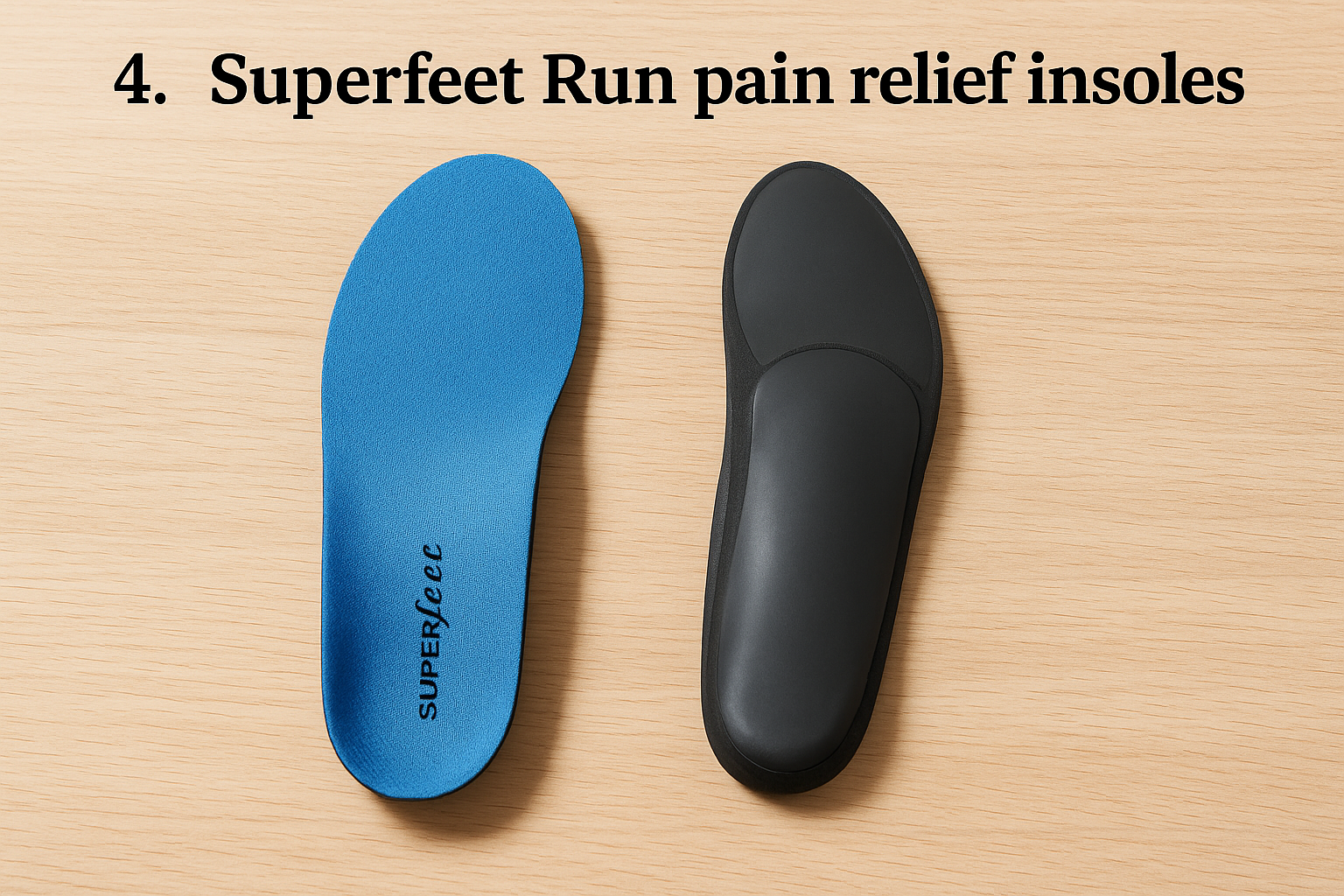
For runners who want a proven, off-the-shelf option before jumping to custom orthotics, Superfeet Run insoles are usually our first recommendation. The brand built its reputation on a rigid stabilizer cap under the heel, a feature most drugstore insoles skip entirely, and it’s the reason these hold their shape after months of training runs instead of collapsing by week three.
Key features
- Deep heel cradle that stabilizes the fat pad on impact
- Rigid biomechical shell for structured motion control
- Moisture-wicking top cover designed for sweaty long runs
- Available in multiple arch heights (low, medium, high) sold as separate models
Arch support level
Medium to firm, with the Superfeet Run Comfort and Run Support versions covering slightly different arch heights. Runners with flat or low arches typically do better with the Support version, since it adds more structure through the midfoot.
A rigid heel stabilizer, not extra foam, is what actually keeps a runner’s heel from rolling mid-stride.
Best for
Runners dealing with mild to moderate heel pain who want a durable, trusted insole without committing to a custom device. They also work well as a maintenance insole for people who’ve finished physical therapy and want to prevent a flare-up from coming back. We don’t recommend them for severe overpronation, since the correction isn’t as aggressive as a rigid custom device.
Price range
Expect to pay $50 to $65 per pair at most running stores or sporting goods retailers. That’s a reasonable middle ground, more supportive than a $20 gel insert, but far less than a custom orthotic, and a solid test run before deciding if you need something built specifically for your foot.
5. Currex RunPro insoles
Currex RunPro insoles stand out because they’re built specifically for gait pattern, not just arch height. The brand runs a fitting system that sorts runners into overpronator, neutral, or supinator profiles, then shapes the insole’s dynamic shell to match how your foot actually moves through a stride. That’s a different approach than most insoles on this list, which size by arch height alone and hope the fit works out.
Key features
- Dynamic Fit System that adjusts shell shape based on your gait profile
- Precision-engineered heel cup that narrows toward the arch for a locked-in feel
- Lightweight, low-profile design that fits snugly in performance running shoes
- Separate models (RunPro, RunPro Speed) for different mileage and shoe volume needs
Arch support level
Medium to firm, with the shell stiffness varying by which gait-profile version you buy. Overpronators get a firmer medial post built into the arch, while supinators get more lateral cushioning instead.
Matching an insole to your gait pattern, not just your arch height, is what separates Currex from most drugstore inserts.
Best for
Runners training for races who want a low-profile fit inside snug performance shoes without sacrificing heel support. They’re also a solid pick for anyone who’s already been told their gait type through a running store analysis or physical therapy evaluation, since the sizing system relies on that information.
Price range
Expect $55 to $70 per pair, sold mainly through specialty running retailers rather than general pharmacies. That’s comparable to Superfeet, and the gait-specific fitting makes them worth the extra research time if you already know your pronation pattern.
6. PowerStep Pinnacle insoles
PowerStep Pinnacle insoles have been a go-to recommendation for plantar fasciitis relief for years, and they earn that reputation with a design that balances firm support and everyday comfort. Unlike some of the more performance-focused options on this list, the Pinnacle works as well in walking shoes and work boots as it does in running shoes, which makes it a practical pick for runners who are also on their feet all day at a job that involves standing or walking.
Key features
- Semi-rigid arch support built into a dual-layer cushioning system
- Deep heel cradle that stabilizes the heel and absorbs shock on impact
- Top layer of cushioning foam for added comfort without sacrificing structure
- Antimicrobial cover to control odor and moisture during long runs
Arch support level
Medium, which makes the Pinnacle a solid fit for neutral to mild overpronators. Runners with more pronounced arch collapse usually need a firmer option like the Superfeet Run Support or a custom device.
A firm arch shell wrapped in comfortable cushioning is exactly why the Pinnacle works for runners and all-day standers alike.
Best for
Runners recovering from a plantar fasciitis flare-up who need support during recovery runs, plus anyone who spends the rest of their day on their feet in retail, healthcare, or hospitality work. The dual-purpose design means you’re not swapping insoles between your running shoes and your work shoes.
Price range
Expect $40 to $50 per pair, widely available at pharmacies and general retailers. That accessibility, combined with real arch support, is why we recommend Pinnacle insoles so often as a first step before considering a custom orthotic.
7. Tread Labs Pace insoles
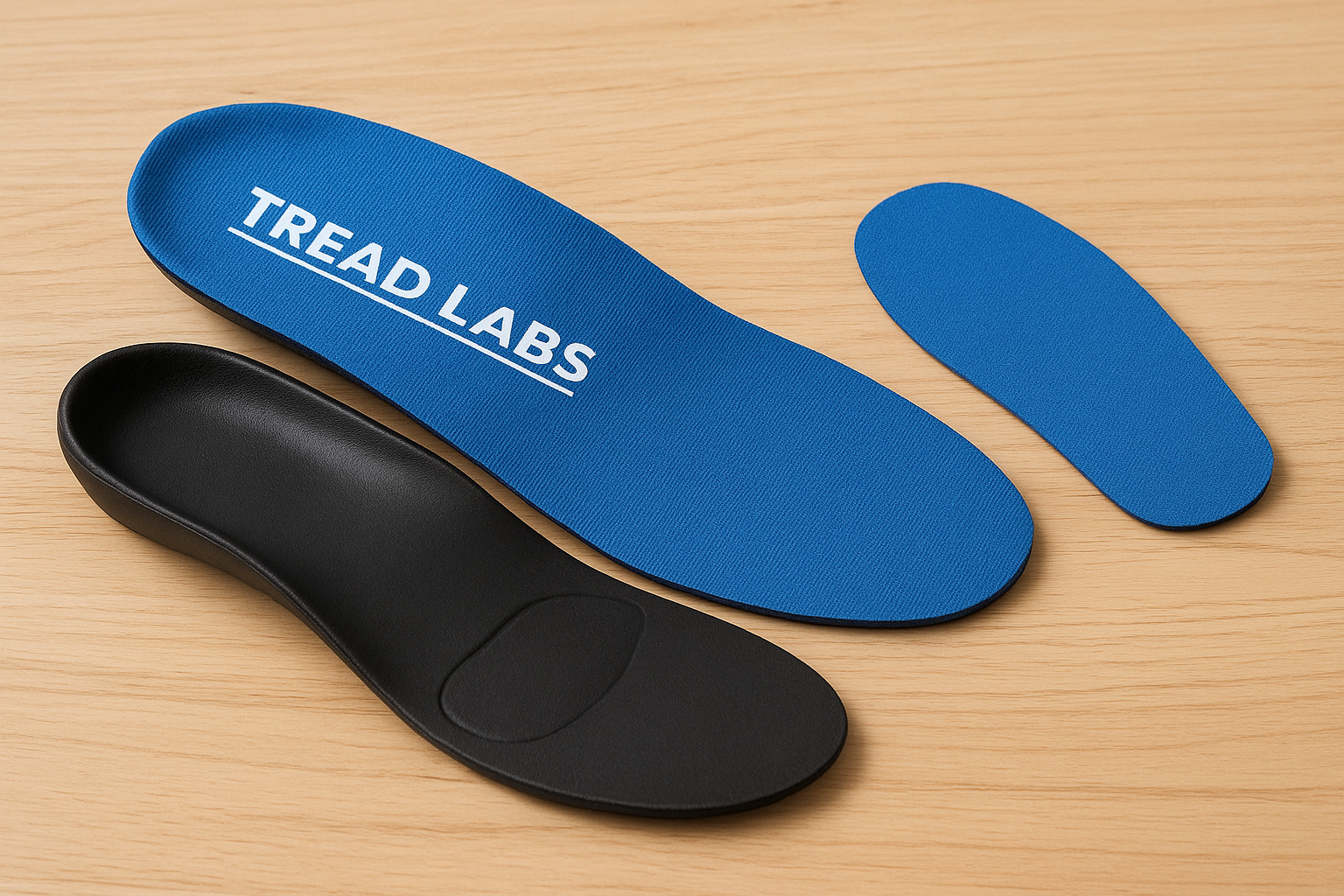
Tread Labs Pace insoles take a different approach than every other option on this list: the arch support and the top cover are separate pieces you can swap out independently. The rigid arch support is built from a medical-grade polymer and comes in five sizes, so instead of guessing between "low, medium, high" like most brands, you get a fit closer to what a custom orthotic offers, without the $500 price tag.
Key features
- Replaceable topsole covers, so you swap out worn cushioning without buying a new arch support
- Five arch height options for a more precise fit than typical three-tier sizing
- Rigid polymer shell that resists compression far longer than foam-based insoles
- Deep heel cup that locks the fat pad in place during heel strike
Arch support level
Adjustable across five sizes, from low to high, which makes the Pace one of the more precisely fitted off-the-shelf options for runners who’ve struggled with standard low-medium-high sizing elsewhere.
Separating the arch support from the cushioning layer means you replace what wears out instead of tossing the whole insole.
Best for
Runners who want near-custom arch precision without a clinic visit, plus anyone tired of replacing an entire insole every time the top cushioning wears thin. They also suit runners with a specific arch height that always falls awkwardly between a brand’s standard size options.
Price range
Expect $65 to $80 for the arch support, with replacement topsole covers running $20 to $30 separately. It costs more upfront than a single Superfeet or PowerStep pair, but the replaceable design saves money over a full running season since you’re not buying a whole new insole every few months.
8. Sole Active insoles
Sole Active insoles use a heat-moldable footbed, a feature borrowed from ski boot fitting, that lets the shell soften with your body heat and reshape slightly to your foot over the first few wears. Heat moldability is what separates Sole from most insoles on this list, since it closes the gap between a generic arch profile and something closer to a custom fit, all without a clinic visit or a $500 price tag.
Key features
- Heat-moldable footbed that softens with wear and adapts to your arch shape
- Deep heel cradle with a stabilizing bridge for added heel-strike control
- Metatarsal support built into the forefoot to reduce pressure on the ball of the foot
- Cork and foam base that provides both structure and shock absorption
Arch support level
Medium to firm, and it adjusts slightly to your actual foot shape once the heat-molding process finishes. That semi-custom fit makes Sole Active insoles a solid step up for runners who’ve outgrown a standard three-tier arch sizing chart.
Heat-molding a footbed to your own foot shape closes most of the gap between an off-the-shelf insole and a custom device.
Best for
Runners with moderate heel pain who want a semi-custom fit without committing to a full custom orthotic, plus anyone whose arch falls between standard sizing options at other brands. They also work well for runners who log high weekly mileage and want a footbed that keeps molding to foot shape changes over a training cycle.
Price range
Expect $50 to $65 per pair, sold through outdoor retailers and some running specialty stores. That price puts Sole Active right alongside Superfeet and Currex, with the heat-molding feature as the main reason to pick this one over a standard fixed-arch insole.
9. Spenco Polysorb Cross Trainer insoles
Spenco built its reputation decades ago on Polysorb foam, and the Cross Trainer version still holds up as a budget-friendly option for runners who need cushioning more than aggressive arch correction. This insole leans toward shock absorption rather than motion control, which makes it a better match for runners whose heel pain comes from impact fatigue rather than a structural pronation problem. It won’t replace a rigid device for someone with collapsed arches, but for general heel soreness after long runs, it does the job at a fraction of the cost of most insoles on this list.
Key features
- Polysorb shock-absorbing foam that cushions the heel and forefoot on impact
- Low-profile design that fits into narrow running shoes without crowding the toe box
- Antimicrobial top cover to manage moisture and odor on long runs
- Reinforced heel cradle for added stability during faster-paced training
Arch support level
Low to medium, with the emphasis on cushioning rather than a firm structural shell. Runners with significant overpronation usually need a firmer arch post than what Cross Trainer insoles provide.
Cushioning helps sore heels recover, but it won’t correct a pronation problem on its own.
Best for
Runners with mild, impact-related heel soreness rather than diagnosed plantar fasciitis, plus anyone who wants an affordable upgrade over the stock insole that came with their shoes. They also suit casual runners logging shorter weekly mileage who don’t need aggressive arch correction.
Price range
Expect $20 to $30 per pair, widely available at pharmacies and big-box stores. That low cost makes Cross Trainer insoles an easy first try before spending more on a structured option.
10. Dr. Scholl’s plantar fasciitis pain relief insoles
Dr. Scholl’s designed this insole around a single job: taking pressure off the exact spot where plantar fascia pain hits hardest. Shock-Guard technology sits directly under the heel, absorbing impact before it reaches the inflamed tissue, and that targeted approach is why this insole shows up in nearly every pharmacy foot-care aisle in the country. Massaging gel nodes line the arch and forefoot, adding a layer of comfort that most budget insoles skip entirely.
Key features
- Shock-Guard heel technology that concentrates cushioning under the painful spot
- Massaging gel nodes through the arch and forefoot
- Semi-rigid arch support built into a lightweight foam base
- Low-profile shape designed to fit most athletic and running shoes
Arch support level
Low to medium, leaning more toward cushioning than structural correction. Runners with flat feet or significant overpronation typically need a firmer shell than what this insole provides.
Targeted heel cushioning eases the sharpest pain point fast, but it won’t correct the pronation pattern causing it.
Best for
Runners dealing with acute, sharp heel pain first thing in the morning, plus anyone testing whether insoles help at all before investing in a pricier option. They also suit occasional runners who log shorter distances and don’t need aggressive motion control, just relief from that first-step pain.
Price range
Expect $15 to $25 per pair at nearly any pharmacy or grocery store. It’s the most accessible option on this list, and a reasonable starting point if you’re not yet sure whether your heel pain needs cushioning alone or a firmer corrective device.
11. Aetrex Speed insoles
Aetrex built the Speed line for runners who want performance-oriented support without the bulk of a traditional orthotic. Aetrex Speed insoles use a compression-molded EVA base paired with a metatarsal pad, targeting both heel strike and forefoot pressure in a single low-profile design. What makes this insole different from others on this list is its background in 3D foot scanning technology, since Aetrex operates in-store scanning kiosks at many shoe retailers, so runners who’ve had a scan done can match their results to the closest Speed model instead of guessing at arch height.
Key features
- Compression-molded EVA base that resists breakdown over hundreds of miles
- Built-in metatarsal pad to reduce forefoot pressure during push-off
- Moisture-wicking, antimicrobial top cover for long-distance comfort
- Slim profile designed to fit snugly inside performance running shoes
Arch support level
Medium, with a firmer heel cup than most cushioning-focused insoles on this list. Runners with neutral to mild pronation patterns tend to get the best results, since the support structure isn’t aggressive enough to correct severe overpronation.
A slim profile with real heel structure is what makes Aetrex Speed work inside snug racing flats where bulkier insoles won’t fit.
Best for
Runners training for races who need support without added bulk in a narrow performance shoe, plus anyone who’s already had a foot scan at an Aetrex retail partner and wants a data-backed fit instead of guesswork. They’re a weaker fit for runners with significant flat feet who need a firmer, more corrective device.
Price range
Expect $45 to $60 per pair at running specialty stores and some department stores. That price sits comfortably alongside Superfeet and Currex, with the scanning-based fit process as the main reason to choose Speed over a standard arch-height insole.
12. Footminders Comfort orthotic insoles
Footminders Comfort insoles round out this list as a budget-friendly semi-rigid option built for runners who need daily arch support without the price tag of a custom device. The contoured arch shell runs the full length of the foot rather than stopping at the midfoot, which gives it more structure than typical drugstore inserts while still staying flexible enough for everyday training runs.
Key features
- Full-length rigid arch shell for consistent support from heel to forefoot
- Deep heel cup that cradles the fat pad and limits side-to-side movement
- Breathable, moisture-wicking top layer for reduced friction on longer runs
- Sold in multiple arch heights, including a high-arch specific model
Arch support level
Medium to firm, depending on which arch-height version you order. Footminders sells separate models for low, medium, and high arches, which helps narrow down fit better than a one-size insole, though it still relies on self-assessment rather than a professional scan.
A full-length rigid shell gives everyday runners more consistent arch support than a insole that only reinforces the midfoot.
Best for
Runners on a tighter budget who still want structured arch support rather than pure cushioning, plus anyone managing mild plantar fasciitis symptoms during easy training runs. They also work well as a backup pair for a second pair of running shoes, since the price makes owning multiples practical.
Price range
Expect $30 to $40 per pair, sold mainly online and through some pharmacies. That price makes Footminders one of the more affordable semi-rigid options on this list, a reasonable middle step between a soft cushioning insole and a firmer, pricier device like Superfeet or Tread Labs.
13. Frequently asked questions about running insoles
Runners ask us the same handful of questions during nearly every fitting, so here are straight answers based on what we see in clinic.
How long do running insoles last? Most off-the-shelf insoles hold their support for 300 to 500 miles, roughly the same lifespan as your running shoes. Custom orthotics last far longer, often three to five years, since the rigid shell doesn’t compress the way foam does.
Can insoles fix plantar fasciitis on their own? Insoles reduce strain on the plantar fascia and speed up recovery, but they rarely fix the problem alone if tight calves or a sudden mileage jump caused the flare-up in the first place. Pairing an insole with calf stretches and a sensible training load gets better results than the insole by itself.
An insole supports your foot, but it can’t undo weeks of ignored stretching and overtraining on its own.
Do I need different insoles for different shoes? Yes, if your running shoes and daily shoes have different volumes. A thick insole that fits your trainers usually crowds your work shoes, which is why several brands on this list sell trim-to-fit or replaceable versions.
Should I replace insoles at the same time as my shoes? Generally yes, especially with foam-based options like Spenco or Dr. Scholl’s. Rigid shells from PowerStep, Superfeet, or Tread Labs can often outlast one pair of shoes and transfer to the next.
Are expensive insoles always better? Not necessarily. A $20 Dr. Scholl’s insert solves mild, impact-related soreness just fine. Severe overpronation or chronic heel pain usually needs the firmer structure only a $50-plus insole or custom device provides.
When it’s time to see a podiatrist
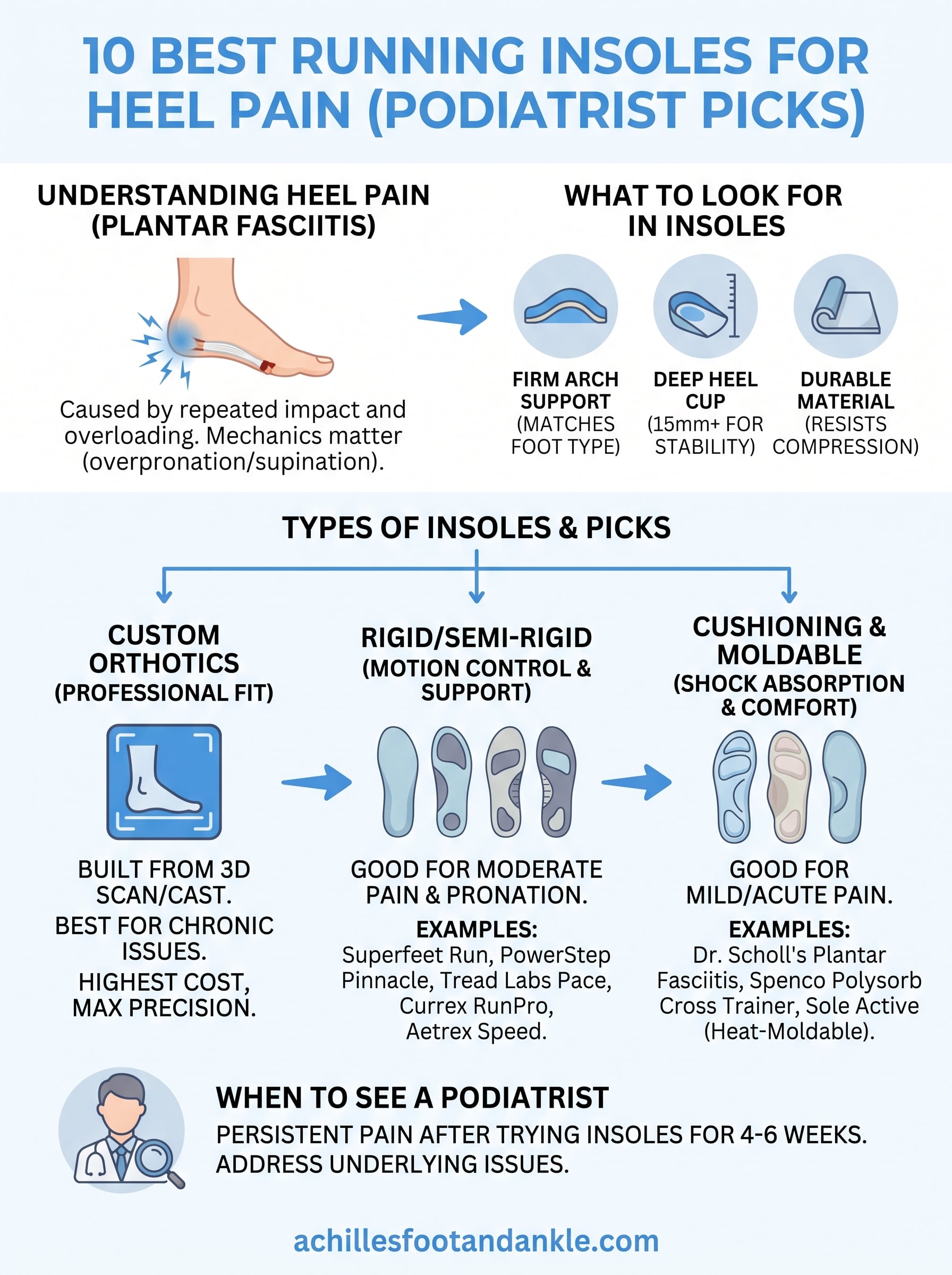
Insoles solve a lot of heel pain, but not all of it. If you’ve tried two or three options from this list and you’re still limping through your first mile after four to six weeks, that’s your sign to stop guessing. Persistent heel pain that doesn’t respond to a good insole usually points to something an over-the-counter product can’t fix, like a stress fracture, nerve entrapment, or a pronation pattern severe enough to need a custom device.
Getting the mechanics right matters more than trying insole number six. Our team fits patients across Central Virginia with everything from off-the-shelf recommendations to custom orthotics built from an actual scan of your foot, and we’ll tell you honestly which one you actually need. Don’t wait until a minor ache turns into a stress fracture that sidelines your training for months. If your heel pain has stuck around longer than a few weeks, book a same-day appointment and get a real answer instead of another guess.