

You rolled your ankle on a curb, a trail root, or a bad landing on the court, and now it’s swollen, stiff, and sore. Someone told you massage might help, but you’re not sure if that’s true or if you’ll just make things worse. Sprained ankle treatment massage can speed healing when you do it the right way, at the right stage of recovery, with the right amount of pressure.
The short answer to your search: yes, massage helps, but timing matters more than most people realize. Rubbing a fresh, swollen sprain too soon can push inflammation in the wrong direction. Wait until the acute swelling settles, then gentle lymphatic strokes and light circular pressure around the ankle can reduce fluid buildup, ease stiffness, and get you moving again faster.
This guide walks you through exactly when to start massaging, which techniques work for each recovery phase, and which mistakes turn a two-week sprain into a two-month problem. If your pain, bruising, or swelling seems severe or isn’t improving, the specialists at Achilles Foot and Ankle Center can check for a fracture or ligament tear that massage alone won’t fix, including the signs of a broken bone in the foot, and get you on a proper recovery plan.
When it’s safe to massage a sprained ankle
Timing decides whether massage helps or hurts. Most sprains fall into one of three grades, and each one dictates how long you should wait before you touch the area at all. A Grade 1 sprain, a mild stretch of the ligament, usually calms down enough for gentle massage within 48 to 72 hours. A Grade 2, a partial tear, often needs 5 to 7 days before any hands-on work. A Grade 3, a complete tear, needs a doctor’s evaluation first, since massage before proper diagnosis can aggravate an already unstable joint.
Wait for the swelling to plateau, not disappear, before you start massaging a sprained ankle.
Signs your ankle is ready
Check for these markers before you begin any sprained ankle treatment massage. If you can answer yes to most of them, you’re likely in the safe zone.
- Swelling has stopped increasing day over day
- Skin isn’t hot to the touch or visibly shiny with fluid
- You can bear at least partial weight without sharp, stabbing pain
- Bruising has started to shift from deep purple to yellow-green
- Pain sits in the 3-to-5 range on a 10-point scale, not an 8 or higher
When to hold off
Otherwise, don’t rush it. Massaging tissue that’s still actively inflamed pushes more fluid into the area instead of moving it out, which extends your swelling and delays the point when you can start real ankle sprain recovery work. Skip massage entirely if you notice numbness, tingling, a visible deformity, or an inability to bear any weight at all, since those point toward a fracture or a complete ligament rupture rather than a routine sprain.
Finally, remember that skin condition matters as much as swelling. Never massage over open wounds, active bruising that’s still spreading, or skin that looks discolored and warm, a combination that can signal a developing infection or a blood clot. If you’re diabetic or have circulation issues, check with your podiatrist before starting any massage protocol, since reduced sensation can hide problems a massage would otherwise reveal through pain.
Step 1. Follow RICE for the first 72 hours
Before you even think about touching your ankle with massage strokes, you need to get the RICE protocol for treating an ankle sprain locked in. Rest, ice, compression, and elevation form the foundation that makes every later step of your sprained ankle treatment massage actually work. Skip this phase and you’re massaging tissue that’s still flooding with fluid, which undoes any benefit you’re chasing.
RICE isn’t a delay tactic, it’s what makes the massage that follows actually effective.
The four steps, done right
Work through each element in this order every few hours during the first three days:
- Rest: Stay off the ankle as much as possible. Use crutches if putting weight down causes sharp pain.
- Ice: Apply a cold pack wrapped in a thin towel for 15 to 20 minutes at a time, four to six times a day, and save heat for a sprained ankle for the later, stiffer stage of recovery.
- Compression: Wrap the ankle with an elastic bandage or pull on compression socks made for ankle swelling, snug enough to control swelling but loose enough that your toes don’t tingle or go pale.
- Elevation: Prop the ankle above heart level whenever you’re sitting or lying down, which helps fluid drain rather than pool at the joint.
Most people relax this routine too early because the pain drops faster than the swelling does. Don’t make that mistake. Once you notice the swelling holding steady rather than climbing day to day, you’ve cleared the first hurdle toward safe ankle injury massage work and the rest of the tips for healing an ankle injury faster. If pain worsens instead of easing over those 72 hours, that’s your cue to get evaluated rather than push forward on your own.
Step 2. Start with gentle circular massage
Once swelling has plateaued and you’ve cleared the RICE phase, you’re ready for the first hands-on step. Gentle circular massage moves stagnant fluid out of the ankle instead of pushing more in, which is why pressure and direction matter more than speed here. Think of this as lymphatic drainage, not deep tissue work. You’re coaxing fluid toward the knee, not kneading the injury itself.
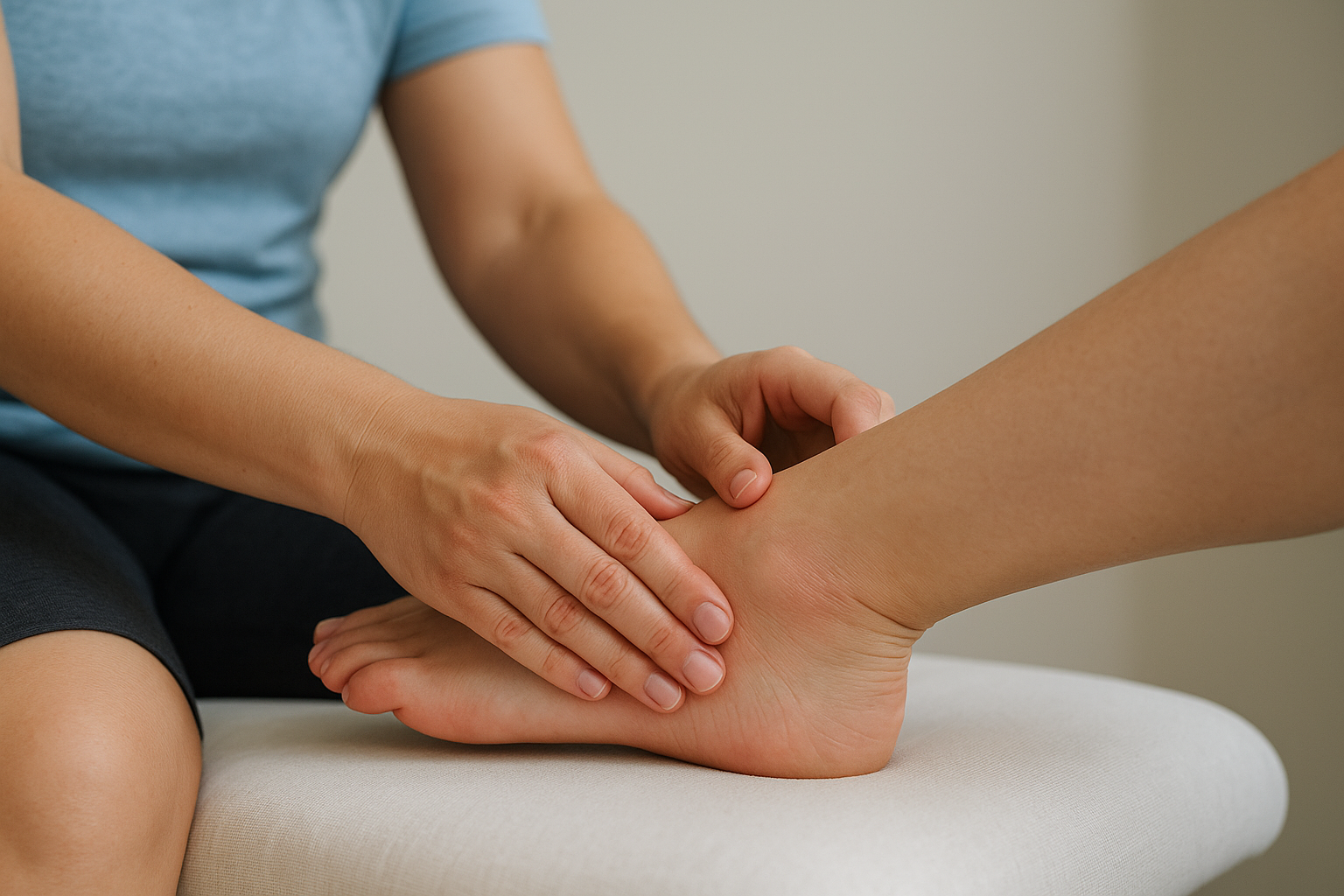
Light, slow circles that move fluid upward do more for a sprained ankle than firm pressure ever will.
How to do it
Sit with your leg elevated and your ankle relaxed. Use two or three fingers, not your whole palm, and keep the pressure light enough that it never causes sharp pain.
- Start just above the ankle bone, on the calf side, not directly over the swollen ligament.
- Make small, slow circles, moving upward toward the knee, never downward toward the toes.
- Spend 30 to 60 seconds on each section before shifting slightly higher.
- Work the full area from ankle to mid-calf over 5 to 8 minutes total.
- Stop immediately if you notice increased throbbing or heat afterward.
What to expect
Expect mild redness and warmth right after a session, that’s normal circulation, not a red flag. Repeat this circular massage once or twice a day for the first week of your ankle sprain massage routine before progressing to more targeted work on the ligament itself.
Step 3. Apply cross-friction massage to the ligament
Once circular massage feels comfortable and swelling stays low for a few days, you can move to cross-friction massage. This technique targets the ligament fibers directly, breaking up minor adhesions and encouraging the tissue to heal with better alignment instead of a tangled, weak scar. Wait until you’re at least 7 to 10 days out from a Grade 1 sprain, or longer for a Grade 2, before you try this step of sprained ankle treatment massage.
Cross-friction massage works the ligament itself, not the fluid around it, so only start once swelling is fully under control.
Technique and pressure
Use your thumb or two fingertips directly over the ligament, usually just below and in front of the ankle bone for a typical lateral sprain. Press firmly enough to feel the tissue move under your finger, then rub perpendicular to the direction of the ligament fibers, side to side rather than up and down.
- Locate the tender band along the ligament, not the bone itself.
- Apply moderate pressure and move your finger back and forth across the fibers.
- Work in 30-second bursts, then pause to check for lingering soreness.
- Limit total treatment to 5 minutes per session.
- Do this once daily, never twice, since this technique is more intense than circular strokes.
Reading your body’s response
Some soreness during and right after cross-friction work is normal, similar to a deep muscle knot release. Sharp pain, however, means you’re pressing too hard or you started this phase too early in your step-by-step ankle injury recovery plan. Back off pressure before you back off the technique entirely.
Step 4. Massage the calf to boost circulation
After the ligament work settles, shift your attention up the leg to the calf itself. The muscles there act as a pump for venous and lymphatic return, so a tight, guarded calf slows the drainage your ankle needs to finish healing. Loosening this area supports the rest of your sprained ankle treatment massage plan by keeping fluid moving instead of settling back down at the joint.
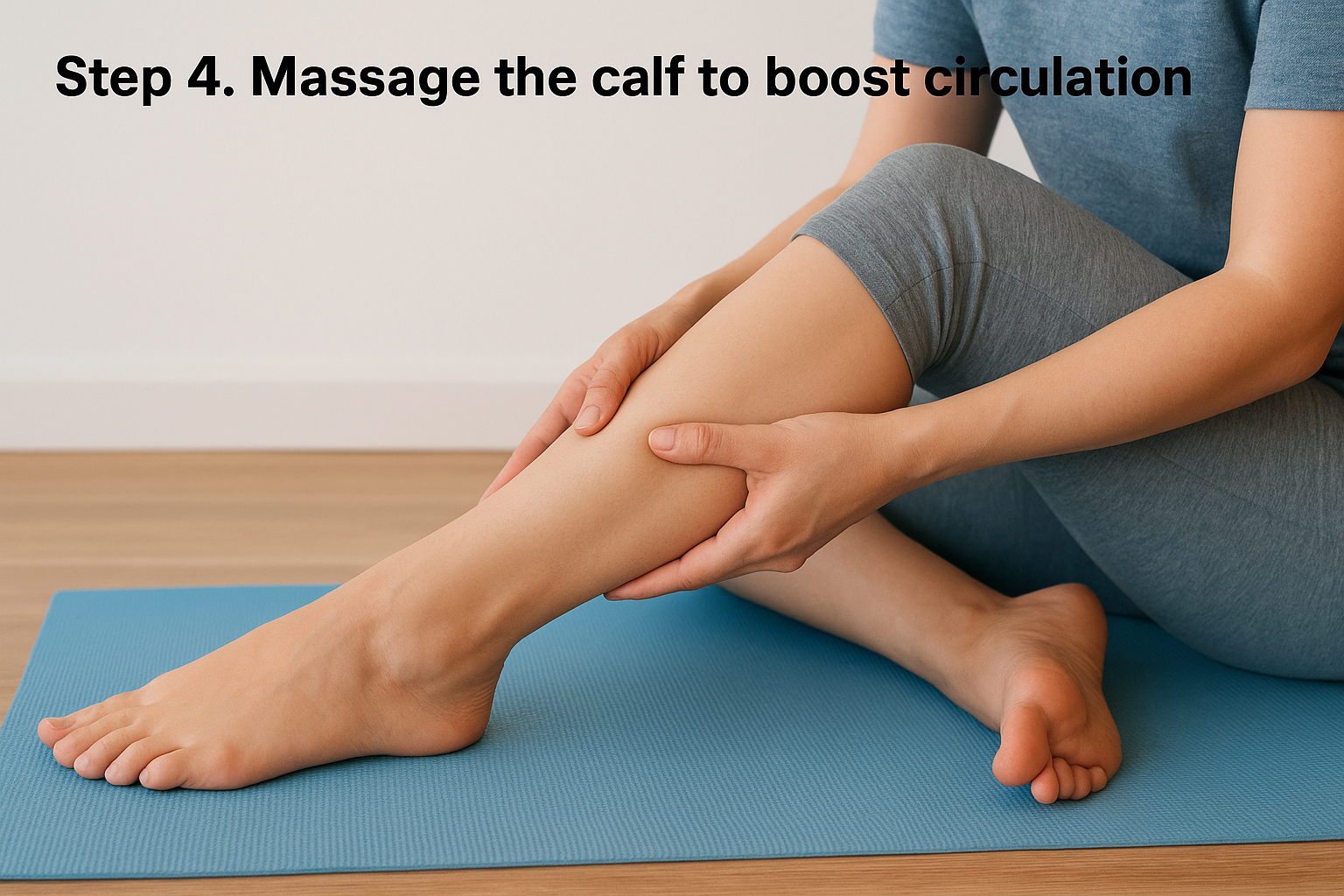
A tight calf holds fluid at the ankle no matter how well you massage the joint itself.
Why the calf tightens up
Guarding is automatic. Once you sprain an ankle, the calf muscles above it tense to protect the joint, even when you’re sitting still. That constant low-level tension restricts circulation support exactly when you need it most, so releasing it isn’t optional, it’s part of the protocol.
How to work the calf
Sit with your leg extended and slightly bent at the knee to keep the muscle relaxed.
- Use both hands and knead the calf muscle from ankle to knee, like squeezing a loaf of bread.
- Apply firmer pressure here than you did on the ankle itself, since calf tissue tolerates more force.
- Spend 3 to 5 minutes total, working in slow upward strokes.
- Follow with a few minutes of gentle ankle circles, rotating clockwise then counterclockwise, to keep the joint mobile.
Repeat this daily. Within a week, most people notice less tightness and steadier progress in restoring ankle mobility.
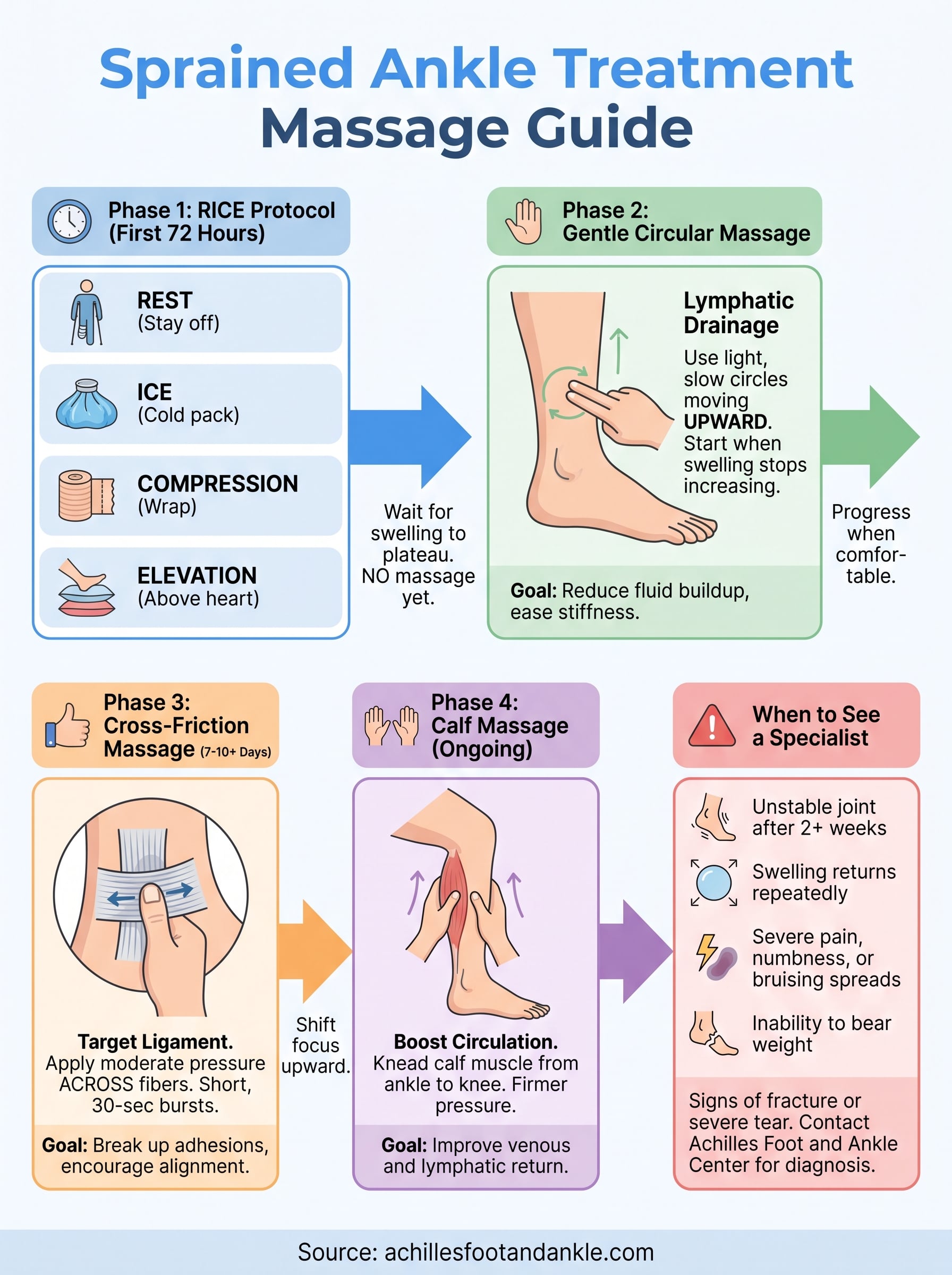
Know when it’s time to see a specialist
Massage helps most sprains heal faster, but it’s not a substitute for a real diagnosis. If your ankle still feels unstable after two weeks, if swelling keeps returning after each session, or if you never regained full weight-bearing ability, those are signs of a Grade 2 or 3 tear that needs more than home care. Bruising that spreads instead of fades, numbness, or pain that spikes rather than settles also point toward something massage can’t fix on its own.
You know your body better than any guide can predict, so trust it when something feels off. A proper exam can catch a hairline fracture or a ligament that’s healing crooked before it turns into chronic instability. The team at Achilles Foot and Ankle Center sees these cases every week across Central Virginia, so don’t wait out a sprain that isn’t improving. Schedule a same-day visit with our foot and ankle team and get back on your feet with a plan built around your actual injury, not guesswork.