
That thick, hardened patch on your heel or the ball of your foot didn’t show up overnight, and it won’t disappear with a pumice stone either. Once calluses build up layer by layer, home remedies usually just shave off the surface while the root cause keeps grinding away underneath. That’s when people start searching for how a foot doctor remove calluses safely, without the nicks and infections that come from bathroom-cabinet surgery.
Here’s the short answer: a podiatrist uses a sterile scalpel to trim away dead, thickened skin in a quick in-office procedure that typically takes just a few minutes and causes little to no pain. Unlike cutting at home, this method removes the callus at its source and lets your doctor check for the underlying issue, whether that’s bone structure, gait, or footwear, so it doesn’t just grow right back.
In this article, we’ll walk through exactly what happens during a callus removal visit, what it costs, how much it hurts (spoiler: not much), and whether the results actually last. We’ll also cover when self-treatment is fine versus when you need professional care, especially if you’re diabetic or dealing with recurring, painful calluses.
Why see a foot doctor for callus removal
Most people reach for a razor, clippers, or a drugstore callus pad before ever thinking about a doctor’s visit, and that instinct is understandable. The problem is that skin thickens for a reason, usually a bone spur, a shifted metatarsal, or a shoe that rubs the same spot with every step. Cutting off the surface layer at home does nothing to fix that mechanical cause, so the callus rebuilds itself within weeks. A podiatrist for calluses looks past the dead skin to figure out why it’s forming in the first place, then treats both the callus and the pressure point feeding it.
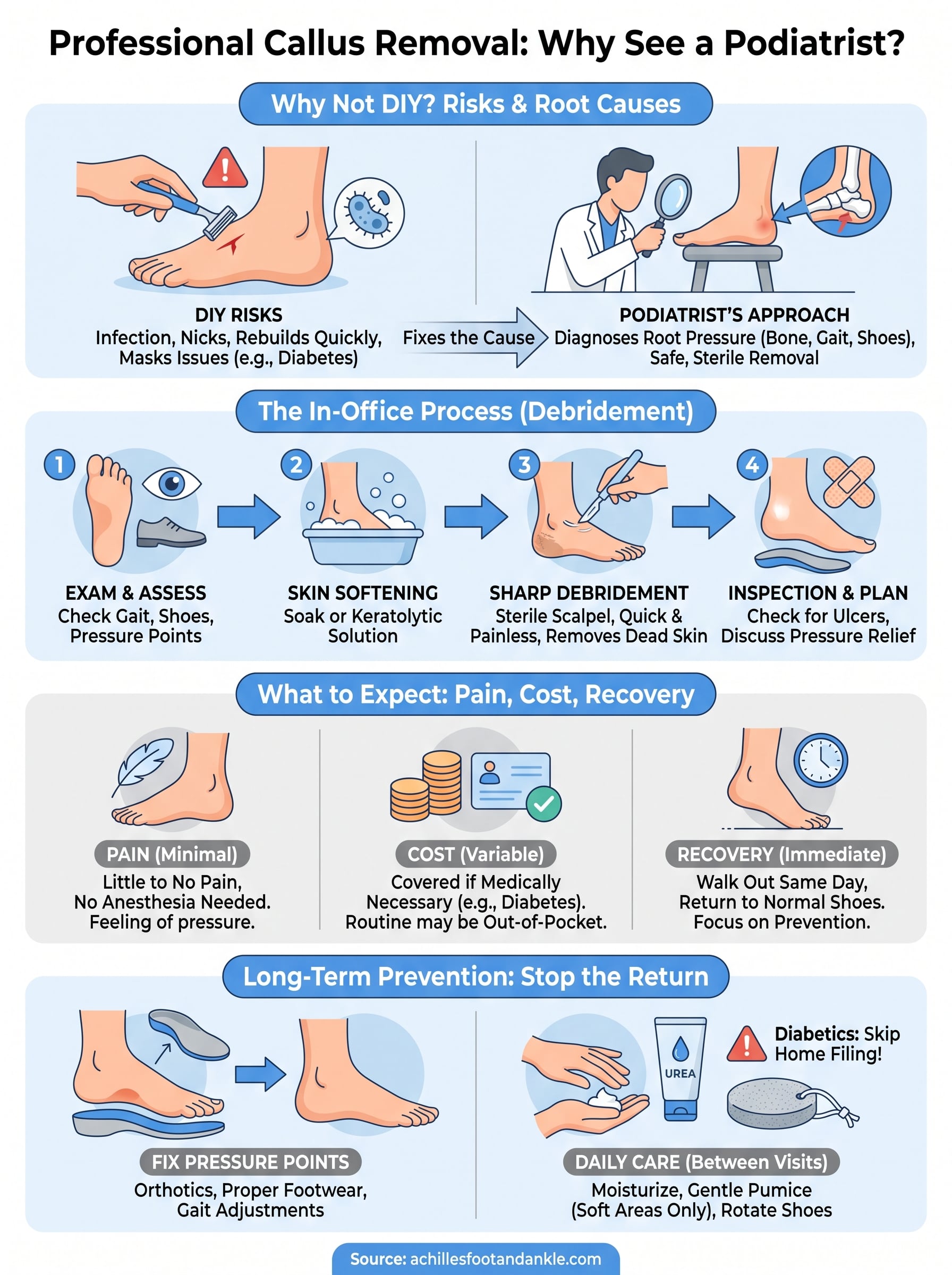
The risks of DIY callus removal
Household razors and callus shavers aren’t sterile, and a slip can turn a hard patch of skin into an open wound, which is why safer home callus removal methods matter if you’re going to try anything yourself. That’s a real problem if you have thin, fragile skin, poor circulation, or diabetes, where even a small nick can become an infection that’s slow to heal.
A callus that keeps coming back isn’t a skin problem, it’s a pressure problem, and only a doctor can find where that pressure lives.
When self-care isn’t enough
Certain signs mean it’s time to stop trimming at home and book an appointment instead:
- The callus is painful to walk on, not just to touch
- It’s cracking, bleeding, or looks infected
- You have diabetes or peripheral neuropathy
- The same spot keeps forming a callus no matter what you try
- You notice a dark spot underneath, which could be a wart or something else entirely
Diabetic patients in particular need professional diabetic foot care rather than home remedies, since reduced sensation can hide a developing ulcer under what looks like an ordinary callus. Our team at Achilles Foot and Ankle Center sees this often enough that we treat every diabetic callus as a potential warning sign, not just a cosmetic nuisance. Seeing a specialist also means you get an actual diagnosis. Sometimes what looks like a callus is a plantar wart, a corn, or a sign of an underlying deformity like a hammertoe, and knowing the difference between corns and calluses matters, because treating the wrong thing gets you nowhere fast.
How podiatrists remove calluses step by step
Walking into a callus removal appointment, most patients expect something dramatic. In reality, the callus debridement procedure is straightforward and follows a predictable sequence that a podiatrist has done hundreds of times.
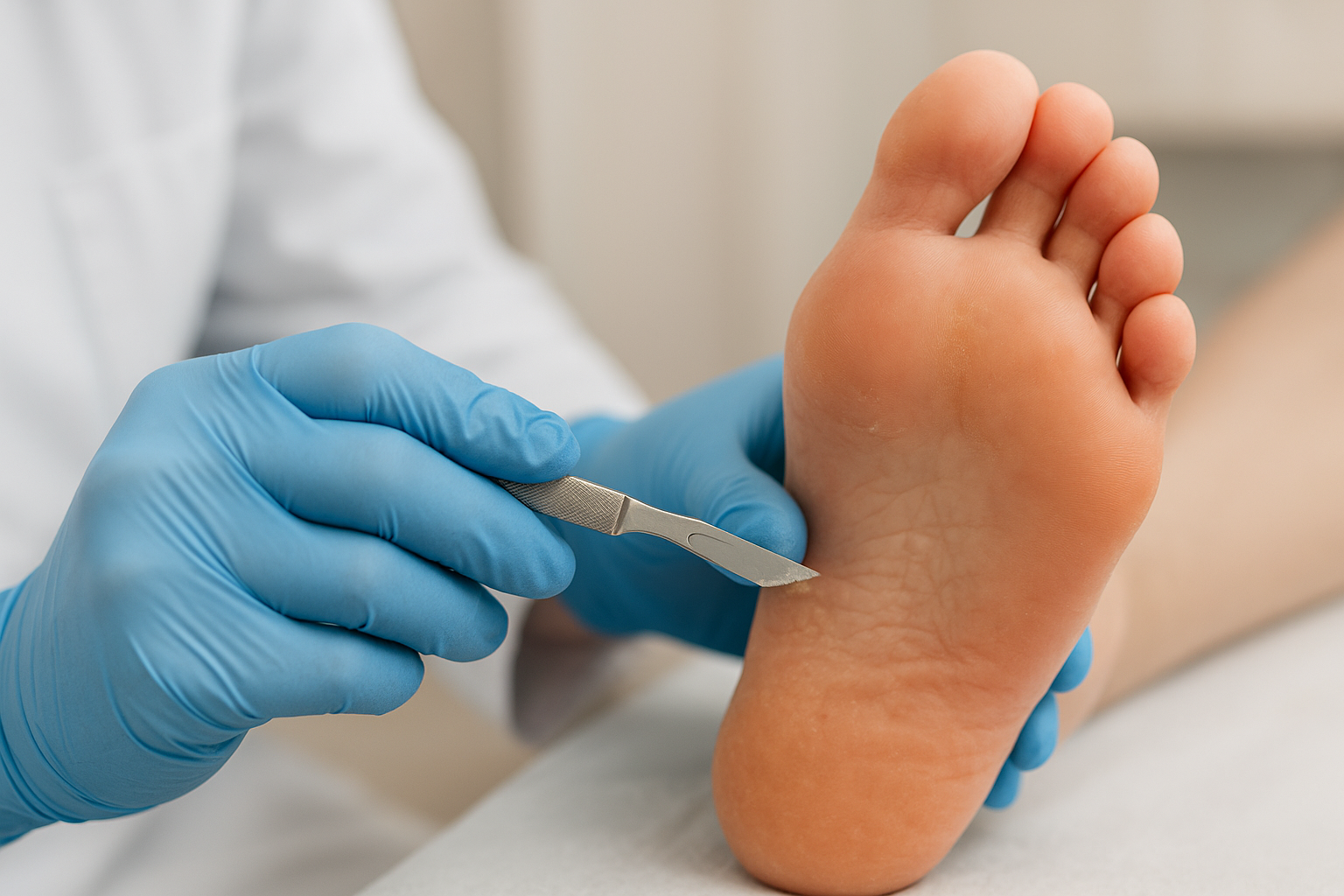
- Exam and assessment: The doctor examines the callus, checks your gait, and looks at your shoes to find the pressure point causing it.
- Skin softening: In some cases, the area is soaked or treated with a keratolytic solution to soften the thickened tissue before trimming.
- Sharp debridement: Using a sterile scalpel, the podiatrist shaves away the dead, hardened layers in thin slices until healthy skin is reached.
- Inspection underneath: Once the surface is removed, the doctor checks for ulcers, other issues hiding beneath the callus, or a wart that would need treatment for plantar warts instead.
- Pressure relief: Padding, orthotics, or shoe recommendations are discussed to stop the callus from rebuilding at the same spot.
Removing the dead skin is the easy part; finding the pressure point behind it is what actually stops the callus from returning.
Unlike a bathroom pumice stone, this sharp debridement technique gives an even, controlled result without gouging healthy tissue. Very thick or vascular calluses sometimes need a follow-up visit, but most are handled completely in one sitting. Occasionally, a doctor will use a small handheld drill or file to smooth the surrounding callus edges so the skin heals evenly.
What to expect: pain, cost, and recovery time
Pain during a callus removal is usually minimal, since the doctor is only shaving away dead skin that has no nerve endings. You might feel a light pressure or scraping sensation, but most patients describe it as far less uncomfortable than they expected, and no anesthesia is needed for a routine trim. Deeper calluses sitting over a bony prominence can feel tender for a day or two afterward, similar to a mild bruise.
Removing a callus rarely hurts more than the sensation of pressure, because the doctor is only ever cutting away skin that’s already dead.
Cost depends on your insurance and whether the visit is billed as routine foot care or medically necessary debridement. Most major plans cover callus removal cost when there’s an underlying condition like diabetes or poor circulation documented in your chart, and Medicare’s foot care coverage guidelines spell out exactly when that applies.
| Scenario | Typical Coverage |
|---|---|
| Diabetic or vascular patient | Usually covered as medically necessary |
| Routine cosmetic trim, no condition | Often out-of-pocket, low cost |
| Recurring painful callus with gait issue | Covered after evaluation |
Recovery is essentially immediate. You can walk out of the office and return to normal shoes the same day, though your podiatrist may recommend a bandage or padding over sensitive spots for a few days. Since calluses grow back if the pressure source isn’t addressed, the real recovery work happens through orthotics, shoe changes, or gait adjustments discussed at your visit.
Preventing calluses from coming back
Stopping a callus from returning means treating the pressure, not just the skin. Once your podiatrist identifies whether the culprit is a bone spur, a hammertoe, or a shoe that pinches with every step, the plan for preventing corns and calluses targets that specific cause instead of guessing.
Fix the pressure point and the callus has nowhere left to build.
Footwear and orthotic adjustments
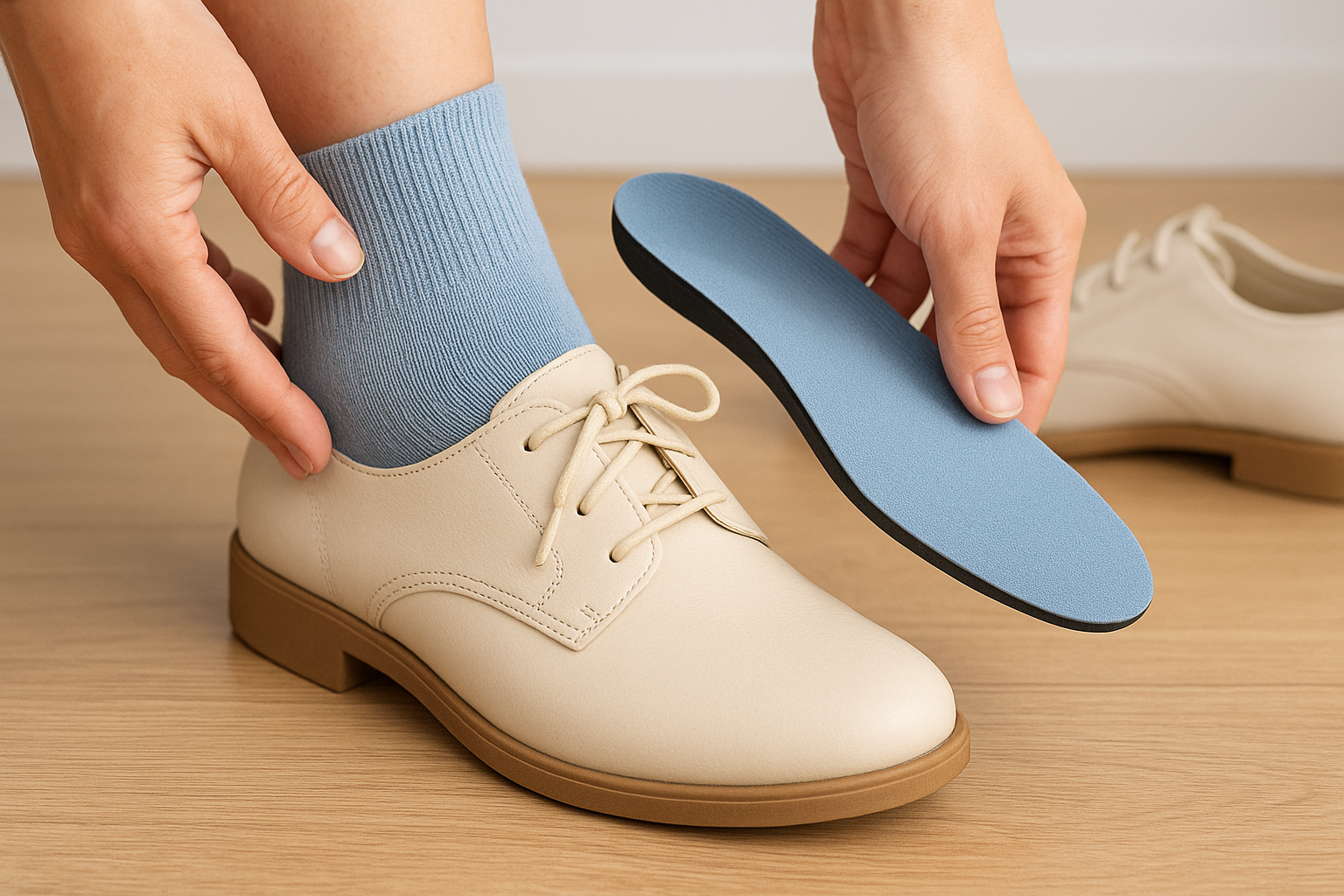
A properly fitted shoe with a wide toe box and cushioned sole removes the friction that thickens skin in the first place. Many patients also benefit from custom-molded orthotics that redistribute weight away from problem spots like the ball of the foot or heel. If a structural issue like a bunion or hammertoe is driving the pressure, your doctor may discuss bracing or, in persistent cases, a minor procedure to correct the deformity itself.
Daily habits that help
Simple home care between visits keeps thickened skin from creeping back:
- Moisturize daily with a urea-based cream to keep skin pliable
- Use a pumice stone gently, never a razor, on soft callused areas only
- Rotate shoes so the same spot isn’t pressured every day
- Add protective padding over bony areas prone to rubbing
Diabetic patients should skip at-home filing entirely and stick to scheduled professional visits, since even minor mistakes carry outsized risk when circulation or sensation is reduced.
Putting your feet first
A callus is your body’s way of telling you something’s rubbing wrong, whether that’s a shoe, a bone spur, or the way you walk. Shaving it down at home might smooth things over for a week, but it does nothing about the pressure that built it in the first place. Getting a foot doctor remove calluses the right way means the dead skin comes off cleanly, the real cause gets diagnosed, and you leave with an actual plan instead of a temporary fix. Diabetics and anyone with recurring, painful, or infected-looking calluses shouldn’t wait for it to get worse; the earlier a podiatrist looks at it, the simpler the treatment usually is.
You don’t need to live with thick, cracked skin or keep re-cutting the same spot every few weeks. If that patch on your heel or ball of your foot has been bothering you longer than you’d like to admit, schedule a same-day appointment with our podiatrists and let someone who does this daily take care of it properly.