
Gout strikes fast. One moment you’re fine, and the next your big toe joint is swollen, red, and throbbing with pain that makes even a bedsheet feel unbearable. If you’ve been searching for a gout specialist near me in the Richmond area, you’re probably dealing with either a first flare-up that caught you off guard or recurring attacks that you’re tired of powering through.
The challenge is knowing exactly where to turn. Gout affects the foot and ankle more than almost any other part of the body, which means podiatric specialists, not just general practitioners, play a critical role in accurate diagnosis and effective treatment. At Achilles Foot and Ankle Center, our team across thirteen Central Virginia locations sees gout patients regularly, from first-time flare-ups to chronic cases that need long-term management plans.
Finding the right specialist can make the difference between ongoing pain and real relief. This article walks you through six practical tips for finding a qualified gout specialist in Richmond, VA, so you can stop searching and start getting the care you need.
1. Book a visit at Achilles Foot and Ankle Center
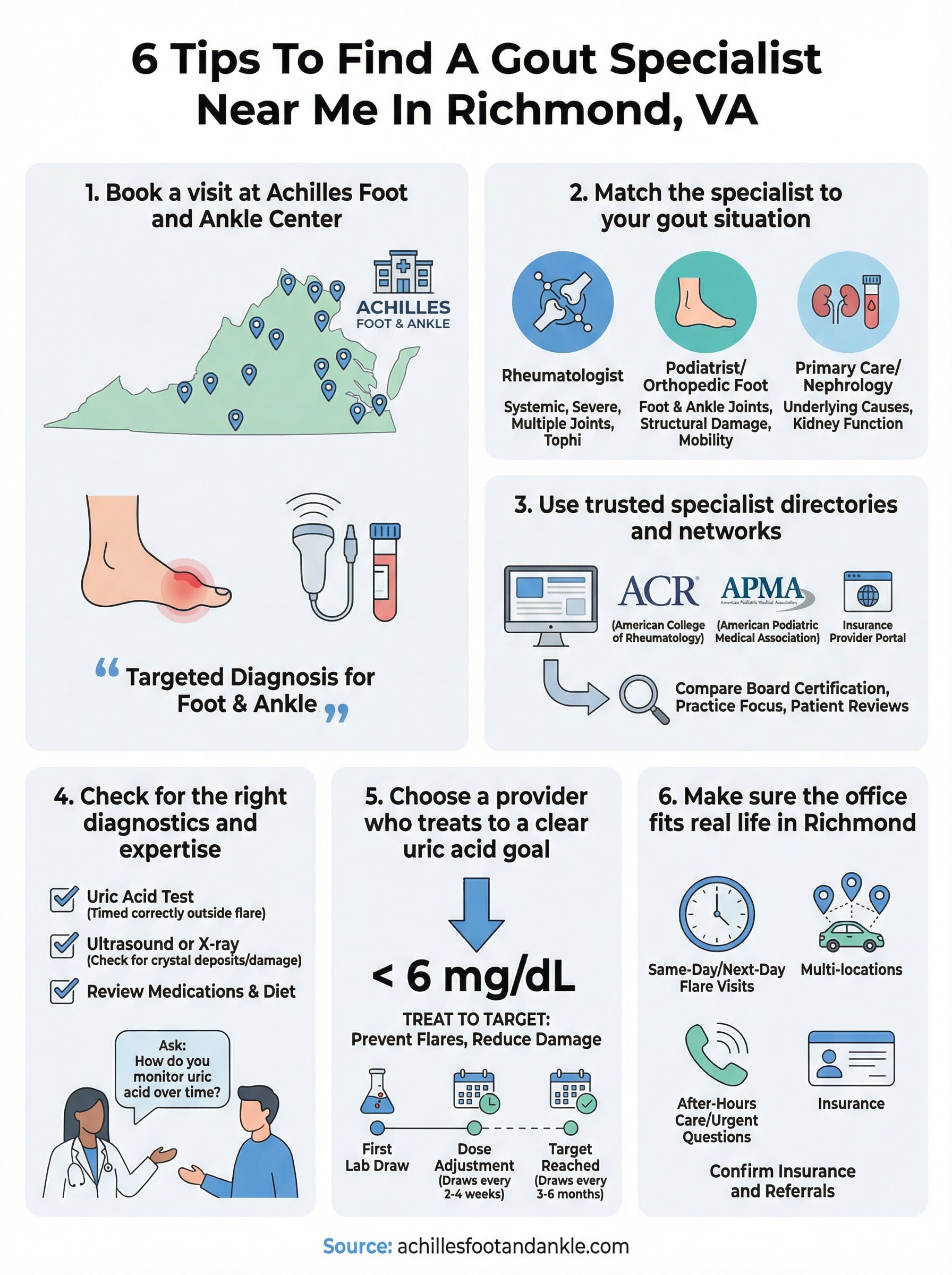
When you’re searching for a gout specialist near me, your first call should be to a foot and ankle practice. Achilles Foot and Ankle Center has thirteen locations across Central Virginia, which means you can likely find care close to home without a long wait.
Why start with a foot and ankle specialist
Gout most commonly attacks the joints in your feet and ankles, particularly the big toe joint, midfoot, and ankle. A podiatrist trained in foot and ankle care understands how uric acid crystals behave in these specific joints and can differentiate gout from other conditions like infection, bursitis, or stress fracture that produce similar symptoms.
Starting with a foot and ankle specialist means you get a targeted diagnosis instead of a generic workup that misses structural joint damage early.
What care to look for at a podiatry visit
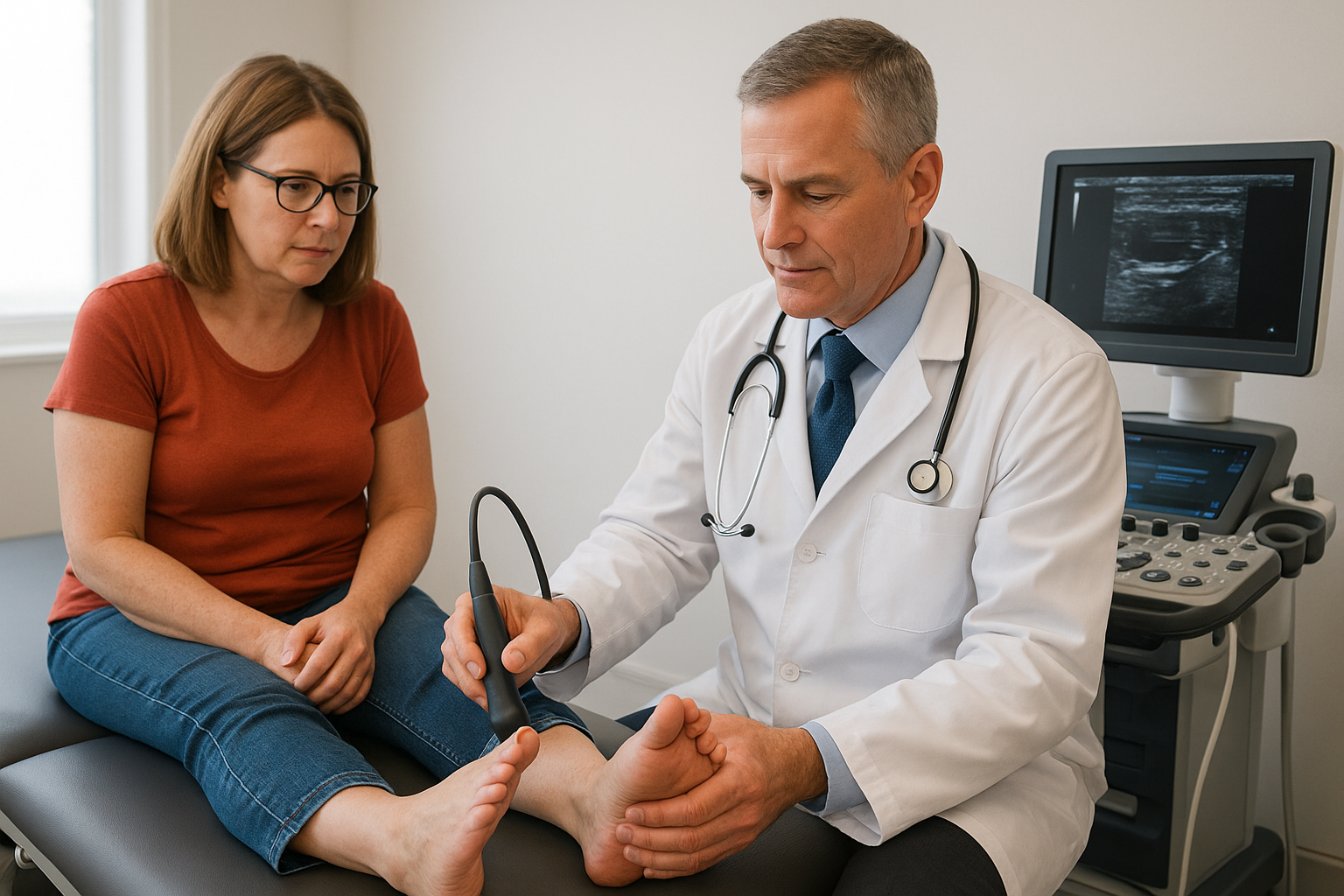
You want a practice that offers in-office imaging and joint assessment so the provider can evaluate the affected joint directly rather than relying solely on bloodwork. Look for clinicians who use ultrasound or digital X-ray to check for crystal deposits, tophi, or joint erosion. Achilles Foot and Ankle Center uses advanced diagnostic technology to confirm gout and rule out other causes of acute joint pain.
A strong visit also includes a uric acid blood test ordered at the right time, not during an active flare when levels can temporarily appear normal, along with a treatment plan that addresses both the current attack and long-term prevention.
What to ask when you schedule and check in
Before you confirm your appointment, ask the front desk whether the practice regularly treats gout patients and whether the provider can order labs and imaging on the same visit. This saves you from moving between multiple offices before getting answers.
When you check in, bring a list of any medications you currently take, including diuretics or low-dose aspirin, since several common drugs raise uric acid levels. Sharing your diet habits, alcohol intake, and family history gives the provider the full picture needed to build an effective care plan from the start.
2. Match the specialist to your gout situation
Not every gout case needs the same type of doctor. Matching your specialist to your specific situation saves time and gets you to effective treatment faster. Understanding which provider fits your case helps you search for a gout specialist near me with more confidence.
When a rheumatologist makes the most sense
A rheumatologist focuses on systemic inflammatory conditions, making them a strong fit if your gout is severe, affects multiple joints at once, or has not responded to standard uric acid-lowering therapy. They also handle cases where gout overlaps with other autoimmune or inflammatory conditions like rheumatoid arthritis or psoriatic arthritis.
If you’ve had three or more flares in a year or carry visible tophi, a rheumatologist should be part of your care team.
When a podiatrist or orthopedic foot specialist helps most
A podiatrist or orthopedic foot specialist is often the best first call when gout hits your big toe, midfoot, or ankle. These providers evaluate joint damage, structural changes, and mobility issues that result from repeated flares and can manage both the acute episode and long-term foot health.
When to involve nephrology or primary care
Your primary care physician plays a key role in managing the underlying causes of high uric acid, including kidney function, diet, and medication interactions. If lab work shows impaired kidney function, a nephrologist may also need to step in to adjust urate-lowering therapy safely without putting additional strain on your kidneys.
3. Use trusted specialist directories and networks
Once you’ve determined which type of specialist fits your case, online directories help you narrow down your choices when searching for a gout specialist near me in Richmond. Using reputable networks keeps you away from outdated listings and connects you with providers who are actively seeing patients.
Where to search for gout-focused clinicians
The American College of Rheumatology and the American Podiatric Medical Association both maintain online provider directories where you can filter by location and specialty. Your insurance company’s provider portal is another practical starting point, since it shows in-network options sorted by distance, acceptance status, and current availability. Both resources update more regularly than general review sites, which makes them more reliable for finding active providers.
How to compare options without getting overwhelmed
Focus on three core factors: board certification, practice focus, and patient reviews on established health platforms. Narrow your list to two or three candidates before diving into detailed research. Evaluating ten providers at once rarely helps you decide faster and often creates more confusion than clarity.
Shortlisting two to three providers and comparing them side by side gives you a clearer path to booking your first appointment.
How to confirm a provider actually treats gout
Call the office directly and ask whether the provider diagnoses and manages gout on a regular basis. Confirm they can order a uric acid panel and joint imaging during your first visit rather than referring you elsewhere for basic diagnostics. A practice that handles gout routinely will answer both questions without hesitation.
4. Check for the right diagnostics and expertise
Not every provider who sees gout patients runs a thorough workup. When you search for a gout specialist near me, knowing what solid diagnostics look like helps you avoid practices that only treat the flare and send you home without a long-term management plan.
What a strong gout workup looks like
A complete gout evaluation goes beyond a single blood draw. Your provider should time the serum uric acid test correctly, outside of an active flare when levels can read falsely low, and use joint imaging such as ultrasound or X-ray to identify crystal deposits, tophi, or structural joint damage that bloodwork alone cannot catch.

- Uric acid test timed outside an active flare
- Ultrasound or X-ray to assess joint and soft tissue damage
- Review of medications, kidney function, and diet history
Signs a clinician treats gout beyond flare care
Providers who manage gout well discuss urate-lowering therapy as a long-term strategy rather than relying only on anti-inflammatory medications to stop the current attack. Look for a clinician who schedules follow-up lab draws at regular intervals to track your uric acid toward a defined target.
A provider focused only on flare management is treating symptoms, not the disease.
Questions that reveal real gout experience
Ask directly: "How do you monitor uric acid over time?" and "What target level do you aim for?" A provider with real gout experience will answer both clearly and cite a specific numeric goal, typically below 6 mg/dL for most patients.
Vague answers or a focus only on pain relief suggest the clinician handles gout reactively rather than proactively. That approach leads to more flares and more long-term joint damage over time.
5. Choose a provider who treats to a clear uric acid goal
When you search for a gout specialist near me, treatment quality often comes down to one question: does the provider commit to a specific uric acid target, or do they simply manage your flares as they arrive?
What "treat to target" means for gout
"Treat to target" is an evidence-based approach where your provider sets a defined uric acid goal, typically below 6 mg/dL for most patients, and adjusts your medication until your levels consistently reach that number. This matters because uric acid above the saturation threshold continues to deposit crystals in your joints even when you feel fine between attacks.
Lowering uric acid to a clear target reduces flare frequency and prevents the long-term joint damage that repeated attacks cause.
How follow-ups and lab monitoring should work
Your provider should schedule regular uric acid blood draws when you first start urate-lowering therapy and space them out once your levels stabilize. Look for a monitoring plan that includes:
- Draws every two to four weeks during dose adjustment
- Spacing to every three to six months once you reach your target level
What to do if you still flare after starting treatment
Flares during the first few months of treatment are common and expected, since shifting uric acid levels can temporarily mobilize crystals already sitting in your joints. Your provider should have a clear short-term plan for anti-inflammatory coverage during this adjustment window.
A provider who treats each early flare as a treatment failure may pull back on your medication too soon, leaving your uric acid levels elevated and your joints at continued risk.
6. Make sure the office fits real life in Richmond
Even the most qualified gout specialist near me won’t help you if the practice doesn’t fit your daily schedule. Richmond’s traffic patterns and spread-out geography mean that distance and appointment availability matter as much as credentials when you’re dealing with an active flare.
How to balance distance, wait times, and access
Look for a practice with multiple locations across Central Virginia so you’re not locked into a single office far from home or work. Check whether the office offers same-day or next-day appointments for acute flares, since waiting two weeks with a swollen, painful joint simply isn’t a realistic option.
A practice that can see you quickly during a flare is worth more than a highly rated office that books three weeks out.
What to confirm about insurance and referrals
Before you book, call the office and confirm they accept your specific insurance plan, not just the insurance company in general. Ask whether you need a primary care referral to be seen, since some plans require one and skipping this step can lead to unexpected out-of-pocket costs.
What to ask about urgent flare visits and after-hours care
Ask the practice directly how they handle patients in active flares who call outside normal business hours. Find out whether you can reach a provider by phone or patient portal for urgent medication questions, or whether the office would send you to an emergency room for something they could manage themselves.
Next steps
Finding the right gout specialist near me in Richmond comes down to matching the provider to your specific situation, confirming they run a thorough diagnostic workup, and making sure the practice fits your daily life. The six tips in this article give you a clear framework to stop searching blindly and start booking with confidence.
Your feet and ankles carry the most direct impact from gout, which makes Achilles Foot and Ankle Center a strong starting point for care. With thirteen locations across Central Virginia, same-day appointments, and advanced in-office diagnostics, the team can evaluate your joint, order the right labs, and build a treatment plan that goes beyond flare management. You don’t have to keep waiting out painful attacks and hoping the next one doesn’t arrive.
Take the first step toward lasting relief and schedule a same-day appointment at Achilles Foot and Ankle Center today.