
You’ve scheduled your hammertoe surgery, now comes the question everyone asks: how long until I’m back to normal? Understanding the hammertoe surgery recovery timeline helps you plan time off work, arrange for help at home, and set realistic expectations for each stage of healing.
Recovery typically spans six to eight weeks for most patients, though full healing can take several months depending on the procedure performed and your overall health. The good news is that each week brings noticeable progress, from initial rest and elevation to gradually bearing weight and eventually returning to regular shoes and activities.
At Achilles Foot and Ankle Center, our podiatric surgeons perform hammertoe corrections regularly across our Central Virginia locations, and we guide patients through every phase of recovery. This article breaks down what to expect week by week after surgery, covering pain management, walking milestones, wound care, and when you can reasonably expect to drive, work, and exercise again.
What affects your recovery timeline
Not every hammertoe surgery is the same, which means your hammertoe surgery recovery timeline won’t necessarily match your friend’s or what you read in an online forum. Several factors determine how quickly you heal and when you can return to your regular routine.
Type of procedure performed
The surgical technique your podiatrist uses has the biggest impact on recovery duration. A simple soft tissue release (cutting tight tendons) typically heals faster than procedures involving bone resection or fusion, where your surgeon removes part of the toe joint or permanently fuses bones together with pins or screws. If you had multiple toes corrected during one surgery, expect your timeline to extend by several weeks compared to a single toe repair.
Your health status and habits
Chronic conditions like diabetes, poor circulation, or autoimmune disorders slow down wound healing and can double your recovery time. Smoking restricts blood flow to your extremities, which delays tissue repair and increases infection risk. Your age and activity level also matter: younger patients with good circulation generally bounce back faster, while older adults may need extra weeks to regain strength and stability.
Recovery speed depends as much on what you do after surgery as the procedure itself.
Following post-operative instructions
Your commitment to rest, elevation, and weight-bearing restrictions directly determines your outcome. Patients who stay off their feet as instructed, keep their foot elevated above heart level, and attend all follow-up appointments typically heal on schedule. Those who return to work too early, skip physical therapy exercises, or ignore swelling management often face setbacks like delayed healing or hardware complications that add months to their recovery.
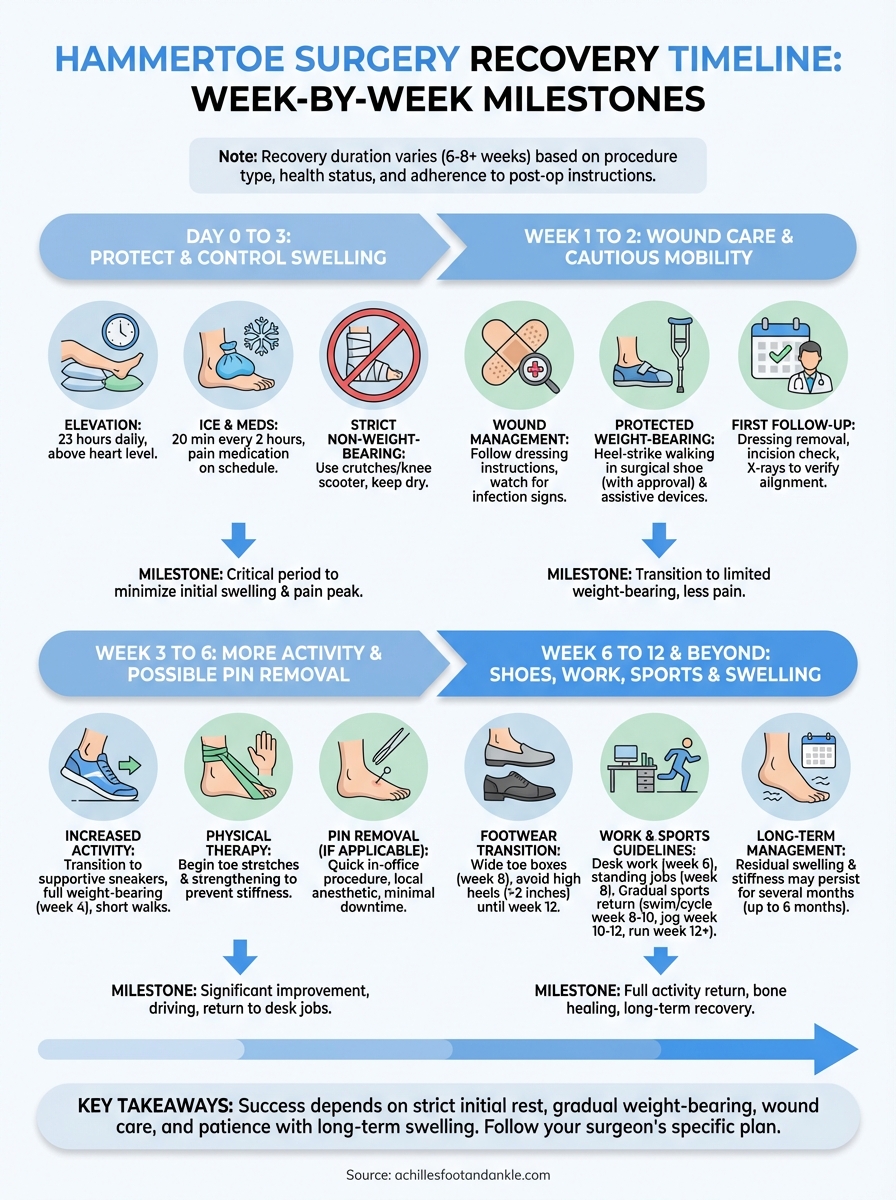
Day 0 to 3: protect the repair and control swelling
The first 72 hours after surgery represent the most critical period in your hammertoe surgery recovery timeline. Your foot remains heavily bandaged, often with a surgical shoe or boot, and you’ll notice significant swelling and discomfort. During this phase, your primary job is to protect the surgical site, minimize swelling through elevation, and manage pain with prescribed medications.
What happens during the immediate recovery window
You’ll leave the surgery center with thick post-operative dressings that must stay dry and intact. Most patients experience moderate pain that peaks on day two, then gradually improves. Your surgeon prescribes pain medication (typically narcotics for the first few days, then NSAIDs), and you may notice numbness or tingling as the local anesthetic wears off within six to twelve hours.
The swelling you control in these first three days directly impacts your overall healing speed.
Your essential daily tasks
Follow these specific instructions during days zero through three:
- Keep your foot elevated above heart level for at least 23 hours daily (use pillows stacked higher than your chest when lying down)
- Apply ice packs for 20 minutes every two hours while awake (place a towel between the ice and dressing)
- Take pain medication on schedule, not just when pain becomes severe
- Stay completely non-weight-bearing or follow your surgeon’s specific weight-bearing instructions (use crutches or a knee scooter)
- Keep the dressing dry by covering it with a plastic bag during showers
Week 1 to 2: wound care, safer walking, first follow-up
Between days seven and fourteen, you transition from strict rest to cautious mobility. Your surgeon typically schedules your first follow-up appointment during this window to examine the surgical site, remove some dressings, and assess your healing progress. While swelling remains substantial, you’ll notice less pain and may begin bearing limited weight in your surgical shoe, depending on the procedure performed.
Daily wound management
Your surgeon will provide specific instructions for dressing changes that typically begin after the first week. Most patients start with simple gauze replacement every two to three days, keeping the area clean and dry between changes. Watch for infection warning signs including increased redness spreading beyond the incision, green or yellow drainage, foul odor, fever above 101°F, or worsening pain that doesn’t respond to medication.
Transitioning to protected weight-bearing
You can begin heel-strike walking in your surgical shoe if your surgeon approves, placing weight only on your heel while keeping your toes elevated off the ground. Continue using crutches or a walker for stability during the first week, then gradually reduce reliance on assistive devices during week two as your balance improves.
The surgical shoe protects your repair while allowing you to move around your home more independently.
What happens at your first appointment
Your podiatrist removes the bulky dressing, examines the incision site, and may take X-rays to verify proper bone alignment. This visit determines whether you can advance to partial weight-bearing or need to remain non-weight-bearing for additional weeks based on your specific hammertoe surgery recovery timeline.
Weeks 3 to 6: more activity and possible pin removal
During weeks three through six, you’ll see the most dramatic improvements in your hammertoe surgery recovery timeline. Most patients transition from surgical shoes to supportive sneakers, return to desk jobs, and regain enough stability to drive short distances. Your surgeon monitors bone healing through follow-up appointments and may schedule pin removal if your procedure used temporary hardware.
Increasing your activity level
You can begin full weight-bearing in regular athletic shoes with cushioned insoles around week four, though swelling increases with prolonged standing. Start with ten-minute walks and add five minutes daily as tolerated. Physical therapy exercises now include toe stretches and strengthening movements that prevent stiffness. Avoid high heels, narrow toe boxes, and barefoot walking until week eight.
Pin removal typically requires only local anesthetic and adds minimal recovery time.
What to expect with hardware removal
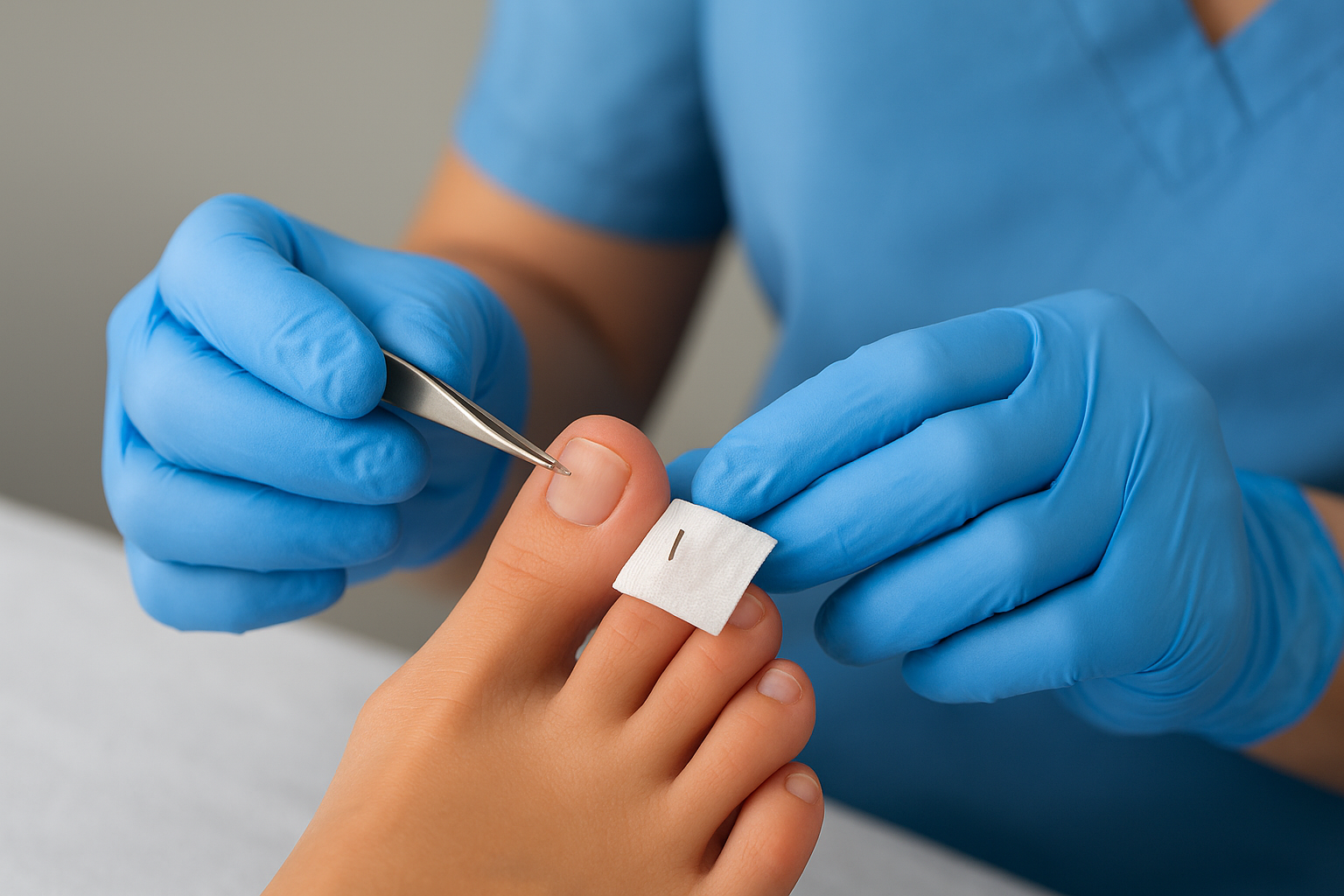
If your surgeon placed temporary pins to hold bones in position, removal happens between weeks three and six during an office visit. The podiatrist numbs your toe with local injection, pulls the pin out (which takes less than thirty seconds), and applies a small bandage. You’ll feel pressure but no sharp pain, and you can walk immediately afterward wearing your surgical shoe for three additional days while the pin site closes.
Weeks 6 to 12 and beyond: shoes, work, sports, swelling
By week six, your hammertoe surgery recovery timeline enters the final phase where you regain most of your pre-surgery activities. Your bones have healed enough to tolerate regular footwear and work demands, though residual swelling and stiffness persist for several more months. Most patients return to full-time employment around week eight and resume low-impact exercise by week ten, with complete recovery taking up to six months.
Returning to shoes and footwear choices
You can transition to dress shoes and flats with wide toe boxes starting at week eight, though your foot may feel tight in fitted styles. Avoid high heels above two inches until week twelve when ligaments have fully strengthened. Athletic shoes remain your best option through month three, and you should replace your insoles monthly to maintain proper arch support during this healing period.
Work and sports activity guidelines
Return to desk work at week six with periodic foot elevation, or week eight for jobs requiring extended standing. For athletic activities, follow this progression:
- Week 8-10: Swimming and stationary cycling
- Week 10-12: Walking, light jogging on soft surfaces
- Week 12+: Tennis, basketball, running (with podiatrist clearance)
Swelling that increases throughout the day remains normal until month six.
Key takeaways and next steps
Your hammertoe surgery recovery timeline typically spans six to twelve weeks, with most patients walking in regular shoes by week eight and returning to full activity by month three. The first three days require strict elevation and rest, weeks one through six focus on protected weight-bearing and wound care, and weeks six through twelve involve gradually resuming work and exercise.
Success depends on following your surgeon’s specific instructions for your procedure type. Patients who maintain elevation, attend all follow-up appointments, and avoid rushing back to activities heal faster with fewer complications than those who ignore post-operative restrictions.
If you’re experiencing hammertoe pain or considering surgical correction, schedule an appointment with our podiatric surgeons at any of our Central Virginia locations. We’ll evaluate your condition, discuss whether surgery makes sense for your situation, and provide a personalized recovery plan based on the specific procedure you need. Our team guides you through every phase of healing to ensure the best possible outcome.