
If your shins ache after a run or even a long walk, your foot structure might be the hidden culprit. The connection between high arches and shin splints is one that many people overlook, yet it plays a significant role in recurring lower leg pain that won’t seem to go away no matter how much you rest.
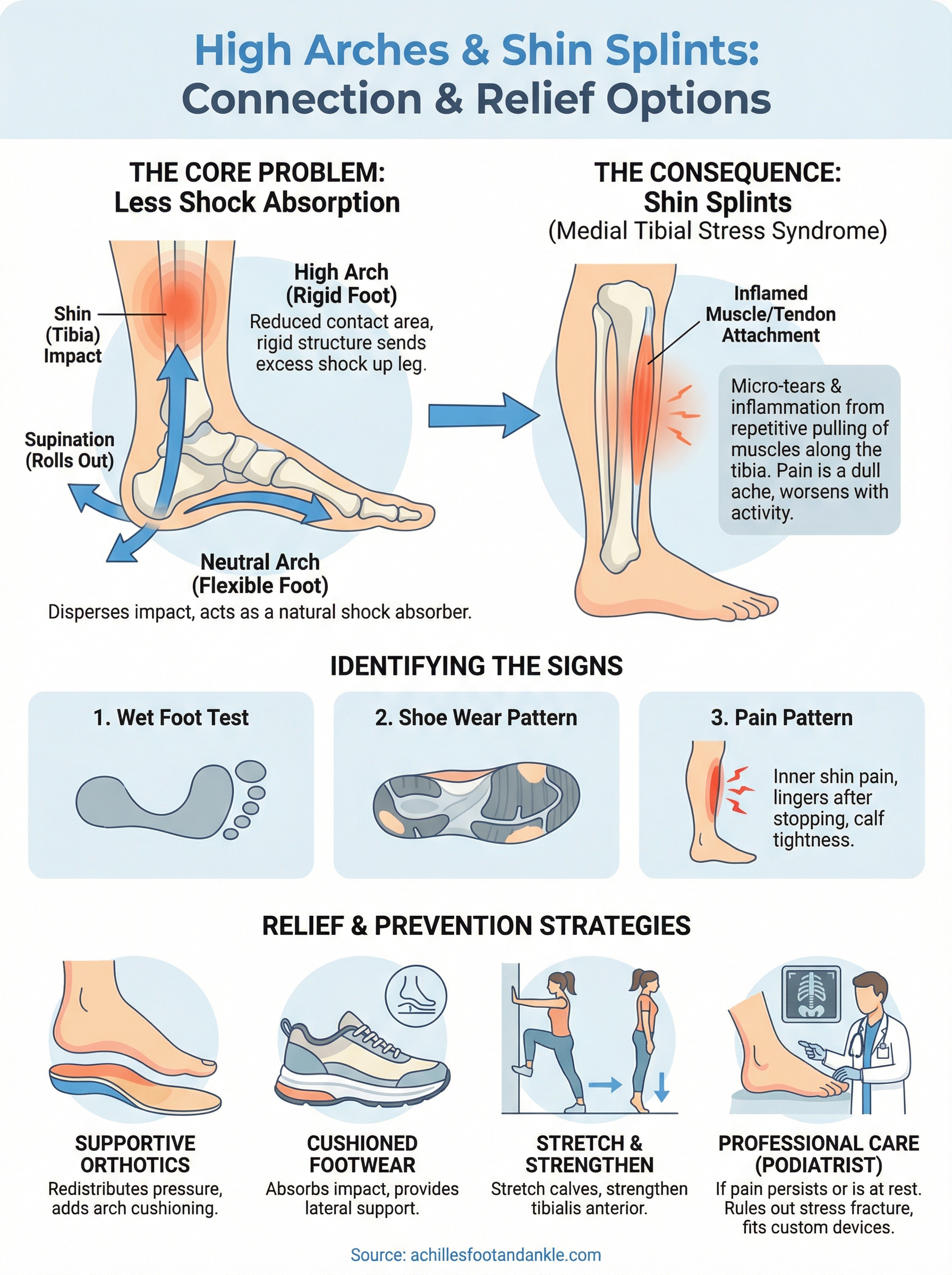
High arches change the way your foot absorbs impact with every step. Instead of distributing force evenly, a rigid, high-arched foot sends excess shock up through the shin, straining the muscles and connective tissue along the tibia. Over time, this repeated stress leads to the throbbing, tender sensation known as shin splints, and without addressing the root cause, the cycle just continues.
At Achilles Foot and Ankle Center, our podiatrists across Central Virginia see this pattern regularly in patients of all ages and activity levels. Below, we break down exactly why high arches contribute to shin splints, how to identify the warning signs early, and what relief options, from proper footwear and custom orthotics to targeted exercises, can get you back on your feet without pain.
What high arches and shin splints mean
Before you can address the pain, you need to understand what each condition actually is. High arches and shin splints are two distinct issues, but they share a direct mechanical relationship that affects how your body handles every step you take.
What high arches are
Your foot arch sits between your heel and the ball of your foot. In a typical arch, this curve absorbs and distributes impact forces across a broad surface area of the foot during movement. With high arches, the curve rises significantly higher than normal, leaving less surface area in contact with the ground.
This reduced ground contact means your foot cannot spread force evenly. Instead, impact concentrates at the heel and ball of the foot, and that excess load travels straight up into your ankle, shin, and knee. People with high arches also tend to have rigid, less flexible feet, which makes shock absorption even less effective compared to a neutral or flat arch structure.
A rigid, high-arched foot transfers significantly more mechanical stress to the lower leg than a neutral foot structure during walking or running.
What shin splints are
Shin splints is the common name for medial tibial stress syndrome, a condition where the muscles, tendons, and bone tissue along the tibia become overloaded and inflamed. You typically feel a dull, aching pain along the inner edge of your shin that worsens with activity and eases with rest, at least in the early stages.
The pain develops because the muscles attached to the tibia get repeatedly pulled beyond what they can comfortably handle. When you look at high arches and shin splints together, the added mechanical load from a high-arched foot becomes the central driver of this overuse injury. Left untreated, shin splints can progress from mild discomfort to a stress reaction or even a stress fracture in the tibia, which requires significantly more recovery time and medical intervention.
Why high arches can trigger shin splints
The mechanical link between high arches and shin splints comes down to how force travels through your body. Every time your foot hits the ground, your arch acts as a natural shock absorber. When that arch is too rigid and elevated, your body loses a critical layer of impact protection, and the lower leg picks up the slack.
The shock absorption problem
A neutral arch compresses slightly with each step, spreading force across a wider contact surface and reducing the load on surrounding structures. Your high-arched foot cannot compress the same way, so instead of dispersing impact broadly, it channels concentrated force directly up through the heel and into the shin. This repeated mechanical stress aggravates the muscles and connective tissue that attach along the tibia, setting the stage for inflammation and pain.
A high-arched foot can increase ground reaction forces traveling to the lower leg by a measurable margin compared to a neutral arch structure.
How muscle strain builds over time
Your shin muscles work harder than usual to stabilize a rigid, high-arched foot during movement. The tibialis anterior and posterior muscles pull repeatedly against the tibia to control your foot placement with every stride. Over miles or hours of activity, this constant strain exceeds what those muscles can handle, and micro-tears and inflammation develop along the bone’s surface. You may not notice pain immediately, but the damage accumulates stride by stride until the discomfort becomes hard to ignore. That gradual buildup is exactly why shin splints tied to foot structure tend to become chronic without targeted treatment.
How to tell if high arches drive your pain
Not all shin splints come from the same source. Before you can treat the problem effectively, you need to identify whether your foot structure is actually contributing to the pain or whether another cause is at play. A few simple observations can help you connect the dots between high arches and shin splints before you even visit a specialist.
Signs in your foot structure
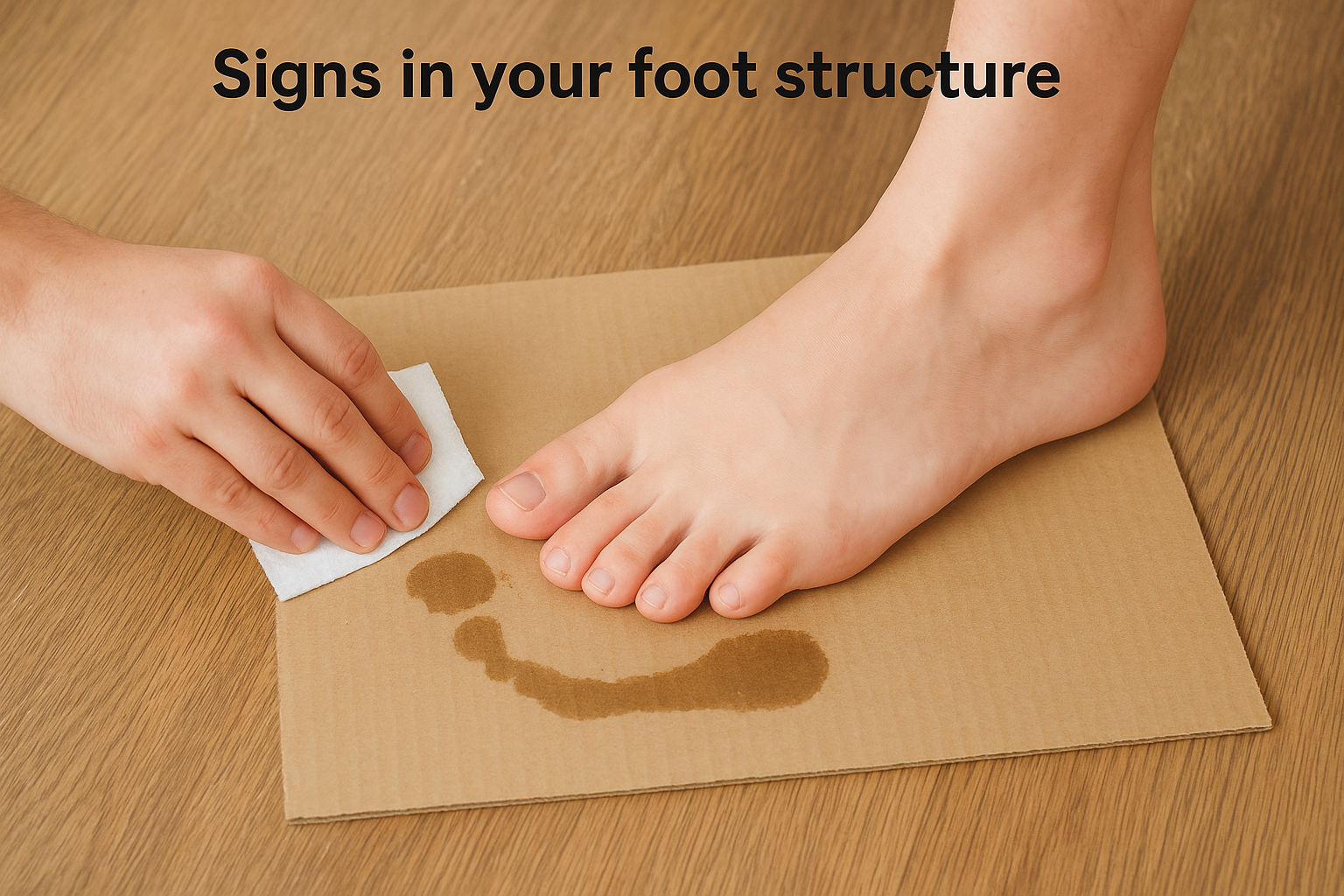
Start by checking your arch with a wet foot test. Wet the sole of your foot, then step onto a dry piece of cardboard or a paper bag. A neutral arch leaves a partial imprint with a visible connection between the heel and forefoot. A high arch leaves only a thin band or no connection at all between the heel and forefoot, with a noticeable gap across the middle of the print.
You can also check for shoe wear patterns. High-arched feet tend to wear down the outer edges of shoe soles more heavily than neutral feet, since your foot supinates, or rolls outward, when it lacks adequate shock absorption.
If your shoes wear heavily along the outer heel and outer forefoot, your foot is likely offloading impact in a way that puts extra strain on your lower leg.
Patterns in your pain
Pay attention to when and where your pain appears. Shin pain driven by high arches typically starts along the inner shin, worsens progressively during activity, and lingers after you stop moving. If you also notice tightness in your calves and ankle stiffness alongside the shin discomfort, the combination points strongly toward a structural foot issue rather than a simple overuse injury from training load alone.
How to relieve shin splints with high arches
Relieving shin pain when you have high arches requires addressing the root cause, not just the symptoms. Resting and icing help in the short term, but if you return to activity without correcting the mechanical load your high-arched foot places on your shin, the pain comes back faster than you expect.
Use supportive insoles or custom orthotics
Standard shoe insoles often lack the structured cushioning and arch support that a high-arched foot needs. A rigid or semi-rigid orthotic fills the gap beneath your arch, redistributing pressure more evenly across your foot and reducing the concentrated shock that drives high arches and shin splints. Custom orthotics fitted by a podiatrist offer the most precise correction, but over-the-counter options with firm arch support can provide meaningful short-term relief while you arrange a professional evaluation.
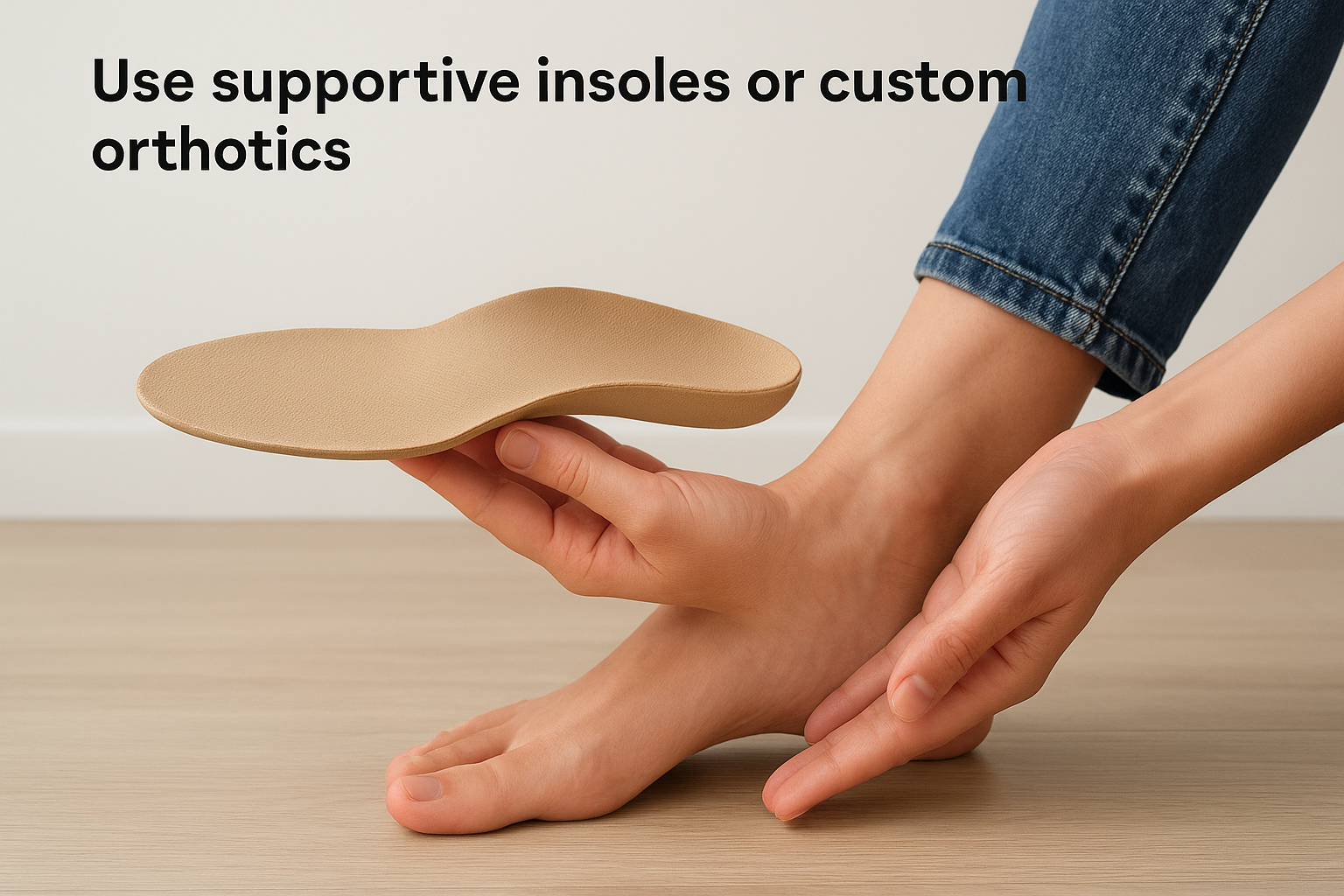
Custom orthotics designed for high arches can significantly reduce the mechanical stress transferred to the lower leg with each step.
Choose footwear with cushioning and lateral support
Your shoe choice directly affects how much shock your shin absorbs with every stride. Look for shoes that offer substantial heel and midsole cushioning combined with lateral stability to prevent your foot from rolling outward. Avoid minimalist or flat shoes, which give a rigid high-arched foot no shock buffering at all and intensify the impact sent straight up into your lower leg.
Stretch and strengthen your lower leg
Tight calves amplify the strain on your shin considerably. Stretching your calf muscles and Achilles tendon daily reduces tension pulling along the tibia. Pair that with strengthening exercises for the tibialis anterior, such as toe raises, to build the muscular support your shin needs during activity.
When to see a podiatrist for shin pain
Self-care goes a long way, but it has limits. If your shin pain persists beyond a few weeks despite rest, orthotics, and footwear changes, a podiatrist’s evaluation can identify what conservative measures alone cannot fix. Catching the problem early prevents a manageable injury from turning into something that sidelines you for months.
Warning signs that need professional attention
Some symptoms tell you clearly that home treatment is not enough. Pain that continues during rest, not just during activity, points to a more serious issue than typical shin splints. Swelling or tenderness concentrated at a specific point on the tibia can indicate a stress fracture, which requires imaging to confirm and a structured recovery plan to heal safely.
You should also seek care if you notice sharp or worsening pain that starts earlier and earlier into activity over consecutive days. This pattern means the tissue is accumulating damage faster than it can recover, and continuing without professional guidance significantly raises your injury risk. The combination of high arches and shin splints left unmanaged is a common path toward stress fractures that require weeks in a boot.
Shin pain that worsens progressively over days rather than improving with rest is a signal to stop activity and get evaluated promptly.
What a podiatrist can do for you
A podiatrist evaluates your foot mechanics, arch structure, and gait to pinpoint exactly how your high arches contribute to the load on your shin. From there, treatment can include custom orthotics, targeted physical therapy, and imaging to rule out bone injury, giving you a clear, evidence-based path back to pain-free movement.
Next steps for getting back to pain-free movement
The relationship between high arches and shin splints is mechanical, which means it responds well to the right interventions when you act on them early. Understanding your foot structure gives you a clear starting point, and each step outlined in this article, from choosing cushioned, supportive footwear to stretching your calves and using orthotics, targets a specific piece of that mechanical chain.
Waiting for the pain to resolve on its own carries real risk. Without correcting the underlying structural load, shin splints tend to return, and repeated stress on the tibia can escalate into a stress fracture that takes far longer to heal. Getting a professional evaluation now protects the progress you want to make later.
If your shin pain persists or keeps coming back, a podiatrist can assess your arch mechanics, confirm the cause, and set you on a precise treatment path. Schedule a same-day appointment at Achilles Foot and Ankle Center and get a clear plan to move without pain.