

Stress fractures account for up to 20% of all sports medicine injuries, and runners are among the most affected. These tiny cracks in bone develop gradually, often without a single dramatic moment, making them easy to ignore until the pain becomes impossible to run through. Understanding how to prevent stress fractures starts with recognizing that they’re rarely random. They result from specific, correctable training and lifestyle habits that put repetitive strain on vulnerable bones in the feet and lower legs.
At Achilles Foot and Ankle Center, our podiatrists treat stress fractures across our Central Virginia clinics every week. We see firsthand how a few targeted changes in footwear, training load, nutrition, and recovery can keep runners on the road instead of sidelined for weeks. That clinical experience is exactly what shaped the five prevention strategies below.
Whether you’re training for your first 5K or your tenth marathon, these evidence-based tips will help you protect your feet and ankles, and keep running on your terms.
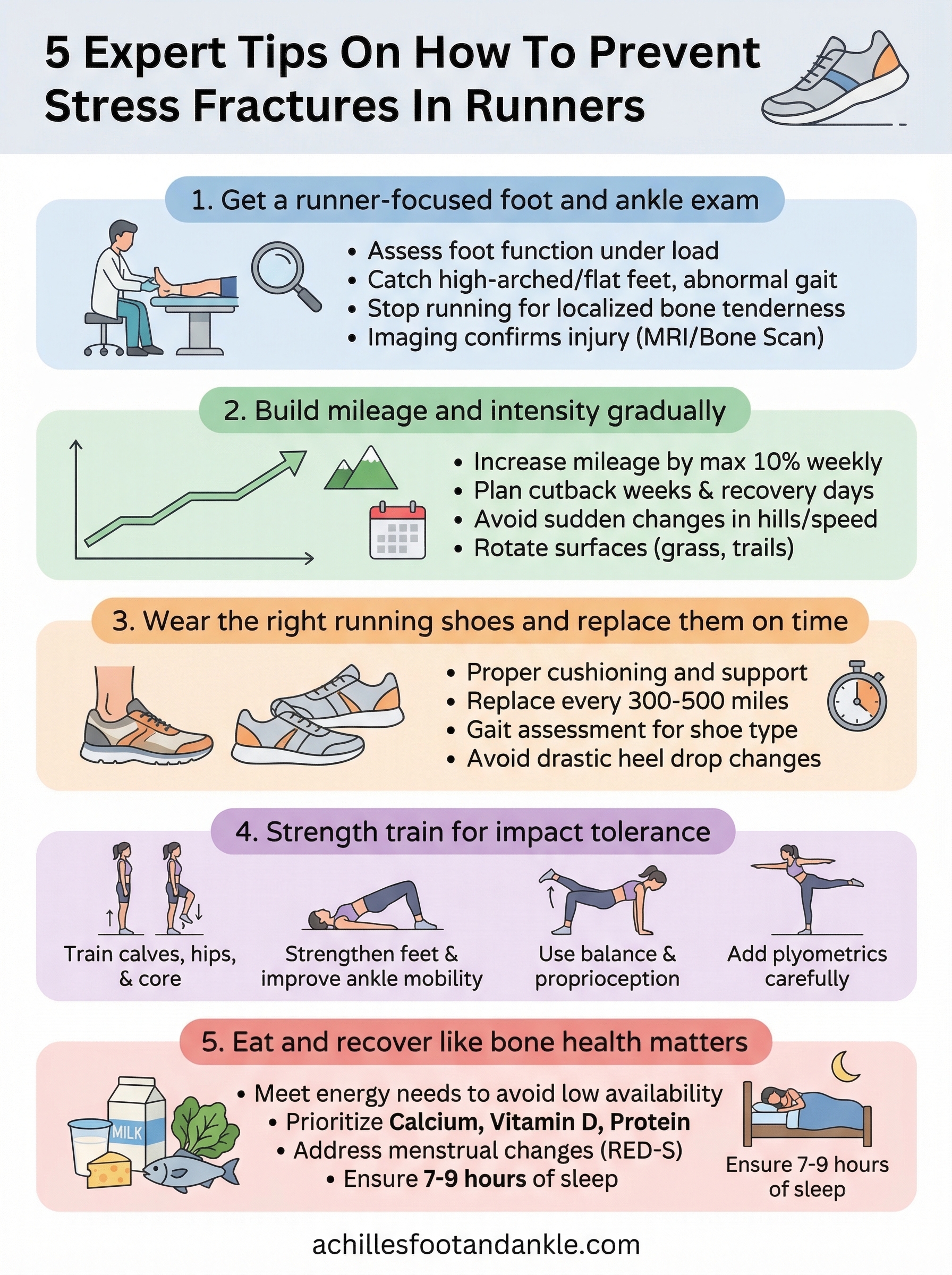
1. Get a runner-focused foot and ankle exam
A podiatrist who works with runners looks at more than just your pain. They assess how your foot functions under load, which gives you the clearest picture of your actual stress fracture risk before a crack forms.
What a podiatry exam can catch early
A clinical exam can identify high-arched or flat feet, leg length differences, tight calves, and abnormal gait mechanics. Each of these increases bone stress with every stride. Catching them early is one of the most direct ways to understand how to prevent stress fractures before symptoms appear.
When to stop running and get checked
Stop running and schedule an appointment if you notice localized bone tenderness, pain that worsens during a run and eases with rest, or swelling over the shin, foot, or ankle. Running through early warning signs converts a stress reaction into a complete fracture, which means a much longer recovery.
Pain that improves with rest but returns the moment you run is a classic stress fracture warning sign that warrants same-day evaluation.
How imaging helps confirm a stress injury
Your podiatrist may order an MRI or bone scan to confirm a stress injury, since standard X-rays often miss early-stage fractures. Imaging tells you exactly which bone is affected and how advanced the damage is, which directly shapes your treatment and return-to-run timeline.
How custom orthotics and bracing can reduce bone load
Custom orthotics redistribute ground reaction forces away from high-stress areas of the foot. For runners with structural risk factors, a properly fitted orthotic combined with supportive bracing can meaningfully lower the load placed on vulnerable bones during training.
How to fix biomechanical risk factors safely
Your podiatrist can refer you to a physical therapist or gait specialist to correct overpronation, crossover stride patterns, or hip drop. Fixing these mechanics with guided exercises reduces repetitive bone stress and builds a more resilient running foundation.
2. Build mileage and intensity gradually
The most common reason runners develop stress fractures is doing too much, too fast. Gradual load progression gives your bones time to adapt to the demands of training, and it remains one of the most reliable answers to how to prevent stress fractures across all experience levels.
Use a simple progression rule that protects bone
Increase your weekly mileage by no more than 10% from one week to the next. This gives bone remodeling time to keep pace with the physical demands you place on it.
Plan cutback weeks and recovery days
Every third or fourth week, drop your volume by 20 to 30%. Schedule at least one or two full rest days per week so bone tissue can repair micro-damage before it builds into something serious.
Skipping recovery weeks is the single most consistent training mistake that leads to stress fractures in competitive runners.
Avoid sudden changes in hills, speed work, and volume
Adding hills, tempo runs, or intervals all increase bone stress independently of mileage. Change only one training variable at a time to avoid stacking excessive load.
Adjust training when you return after time off
After illness, injury, or a break, start at roughly half your previous mileage and rebuild over several weeks. Jumping back to full training volume is one of the fastest ways to fracture bone.
Choose surfaces that lower impact without changing form
Grass and trails produce less ground reaction force than asphalt or concrete. Rotate your surfaces when possible, but keep your running mechanics consistent across all terrain.
3. Wear the right running shoes and replace them on time
Your shoes absorb ground forces before they reach bone, making footwear selection and timing one of the most practical parts of understanding how to prevent stress fractures. Worn-out or poorly fitted shoes shift load unevenly across your foot with every stride.
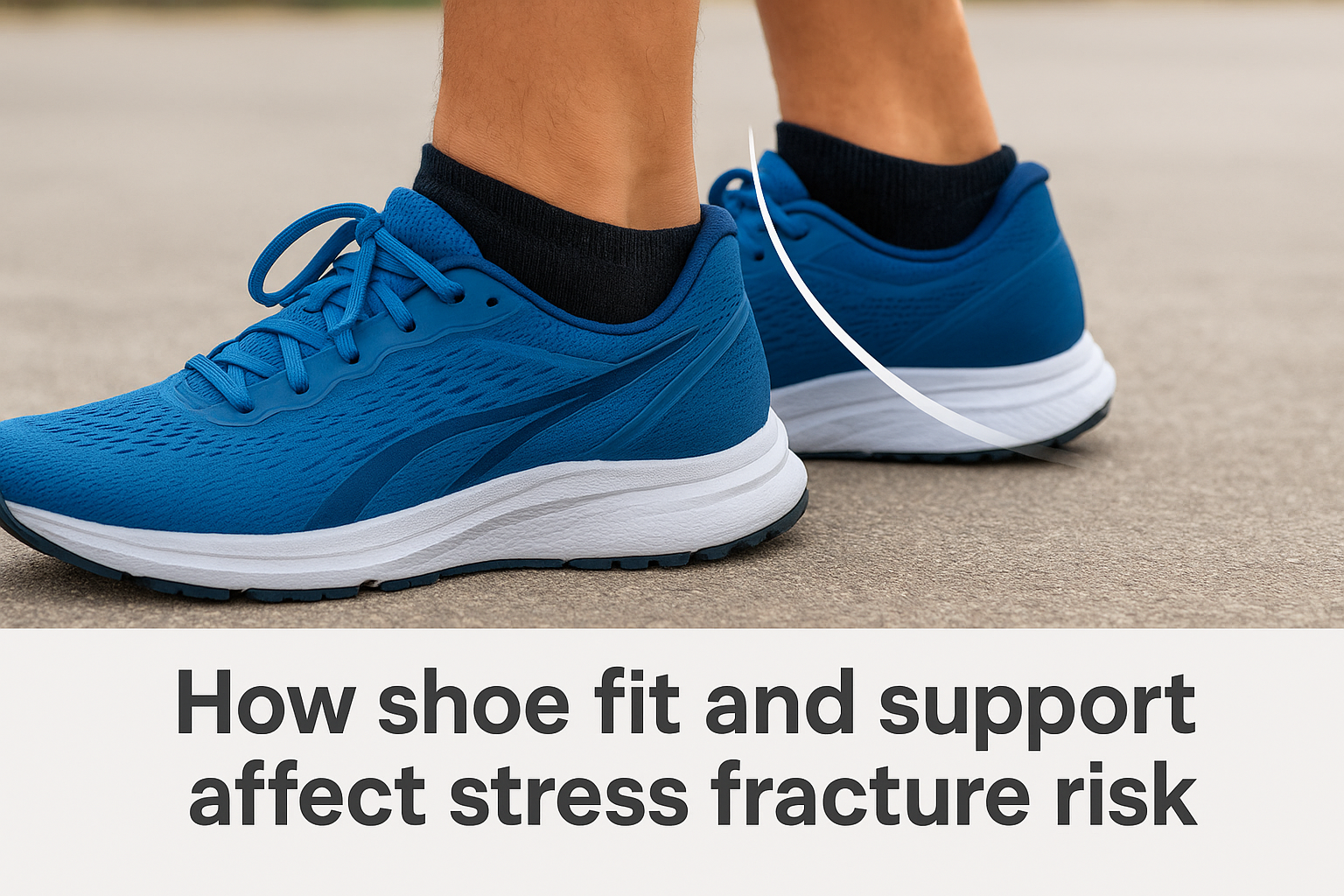
How shoe fit and support affect stress fracture risk
Proper cushioning and heel support distribute impact across the entire foot structure. A shoe that fits too loosely or too tightly concentrates stress on vulnerable bones like the metatarsals and navicular.
Signs your shoes have lost cushioning and stability
Replace running shoes every 300 to 500 miles. If the midsole feels flat, the heel counter twists easily, or you notice new foot soreness, your shoes no longer protect your bones.
The midsole breaks down well before the exterior shows visible wear, so mileage tracking matters more than how your shoes look.
How to pick shoes for your foot type and stride
Visit a specialty running store for a gait assessment. Matching shoe structure to your arch type and pronation pattern reduces uneven bone loading.
When inserts and orthotics make sense
When standard insoles don’t resolve discomfort, custom orthotics from a podiatrist offer precise correction for your specific foot mechanics and load distribution.
Common footwear mistakes runners make
Avoid switching between drastically different heel drop levels without a gradual transition period. Breaking in new shoes during a long run spikes bone stress and increases fracture risk quickly.
4. Strength train for impact tolerance
Stronger muscles absorb ground reaction forces before they reach bone. Building targeted strength is one of the most direct answers to how to prevent stress fractures for runners at any level.
Train calves, hips, and core to share load with bone
Weak hips and calves force your bones to handle forces your muscles should absorb instead. Focus on these foundational movements:

- Calf raises and hip abduction exercises
- Core stability work like single-leg deadlifts and dead bugs
Strengthen feet and improve ankle mobility
Short-foot exercises and toe-spreading drills build intrinsic foot strength that supports your metatarsals with every stride. Pair them with ankle dorsiflexion stretches to reduce compensatory loading patterns that concentrate stress on vulnerable bones.
Use balance and proprioception to reduce overload
Single-leg balance drills improve neuromuscular control and reduce uneven bone stress during running. Better proprioception means your body corrects load distribution automatically at each footstrike.
Improving proprioception reduces repetitive microtrauma to bone faster than most runners expect.
Add plyometrics only when you earn them
Introduce box jumps or bounding exercises only after you demonstrate solid single-leg strength and stability. Adding them too soon spikes bone stress sharply and accelerates fracture risk.
Build a weekly routine runners can stick with
Two dedicated strength sessions per week is enough for most runners. Keep them short and consistent rather than long and sporadic to see real bone protection benefits.
5. Eat and recover like bone health matters
Nutrition and recovery directly shape whether your bones strengthen or break down under training load. Understanding how to prevent stress fractures requires as much focus off the road as on it.
Meet energy needs to avoid low energy availability
Underfueling is one of the most common stress fracture triggers in runners. When you eat too little, your body diverts resources away from bone remodeling to cover basic energy needs first.
Prioritize calcium, vitamin D, and protein
Target 1,000 to 1,300 mg of calcium daily through dairy, leafy greens, or fortified foods. Vitamin D supports calcium absorption, and adequate protein gives your body the raw materials to rebuild bone tissue after hard training.
Getting your vitamin D tested annually is a simple step that reveals a correctable risk factor many runners overlook.
Address menstrual changes and RED-S risk factors
Irregular or absent periods in female runners signal low energy availability, which weakens bone density directly. This pattern falls under Relative Energy Deficiency in Sport (RED-S) and requires prompt medical evaluation rather than self-management.
Sleep and rest strategies that support bone remodeling
Bone remodeling peaks during sleep, making seven to nine hours essential during heavy training blocks. Consistent sleep schedules amplify your body’s overnight repair response and lower cumulative bone stress.
Habits that slow healing and raise risk
Smoking and heavy alcohol use both impair bone density and delay fracture healing significantly. Reducing or eliminating both lowers your fracture risk in ways that no training adjustment alone can replicate.
Next Steps
Knowing how to prevent stress fractures gives you a real advantage, but knowledge only protects you when you act on it. The five strategies in this article work together. Proper footwear, gradual training load, targeted strength work, and solid nutrition each reduce bone stress on their own, but combining them consistently is what keeps stress fractures from becoming a recurring problem in your running life.
If you have localized bone tenderness, pain that fades with rest and returns when you run, or swelling over your foot or ankle, that pattern needs a clinical evaluation before your next run. Waiting turns a manageable stress reaction into a full fracture with a far longer recovery timeline.
Our podiatrists at Achilles Foot and Ankle Center work with runners across Central Virginia every week. Schedule a same-day appointment to get a runner-focused exam, imaging if needed, and a clear plan to keep you training safely.