

Your feet carry you roughly 100,000 miles over a lifetime, the equivalent of circling the Earth four times. Yet most people don’t think twice about their feet until something goes wrong. The importance of foot health extends far beyond avoiding pain. Your feet are the foundation of every step, every workout, and every moment you spend standing, and when that foundation breaks down, your entire body feels the impact.
Foot problems can also serve as early warning signs for systemic conditions like diabetes, arthritis, and circulatory disease. A change in sensation, a wound that won’t heal, or persistent swelling might seem minor, but these symptoms often point to something bigger. Recognizing them early can make a real difference in long-term outcomes.
At Achilles Foot and Ankle Center, our team treats the full spectrum of foot and ankle conditions across thirteen locations in Central Virginia, from routine care and prevention to complex surgical reconstruction. We see firsthand how small, overlooked foot issues can snowball into serious mobility limitations. This article breaks down why your feet deserve more attention, how to maintain them properly, and when it’s time to see a specialist before a minor issue becomes a major setback.
Why foot health matters for mobility and health
Your feet contain 26 bones, 33 joints, and over 100 muscles, tendons, and ligaments per foot. That’s a complex structure handling an enormous load every single day. When any part of that system breaks down, the effects travel upward through your ankles, knees, hips, and spine. Understanding the importance of foot health isn’t just about avoiding pain at the end of the day, it’s about keeping your entire body working the way it should.
Foot mechanics affect your whole body
Poor foot alignment changes the way you walk, and that change doesn’t stay isolated to your feet. Altered gait patterns place uneven stress on your knees and hips, which can accelerate joint wear over time. If you’ve developed knee or lower back pain without any clear cause, your feet are often the place to start looking.
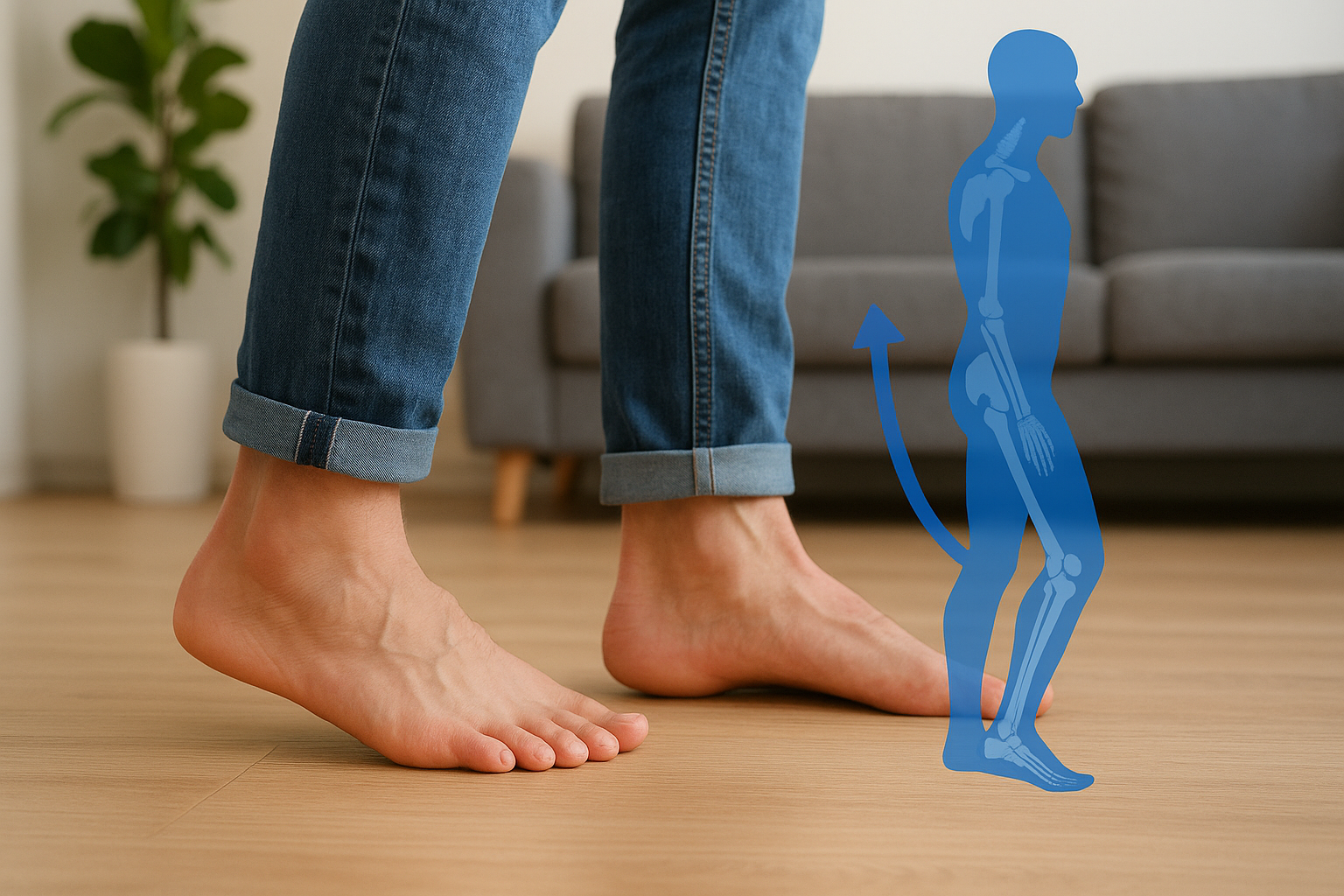
Your arch height plays a direct role in how force travels through your body during movement. Flat arches cause the foot to roll inward excessively, which rotates the shin and stresses the knee. High arches limit shock absorption and overload the outer edge of the foot. Both patterns produce injuries that feel unrelated to your feet but trace directly back to foot mechanics.
When your feet lose proper alignment, every joint above them compensates, and that compensation adds up over years of walking.
How foot conditions signal systemic health problems
Some foot symptoms are more than a local issue. Peripheral neuropathy, which causes numbness, tingling, or burning in the feet, is one of the earliest detectable signs of uncontrolled diabetes. For people with diabetes, reduced sensation combined with poor circulation makes even small wounds dangerous. Cuts and blisters that would heal quickly in a healthy person can develop into serious infections that threaten limb health if ignored.
Arthritis frequently shows up in the feet first. The small joints of the toes are common early sites for rheumatoid arthritis, and the pattern of joint involvement can help identify the condition sooner. Gout, another form of inflammatory arthritis, almost always begins with sudden, severe pain at the base of the big toe. Swelling, skin discoloration, or unexplained foot pain may be your body flagging something that warrants a broader medical evaluation.
Why foot health directly supports staying active
Physical activity depends on your feet absorbing impact and providing stable push-off with every step. When foot pain limits your movement, the downstream effects include reduced cardiovascular activity, weakened leg muscles, and increased risk of falls, particularly in older adults. Research from the American College of Rheumatology has linked chronic foot pain to significant reductions in physical function and quality of life.
Addressing foot problems early keeps you moving without compensating through your knees, hips, or lower back. Prevention and timely treatment are almost always less disruptive, less costly, and less painful than waiting until a condition forces you to stop moving altogether.
What healthy feet look like
Understanding the importance of foot health starts with knowing what you’re aiming for. Healthy feet aren’t just pain-free; they show consistent physical characteristics that reflect good circulation, proper structure, and normal nerve function. Recognizing these signs gives you a reliable baseline to track changes before they become problems.
Physical signs to look for
Skin and nail condition tells you a lot about what’s happening beneath the surface. Healthy skin should feel smooth and intact, without cracking, peeling, or unusual dryness, particularly around the heels and between the toes. Your nails should grow straight, appear light pink or off-white, and lie flat against the nail bed without thickening, yellowing, or curling at the edges.
Circulation and sensation are equally important indicators. Your feet should feel warm to the touch and carry a normal pinkish tone when you press down briefly on the skin and release it. Color should return within two seconds. You should feel light touch, temperature changes, and pressure evenly across both feet, with no persistent numbness, tingling, or cold patches in one foot compared to the other.
Consistent differences in warmth or color between your two feet can signal a circulation problem that needs medical attention sooner rather than later.
How healthy feet move and support you
Arch structure and alignment directly affect how well your feet handle daily load. Healthy feet have a visible arch that lifts off the ground when you stand, though the exact height varies by person. When you walk, your heel should contact the ground first, your weight should roll forward through the middle of the foot, and your toes should push off smoothly at the end of each step without gripping or clawing.
Balance and stability round out the picture. Standing on one foot for 10 seconds without significant wobble is a reasonable benchmark for healthy foot and ankle function in most adults, and a noticeable decline in that ability is worth discussing with a specialist.
Common foot problems and what they can signal
Most foot problems don’t appear out of nowhere. They develop gradually, and many carry signals about your overall health that go well beyond localized pain. Recognizing common conditions early is central to understanding the importance of foot health and acting before a manageable issue turns into a serious one.
Structural and mechanical problems
Plantar fasciitis is one of the most common causes of heel pain, producing sharp discomfort during your first steps in the morning. It develops when the thick band of tissue running along the bottom of your foot becomes inflamed, usually from overuse, poor footwear, or a sudden spike in activity. Bunions and hammertoes signal joint stress and often worsen with ill-fitting shoes, eventually affecting how you walk and distributing load unevenly across the foot.
Flat feet and fallen arches are structural issues that alter your gait mechanics from the ground up. Left unaddressed, they contribute to shin splints, knee pain, and hip problems because your body continually compensates for the lack of arch support with every step you take.
Skin, nail, and nerve symptoms
Changes in your skin and nails often reflect what’s happening systemically. Thickened or yellowed toenails can indicate a fungal infection, but they also appear in patients with psoriasis or circulatory disease. Wounds or sores that heal slowly, particularly on the bottom of your foot, are a red flag for uncontrolled diabetes or peripheral vascular disease and require prompt medical evaluation.
A foot wound that hasn’t improved after two weeks of basic care is never something to wait out on your own.
Numbness, burning, or tingling that appears gradually in both feet points toward peripheral neuropathy, one of the earliest detectable signs of diabetes. Sudden numbness or weakness in one foot may indicate a nerve compression issue like tarsal tunnel syndrome, which a podiatrist can diagnose and treat before permanent nerve damage occurs.
Daily foot care routine and shoe basics
Maintaining the importance of foot health doesn’t require an elaborate protocol. A consistent, simple daily routine catches problems early and keeps your feet in good working condition throughout your entire life.
Building a simple daily routine
Washing and drying your feet thoroughly every day is the foundation of basic foot care. Pay close attention to the spaces between your toes, where moisture accumulates and creates the right environment for fungal infections. After washing, apply a fragrance-free moisturizer to the tops and bottoms of your feet, but avoid putting lotion between the toes since that area needs to stay dry.
Skipping the spaces between your toes when drying your feet is one of the most common ways fungal infections start.
Make a habit of inspecting your feet visually each evening, especially if you have diabetes or circulatory issues. Look for new cuts, blisters, redness, or changes in nail appearance. Catching these signs early gives you time to address them before they progress into something that requires more involved treatment.
Choosing shoes that protect your feet
Footwear is one of the most controllable factors in your foot health. Shoes should fit your actual foot shape, not force your foot into a shape the shoe prefers. Look for a thumb’s width of space between your longest toe and the end of the shoe, a secure heel counter that doesn’t slip, and enough width across the ball of the foot so your toes aren’t compressed.

Replace athletic shoes every 300 to 500 miles of use, or every six to twelve months if you wear them regularly for exercise. Worn midsoles stop absorbing shock effectively long before the outer sole shows visible wear, which means you’re walking on compromised support without realizing it. Rotating between two pairs also allows each pair to fully dry out and recover its shape between wears.
When to see a podiatrist and what to expect
Knowing when to move beyond home care is a critical part of understanding the importance of foot health. Many people delay seeing a specialist until a condition has advanced, which usually means longer recovery and more involved treatment. A podiatrist can evaluate your foot mechanics, diagnose the source of your symptoms, and build a treatment plan that home remedies simply can’t replicate.
Signs that warrant a professional visit
Some symptoms should prompt a call to a podiatrist rather than a wait-and-see approach. Persistent pain lasting more than two weeks, any wound or sore that isn’t closing, sudden swelling in one foot without an obvious cause, and numbness or tingling that appears in both feet all warrant professional evaluation. You should also schedule an appointment if you notice a change in your nail color or thickness, a new growth or lump on your foot, or if you have diabetes and find any skin break at all.
If you have diabetes, a foot wound that appears minor still requires same-day evaluation from a medical professional.
What a podiatry appointment involves
Your first visit typically starts with a review of your health history, including any medications, prior injuries, and underlying conditions like diabetes or arthritis. The podiatrist will examine your foot structure, skin and nail condition, circulation, and sensation. For many patients, digital imaging or ultrasound helps identify structural changes or soft tissue problems that aren’t visible from the surface.
Treatment plans vary widely depending on what the examination reveals. You might leave with a prescription for custom orthotics, a referral for physical therapy, guidance on footwear changes, or a plan for a follow-up procedure. The goal is always to address the underlying cause, not just manage the symptom, so the same problem doesn’t keep coming back. Most appointments are straightforward and far less intimidating than people expect once they get through the door.
Key takeaways
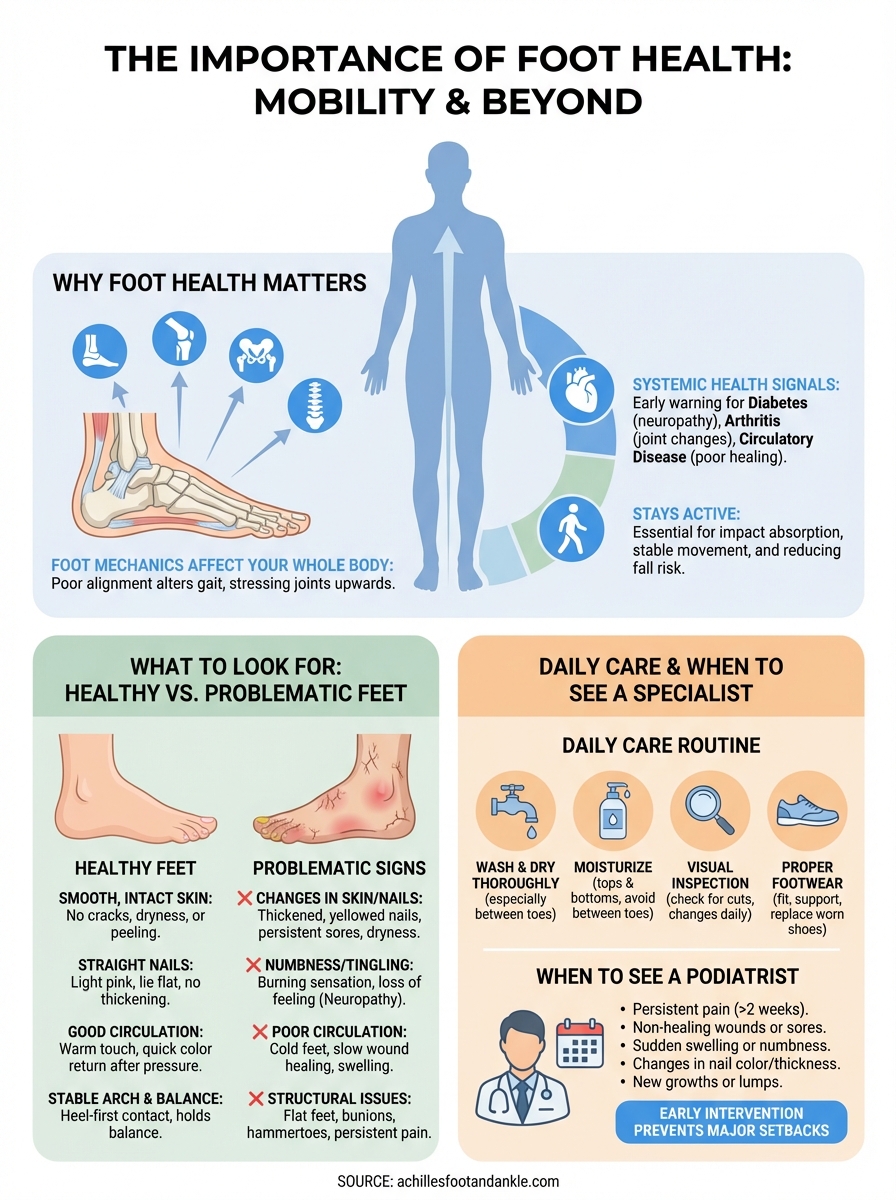
The importance of foot health reaches well beyond comfort. Your feet influence your posture, your gait, your joint health, and your body’s ability to stay active as you age. Small changes in your skin, nails, or sensation can signal conditions like diabetes, circulatory disease, or arthritis long before those conditions are otherwise obvious.
Healthy feet share consistent markers: intact skin, proper nail growth, good circulation, and stable arch mechanics. A simple daily routine of washing, moisturizing, inspecting, and wearing well-fitted shoes handles most preventable problems before they escalate. When symptoms persist beyond two weeks, or when you notice wounds, numbness, or structural changes, waiting is never the right strategy.
Catching problems early means shorter recovery times and fewer complications. If something feels off, a podiatrist can identify the source and build a plan that actually resolves it. Schedule a same-day appointment at Achilles Foot and Ankle Center and get the right answers fast.