Your feet carry you through every step of life, roughly 100,000 miles over a lifetime, according to the American Podiatric Medical Association. Yet most people give little thought to what they put on their feet until pain or injury forces the issue. The importance of proper footwear extends far beyond comfort; it directly affects your joints, spine, and overall mobility. Wearing the wrong shoes can lead to chronic conditions that impact how you move for years to come.
At Achilles Foot and Ankle Center, our podiatrists see firsthand how shoe choices shape foot health across Central Virginia. From athletes nursing preventable injuries to diabetic patients managing ulcer risks, footwear plays a critical role in treatment and prevention alike.
This guide breaks down how supportive shoes protect your feet, improve your posture, and help you avoid long-term damage to your ankles, knees, and back.
Why proper footwear matters for your whole body
Your feet form the foundation of your entire skeletal system, and what you wear on them creates a ripple effect through your ankles, knees, hips, and spine. When your shoes lack adequate support or fit poorly, your body compensates by altering your gait and posture. These adjustments may seem minor at first, but they accumulate into chronic pain and structural problems over time. The importance of proper footwear becomes clear when you understand how each step you take transmits force through your joints, distributing pressure that can either protect or damage your body.
The biomechanical chain from feet to spine
Every time your foot strikes the ground, it absorbs impact equal to 1.5 times your body weight during walking and up to 4 times your weight during running. Supportive shoes help your foot maintain its natural arch and alignment, which keeps your ankle stable and your leg bones properly positioned. Without this support, your foot may roll inward (overpronation) or outward (supination), causing your knee to twist unnaturally and your hip to tilt. This misalignment forces your lower back to compensate, leading to muscle strain and spinal stress that manifests as pain far from your feet.
"When your foundation is off, everything above it pays the price."
Common conditions linked to poor shoe choices
Wearing unsupportive footwear increases your risk of plantar fasciitis, the leading cause of heel pain in adults. Flat shoes without arch support stretch the plantar fascia ligament with every step, creating microscopic tears that inflame over time. You may also develop bunions, hammertoes, or neuromas when tight or narrow shoes squeeze your toes into unnatural positions for hours each day.
Beyond foot-specific problems, poor shoes contribute to knee osteoarthritis, IT band syndrome, and chronic lower back pain. Research from major medical institutions shows that improper footwear can accelerate joint degeneration by increasing stress on cartilage. Your body will continue adapting to bad shoes until pain becomes severe enough to limit your mobility and quality of life.
What supportive footwear includes
Supportive footwear combines specific structural elements that work together to protect your feet and maintain proper alignment. Understanding the importance of proper footwear means knowing which features to look for when you shop for shoes. A truly supportive shoe provides cushioning, stability, and flexibility in the right places while keeping your foot secure during movement.
Essential structural features
Your shoes need several key components to qualify as supportive. The arch support must match your foot type (high, normal, or flat arches) to prevent your foot from collapsing inward with each step. A firm heel counter at the back of the shoe keeps your ankle stable and prevents excessive side-to-side movement that strains ligaments. The midsole should include shock-absorbing material that cushions impact without being so soft that your foot sinks into instability.
"Supportive shoes combine structure with flexibility in specific zones."
Proper footwear also needs a toe box wide enough to let your toes spread naturally without cramping. The sole should bend at the ball of your foot but remain rigid through the arch, and adequate tread provides traction to prevent slips.
Materials that matter
Quality footwear uses breathable materials like leather or engineered mesh that allow air circulation and prevent moisture buildup. Synthetic materials can work well if they include ventilation features, but avoid shoes made entirely of non-breathable plastic that trap sweat and increase infection risk. The insole should use antimicrobial foam that resists odor and maintains its shape over time.
How to get the right fit and size
Finding the right shoe size goes beyond picking your usual number off the shelf. Your feet change shape throughout the day as they swell from activity and heat, and they can also increase in size over years due to aging, weight changes, or pregnancy. Understanding the importance of proper footwear includes recognizing that fit matters just as much as structural support.
When to measure your feet
You should measure your feet in the afternoon or evening when they reach their maximum size for the day. Shop for shoes during these hours to ensure you choose a pair that accommodates natural swelling. Your feet can expand up to half a size between morning and evening, and buying shoes that fit only your rested morning feet leads to afternoon discomfort and pressure points.
"Proper fit means your shoes work with your feet at their largest, not their smallest."
Key measurements to check
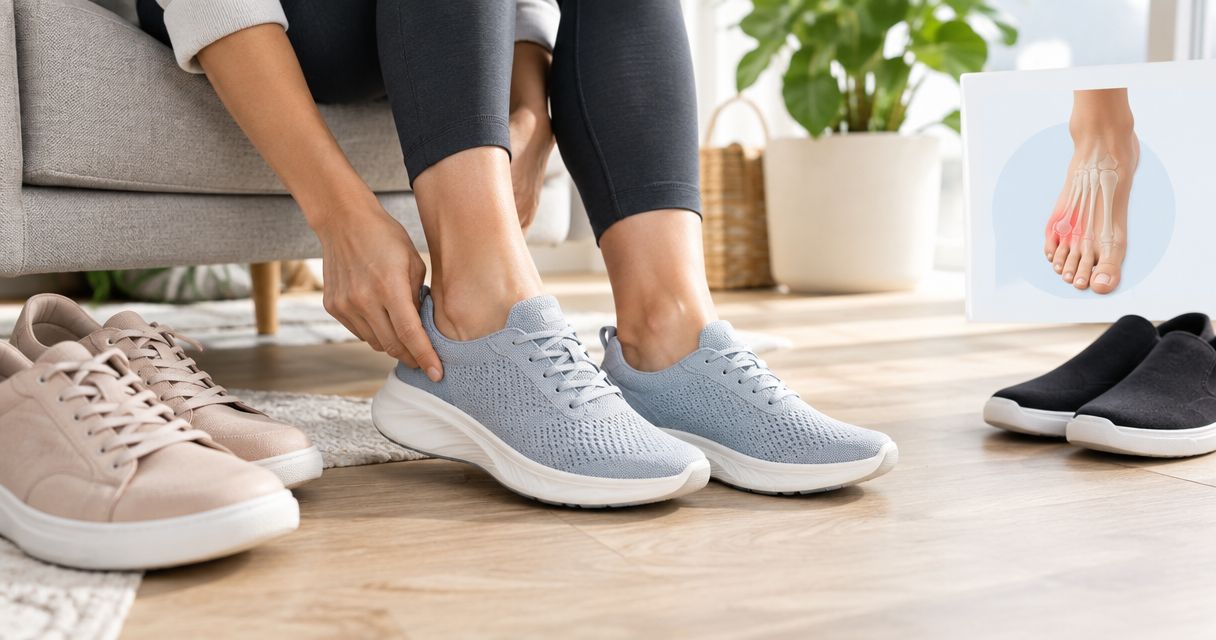
Stand when trying on shoes because your foot spreads and lengthens under body weight. You need about a thumb’s width of space between your longest toe and the shoe’s end to prevent jamming during walking. Check that the widest part of your foot aligns with the widest part of the shoe, and make sure the heel doesn’t slip more than a quarter inch when you walk. Both feet should be measured since most people have one foot slightly larger than the other, and you should always fit shoes to your larger foot.
How to pick shoes for your day and activities
Your daily routine determines which shoe features matter most for your foot health. The importance of proper footwear includes matching your shoes to your activity level and environment, because a shoe that works well at a desk job can cause injury during a warehouse shift. You need different levels of cushioning, support, and protection depending on whether you stand, walk, or run throughout your day.
Matching footwear to work demands
Office workers who sit most of the day can wear shoes with moderate support and cushioning, but those who stand for hours need enhanced arch support and shock absorption to prevent fatigue. Retail workers, nurses, and warehouse employees should look for shoes with slip-resistant soles and reinforced heel counters that maintain stability during constant movement. Construction workers require steel-toe protection and ankle support that prevents injuries from heavy objects and uneven surfaces.
"Your shoes should match the physical demands you place on your feet each day."
Activity-specific shoe selection
Walking shoes need flexible forefoot areas that bend naturally with your stride and enough cushioning for repetitive impact. Running shoes require additional heel cushioning and motion control features based on your gait pattern. Sports-specific footwear provides lateral support for basketball or tennis and cleats for traction on grass or turf. Casual daily wear still needs proper arch support and secure fit, even when you prioritize style over performance features.
When to replace shoes and when to see a podiatrist
Even high-quality shoes eventually lose their supportive properties through normal wear, and continuing to use them can undermine the importance of proper footwear in protecting your feet. You need to monitor your shoes for signs of breakdown and recognize when foot problems require professional medical attention beyond simply buying new footwear.
Signs your shoes need replacement
Athletic shoes typically last 300 to 500 miles of walking or running, which translates to about six months of regular use for most people. You should replace shoes when the tread pattern becomes smooth, the midsole feels compressed and no longer springs back, or the heel counter loses its firmness. Visible signs include creases in the midsole foam, worn-down outer sole edges, or the upper material separating from the sole.
"Worn-out shoes provide no more support than walking barefoot on hard surfaces."
When professional care is necessary
Contact a podiatrist at Achilles Foot and Ankle Center if you experience persistent foot pain lasting more than two weeks, even after switching to supportive shoes. You need medical evaluation for swelling that doesn’t resolve, numbness or tingling in your feet, or pain that worsens with activity. Diabetic patients should see a podiatrist regularly for preventive foot exams regardless of symptoms, and anyone developing visible deformities like bunions or hammertoes benefits from early intervention before these conditions progress.
Key takeaways and next steps
The importance of proper footwear goes beyond preventing blisters or sore feet. Your shoes directly influence your joint health, posture, and long-term mobility throughout your entire body. Supportive footwear includes specific features like arch support, firm heel counters, and adequate cushioning that work together to protect your biomechanical chain. You need shoes that fit correctly when your feet are at their largest, match your daily activities, and get replaced before they lose their structural integrity.
Start by evaluating your current shoe collection and replacing any pairs that show wear or cause discomfort. Measure both feet before buying new shoes, and shop during afternoon hours when your feet have expanded. Pay attention to persistent pain, swelling, or changes in how you walk, as these signals indicate you need professional care beyond better footwear.
If you experience ongoing foot or ankle problems, schedule an appointment with Achilles Foot and Ankle Center to identify underlying conditions and develop a comprehensive treatment plan tailored to your needs.