

You wake up at 2 a.m. with a throbbing big toe that feels like it’s on fire. Even the weight of a bedsheet is unbearable. If you’ve never experienced it before, you’re probably asking yourself, what does gout pain feel like, and whether what you’re feeling right now qualifies. You’re not alone. Gout is one of the most common forms of inflammatory arthritis, and its hallmark is a sudden, intense joint pain that catches people completely off guard.
The tricky part is that gout can mimic other foot and ankle conditions, infections, sprains, even a bad stubbed toe. Knowing exactly what separates a gout flare from other types of joint pain helps you respond faster and get the right treatment sooner. Delays often mean more damage to the joint and longer recovery times.
At Achilles Foot and Ankle Center, our podiatrists across Central Virginia diagnose and treat gout regularly, helping patients manage acute flare-ups and prevent future attacks. This article breaks down the specific sensations, stages, and red flags of gout pain so you can determine your next steps with confidence.
Why gout pain feels so intense
Most joint pain builds gradually. Gout does not. Understanding the biology behind a gout attack helps explain why this condition produces some of the most severe pain a person can experience without a physical injury. The answer starts with a substance your body produces every day: uric acid.
Uric acid crystals in the joint
Uric acid forms when your body breaks down purines, compounds found naturally in certain foods and in your own tissue. Under normal circumstances, uric acid dissolves in the blood, travels to the kidneys, and exits through urine. When uric acid levels climb too high, a condition called hyperuricemia, the excess uric acid begins forming microscopic crystals called monosodium urate crystals. These crystals accumulate and deposit directly inside joint spaces and surrounding tissue.
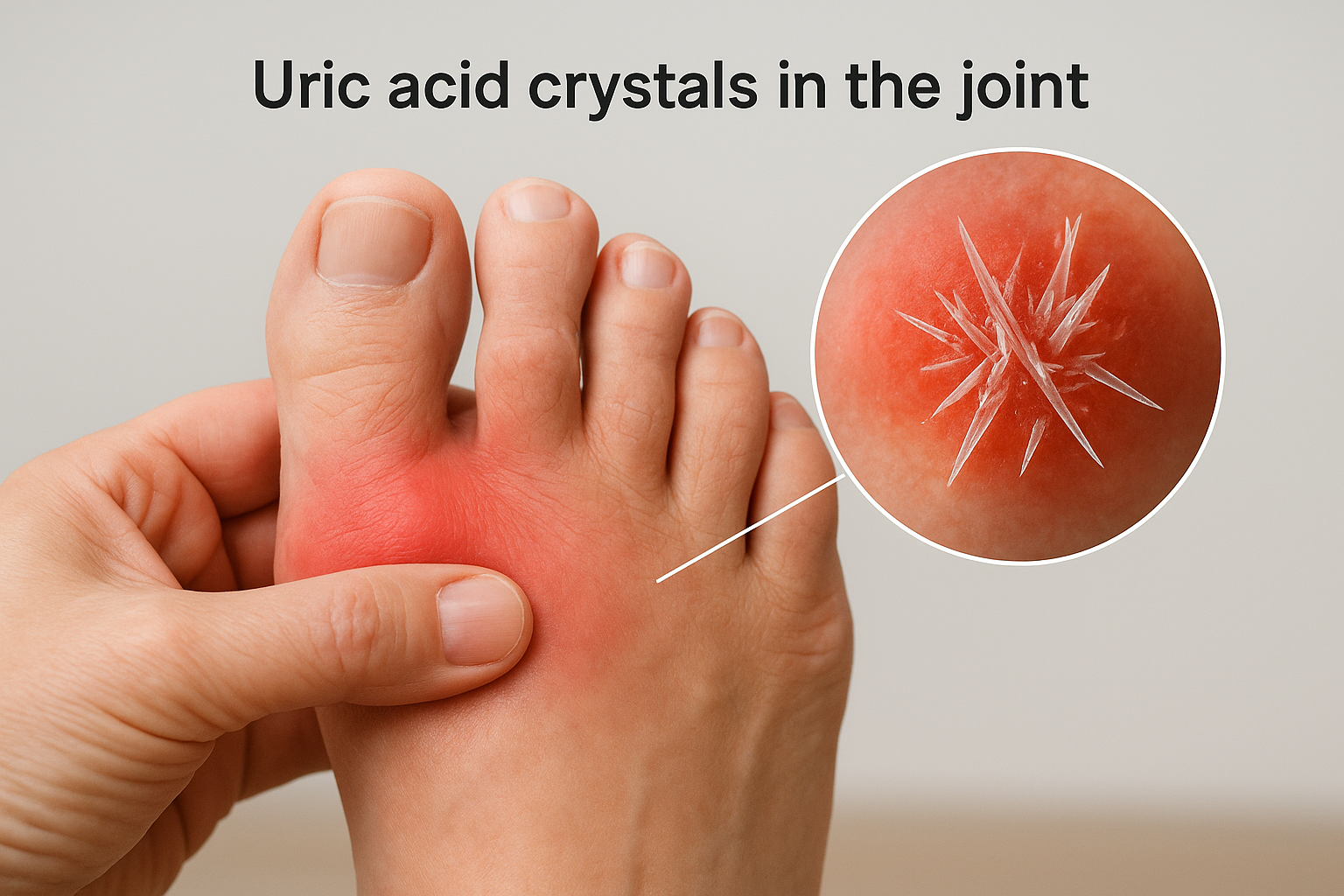
Monosodium urate crystals are shaped like tiny needles, and they don’t just sit passively in the joint. They actively pierce surrounding tissue with every movement.
These crystals are not smooth or round. Their sharp, jagged edges tear into cartilage, synovial membranes, and soft tissue. When you move the affected joint, those needle-like structures grind against sensitive nerve endings, which is a major part of what gout pain feels like: a stabbing, relentless sensation that intensifies with any pressure or contact.
Your body’s inflammatory response
Once crystals appear in the joint, your immune system treats them as foreign invaders. White blood cells flood the area in an attempt to neutralize the threat. The problem is that uric acid crystals cannot be digested or cleared by white blood cells alone, so the immune response stays active, sometimes for days or even weeks.
This sustained immune reaction releases a cascade of pro-inflammatory chemicals, including cytokines and interleukins, that amplify pain signals and drive swelling, heat, and redness in the joint. The result is a joint that becomes hypersensitive to even the slightest contact. Many patients report that a thin fabric touching the skin over the joint is enough to cause significant pain.
Your body is essentially fighting a battle it cannot quickly win, and you feel every moment of that fight. This biological cycle explains why gout attacks don’t fade overnight and why prompt medical treatment makes such a measurable difference in how long the pain lasts and how much cumulative damage the joint sustains over time.
What gout pain feels like during a flare
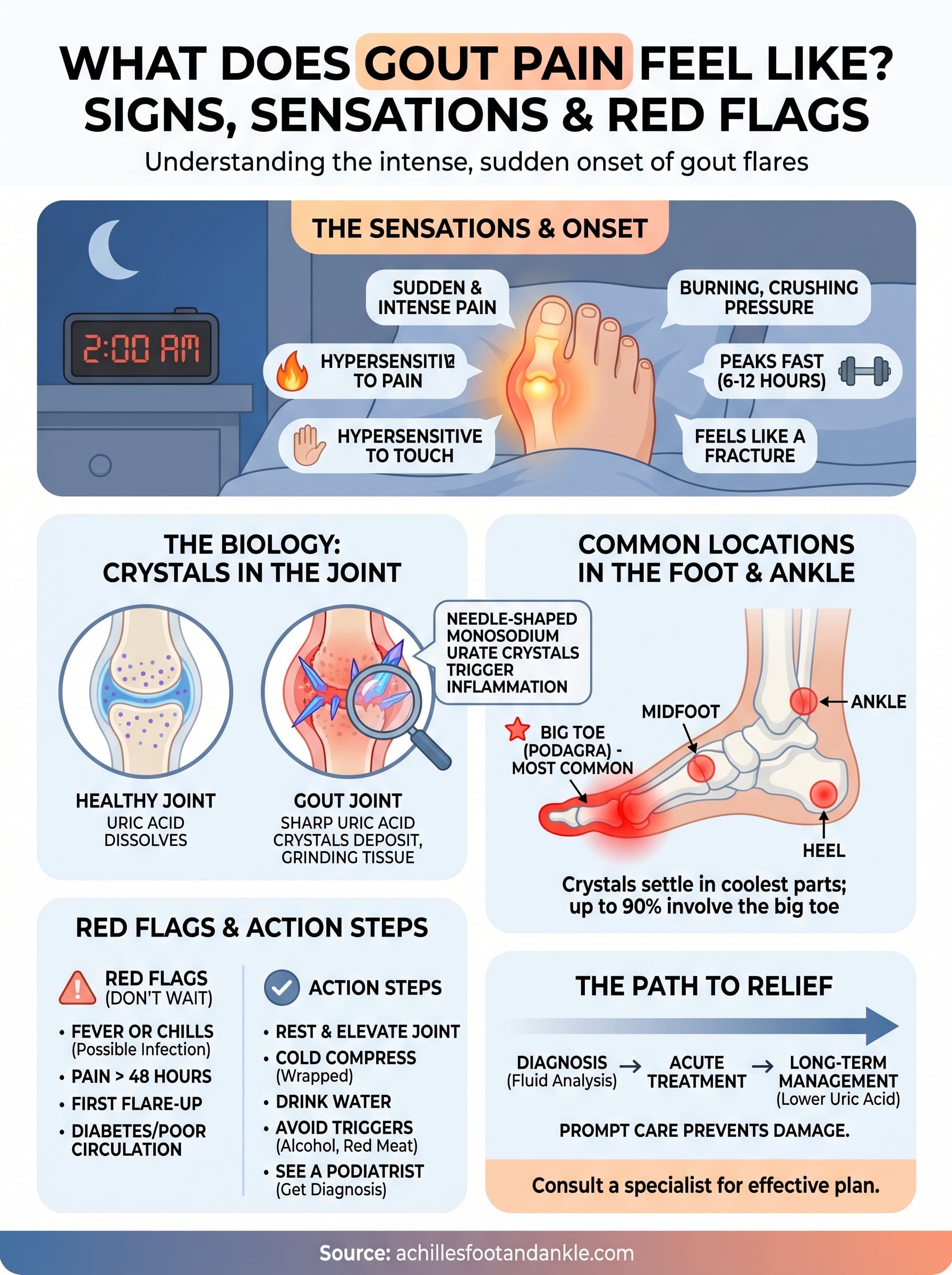
A gout flare doesn’t ease in gradually. The pain arrives fast, often peaking within 6 to 12 hours of the attack starting. Most people describe the initial sensation as a burning, crushing pressure inside the joint, as if the bones themselves are being squeezed from the inside. The skin over the joint turns red, feels hot to the touch, and swells visibly, sometimes within a single hour.
The onset: sudden and severe
For most people, the first sign appears in the middle of the night or early morning. [Joint temperatures drop slightly during sleep](https://achillesfootandankle.com/what-triggers-gout-flare-ups/), which makes uric acid crystals more likely to precipitate out of solution and trigger an acute immune response. You may wake up to find the joint already swollen, red, and radiating heat before the worst of the pain even sets in. Any contact with the affected area, including a bedsheet resting lightly on the joint, can feel completely unbearable.
Many gout patients describe the early hours of a flare as some of the worst pain they have ever experienced, comparable in intensity to a fracture.
How the pain evolves over days
Understanding what does gout pain feel like across the full duration of a flare helps you know what to expect. Without treatment, an attack typically peaks within the first 24 hours and can last anywhere from 3 to 10 days. During the first day or two, even minor movement produces sharp, stabbing sensations. After that peak, the pain shifts into a dull, persistent ache as the inflammation slowly subsides. The skin over the joint may begin to itch or peel slightly as swelling decreases, which is a normal part of the recovery process.
Where gout pain shows up in the foot and ankle
Gout doesn’t strike randomly. Uric acid crystals tend to settle in the coolest parts of the body, where lower temperatures make crystallization more likely. The feet and ankles sit furthest from your core, which makes them prime targets for crystal deposits and the severe inflammation that follows.
The big toe: the most common target
The big toe joint, known medically as the first metatarsophalangeal joint, is where gout attacks most often. This pattern is so consistent that doctors use the term podagra to describe gout specifically at this location. If you’re trying to understand what does gout pain feel like, the big toe is where most people first experience it. The joint swells rapidly, turns deep red, and becomes so sensitive that wearing a shoe becomes impossible within hours of the flare starting.
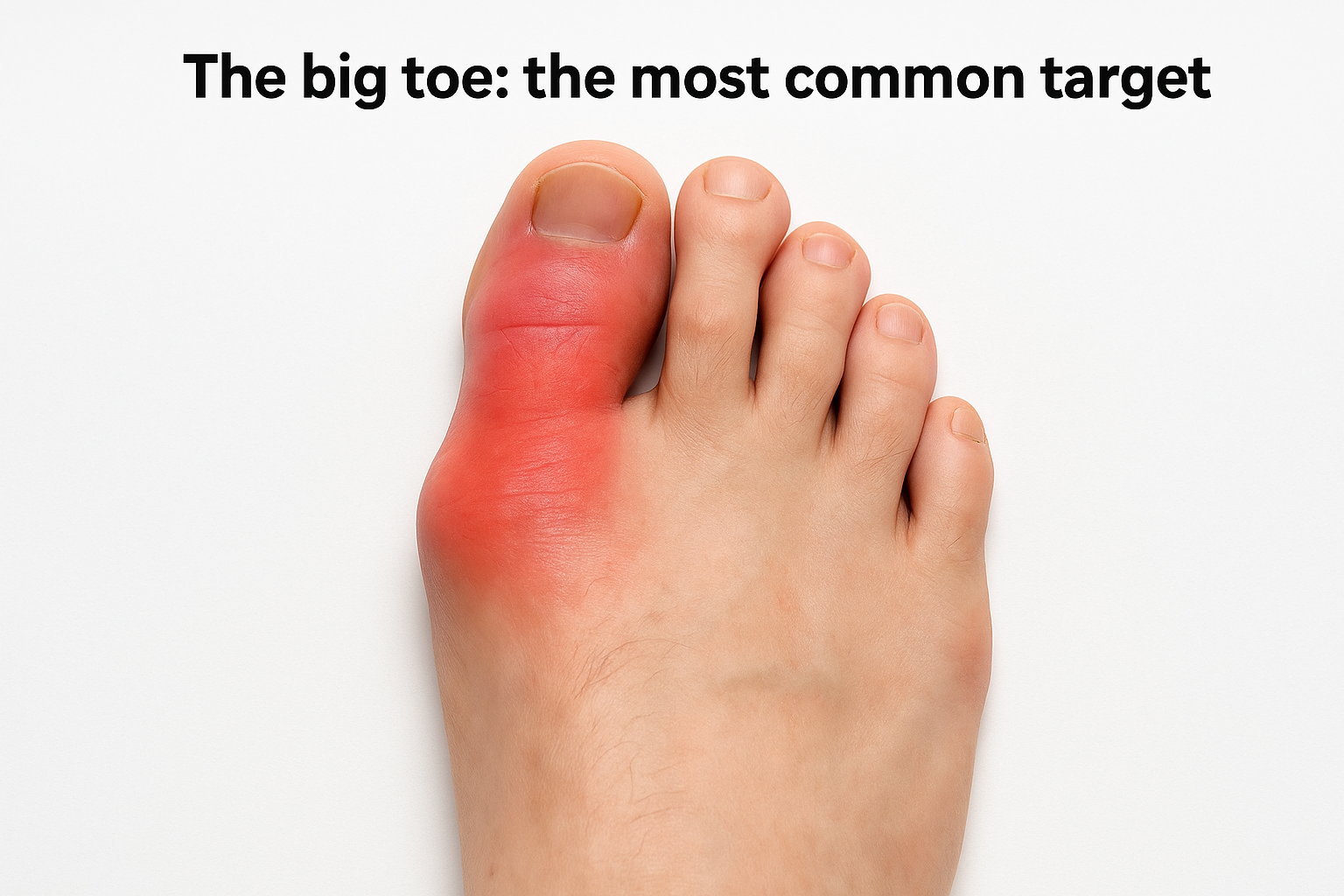
Research indicates that up to 90% of people with gout experience at least one attack in the big toe at some point during their lifetime.
Other foot and ankle joints affected by gout
Gout doesn’t always stay confined to the big toe. The midfoot, ankle, and heel are all common secondary sites where crystal deposits can accumulate and trigger flares. Pain in the ankle from gout can closely resemble a bad sprain, with significant swelling and sharply reduced range of motion. The heel and the area surrounding the Achilles tendon can also become inflamed when crystals deposit in the nearby bursa or soft tissue.
Without treatment, elevated uric acid levels allow crystals to spread into multiple joints at once, making it progressively harder to walk, stand, or bear any weight through your foot.
What can look like gout but is not
Several conditions produce foot and ankle pain that closely mirrors a gout flare, and misidentifying the cause delays effective treatment. Knowing what separates gout from similar conditions helps you have a more informed conversation with your podiatrist and avoid months of treating the wrong problem.
Pseudogout and septic arthritis
Pseudogout causes sudden, severe joint inflammation just like gout, but the crystals involved are calcium pyrophosphate rather than uric acid. It often hits the ankle and midfoot hard, and the swelling and heat can look identical to a gout attack on the surface. Septic arthritis, which is a joint infection caused by bacteria, also produces rapid-onset swelling, warmth, and intense pain. The key difference is that septic arthritis typically comes with fever and systemic symptoms like chills, which gout does not.
If you have joint pain alongside a fever, treat it as an urgent situation and seek care the same day, since untreated joint infections can cause permanent damage quickly.
Plantar fasciitis, sprains, and stress fractures
Plantar fasciitis produces significant heel and arch pain, especially during those first steps in the morning, but it builds gradually rather than arriving overnight as a violent flare. An ankle sprain causes swelling and tenderness around the ankle joint after a physical event like a twist or fall, while gout requires no injury to trigger it. Stress fractures in the foot produce localized bone pain that worsens with activity and eases with rest. Understanding what does gout pain feel like, specifically its sudden overnight onset with no prior injury, helps distinguish it from all three of these mechanical conditions.
What to do next and when to get care
If you recognize what gout pain feels like in your own joint, acting quickly gives you the best chance at shortening the flare and protecting the joint from cumulative damage. The first 24 to 48 hours are the most critical window, and there are specific steps you can take at home while you arrange care with a podiatrist.
Managing a flare at home
Resting the affected joint and elevating your foot above heart level reduces swelling and eases some of the pressure building inside the joint. Apply a cold pack wrapped in a cloth for 20 minutes at a time to bring down inflammation without direct ice contact on already sensitive skin. Here are a few other steps that help during an active flare:
- Drink plenty of water to help your kidneys process and clear uric acid
- Avoid alcohol, red meat, and shellfish, since all three spike uric acid levels rapidly
- Wear loose footwear or go barefoot indoors to avoid any pressure on the joint
Over-the-counter anti-inflammatory medications like ibuprofen can reduce pain temporarily, but they do not lower uric acid or prevent future attacks.
When to call a podiatrist
Certain signs mean you should not wait and should contact a podiatrist as soon as possible. Reach out if the pain has not improved within 48 hours, if this is your first suspected flare, or if you have diabetes or poor circulation in your feet. Fever alongside joint swelling signals a possible joint infection requiring same-day evaluation. Repeated flares without medical management cause permanent joint damage, so getting a confirmed diagnosis and a long-term uric acid treatment plan is the most important step you can take for your joints.
Next steps if you suspect gout
Now that you understand what gout pain feels like and how it differs from other foot conditions, the next step is getting a confirmed diagnosis. A podiatrist can draw fluid from the affected joint to identify uric acid crystals directly, which is the most reliable way to confirm gout rather than guessing based on symptoms alone. Without that confirmation, you risk treating the wrong condition while the crystals keep accumulating.
Gout is a manageable condition when you catch it early and stay consistent with treatment. A personalized plan typically includes prescription anti-inflammatory medication for acute flares, long-term uric acid lowering therapy, and dietary guidance tailored to your specific triggers. Waiting for the pain to pass on its own without medical follow-up almost always leads to more frequent and more severe attacks over time. If your joint pain sounds like what this article describes, book a same-day appointment at Achilles Foot and Ankle Center and get answers today.