

You finally lie down after a long day, and there it is, that uncomfortable burning, tingling sensation creeping through your feet. If you’ve been searching for the causes of burning feet at night, you’re not alone. This symptom affects millions of people and can range from a minor annoyance to a sign of something that needs medical attention.
The good news? Most causes are treatable once you know what’s behind them. Whether it’s nerve damage, a vitamin deficiency, or circulation issues, understanding the conditions that make feet burn is the first step toward relief. At Achilles Foot and Ankle Center, our podiatrists regularly help patients across Central Virginia identify why their feet burn at night and develop effective treatment plans.
This guide covers the most common medical conditions, lifestyle factors, and warning signs that warrant a doctor’s visit, plus practical steps you can take to find relief.
What burning feet at night is and what it feels like
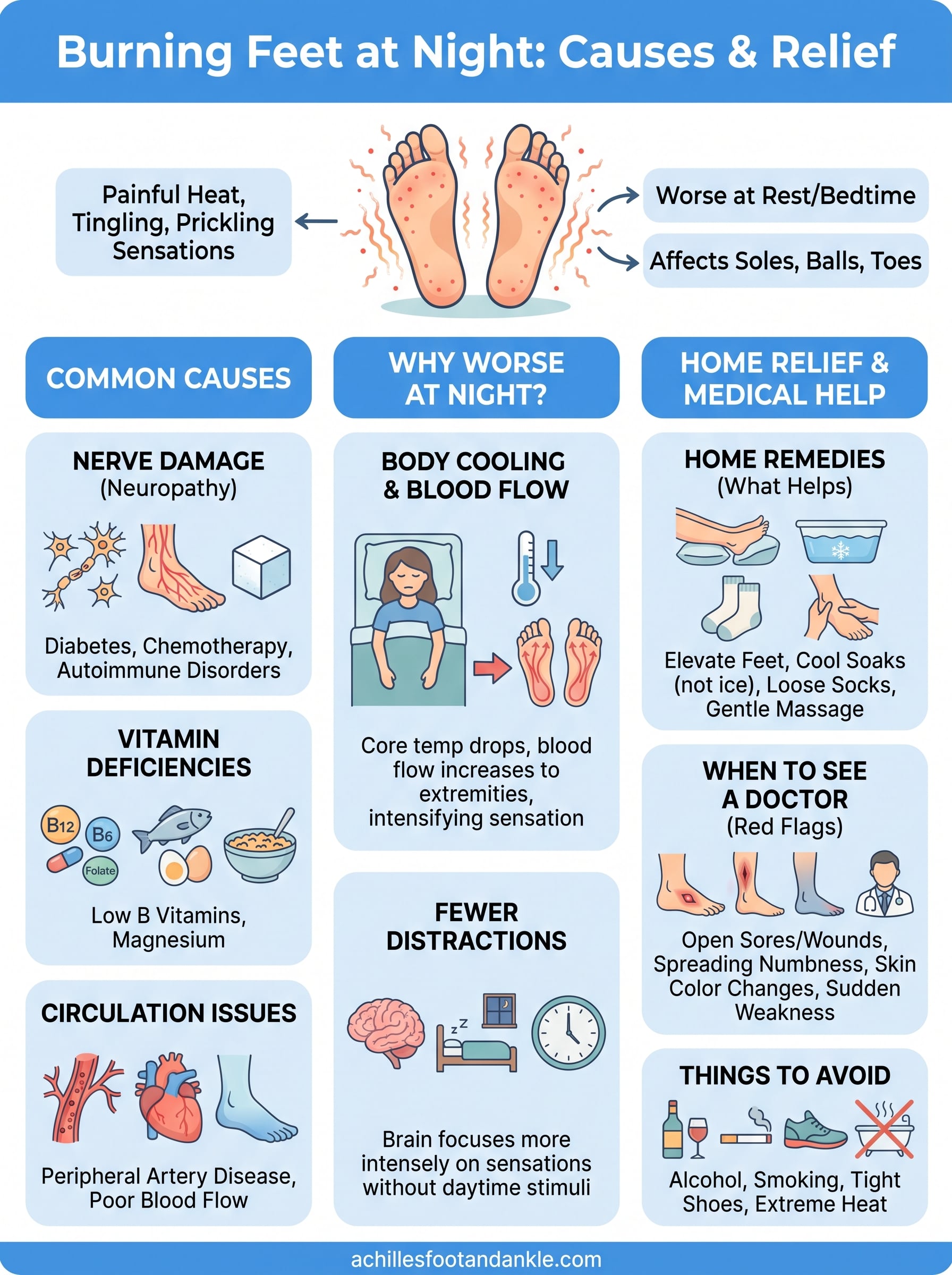
Burning feet at night refers to painful heat, tingling, or prickling sensations in your feet that occur or worsen when you’re resting, particularly at bedtime. Medical professionals call this neuropathic pain when it stems from nerve damage, though other conditions can trigger similar symptoms. The sensation typically builds gradually throughout the day and peaks when you climb into bed, making it difficult to fall asleep or stay asleep through the night.
How the sensation shows up
You might experience the burning as intense heat radiating from the soles of your feet, as if you stepped on hot sand or coals. Some people describe it as sharp, stabbing pricks similar to pins and needles, while others feel a constant tingling that refuses to go away. The intensity varies from person to person. You may notice mild warmth that feels annoying but tolerable, or severe burning that makes it impossible to keep your feet under the covers.

Other common sensations include numbness mixed with burning, shooting pains that travel up your ankles, or hypersensitivity where even light sheets touching your feet feel unbearable. The discomfort can come and go in waves or remain steady throughout the night.
If you feel burning combined with numbness or loss of sensation, this often signals nerve involvement, one of the common culprits behind foot nerve pain, and requires medical evaluation.
Where you feel it most
The burning typically concentrates in specific areas of your feet rather than affecting them uniformly. Most people experience the strongest sensations in the balls of their feet and toes, though the heels and arches can burn too. Your soles often feel the most affected because they contain dense nerve networks that react strongly when irritated or damaged.
Both feet usually develop symptoms, though one foot may burn more intensely than the other. The pattern depends on what’s causing the problem. Nerve damage from diabetes tends to affect both feet symmetrically, while a pinched nerve in your back might cause burning on just one side. Understanding the causes of burning feet at night helps determine why your symptoms follow certain patterns and guides appropriate treatment.
Why burning often feels worse at night
Your feet don’t actually burn more at night, but your perception of the pain intensifies when you’re lying down and trying to rest. Several physiological changes happen in your body after sunset that make the sensation feel more pronounced. Understanding these patterns helps you recognize that nighttime worsening is a common feature of many conditions that cause burning feet, not a sign that your condition is deteriorating.
Your body’s natural temperature shifts
Throughout the evening, your core body temperature drops as part of your natural circadian rhythm, which signals your brain that it’s time to sleep. This cooling process triggers increased blood flow to your extremities, including your feet, to release excess heat. When more blood reaches nerve endings that are already irritated or damaged, it can intensify burning sensations.
The temperature regulation system works against you when dealing with neuropathy or other nerve conditions. Your feet may feel warmer to the touch even as they burn because dilated blood vessels bring more warmth to the surface. This combination of actual warmth and hypersensitive nerves creates the perfect storm for nighttime discomfort.
Fewer distractions amplify sensation
During the day, your brain processes hundreds of sensory inputs that compete for attention: work stress, conversations, physical activity, visual stimuli. These distractions effectively mask or reduce your awareness of foot discomfort. When you lie in bed, those distractions disappear, and your nervous system focuses more intensely on any remaining sensations.
The quiet stillness of bedtime removes the mental noise that normally helps you ignore mild pain signals throughout the day.
This heightened awareness doesn’t mean the causes of burning feet at night differ from daytime causes. You simply notice them more acutely when nothing else demands your attention.
Common causes of burning feet at night
Several medical conditions trigger the burning sensation you feel when you lie down. The causes of burning feet at night range from nerve damage that develops over years to vitamin deficiencies that build up gradually without obvious warning signs. Identifying the specific cause requires looking at your overall health, lifestyle factors, and any other symptoms you experience alongside the burning.
Nerve damage from diabetes and other conditions
Peripheral neuropathy, or nerve damage in the feet, stands as the leading cause of nighttime foot burning. This condition damages the nerves in your feet, typically starting in your toes and spreading upward. Diabetes causes about 60% of neuropathy cases because high blood sugar levels injure nerve fibers over time. You might also develop neuropathy from chronic kidney disease, hypothyroidism, or autoimmune disorders like lupus. Tarsal tunnel syndrome, where the tibial nerve gets compressed as it passes through a narrow space near your ankle, produces similar burning and tingling but typically affects one foot more than the other.
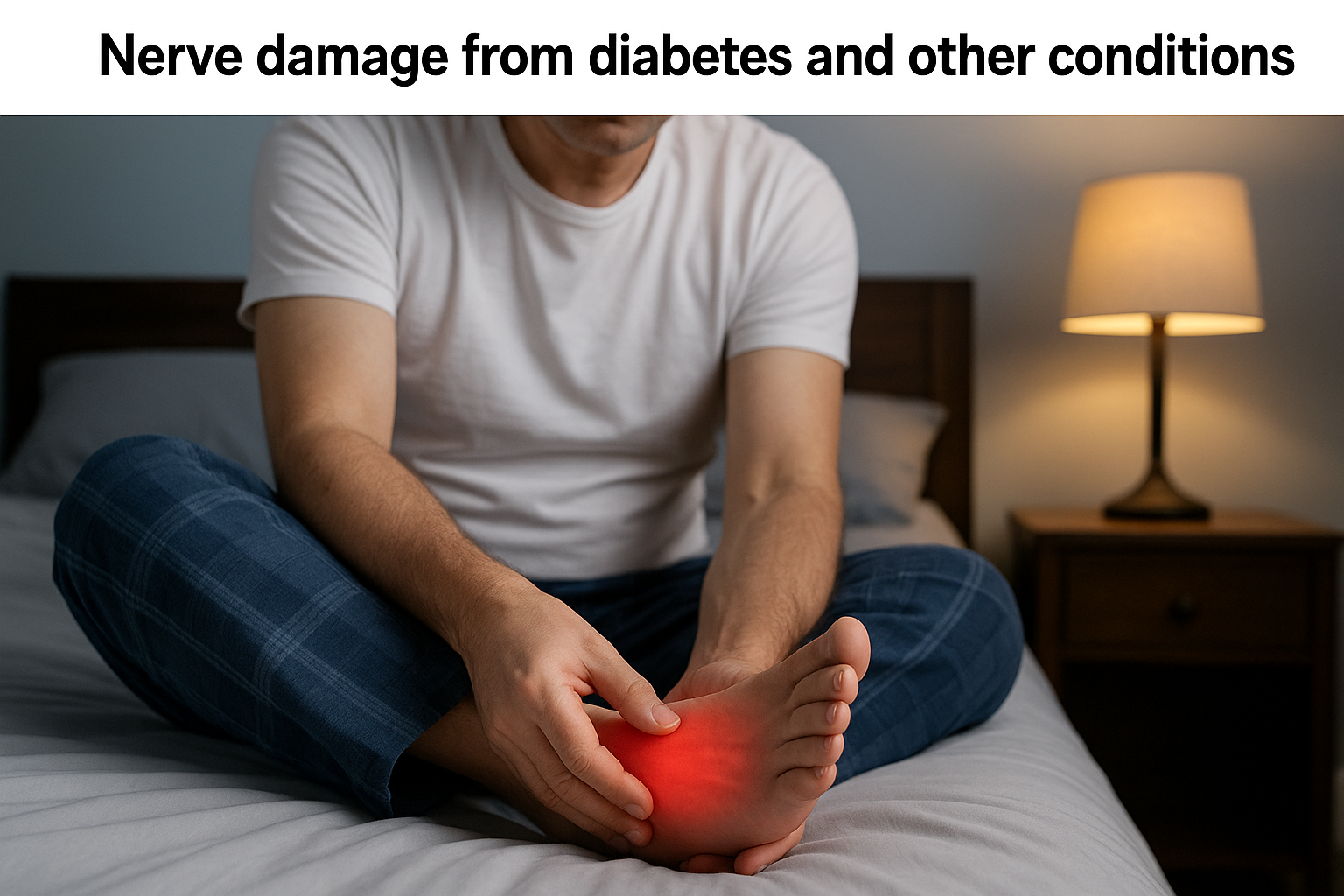
Chemotherapy drugs, excessive alcohol use, and certain infections (including HIV) can damage peripheral nerves as well. Athlete’s foot, a fungal infection between your toes, can also cause burning and itching, though this discomfort comes from skin irritation rather than nerve damage and usually clears up with antifungal treatment. The nerve injury creates faulty pain signals that your brain interprets as burning even when no actual heat or injury exists.
Vitamin deficiencies and nutritional problems
Your nerves need specific B vitamins to function properly, particularly B12, B6, and folate. When your body runs low on these nutrients, nerve function deteriorates and burning sensations develop. Strict vegetarians, people with digestive disorders (like Crohn’s disease), and those taking certain medications face higher risk of deficiency.
Vitamin B12 deficiency often goes undetected for years because symptoms develop slowly and can mimic other conditions.
Foods like fish, eggs, and fortified cereals provide B12, though people with absorption problems may need injections or high-dose supplements to correct a long-standing deficiency. Low levels of vitamin E or certain minerals like magnesium can also contribute to nerve irritation and burning feet, so it helps to know which vitamin deficiencies cause foot pain. Poor circulation from peripheral artery disease reduces oxygen delivery to your feet, creating another pathway to burning discomfort.
What helps at home and what to avoid
Simple changes to your bedtime routine can significantly reduce foot burning without prescription medications. Most home remedies target cooling the affected area and supporting nerve health, which addresses many causes of burning feet at night regardless of their underlying source. These strategies work best when you apply them consistently rather than just when symptoms flare up.
Immediate relief methods
Elevating your feet on pillows helps reduce blood pooling that intensifies burning sensations. Position them at a 45-degree angle above your heart for 15 to 20 minutes before bed. Cool (not cold) water soaks provide temporary relief by calming overactive nerve endings, though you should keep sessions under 10 minutes to avoid skin damage. If you need the fastest relief possible, combine a brief cool soak with a gentle foot massage using circular motions from your toes toward your ankle. This simple combination stimulates circulation and calms irritated nerves faster than either method alone.
Avoid ice packs or extremely cold water, as temperature extremes can worsen nerve pain and damage already sensitive tissue.
Loose-fitting cotton socks allow airflow while protecting your feet from temperature changes during sleep. Some people find going barefoot helps more than covering their feet, so experiment to find what works for your specific symptoms.
Habits that make burning worse
Alcohol consumption damages peripheral nerves and depletes B vitamins that your nerves need to heal. Even moderate drinking can intensify symptoms if you already have neuropathy. Tight shoes and restrictive footwear compress nerves and reduce circulation throughout the day, setting the stage for worse burning at night. Smoking narrows blood vessels and reduces circulation to your feet, which can worsen nerve-related burning over time.
Exposure to extreme heat from heating pads, hot baths, or electric blankets triggers inflammation in already irritated nerve tissue. Similarly, sitting or standing in one position for extended periods restricts blood flow to your feet, which compounds nerve irritation.
When to worry and what a doctor checks
Most burning feet symptoms respond to home care and lifestyle changes, but certain warning signs indicate you need professional evaluation. You should contact a podiatrist or your primary care physician when the burning persists for more than two weeks without improvement, suddenly worsens, or interferes with your ability to sleep or walk normally, all symptoms that call for a foot specialist. Rapid progression of symptoms often signals an underlying condition that requires treatment before permanent nerve damage occurs.
Warning signs that need immediate attention
Severe burning accompanied by open sores or wounds on your feet demands urgent medical care, especially if you have diabetes and aren’t already following a routine to protect diabetic feet from wounds. These ulcers can quickly become infected and lead to serious complications. Loss of sensation or numbness spreading up your legs indicates progressive nerve damage that needs immediate intervention.
Sudden burning in one foot along with leg pain or difficulty walking may signal a blood clot or vascular emergency requiring same-day evaluation.
Changes in skin color (bluish, reddish, or pale), swelling that doesn’t resolve overnight, or feet that feel cold despite burning sensations all point to circulation problems. Contact your doctor promptly if you develop weakness in your feet or ankles that affects your balance or gait.
What your doctor evaluates
Your podiatrist conducts a comprehensive neurological exam testing sensation, reflexes, and nerve function using specialized tools. Blood tests check for diabetes, vitamin deficiencies, thyroid problems, and kidney function since these commonly cause nighttime foot burning. The evaluation may include nerve conduction studies that measure how electrical signals travel through your nerves, helping pinpoint damage locations and severity. Understanding the specific causes of burning feet at night through proper testing allows your doctor to develop targeted treatment rather than just managing symptoms.
Treatment for burning feet at night depends entirely on what’s causing it. Your doctor might prescribe medications like gabapentin or alpha-lipoic acid to calm overactive nerve signals, recommend custom orthotics if a compressed nerve is contributing to your symptoms, or start vitamin supplementation when bloodwork reveals a deficiency, all part of our nerve pain treatment options. Addressing the underlying cause, rather than only masking the burning, gives you the best shot at lasting relief.
What to do next
Understanding the causes of burning feet at night gives you the foundation to take action, but relief requires addressing your specific situation. Start by tracking when your symptoms occur and what makes them better or worse. Document any accompanying symptoms like numbness, weakness, or changes in skin appearance, as these details help your doctor make an accurate diagnosis.
Schedule an appointment if home remedies don’t improve your symptoms within two weeks or if warning signs develop. Early intervention prevents minor nerve irritation from progressing to permanent damage that becomes harder to treat. The podiatrists at Achilles Foot and Ankle Center evaluate patients throughout Central Virginia and create personalized treatment plans based on the underlying cause. Reserve a same-day visit with a Central Virginia podiatrist for urgent concerns, and know that our team accepts all major insurance plans to make care accessible when you need it most.