

Your feet carry you through roughly 100,000 miles over a lifetime, yet most people spend more time caring for their teeth than their feet. Learning how to improve foot health doesn’t require expensive equipment or hours of effort, it starts with a few consistent daily habits.
Foot problems rarely appear overnight. They build slowly from years of neglect, poor footwear choices, and skipping basic maintenance. The good news? Small, intentional changes to your routine can strengthen the muscles in your feet, increase mobility, and help you avoid common issues like plantar fasciitis, bunions, and chronic ankle instability before they start.
At Achilles Foot and Ankle Center, our podiatry team across Central Virginia treats these conditions every day, and we consistently see that patients who practice preventive habits at home recover faster and stay healthier long-term. Below, we’re sharing five practical habits backed by what we see in our clinics that you can start using today.
1. Get a podiatrist baseline exam
The first step in how to improve foot health is knowing where you currently stand. A podiatrist baseline exam gives you a clear picture of your foot structure, gait mechanics, and any early warning signs before they become serious problems.
What you check and why it matters
A podiatrist will assess your arch height, ankle range of motion, skin and nail health, circulation, and nerve sensation during a baseline exam. These checks identify structural issues like flat feet or high arches that quietly stress your tendons and joints over time. Gait analysis can also reveal how your foot strikes the ground, which directly influences your knee, hip, and back health.
What to bring and what to ask at your visit
Bring your most worn pair of shoes so the podiatrist can read the wear pattern, which shows how your foot loads with each step. Also bring a list of any pain locations, past injuries, and current medications. Ask specifically about your arch support needs, any alignment concerns, and which exercises suit your foot type.
The more information you give your podiatrist upfront, the more targeted your care plan will be.
Who benefits most from an early evaluation
Anyone with diabetes, a family history of foot deformities, or recurring pain should prioritize this exam. Athletes, people who stand for long hours, and older adults also benefit significantly because mechanical wear accumulates faster in these groups and problems compound quickly without early intervention.
When to book urgently vs schedule soon
Book same-day or urgent care if you have sudden swelling, an open wound, numbness, or severe pain that limits walking. Schedule a standard appointment if you notice gradual arch pain, nail changes, skin thickening, or balance issues that have persisted longer than two weeks.
2. Follow a simple daily foot care routine
A consistent daily routine is one of the most effective ways to improve foot health long-term. Five minutes each day of focused care protects your skin barrier, prevents infections, and helps you catch small problems early before they turn into painful ones.
Clean, dry, and protect your skin barrier
Wash your feet with mild soap and warm water every day, paying close attention to the spaces between your toes. Dry them thoroughly because trapped moisture between toes creates the ideal environment for athlete’s foot and fungal infections.
Moisturize the right way to prevent cracks
Apply a fragrance-free lotion or urea-based cream to the tops and bottoms of your feet daily, but skip the spaces between your toes. Dry, cracked heels are not just cosmetic; deep heel fissures can become painful and infected if left untreated.
Cracked heels are one of the most preventable conditions we treat, and consistent moisturizing is usually all it takes.
Trim toenails to reduce ingrowns and pain
Cut toenails straight across and smooth sharp edges with an emery board. Rounding the corners or cutting too short is the leading cause of ingrown toenails, which often require a clinical procedure to correct.
Watch for warning signs and track changes
Check your feet visually each day for blisters, color changes, swelling, or sores. People with diabetes especially need to inspect their entire foot surface daily since nerve damage can mask pain from developing wounds.
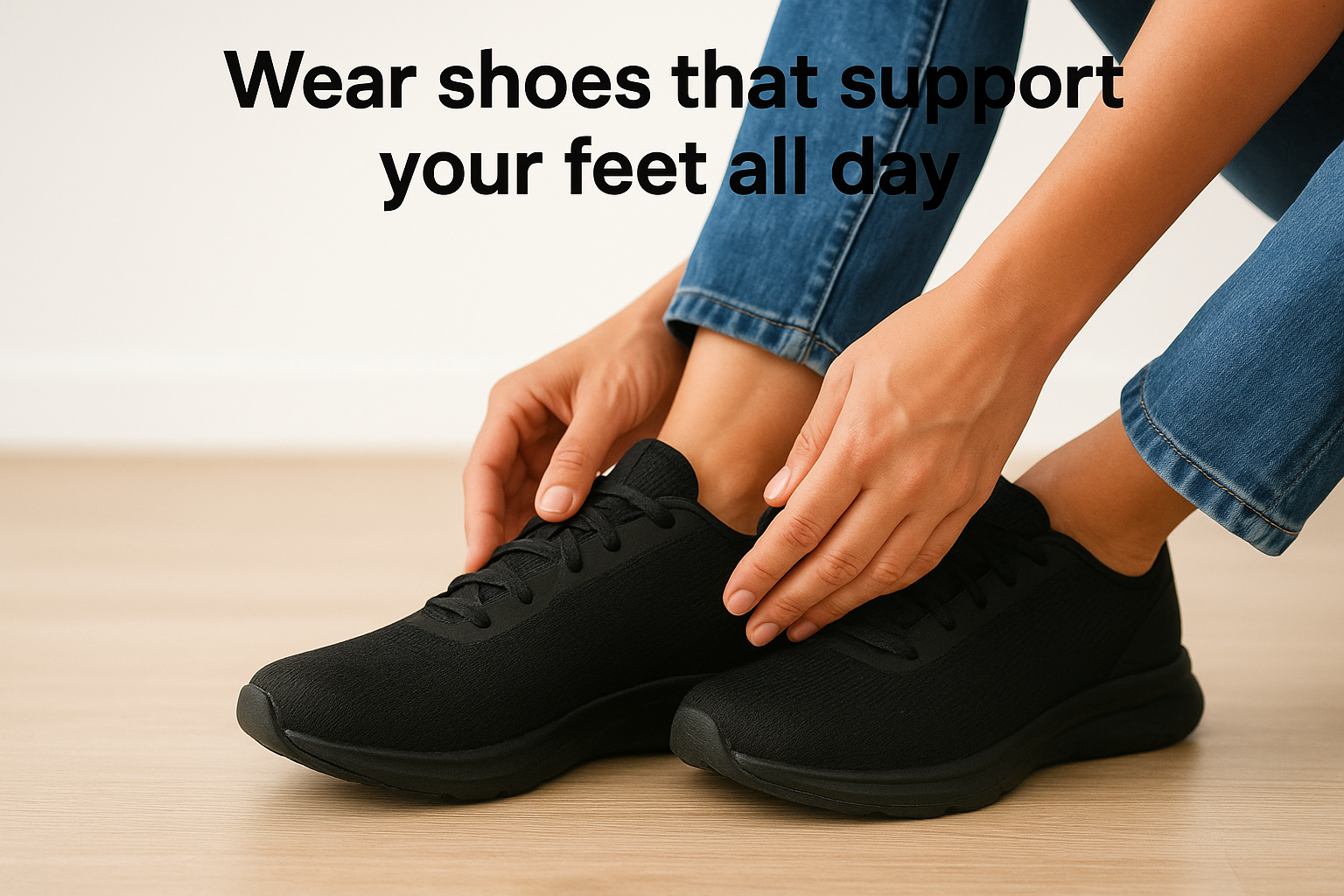
3. Wear shoes that support your feet all day
Your footwear choice directly affects how to improve foot health at every step. Ill-fitting or unsupportive shoes are one of the leading causes of plantar fasciitis, blisters, and toe deformities, making shoe selection a non-negotiable part of your daily routine.
Fit rules that prevent blisters and toe crowding
Shop for shoes at the end of the day when your feet are at their largest. You need a thumb’s width of space between your longest toe and the shoe tip to prevent crowding, black toenails, and blisters during extended wear.
Support features that protect arches and heels
Look for shoes with a firm heel counter, adequate arch support, and cushioned midsoles. Flat, flexible shoes with no structure force your plantar fascia to absorb all the load, which accelerates wear on your tendons and joints.
The right shoe does most of the work before you ever need a medical intervention.
How to rotate shoes, socks, and insoles
Rotate between at least two pairs of shoes to allow each pair to decompress and dry fully between uses. Wear moisture-wicking socks to reduce friction and replace insoles every six months as cushioning breaks down.
When to consider custom orthotics or bracing
If you have recurring heel pain, flat feet, or ankle instability, over-the-counter insoles may not provide enough correction. A podiatrist can prescribe custom orthotics built specifically to your foot structure and gait pattern.
4. Build foot strength and ankle mobility
Strength and mobility work is one of the most overlooked parts of how to improve foot health. Weak intrinsic foot muscles and stiff ankles shift load to your tendons and joints, accelerating wear over time.
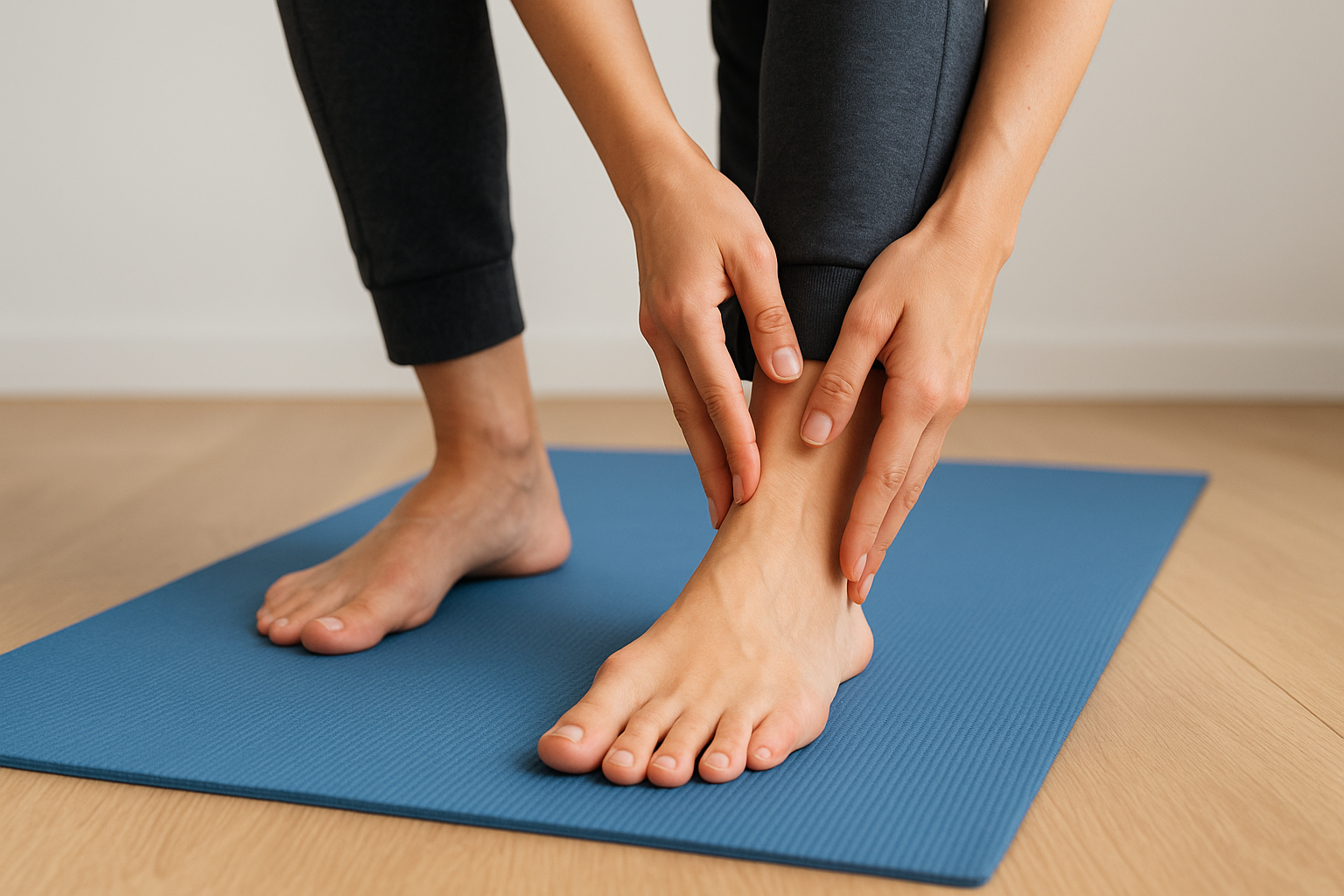
Daily mobility drills for toes, ankles, and calves
Start with toe spreads, ankle circles, and calf stretches held for 30 seconds each morning. These movements restore range of motion and reduce stiffness that builds overnight.
Strength moves for arches, balance, and stability
Towel scrunches, single-leg balance, and short-foot exercises directly strengthen the arch muscles that support your plantar fascia. Aim for three sets of ten reps daily to build a stable foundation.
Consistent strength work reduces your injury risk far more than any supportive shoe alone.
How to progress safely for walking and running
Add one new exercise per week and increase duration or resistance gradually. Jumping ahead too fast creates overload injuries that set your progress back weeks.
What to avoid if you have pain or numbness
Skip high-impact drills or balance work on any foot with active pain, open wounds, or numbness. Numbness signals a nerve issue that needs clinical evaluation before you add any training load.
5. Reduce overload and recover before pain becomes chronic
One of the most overlooked parts of how to improve foot health is managing how much load your feet handle each day. Consistent overload without adequate recovery is what turns minor soreness into chronic conditions like plantar fasciitis and stress fractures.
Manage standing, walking, and training volume
Track your daily step count and standing hours to identify patterns before pain sets in. If you increase activity, limit the jump to no more than 10% per week to give your tissues time to adapt and strengthen.
Use smart self-care for soreness and swelling
Apply ice for 15 to 20 minutes after activity to control inflammation, and elevate your feet above heart level when resting. Compression socks can also reduce end-of-day swelling for people who stand for long hours.
Consistent recovery habits cost you almost nothing but prevent the majority of overuse injuries.
Address common triggers like tight calves and weight gain
Tight calf muscles pull directly on your Achilles tendon and plantar fascia, increasing strain with every step. Managing body weight through movement and nutrition also reduces the mechanical load your feet carry daily.
Know when home care is not enough
If pain persists beyond two weeks or returns after rest, your foot needs a clinical assessment. Ignoring recurring pain allows minor injuries to progress into structural damage that requires longer and more complex treatment.
What to do next
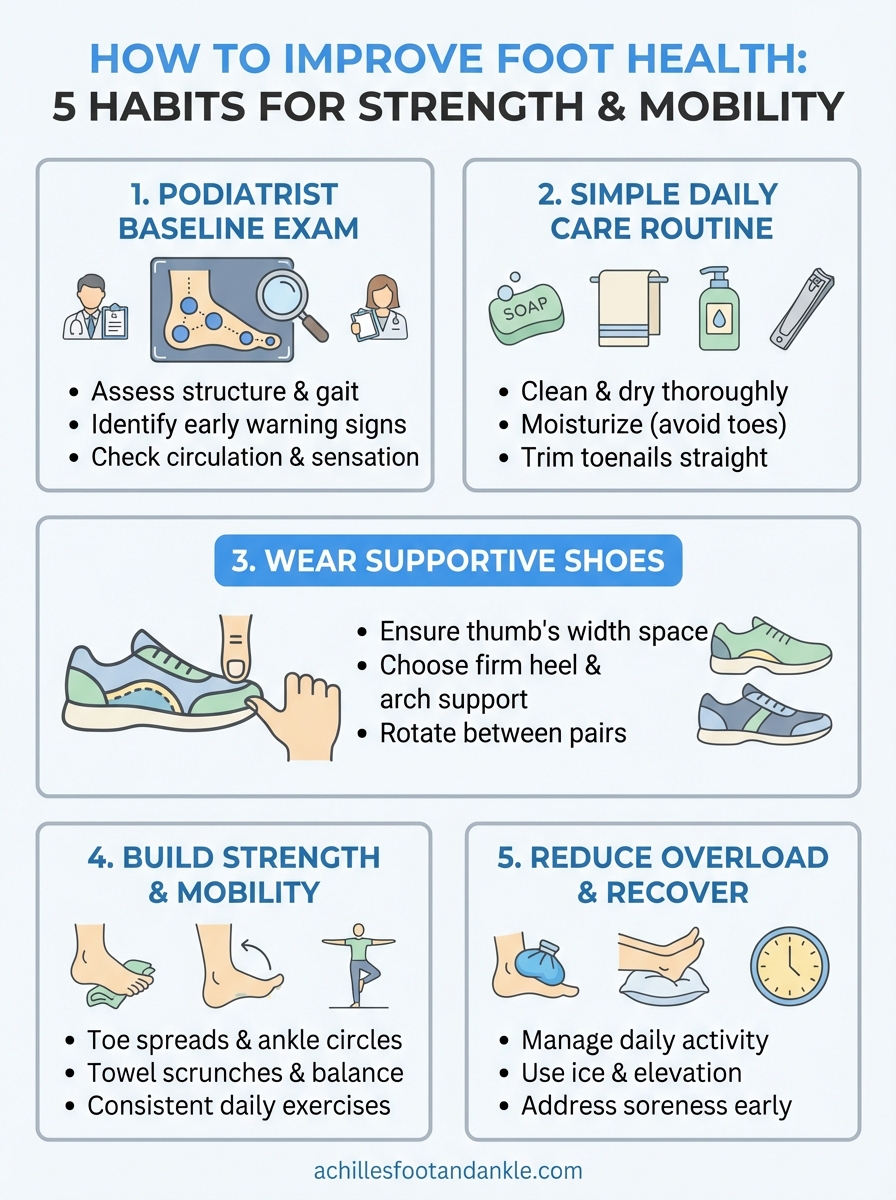
Knowing how to improve foot health is straightforward once you break it down into habits you can actually stick with. A podiatrist baseline exam, a simple daily care routine, supportive footwear, consistent strength work, and smart recovery together form a complete foundation for healthier, pain-free feet over the long term.
Start with whichever habit addresses your most pressing issue right now. If you have recurring pain, numbness, or a condition like diabetes, that baseline exam is your most important first step. For everyone else, daily care and shoe fit are the lowest-effort, highest-return changes you can make today.
You do not have to figure this out alone. The podiatry team at Achilles Foot and Ankle Center serves patients across Central Virginia and can help you build a personalized plan based on your specific foot structure and goals. Schedule a same-day or routine appointment and take the first step toward stronger, healthier feet.