

Foot problems don’t just become more common with age, they become more consequential. A painful callus or an ingrown toenail that a younger person might shrug off can lead to infection, falls, or hospitalization in an older adult. That’s why senior foot care services exist: to address the specific risks and needs that come with aging feet, from routine nail trimming to diabetic wound prevention and everything in between.
But finding the right type of care isn’t always straightforward. Should you see a podiatrist or a medical pedicurist? Is mobile foot care worth the cost? Does Medicare cover any of it? These are real questions families ask every day, and the answers depend on the senior’s health status, mobility, and specific foot conditions.
At Achilles Foot and Ankle Center, our podiatrists treat seniors across thirteen locations in Central Virginia, providing everything from preventive checkups to advanced diabetic foot care and surgical intervention when needed. This article breaks down the types of senior foot care available, what each one costs, and how to decide which option makes sense for your situation.
What senior foot care services include
Senior foot care is not a single service. It covers a wide range of treatments, from simple hygiene tasks to complex medical interventions. Understanding what falls under this umbrella helps you choose the right provider and ask the right questions before scheduling an appointment.
Routine and preventive care
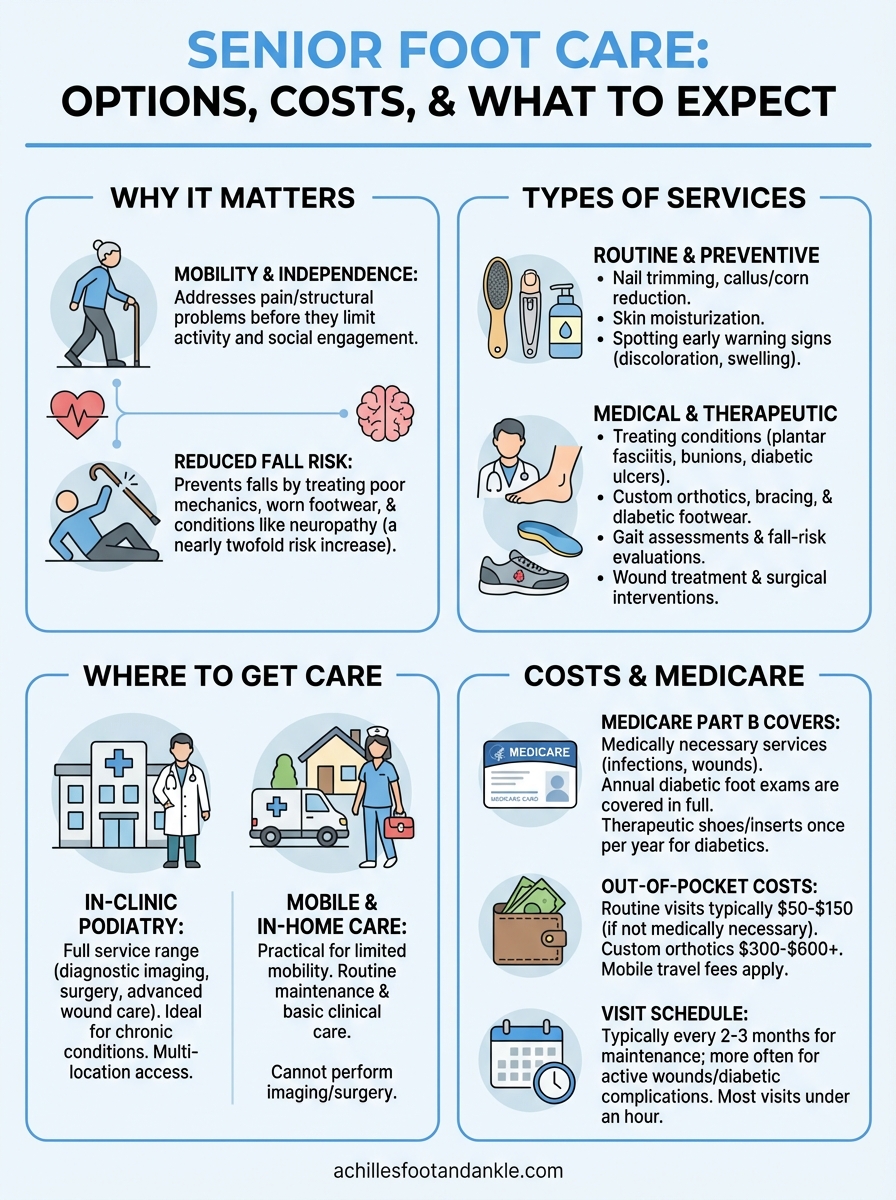
The most common starting point for many seniors is basic preventive maintenance. This includes nail trimming, callus reduction, corn removal, and skin moisturization. For older adults with reduced flexibility or poor vision, these routine tasks become difficult and even risky to handle at home. A trained provider completes them safely while also spotting early warning signs like discoloration, swelling, or changes in skin texture that you might otherwise miss.
Catching a small skin crack or early fungal infection during a routine visit can prevent a much larger problem, especially for seniors with diabetes or circulation issues.
Medical and therapeutic care
Beyond hygiene, senior foot care services extend into clinical territory. Podiatrists diagnose and treat conditions like plantar fasciitis, bunions, hammertoes, peripheral neuropathy, and diabetic foot ulcers. They also fit patients for custom orthotics, therapeutic bracing, and specialized diabetic footwear and perform procedures such as steroid injections for heel pain or surgical removal of ingrown toenails when conservative options have not resolved the problem.
Many clinics also include gait assessments and fall-risk evaluations as part of a senior care visit. These assessments examine how you walk, where pressure concentrates under your feet, and whether your current footwear supports safe movement. For seniors who have already experienced a fall or show early signs of balance instability, this type of evaluation can directly inform both footwear recommendations and treatment plans. Combining routine maintenance with this level of clinical oversight is what separates a full-service podiatry practice from a basic nail care provider.
Why senior foot care matters for health and mobility
Foot health connects directly to overall mobility and independence in older adults. When foot pain or structural problems limit how confidently someone walks, the effects ripple outward: reduced physical activity, muscle weakening, social withdrawal, and a higher fall risk. Senior foot care services address these issues before they compound into larger, harder-to-treat problems.
Foot problems and fall risk
Falls are the leading cause of injury among adults 65 and older. Poor foot mechanics, worn footwear, and untreated conditions like bunions or neuropathy all increase the chance of losing balance. Regular podiatry visits give providers the opportunity to spot instability early and recommend corrective shoes, orthotics, or exercises that lower your fall risk directly.
Foot pain is associated with a nearly twofold increase in fall risk among older adults, making routine foot exams one of the most practical fall-prevention steps available.
The connection to systemic conditions
Your feet often show early signs of diabetes, peripheral arterial disease, and nerve damage before symptoms appear elsewhere in your body. Reduced circulation in the lower legs means wounds heal slowly, and even a small cut can escalate into a serious infection. Staying current with routine podiatry checkups allows your care team to monitor these changes and step in before a minor issue becomes a limb-threatening one.
Older adults with diabetes especially benefit from regular foot screenings because neuropathy can mask pain signals entirely. Without professional oversight, a wound may go unnoticed until it reaches a critical stage.
Where seniors can get foot care services
Senior foot care services are available through several different settings, and the right choice depends on your mobility, medical complexity, and insurance coverage. Knowing your options helps you access the care you need without unnecessary delays or expense.

In-clinic podiatry practices
A licensed podiatrist’s office is the most comprehensive setting for senior foot care. Clinics offer the full range of services: routine nail care, diagnostic imaging, custom orthotics, wound treatment, and surgical procedures when necessary. Multi-location practices make this option more accessible, since you can choose a facility close to home or near a family member who helps with transportation.
If you manage a chronic condition like diabetes or peripheral arterial disease, an in-clinic podiatrist gives you direct access to diagnostic tools and specialist referrals that no other setting can match.
Mobile and in-home foot care
For seniors with limited mobility or transportation barriers, mobile podiatry is a practical alternative. Licensed podiatrists and trained foot care nurses travel to private homes, assisted living facilities, and nursing homes to provide routine maintenance and basic clinical care. This option works well for low-risk individuals who primarily need nail trimming, callus care, and periodic skin assessments. However, mobile providers cannot perform imaging, surgical procedures, or advanced wound care on-site, so complex cases still require a clinic visit.
Costs, insurance, and Medicare coverage basics
Cost is one of the biggest concerns families raise when exploring senior foot care services. The amount you pay depends on where you receive care, what services you need, and what insurance you carry. Getting clear on this upfront prevents surprises and helps you schedule visits consistently rather than delaying care due to cost uncertainty.
What Medicare covers
Medicare Part B covers medically necessary podiatry services, including treatment of infections, wounds, and nail care when a qualifying systemic condition like diabetes or peripheral arterial disease is documented. Routine nail trimming alone is generally not covered unless your provider documents a medical necessity. Annual diabetic foot exams are covered in full when ordered by your physician, making them a no-cost benefit worth using every year.

Medicare covers therapeutic shoes and inserts for diabetic patients once per calendar year, which can significantly reduce out-of-pocket costs for custom footwear.
Out-of-pocket costs to expect
For services Medicare does not cover, routine podiatry visits typically range from $50 to $150 depending on the provider and location. Custom orthotics can run $300 to $600 or more, though many Medicare Advantage plans and supplemental Medigap policies cover a portion of that cost. Mobile or in-home visits often carry an additional travel fee on top of the standard service rate. Always verify your specific coverage before your appointment so you know exactly what you owe.
What to expect at a senior foot care visit
Knowing what happens at an appointment helps reduce anxiety and lets you prepare what to bring. Senior foot care services follow a consistent structure in most settings, though the depth of the exam depends on your health history, specific conditions, and the reason for the visit.
The initial assessment
Your provider begins by reviewing your medical history, current medications, and any systemic conditions like diabetes or peripheral arterial disease. From there, the physical exam covers skin condition, nail health, circulation, and nerve sensation in your feet and lower legs. To make the most of your first visit, bring:
- A current list of all medications and supplements
- Any recent lab results related to diabetes or circulation
- Your current footwear for the provider to evaluate
Arriving with this information upfront allows your podiatrist to accurately assess your healing risk and circulation status from the start.
Treatment and follow-up planning
Once the assessment wraps up, your provider addresses any immediate concerns during that same visit, whether that means trimming thickened nails, reducing calluses, treating an early infection, or fitting you for orthotics.
Before you leave, you receive a care summary and a recommended return schedule matched to your needs. Most older adults return every two to three months, though patients managing active wounds or diabetic complications typically come in more often to stay ahead of changes.
Next steps
Senior foot care services cover a wide range, and the right starting point depends on your specific situation. If you manage diabetes, peripheral arterial disease, or a history of foot wounds, schedule a podiatry visit as soon as possible rather than waiting for pain to appear. If your needs are more routine, booking a preventive checkup every two to three months gives your provider the opportunity to catch small problems before they grow.
You don’t need a referral to see a podiatrist, and most visits are completed in under an hour. Bring your current medication list, wear the shoes you use daily, and note any symptoms you’ve noticed, even minor ones like occasional numbness or skin changes.
If you’re in Central Virginia and ready to get started, schedule a same-day appointment at Achilles Foot and Ankle Center. Our podiatrists work across thirteen locations and can evaluate your feet, address any active concerns, and build a care plan that fits your health needs.