

Your feet carry you through thousands of steps each day, yet they’re often the last body part to get any real attention during your hygiene routine. Understanding the importance of foot hygiene goes beyond just keeping your feet looking presentable, it’s a frontline defense against infections, fungal growth, and complications that can sideline you for weeks or even lead to serious medical problems, especially if you have diabetes or compromised circulation.
Neglected feet create the perfect environment for bacteria and fungi to thrive. Moisture trapped between toes, cracked skin on heels, and poorly maintained nails can quickly turn into painful infections that spread or worsen without proper care. The good news? Most of these issues are entirely preventable with a consistent daily routine that takes just a few minutes. And when problems do develop, catching them early makes treatment far simpler and more effective.
At Achilles Foot and Ankle Center, our podiatrists across Central Virginia treat foot infections and hygiene-related complications every day, many of which patients could have avoided. That firsthand clinical experience is exactly what shaped this guide. Below, you’ll find practical daily steps to keep your feet clean, dry, and healthy, along with guidance on recognizing warning signs that mean it’s time to see a specialist before a minor issue becomes a major one.
Why foot hygiene matters for your health
Your feet spend most of the day enclosed in socks and shoes, creating warm, moist conditions where bacteria and fungi multiply rapidly. Understanding the importance of foot hygiene means recognizing that this enclosed environment, combined with the constant pressure and friction of daily movement, makes your feet uniquely vulnerable to problems that other parts of your body rarely face. Ignoring that reality is what turns a minor oversight into a painful, sometimes serious condition.
Your feet face unique daily challenges
Every step you take puts mechanical stress on your skin and nails, creating small cracks, pressure points, and areas where the outer skin layer breaks down over time. Add sweat to that picture, and you have a reliable breeding ground for organisms like Trichophyton, the fungus responsible for athlete’s foot, along with bacteria that cause conditions such as cellulitis. Most people walk between 8,000 and 10,000 steps per day, meaning your feet deal with these conditions for hours at a stretch, every single day.
Keeping your feet clean and dry each day is one of the most reliable ways to interrupt the cycle of bacterial and fungal growth before it turns into a full infection.
Common problems that develop when foot hygiene is neglected include:
- Athlete’s foot (tinea pedis): persistent itching, scaling, and cracking between toes
- Onychomycosis: fungal nail infection causing thick, discolored, brittle nails
- Plantar warts: viral skin growths that spread easily on the soles
- Infected ingrown toenails: painful swelling that often requires professional treatment
- Heel fissures: deep cracks that give bacteria direct entry into the skin
Foot hygiene and your overall health
Foot hygiene carries even higher stakes for people managing diabetes or peripheral vascular disease. Reduced sensation caused by neuropathy means a small cut or blister can go unnoticed for days, allowing an infection to deepen into tissue and, in severe cases, reach bone. The CDC reports that diabetes-related foot complications account for a significant portion of non-traumatic lower limb amputations in the United States each year. Even without diabetes, poor circulation slows wound healing, turning minor abrasions into slow-healing ulcers that require extended medical care. Routine foot hygiene is not simply about comfort; it is a concrete health protection strategy with real consequences when skipped consistently.
Step 1. Wash and dry your feet the right way
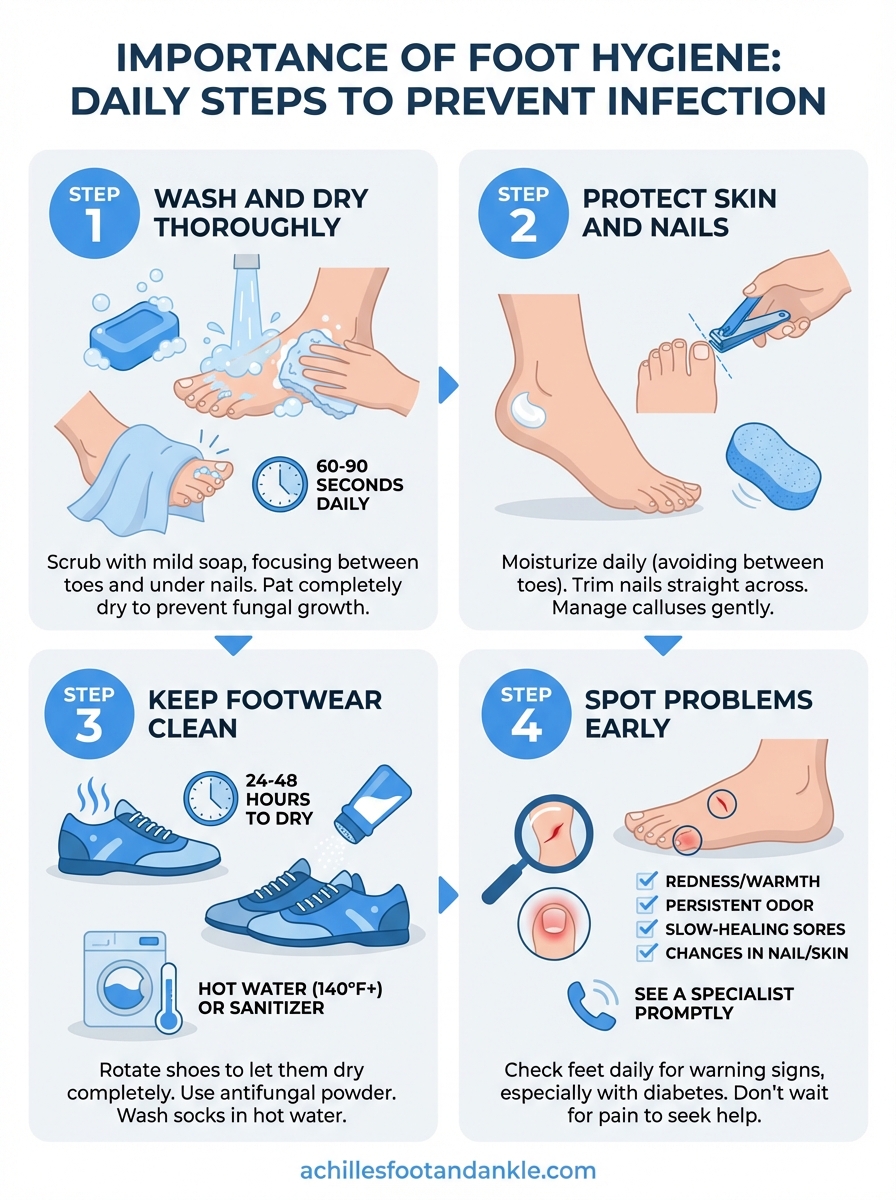
Most people rinse their feet passively while showering, letting soapy water run over them and calling it done. That approach misses the spots where bacteria and fungi actually accumulate, making it far less effective than a brief, deliberate wash. Understanding the importance of foot hygiene starts here, because washing correctly takes just 60 to 90 extra seconds and dramatically reduces your infection risk.
How to wash your feet thoroughly
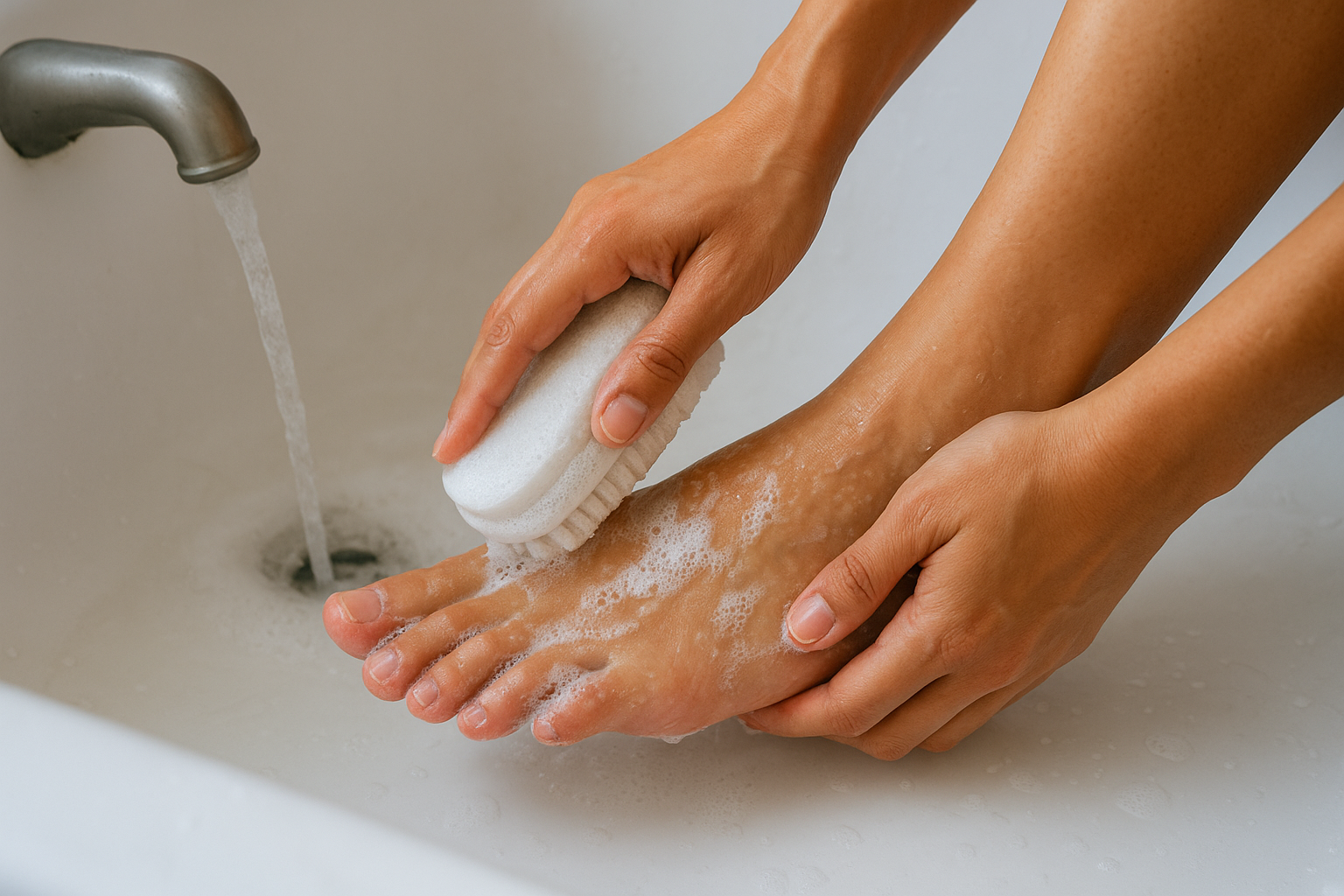
Use warm (not hot) water and a mild antibacterial soap, and scrub each foot directly rather than relying on runoff. Pay particular attention to the areas that trap moisture and debris:
- Between each toe, where fungal growth typically starts
- Under the nails, using a soft nail brush or clean washcloth
- Along the heel and sole, where dead skin accumulates
- Around the nail edges, where bacteria collect beneath the skin fold
Scrubbing between your toes daily is the single most effective mechanical step you can take to prevent athlete’s foot from developing.
Why drying completely is just as important
Moisture left on the skin after washing is one of the primary reasons fungal infections develop even in people who wash regularly. After washing, pat your feet dry with a clean towel rather than rubbing, which can irritate already-stressed skin.
Focus especially on drying between each toe individually, since that narrow space retains moisture the longest. If your feet tend to sweat heavily, applying a light dusting of foot powder after drying helps keep that area dry throughout the day.
Step 2. Protect skin and nails from damage
Washing removes surface bacteria, but protecting your skin barrier and nails takes that foundation a step further. Cracked heels, dry skin, and poorly trimmed nails all create entry points for infection, which is why this step is central to understanding the importance of foot hygiene as a complete system rather than just a quick rinse.
Moisturize daily and manage calluses
Apply a urea-based or thick emollient foot cream to the tops, bottoms, and heels of your feet every day, ideally right after drying them. That timing matters because slightly damp skin absorbs moisturizer more effectively, locking in hydration before the surface dries completely. Skip the area between your toes when applying cream, since moisture trapped there encourages fungal growth rather than preventing it.
Consistent daily moisturizing prevents the deep heel cracks that give bacteria a direct path through your skin barrier.
For calluses, use a pumice stone or foot file during your shower once or twice a week on softened skin. Never cut calluses with a blade at home, since that dramatically increases your risk of breaking the skin and introducing bacteria. If calluses are thick, painful, or recurring, a podiatrist can remove them safely and assess whether footwear or gait issues are driving their return.
Trim nails to the right length and shape
Cut your toenails straight across, keeping them level with the tip of your toe. Avoid rounding the corners or cutting too short, as both habits push the nail edge into surrounding skin and lead directly to painful ingrown toenails. Use clean, sharp nail clippers dedicated to your feet, and sanitize them with rubbing alcohol after each use to prevent transferring bacteria between nails.
Step 3. Keep socks and shoes from spreading fungus
Your socks and shoes play a direct role in spreading or containing fungal organisms, and most people overlook them entirely when thinking about the importance of foot hygiene. Even after washing and drying your feet thoroughly, stepping into a damp, contaminated shoe immediately reintroduces the problem. Managing your footwear correctly closes that gap.
Choose and rotate your footwear wisely
Wearing the same pair of shoes every day prevents them from drying out fully between uses. Fungal spores survive in that residual moisture and transfer back onto clean feet the next morning. Rotating between at least two pairs gives each shoe 24 to 48 hours to dry completely before you wear them again.

Letting shoes air out for a full day between wearings is one of the most underrated steps in preventing recurring fungal infections.
To further reduce fungal buildup inside your shoes, apply the following routine weekly:
- Remove insoles and let them air separately overnight
- Sprinkle antifungal foot powder inside each shoe after use
- Avoid wearing shoes without socks, since bare skin contact accelerates sweat absorption into the lining
- Replace shoes that have developed a persistent odor, as that signals active bacterial or fungal colonization that powder alone will not reverse
Wash socks correctly to kill fungal spores
Standard warm-water washing does not reliably kill all fungal spores on contaminated socks. Washing socks in water at or above 140°F (60°C) eliminates the organisms responsible for athlete’s foot. If your washing machine does not reach that temperature, adding a laundry sanitizer rated for fungi to your regular cycle achieves the same result. Choose moisture-wicking, breathable materials like merino wool or synthetic athletic blends over cotton, since cotton retains sweat against your skin and keeps the environment fungus-friendly for hours.
Step 4. Spot problems early and know red flags
Even a strong daily routine does not make you immune to foot problems, which is why monitoring your feet regularly completes the importance of foot hygiene as a full-cycle practice. A quick visual check each day, especially if you have diabetes or poor circulation, gives you the best chance of catching issues before they escalate into conditions that require intensive treatment.
Warning signs you should not ignore
Look at the tops, soles, and spaces between your toes each morning or evening. Most concerning changes are easy to spot once you know what to look for. The following signs mean you need professional evaluation promptly:
- Redness, warmth, or swelling that does not resolve within 24 to 48 hours
- Pus or discharge from a wound, nail edge, or cracked area of skin
- Skin that changes color to white, gray, or dark, which can signal circulation problems
- Persistent odor that remains after washing, indicating active bacterial or fungal activity
- A wound, blister, or sore that has not started healing within two to three days
- Numbness, tingling, or burning that is new or worsening
Catching a small wound early, especially when you have diabetes, can be the difference between a simple dressing and a surgical intervention.
When to call a podiatrist
Do not wait for pain to become unbearable before making an appointment. Any open sore, nail that is thickening rapidly, or skin infection that is spreading warrants a same-day or next-day call to a specialist. Podiatrists can identify whether an issue requires antibiotics, professional debridement, or imaging, and they can rule out deeper tissue involvement that a home check cannot detect.
Keep your feet healthy starting today
The importance of foot hygiene comes down to consistency over perfection. Washing and drying thoroughly, moisturizing daily, trimming nails correctly, rotating your footwear, and checking your feet each evening are all actions you can start today without any special equipment. None of these steps take more than a few minutes, but skipping them repeatedly is what turns small, preventable issues into painful, costly problems.
Most foot infections and complications do not appear overnight. They build slowly from accumulated neglect, which also means that building better habits now gives you a real head start on preventing them. Follow the steps in this guide as a daily routine, and you will reduce your risk significantly. If you have already noticed a warning sign like swelling, a slow-healing sore, or thickening nails, do not wait to get it checked. Book a same-day appointment at Achilles Foot and Ankle Center and get answers from a specialist today.