

You wake up in the middle of the night and your ankle feels like it’s on fire. It’s swollen, hot to the touch, and even the weight of a bedsheet is unbearable. If this sounds familiar, you may be dealing with signs of gout in the ankle, a condition that strikes suddenly and can stop you in your tracks.
Gout is a form of inflammatory arthritis caused by excess uric acid crystallizing in a joint. While it’s most commonly associated with the big toe, the ankle is another frequent target, and many people don’t realize that until they’re in the middle of a flare. Recognizing the symptoms early makes a real difference in how quickly you recover and how effectively you prevent future attacks.
At Achilles Foot and Ankle Center, our podiatrists diagnose and treat gout across our thirteen Central Virginia locations every week. In this article, we’ll walk you through the specific symptoms to watch for, what causes gout to develop in the ankle, how it differs from other conditions, and what steps to take once you suspect something is wrong.
Why ankle gout happens and why it matters
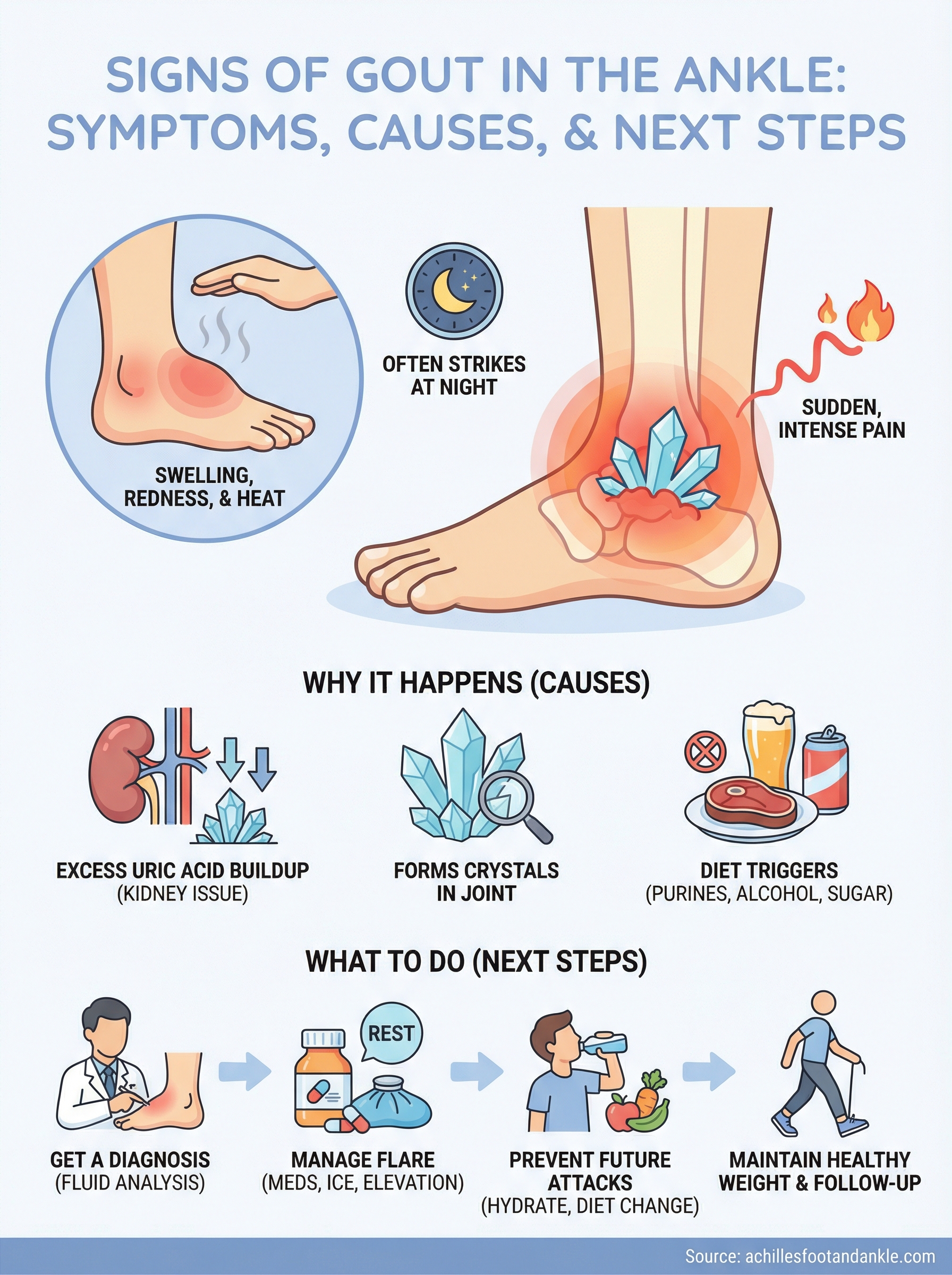
Gout develops when uric acid, a waste product created as your body breaks down purines, accumulates in the bloodstream faster than your kidneys can remove it. Over time, that excess uric acid forms sharp, needle-like crystals called monosodium urate crystals. When these crystals collect inside a joint, your immune system launches an inflammatory response, which produces the intense pain, swelling, and heat you experience during a flare.
The role of uric acid and diet
Your body produces uric acid naturally, but certain foods and habits push levels beyond what your kidneys can manage. High-purine foods such as red meat, organ meats, shellfish, and alcohol are well-known triggers. Sugary drinks containing fructose also raise uric acid, even though most people don’t associate sugar intake with a gout attack.
Medical factors compound the risk as well. High blood pressure, kidney disease, and obesity all reduce how efficiently your body clears uric acid. Certain medications, including diuretics, can raise levels as a side effect. A family history of gout further increases your baseline risk, making diet and lifestyle choices especially important for keeping uric acid under control.
Why the ankle becomes a target
Uric acid crystals form more readily in cooler, lower parts of the body, which is why gout tends to strike the feet and ankles rather than the hips or shoulders. The ankle joint is a particularly common site in people who have experienced gout for several years or who carry extra body weight that loads the joint with every step.
Crystal deposits can build up in the ankle silently for months before inflammation finally triggers visible, painful symptoms.
The ankle also handles enormous mechanical stress daily. That constant movement can disturb existing crystal deposits and set off an attack even without a major change in diet or alcohol intake.
Why ignoring it causes lasting damage
A single gout flare is painful, but repeated attacks without proper treatment gradually destroy cartilage and bone inside the joint. This damage accumulates with each episode and can progress to chronic gouty arthritis, where pain and stiffness become persistent rather than arriving in isolated flares.
Crystals can also build into hard nodules under the skin called tophi, which permanently deform the ankle over time. Recognizing the signs of gout in the ankle early, and acting on them quickly, is the most reliable way to protect your joint function for the long term.
Signs and early symptoms of gout in the ankle
Gout in the ankle rarely gives you much warning before it becomes severe. The signs of gout in the ankle can appear within hours, and most people describe going from mild discomfort to debilitating pain over the course of a single night. Knowing what to look for lets you act faster and reduce how long the flare lasts.
What a flare actually feels like
The dominant symptom during an attack is sudden, intense pain that concentrates around the ankle joint. The area swells noticeably, turns red or purplish, and feels warm compared to the skin around it. Most people also report extreme sensitivity to touch, where light pressure from a sock or shoe feels genuinely unbearable.

Gout pain in the ankle typically peaks within 12 to 24 hours of onset and can last anywhere from a few days to two weeks without treatment.
Stiffness follows closely behind the initial pain. Your range of motion drops sharply, making it difficult to flex or rotate the ankle without a sharp increase in discomfort. Walking becomes difficult, and some people cannot bear weight on the affected foot at all during the height of the attack.
Early warning signs to watch for
Before a full flare erupts, your body often gives smaller signals worth noticing. Catching these early can help you intervene before the pain becomes severe:
- Mild aching or stiffness in the ankle that appears without an obvious injury
- A low-grade warmth around the joint that comes and goes
- Slight swelling that resolves on its own but returns periodically
- Fatigue and a general sense of feeling unwell in the hours before pain intensifies
These early signs are easy to dismiss as a sprain or general soreness. Paying attention to how quickly symptoms escalate and whether they follow a pattern is often what separates gout from other conditions.
How to tell gout from similar ankle problems
The pain and swelling from a gout flare closely mimic several other ankle conditions, which leads many people to delay getting the right treatment. Understanding the key differences between gout and similar problems helps you communicate more clearly with your doctor and avoid wasting time on the wrong approach.
Ankle sprain vs. gout
An ankle sprain typically follows a clear physical event, such as rolling your foot during exercise or stepping off a curb awkwardly. Gout, by contrast, strikes without any trauma and often wakes you up overnight. Sprains produce localized tenderness along the ligament lines on the outer or inner ankle, while gout pain spreads more broadly around the joint and comes with visible redness and heat that sprains rarely produce. Bruising from a sprain also tends to appear within hours, whereas gout produces skin discoloration that looks more like deep flushing than typical bruising.
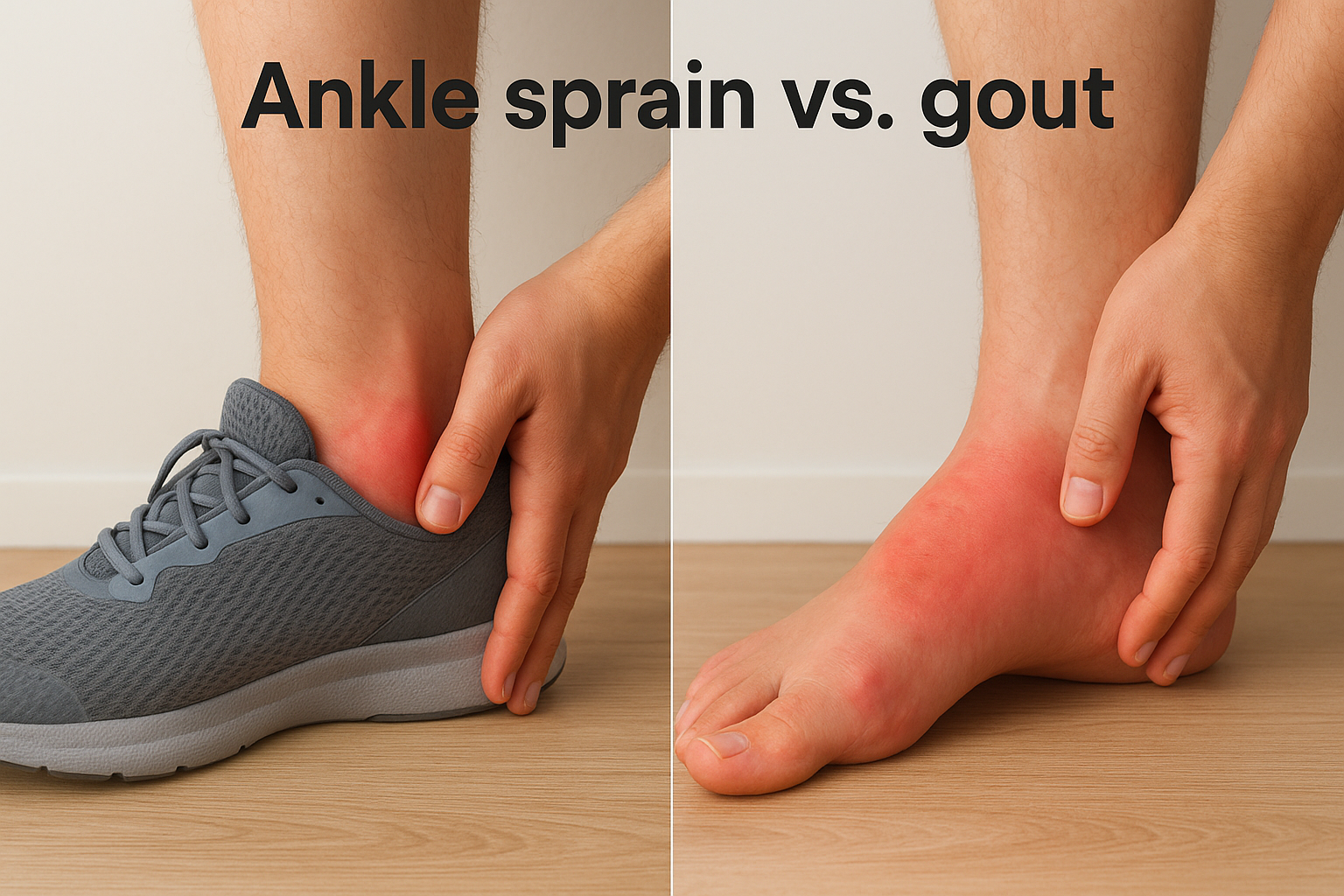
If your ankle is severely painful and you cannot link it to any physical impact or injury, gout should move near the top of your list of possibilities.
Rheumatoid arthritis and pseudogout
Rheumatoid arthritis (RA) also causes joint inflammation and stiffness, but it usually affects multiple joints at once and develops gradually rather than appearing overnight. The signs of gout in the ankle are more sudden and episodic, often resolving fully between attacks, while RA tends to cause ongoing, persistent discomfort that doesn’t follow the same flare-and-clear pattern.
Pseudogout is the condition most easily confused with gout because it also involves crystal deposits in a joint. However, pseudogout forms from calcium pyrophosphate crystals rather than urate crystals, and it more commonly targets the knee, wrist, or shoulder. A laboratory analysis of the joint fluid is the only reliable way to separate the two, which is exactly why getting a proper diagnosis matters more than guessing based on symptoms alone.
How doctors confirm gout in the ankle
Recognizing the signs of gout in the ankle on your own is a useful starting point, but a firm diagnosis requires testing. Several conditions look nearly identical to gout, and choosing the wrong treatment based on guesswork can prolong your recovery and allow joint damage to continue.
Joint fluid analysis
The most reliable way to confirm gout is a procedure called arthrocentesis, where your doctor inserts a needle into the ankle joint and withdraws a small sample of synovial fluid. A lab technician then examines that fluid under a polarized light microscope to check for monosodium urate crystals. Finding those crystals removes any doubt and distinguishes gout from pseudogout, infection, or other forms of arthritis.
A joint fluid test is the only method that can definitively separate gout from conditions that mimic it, which is why podiatrists use it when the diagnosis is unclear.
Your doctor will also assess the fluid for signs of bacterial infection, since septic arthritis can cause similarly severe ankle pain and swelling and requires completely different treatment. The two can even occur at the same time, so ruling out infection is always part of the evaluation.
Blood tests and imaging
A serum uric acid test measures how much uric acid is circulating in your bloodstream. Elevated levels support a gout diagnosis, though uric acid can actually fall during an active flare, which makes this test less reliable on its own. Your doctor will interpret the result alongside your symptoms rather than treating it as a standalone answer.
X-rays show bone changes and rule out fractures, but they rarely reveal early gout damage. For a more detailed picture of soft tissue swelling and crystal deposits, your doctor may order an ultrasound or dual-energy CT scan, both of which can detect urate deposits before they cause visible bone erosion.
How to calm a flare and prevent the next one
Once you recognize the signs of gout in the ankle, your priorities shift to two goals: reducing the pain right now and lowering your uric acid levels to prevent future attacks. Both steps matter, and skipping one typically means the flare lasts longer or comes back sooner than it should.
Managing the immediate flare
During an active attack, rest and elevation are your first line of defense. Keep the affected ankle raised above heart level to help drain excess fluid from the joint and reduce swelling. Apply an ice pack wrapped in a thin cloth for 20 minutes at a time, several times per day, to bring down heat and provide temporary relief.
Do not apply ice directly to the skin, and avoid heat therapy during an active gout flare, as warmth can intensify the inflammation already driving your pain.
Your doctor will likely recommend anti-inflammatory medications such as NSAIDs, colchicine, or corticosteroids, depending on your medical history and kidney function. Starting these medications early in a flare shortens its duration significantly, which is why contacting your provider at the first sign of symptoms rather than waiting always pays off.
Preventing the next attack
Long-term prevention centers on lowering your serum uric acid through both medication and consistent lifestyle changes. Your doctor may prescribe urate-lowering drugs such as allopurinol or febuxostat if you experience frequent flares or show evidence of joint damage on imaging.
On the lifestyle side, the adjustments that carry the most weight include:
- Staying well hydrated daily, aiming for at least eight glasses of water to help your kidneys flush uric acid
- Cutting back on high-purine foods such as red meat, organ meats, and shellfish
- Limiting alcohol, particularly beer and spirits, which raise uric acid levels more sharply than other beverages
- Reaching and maintaining a healthy body weight to reduce joint stress and support better kidney clearance
Next steps
The signs of gout in the ankle follow a recognizable pattern once you know what to look for: sudden intense pain, visible swelling, redness, and heat that arrive overnight without any injury. Acting on those signals quickly, by getting a proper diagnosis and starting treatment early, determines how long a flare lasts and how much long-term damage you avoid.
Your next move matters. Ankle gout responds well to treatment when you catch it early, but it causes real harm when left unmanaged. If your ankle pain matches what you’ve read here, the right step is to see a podiatrist who can confirm the diagnosis and build a plan tailored to your uric acid levels, your lifestyle, and your history of flares.
Book a same-day appointment at Achilles Foot and Ankle Center and get the care your ankle needs before the next flare hits.