

You’re lying in bed or sitting at your desk when you notice it, a tingling, pins-and-needles sensation in your foot, or maybe no sensation at all. Your first thought: is foot numbness serious, or will it just go away on its own? The answer depends entirely on what’s causing it. A foot that falls asleep after you’ve been sitting cross-legged for too long is harmless. But numbness that keeps coming back, spreads, or shows up without an obvious reason could point to something that needs medical attention.
Foot numbness can stem from anything, a pinched nerve, poor circulation, diabetes, or even a spinal issue. Some causes are straightforward and easy to treat. Others, if ignored, can lead to permanent nerve damage or signal a condition that affects your overall health. Knowing the difference matters, and that’s exactly what this article covers: the common causes behind foot numbness, the red flags you shouldn’t brush off, and when it’s time to see a specialist.
At Achilles Foot and Ankle Center, our podiatrists across Central Virginia diagnose and treat nerve-related foot conditions every day, from peripheral neuropathy and tarsal tunnel syndrome to diabetic foot complications. If your foot numbness has you concerned, this guide will help you understand what your body might be telling you and when professional evaluation becomes essential.
What foot numbness can mean
Foot numbness means your foot is sending you a signal that something is interfering with normal nerve function. Nerves carry messages between your feet and your brain, and when that communication gets disrupted, you feel tingling, burning, or a complete loss of sensation. The medical term for this is paresthesia, but what matters to you practically is whether the cause is temporary or something that needs attention.
Temporary vs. persistent numbness
Not all numbness points to a serious problem. Sitting with your legs crossed for too long, wearing shoes that are too tight, or sleeping in an awkward position can all compress a nerve temporarily and trigger that familiar pins-and-needles feeling. This type of numbness resolves quickly once you change position or remove the pressure. If it fades within a few minutes and you can clearly identify the cause, it’s likely harmless.
Persistent numbness is a different story. When foot numbness keeps returning without a clear mechanical reason, or when it stays for hours or days, your body is signaling something more significant. This is when asking "is foot numbness serious" becomes a question worth taking seriously, because recurring or unexplained numbness often points to an underlying condition affecting your nerves, circulation, or spine.
Numbness that returns regularly or appears without explanation deserves a professional evaluation, not a wait-and-see approach.
What nerves are actually involved
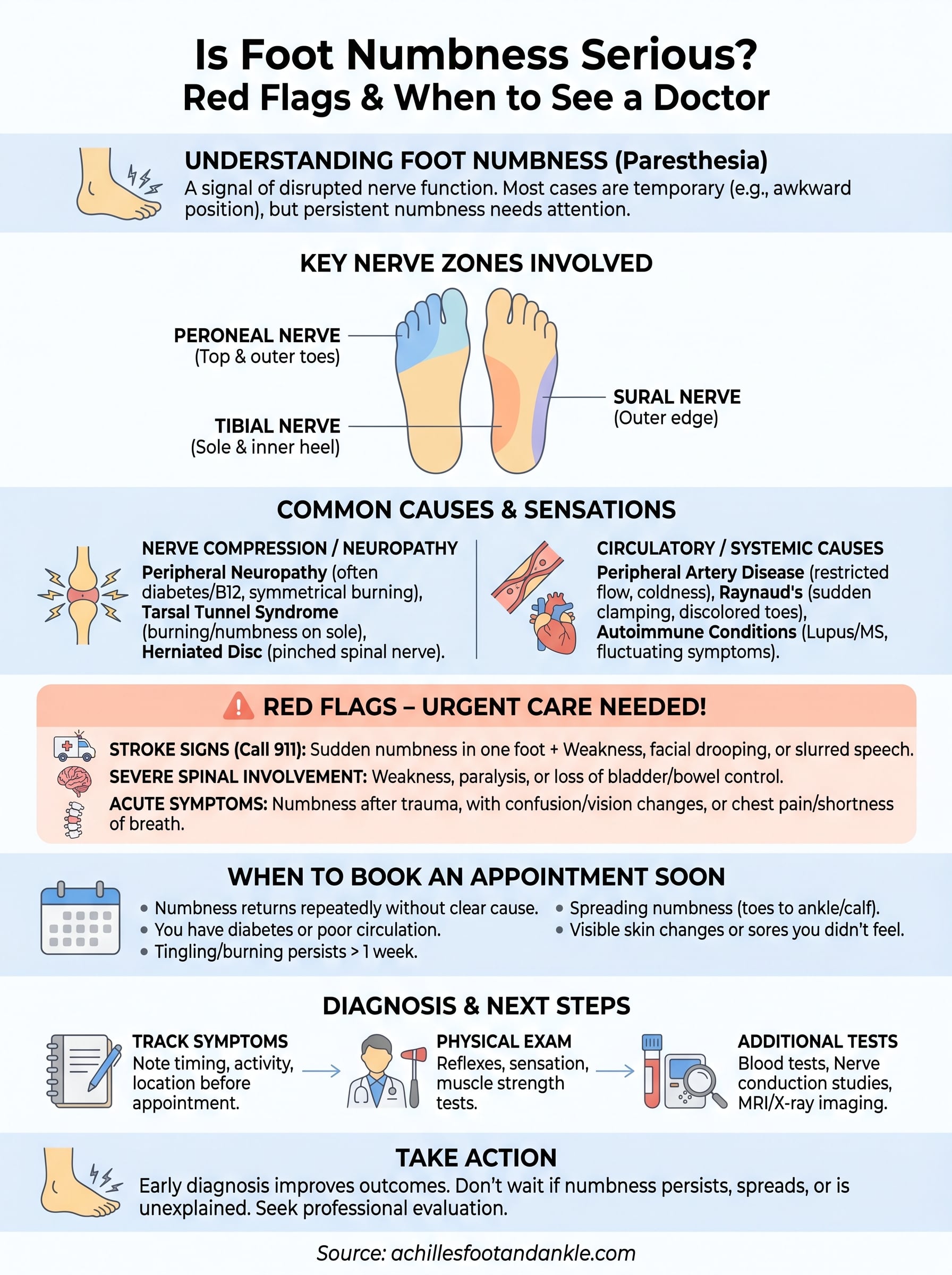
Your feet are supplied by several nerve branches that travel down from your lower back and branch through your legs. Compression or damage anywhere along that pathway can produce numbness, and the location of your symptoms helps identify the source. Three key nerve groups supply your foot:

- Peroneal nerve: numbness across the top of your foot and outer toes
- Tibial nerve: numbness along the sole and inner heel
- Sural nerve: numbness along the outer edge of the foot
Knowing where your numbness occurs allows a doctor to pinpoint exactly where the nerve disruption originates, making diagnosis faster and more accurate.
Common causes and what they feel like
Understanding the root cause is the fastest way to answer whether foot numbness is serious for your situation. The sensation varies widely: some causes produce sharp tingling or burning, while others result in a dull, cotton-wool feeling where you can barely feel the floor beneath you.
Nerve compression and neuropathy
Peripheral neuropathy commonly begins with symmetric burning or tingling in both feet, particularly in people with diabetes or vitamin B12 deficiency. Tarsal tunnel syndrome compresses the tibial nerve inside your ankle, generating burning and numbness along the sole. A herniated lumbar disc can also pinch a spinal nerve and send numbness down into one foot.
Common nerve-related patterns include:
- Both feet affected equally: typical of peripheral neuropathy
- One foot or one specific area: suggests local nerve compression or a disc problem
- Burning, shooting pain alongside numbness: common with tarsal tunnel syndrome
Circulatory and systemic causes
Poor circulation from peripheral artery disease restricts oxygen delivery to the nerves, which your feet register as numbness or coldness, often alongside pale or bluish skin. Raynaud’s phenomenon causes sudden episodes where blood vessels clamp down, leaving toes numb and discolored within minutes.
If numbness occurs in both feet and progresses slowly over months, peripheral neuropathy linked to diabetes or a systemic condition is a strong possibility.
Autoimmune conditions like lupus or multiple sclerosis can disrupt nerve signals at multiple points along the pathway, producing numbness that fluctuates over time without any obvious physical trigger.
Red flags that need urgent care
Some situations make "is foot numbness serious" a question with a clear and urgent answer. Certain symptoms alongside foot numbness signal a medical emergency or a rapidly progressing condition that can cause permanent harm if you delay treatment. Recognizing these warning signs early can protect both your mobility and your long-term health.

Sudden numbness in one foot combined with weakness, facial drooping, or slurred speech requires an immediate call to 911, as these are classic stroke warning signs.
Signs that demand emergency care
If your numbness appears suddenly without any physical cause and spreads quickly up your leg, treat it as an emergency. The same applies if you notice weakness, paralysis, or loss of bladder or bowel control alongside foot numbness, as these point to severe spinal cord involvement. Get emergency care immediately for:
- Numbness following a traumatic injury to your back, hip, or leg
- Sudden one-sided numbness paired with confusion or vision changes
- Foot numbness combined with chest pain or shortness of breath
Patterns that suggest serious nerve damage
Beyond acute emergencies, certain slower-developing patterns still warrant urgent specialist attention. If you have diabetes and develop any loss of sensation in your foot, you face a high risk of undetected wounds and infection that can escalate to limb-threatening complications. Numbness that spreads from your toes toward your knee over weeks, or numbness that accompanies unexplained weight loss or persistent fatigue, can indicate a systemic condition requiring prompt diagnosis.
When to See a Podiatrist or Doctor
Not every case of foot numbness calls for an emergency room visit, but many situations do require a scheduled medical evaluation sooner rather than later. If you’ve been asking yourself whether is foot numbness serious applies to your situation, the answer leans toward yes whenever your symptoms are recurring, worsening, or linked to an underlying health condition.
Signs You Should Book an Appointment Soon
Several patterns indicate that a podiatrist or physician needs to assess your foot. You should schedule an appointment within a few days if you notice:
- Numbness that returns repeatedly without a clear positional or mechanical cause
- Any foot numbness combined with diagnosed diabetes or poor circulation
- Tingling or burning that has persisted for more than a week
- Numbness spreading from your toes toward your ankle or calf
- Visible skin changes, sores, or wounds you didn’t feel forming
Why a Podiatrist Specifically
A podiatrist specializes in the nerves, joints, and soft tissue structures of your foot and ankle, which makes them the most direct path to an accurate diagnosis for foot-specific numbness. Your primary care doctor can handle initial bloodwork or refer you onward, but a podiatrist can perform on-site nerve assessments, imaging, and targeted treatment in a single visit.
Catching nerve damage early dramatically improves outcomes and reduces your risk of complications like non-healing wounds or permanent loss of sensation.
What to do now and how doctors diagnose it
When you’re wondering is foot numbness serious, your first practical step is to document your symptoms before your appointment. Write down when the numbness started, how long each episode lasts, which part of your foot is affected, and any related symptoms like pain or skin changes. This information helps your doctor identify patterns quickly and saves significant time during your visit.
What to track before your appointment
Keeping a simple symptom log gives your doctor concrete data rather than a rough estimate. Note the time of day, your activity level, and the footwear you were wearing when numbness occurred. If you have diabetes, also check your feet daily for cuts or sores you may not feel forming.
How doctors evaluate foot numbness
Your doctor will likely start with a physical and neurological exam, testing your reflexes, sensation, and muscle strength in the affected foot. From there, they may order additional testing to pinpoint the cause:
- Blood tests to check for diabetes, vitamin deficiencies, or autoimmune markers
- Nerve conduction studies to measure how well electrical signals travel through your nerves
- MRI or X-ray imaging to identify spinal issues or structural problems in your foot and ankle
Early diagnostic testing catches the underlying cause before nerve damage becomes permanent and harder to reverse.
Next steps for your feet
Foot numbness is easy to dismiss, but the question is foot numbness serious has a clear answer once you understand your symptoms: anything that persists, spreads, or appears alongside red flag signs deserves professional evaluation. The sooner you get an accurate diagnosis, the better your odds of reversing nerve damage or stopping a serious condition before it progresses.
Your most important next step is to stop waiting and get your feet checked. At Achilles Foot and Ankle Center, our podiatrists across 13 Central Virginia locations combine on-site nerve assessments, advanced imaging, and targeted treatment to identify exactly what is causing your numbness. Whether your symptoms point to peripheral neuropathy, tarsal tunnel syndrome, or a circulatory issue, a specialist can build a treatment plan that fits your situation. Don’t put it off until numbness turns into something worse. Schedule a same-day appointment and get the answers your feet need today.