
Bone spurs, small, bony projections that develop along joint edges, can turn simple activities like walking or standing into a painful ordeal. When they form in the feet or ankles, even getting out of bed in the morning can feel like a challenge. The good news: bone spur home remedies can provide meaningful relief, especially when you catch symptoms early and stay consistent with treatment.
At Achilles Foot and Ankle Center, our podiatrists treat bone spurs across our Central Virginia locations every week. While some cases require medical intervention, many patients find that targeted at-home strategies significantly reduce their pain and inflammation, often enough to avoid more aggressive treatment altogether.
This article covers six practical home remedies you can start using today to manage bone spur discomfort. We’ll explain what works, why it works, and when it’s time to schedule an appointment with a specialist instead of continuing to manage things on your own. Whether your bone spur is in the heel, toe, or ankle, these approaches can help you get back on your feet with less pain.
1. Get a podiatry diagnosis before you self-treat
Before you commit to any bone spur home remedies, it pays to know exactly what you’re treating. Many conditions mimic bone spur symptoms, including plantar fasciitis, tendinitis, and stress fractures, and treating the wrong problem can delay recovery or make things worse. A podiatry evaluation gives you a confirmed diagnosis and a clear starting point for home care.
Why this step matters for "bone spur" pain
Not every heel or joint pain comes from a bone spur. In fact, bone spurs rarely cause pain on their own. The discomfort typically comes from the soft tissue surrounding the spur, such as inflamed tendons, bursae, or nerve tissue. Without imaging, you cannot tell what structure is actually causing your pain, which means your home treatment could target the wrong issue entirely.
Treating pain without a diagnosis is like fixing a leak without knowing where the pipe broke. You may feel better temporarily, but the underlying problem keeps progressing.
Knowing the location, size, and surrounding tissue involvement of a bone spur helps a podiatrist direct you toward home remedies that actually fit your situation rather than a generic protocol.
What to expect at Achilles Foot and Ankle Center
Your first visit typically includes a physical examination of the affected area, a review of your symptoms and activity history, and digital X-rays taken on-site. The team uses this information to map out whether conservative home-based care is appropriate or whether you need additional treatment alongside it. Same-day appointments are available at multiple Central Virginia locations, so you do not have to wait weeks for answers.
When to book same-day care instead of waiting
Some symptoms call for prompt attention rather than a wait-and-see approach. Book a same-day appointment if you notice sudden swelling, significant bruising, inability to bear weight, or sharp nerve-like pain radiating into the toes or up the leg. These signs can indicate a more serious injury that home remedies alone will not resolve, and early evaluation prevents small problems from becoming bigger ones.
2. Rest and ice to calm irritated tissue
When a bone spur flares up, the tissue around it becomes inflamed and irritated, which is the actual source of most pain. Reducing that inflammation quickly is the first priority, and rest combined with ice is the most straightforward way to do it without medication.
Why ice helps more than heat at first
Ice constricts blood vessels and slows inflammatory signals, which reduces swelling and dulls pain in the affected area. Heat increases blood flow, which can worsen acute inflammation during the first 48 to 72 hours of a flare. Stick with ice during flare-ups and save heat for chronic stiffness after the acute phase has passed.
Cold therapy is most effective within the first 72 hours of a flare; applying heat too early can intensify swelling.
How to ice the right way for heels, toes, and ankles
Apply a wrapped ice pack or frozen gel pack to the affected area for 15 to 20 minutes, no more than three times per day. Place a thin cloth between the ice and your skin to avoid frostbite. For heel spurs, a frozen water bottle rolled underfoot works well and targets the plantar surface directly.
Simple rest and activity swaps that still keep you moving
Complete rest is rarely necessary. Swap high-impact activities like running for swimming or cycling, which unload the foot while maintaining cardiovascular fitness. Short walking breaks also beat prolonged standing, which puts sustained pressure on the spur site.
When ice and rest are not enough
If your pain persists beyond two weeks of consistent icing and rest, or swelling keeps returning, these bone spur home remedies alone are likely not enough. That pattern signals deeper tissue involvement that needs professional evaluation.
3. Stretch and strengthen to reduce pull on the spur
Tight muscles and tendons pull directly on the bones where spurs typically form, especially in the heel and Achilles area. Consistent stretching releases that tension, while targeted strengthening stabilizes the joint so surrounding tissue does not have to work as hard. Together, these two tools form some of the most effective bone spur home remedies you can build into your daily routine.
The most useful stretches for heel and Achilles-area spurs
The plantar fascia stretch and standing calf stretch are your two highest-value moves for heel spurs. Hold each stretch for 30 seconds and repeat three times, twice a day, to see meaningful changes in tissue tension over time.
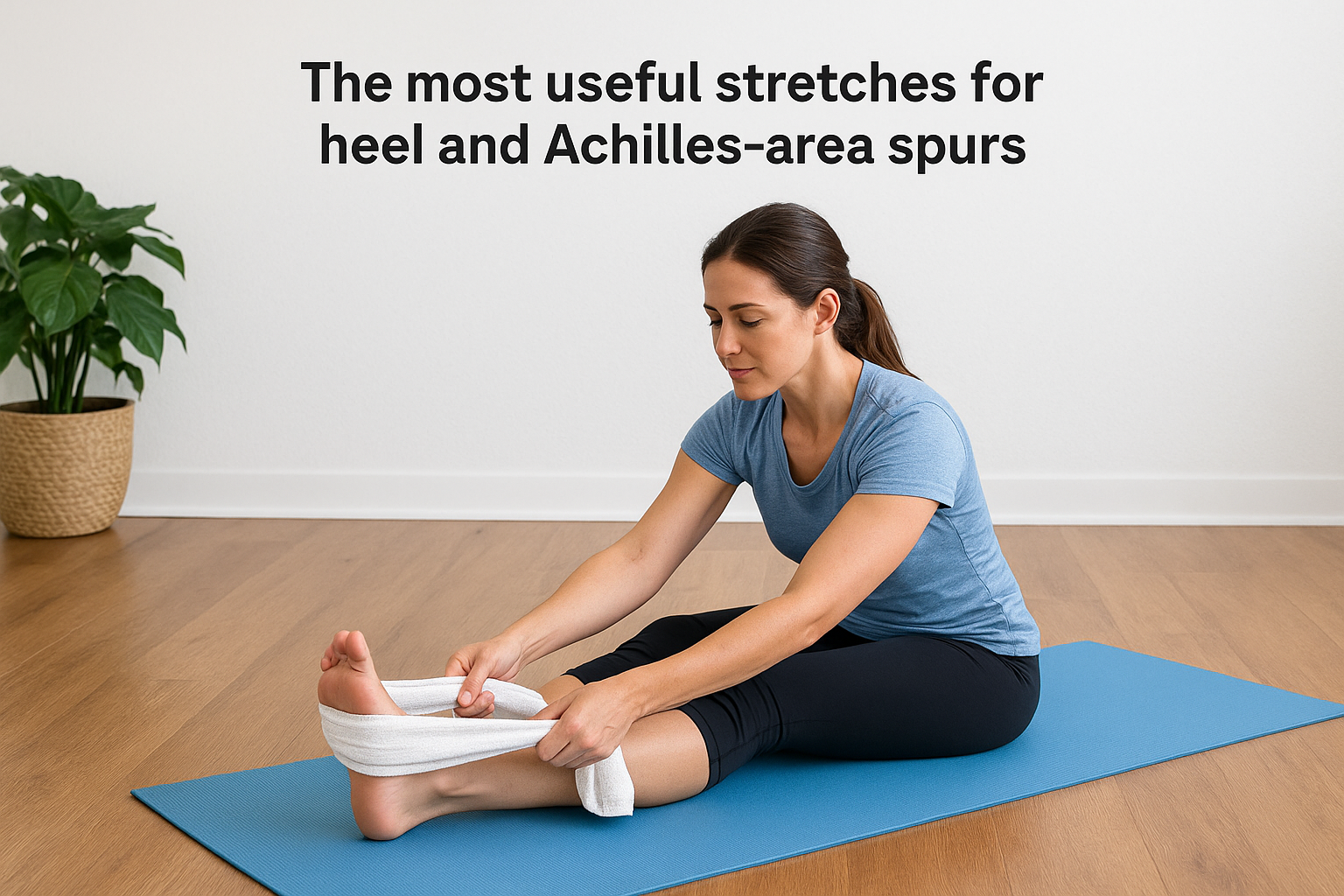
Seated towel stretches and wall calf raises also reduce pull along the Achilles tendon without placing excessive load directly on the spur site.
Gentle strengthening to support the joint without flaring pain
Toe curls with a towel and short-foot exercises build intrinsic foot strength without loading the spur directly. Start with two sets of ten reps and increase only after you can finish each session without pain.
Strengthening before full pain resolution often backfires; focus on gentle range-of-motion first, then add resistance progressively.
A realistic weekly routine you can stick with
Aim for stretching every morning and strengthening exercises three times per week. That frequency builds real progress without overloading tissue that is still recovering.
Mistakes that can make symptoms worse
Skipping a warm-up before stretching and pushing through sharp pain are the two most common errors people make. If you feel a sudden pain spike during any exercise, stop immediately rather than continuing to push through it.
4. Change footwear and add supportive inserts
Your shoes directly influence how much pressure hits the spur site with every step. Wearing the wrong footwear is one of the most common reasons bone spur pain lingers even when people try other bone spur home remedies consistently. The right shoe reduces mechanical stress before it ever reaches the inflamed tissue.
What "supportive" shoes actually mean for bone spur pain
Supportive shoes provide a firm midsole, adequate heel cushioning, and a wide enough toe box to prevent compression. Flexible, flat shoes with little structure transfer ground forces directly through your foot, which aggravates tissue around the spur with every step.
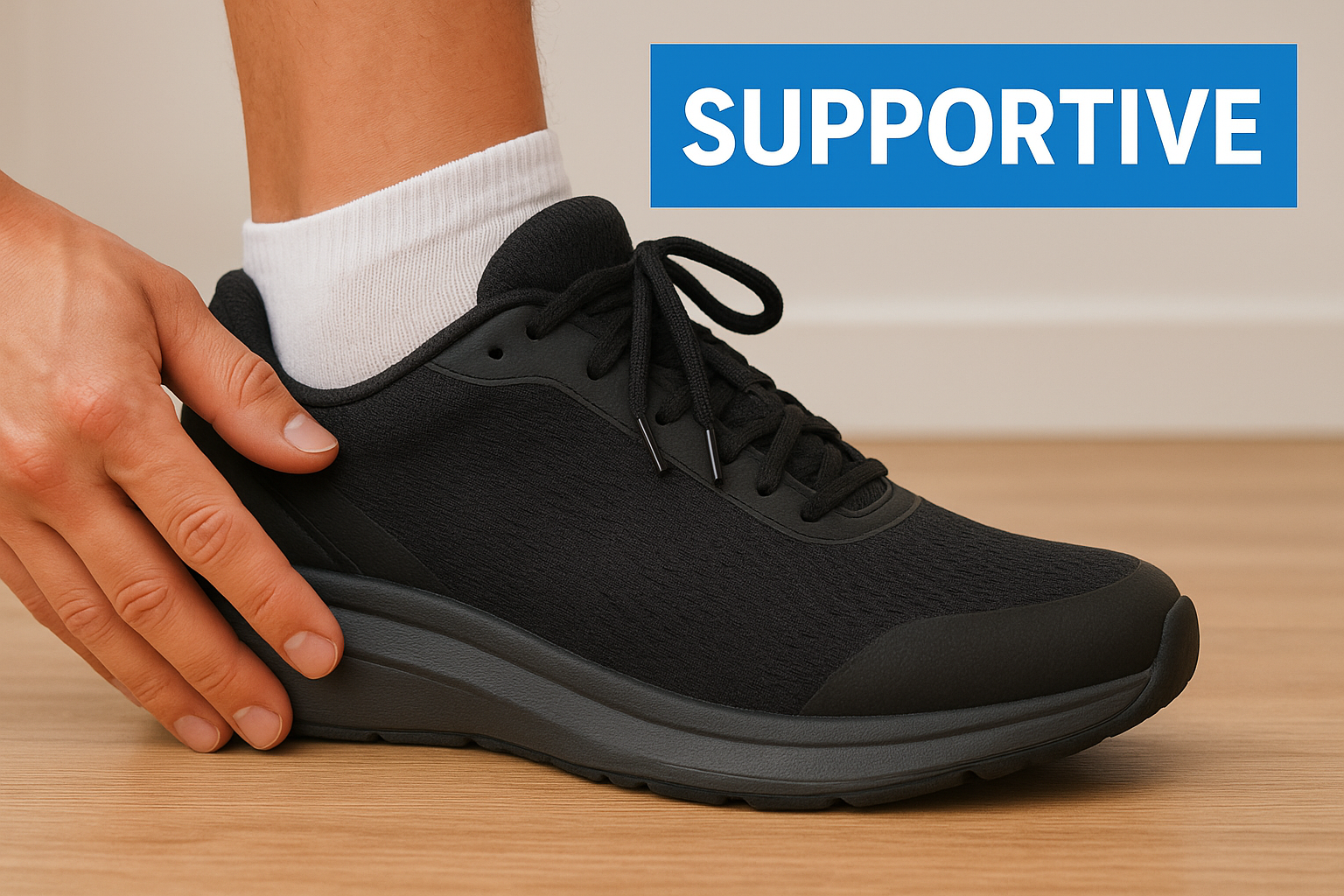
The goal is not a soft shoe; it is a structured shoe that controls motion and absorbs impact before it reaches the spur.
Over-the-counter inserts vs custom orthotics
Over-the-counter gel heel cups work well for mild heel spur discomfort and cost far less than custom options. If your pain persists or your foot has a structural issue like a high arch or flatfoot, custom orthotics prescribed by your podiatrist redistribute load more precisely and deliver better long-term results.
Quick fit checks to avoid rubbing and nerve irritation
Shoes should have a thumb’s width of space between your longest toe and the front of the shoe. Press along the sides to confirm no seams press directly against the spur or any bony prominence.
Tips for work boots, dress shoes, and running shoes
Work boots need a cushioned insole and steel-toe clearance to avoid toe compression. Replace running shoes every 300 to 500 miles, since worn midsoles lose shock absorption quickly and put more stress on inflamed tissue.
5. Use safe over-the-counter pain relief options
OTC medications can reduce bone spur-related inflammation and pain enough to let you stay active and sleep comfortably. Understanding which option fits your situation keeps you from undermining your other bone spur home remedies or creating new health problems.
NSAIDs vs acetaminophen and how to choose
NSAIDs like ibuprofen and naproxen reduce both pain and inflammation, making them the stronger choice for acute bone spur flare-ups. Acetaminophen only blocks pain signals without addressing inflammation, so it works better for mild, steady discomfort. Follow the dosing instructions on the label and take NSAIDs with food to protect your stomach.
Topical anti-inflammatories and other non-pill options
Topical diclofenac gel (available OTC as Voltaren) delivers anti-inflammatory medication directly to the sore area with far less systemic absorption than oral pills. Apply it to the affected area up to four times per day. Menthol-based creams provide temporary cooling relief and can help you get through a painful stretch of the day without adding oral medication.
Topical options are especially useful if you want localized relief without the GI side effects that oral NSAIDs can cause.
Who should avoid certain OTC medications
People with kidney disease, ulcers, or heart conditions should avoid NSAIDs unless a doctor approves them. Individuals taking blood thinners need to check for interactions before using any OTC anti-inflammatory.
When pain relief masks a bigger problem
OTC medication that consistently wears off before your next dose suggests the underlying tissue damage is significant. If you need daily pain relief for more than two weeks, schedule a professional evaluation rather than continuing to manage symptoms on your own.
6. Use night support and smart activity changes
Overnight and daily habits contribute more to bone spur pain than most people realize. Adjusting how you rest your foot at night and which activities you choose during the day gives irritated tissue the recovery window it needs to respond to your other bone spur home remedies.
When night splints and braces help most
Plantar fascia night splints hold your foot at a 90-degree angle while you sleep, keeping the tissue along the bottom of your foot gently stretched rather than contracted. This prevents the sharp first-step pain many people experience every morning. Ankle braces help if your spur involves instability or chronic swelling around the joint.
Consistent overnight support can reduce morning pain within two to four weeks when combined with daytime stretching.
Low-impact cardio options that protect sore joints
Swimming and cycling eliminate the repetitive ground impact that aggravates spur-adjacent tissue while still keeping you active. Water walking in a pool provides cardiovascular benefit with nearly zero foot load, making it one of the best swaps for runners managing heel pain.
Weight and load management that reduces daily irritation
Every extra pound of body weight adds roughly three to four pounds of force through your foot during walking. Reducing overall daily step count during flare-ups and distributing weight evenly between both feet during standing tasks lowers cumulative irritation significantly.
Red flags that mean you should stop and get evaluated
Stop home treatment and book an appointment if you notice numbness, tingling, sudden increased swelling, or pain that wakes you from sleep. These signs suggest nerve involvement or structural damage that requires professional assessment rather than continued self-care.
Next steps
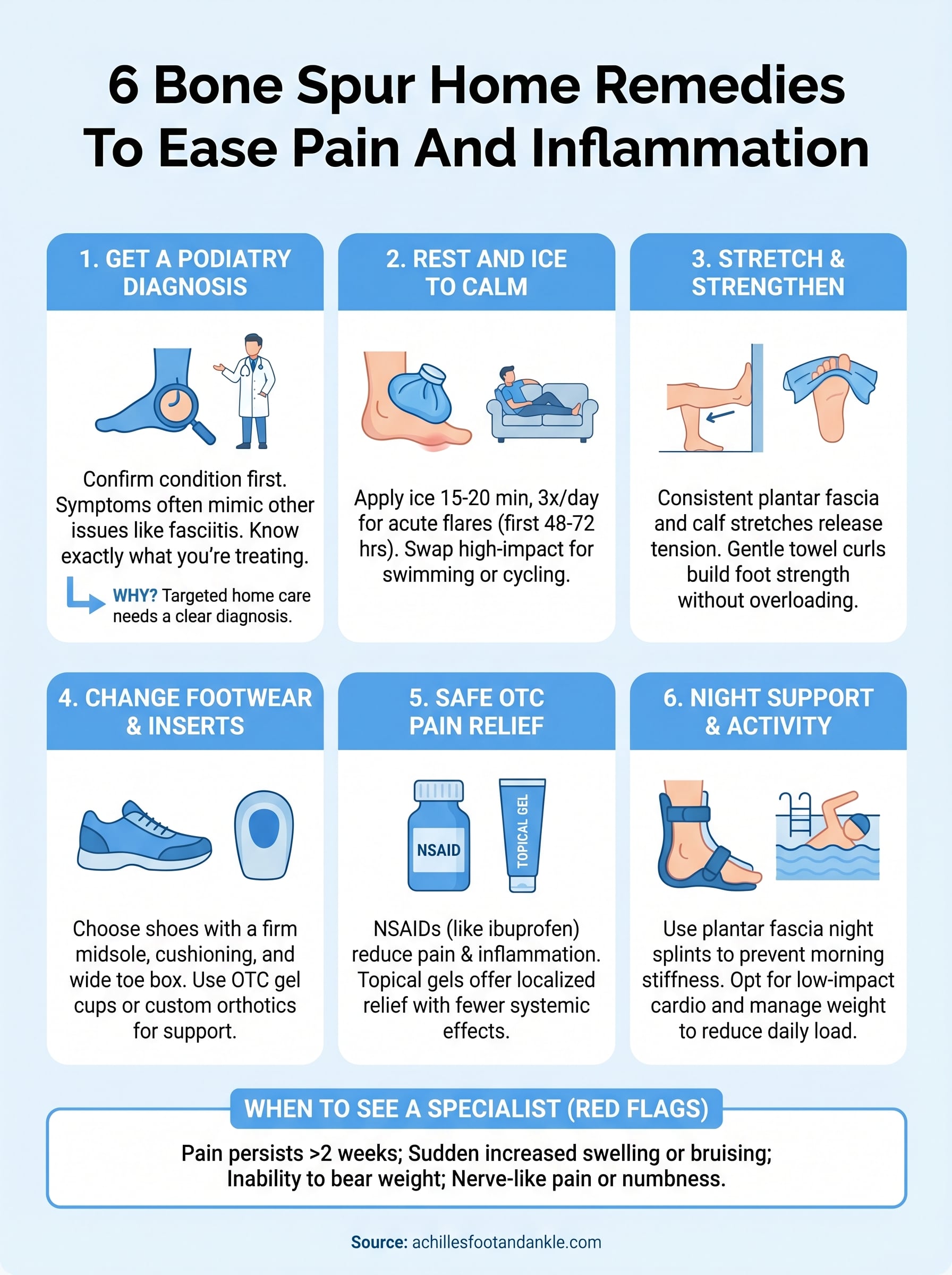
These six bone spur home remedies give you a solid foundation for reducing pain and inflammation on your own terms. Rest and ice calm acute flare-ups, stretching and supportive footwear address the mechanical forces driving your symptoms, and OTC options plus overnight support fill in the gaps between your other efforts.
That said, home care works best when you know exactly what you are treating. If your pain has lasted more than two weeks, keeps returning, or is getting worse despite consistent effort, self-treatment alone is not enough. Continuing to manage symptoms without a clear diagnosis risks missing a more serious underlying condition that responds better to early professional care.
The team at Achilles Foot and Ankle Center can confirm your diagnosis, review what has and has not worked for you, and build a treatment plan around your specific situation. Book a same-day appointment at a Central Virginia location near you and get the right answers faster.