
Foot problems don’t appear overnight. They build slowly, stiff joints, thinning skin, reduced circulation, until one day, a simple task like trimming toenails or walking to the mailbox becomes genuinely difficult. That’s why elderly foot care tips matter long before a crisis shows up. Small, consistent habits at home can prevent falls, infections, and the kind of pain that quietly steals independence from aging adults and their loved ones.
At Achilles Foot and Ankle Center, our podiatrists across Central Virginia treat age-related foot conditions every single day, from diabetic ulcers to brittle toenails to balance-threatening deformities. We see what happens when foot care gets neglected, and we also see how much better outcomes are when patients stay proactive between office visits.
This article breaks down five practical things you or a family member can do at home to protect aging feet, maintain mobility, and know when it’s time to call a specialist.
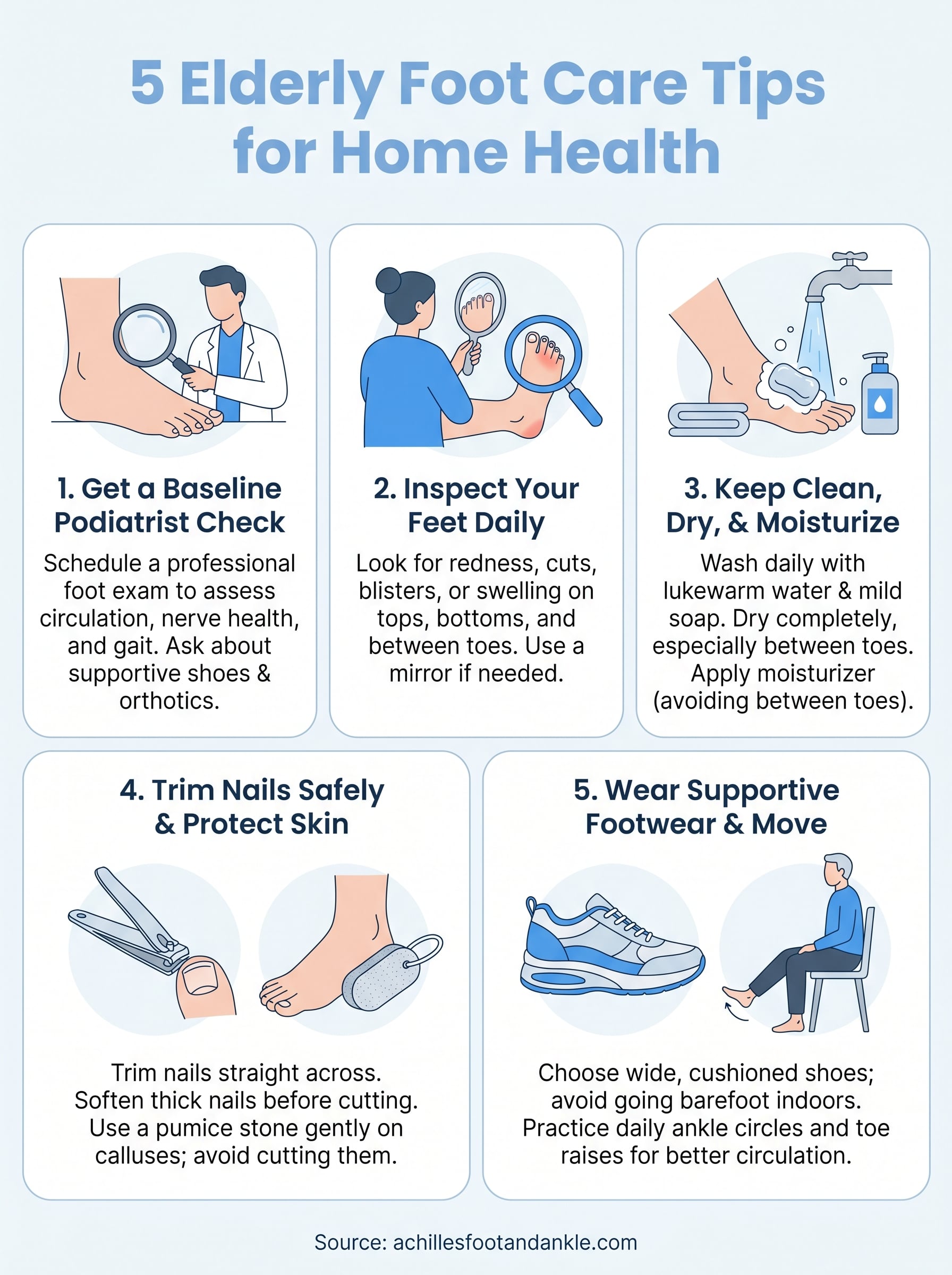
1. Start with a podiatrist foot check
Before any home routine works well, you need to know what you’re actually dealing with. A professional foot exam gives you a clear picture of your current foot health, surfacing problems you may not feel yet, like early nerve damage, reduced circulation, or structural changes that quietly affect the way you walk and balance each day.
What a baseline foot exam looks like
A podiatrist will assess skin condition, nail health, joint flexibility, and nerve sensation during a baseline visit. They’ll also evaluate your gait and pressure points to identify areas likely to develop calluses, blisters, or open sores over time. Most exams take under 30 minutes, and the findings give you a clear starting point for building a home care routine that actually matches your needs.
What to ask about shoes, orthotics, and circulation
Bring your most-worn shoes to the appointment. Ask your podiatrist directly whether they offer adequate support, width, and depth for your foot shape, and whether custom orthotics could reduce pressure on vulnerable areas. Ask about your circulation specifically, and what signs of poor blood flow you should watch for between visits.
Getting clear answers about footwear and circulation at this first visit prevents a lot of guesswork at home, especially if you manage diabetes or have had foot wounds before.
When to book sooner, not later
Most adults over 60 benefit from a podiatry check at least once a year, even without active symptoms. If you have diabetes, peripheral neuropathy, or a history of ulcers, scheduling every three to six months is safer. Call sooner if you notice new pain, numbness, a sore that hasn’t healed in two weeks, or sudden unexplained swelling in one or both feet.
2. Inspect your feet every day
Daily inspection catches problems before they become serious. Many foot issues, including infected sores and early ulcers, develop slowly and without pain, so you won’t notice them without physically looking each day.
What to look for from heel to toe
Check the tops, bottoms, and sides of both feet daily, including the spaces between your toes. Look for redness, swelling, blisters, cuts, bruising, or skin that appears dry, cracked, or unusually warm.
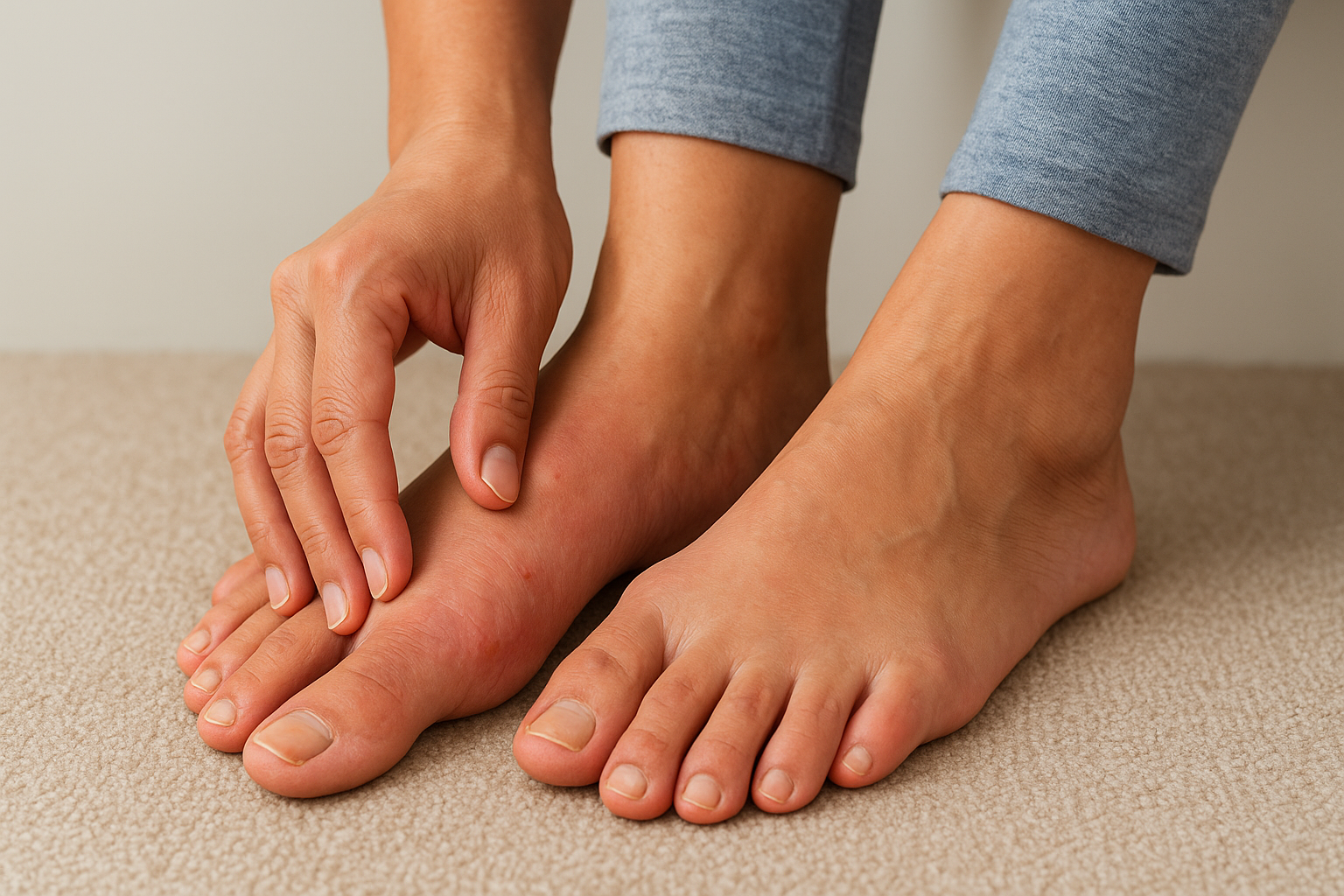
Your toenails need attention too. Note any discoloration, thickening, or edges growing into the surrounding skin.
How to check if you cannot bend or see well
A long-handled mirror on the floor lets you see the soles of your feet without bending. Ask a family member or caregiver to help if limited flexibility or poor vision makes solo checks difficult.
- Use a bright light to spot subtle color changes
- Check between your toes first, since those areas are easiest to miss
What changes mean you should call a doctor
Call your podiatrist if any open wound, blister, or sore hasn’t improved within two days. Report these signs promptly, since delayed treatment can turn a minor issue into a serious infection.
Warning signs to watch for:
- Sudden numbness or tingling in one or both feet
- Unexplained warmth, redness, or color changes in a specific area
- Swelling that appears in one foot only
Catching a small problem early is always better than treating a serious one weeks later.
3. Keep feet clean, dry, and moisturized
Good hygiene protects aging skin that has thinned and lost moisture over the years. A simple daily cleaning routine removes bacteria and prevents the infections that are central to practical elderly foot care tips.
A simple daily wash and dry routine
Wash your feet with mild soap and lukewarm water every day, scrubbing gently between the toes. Dry them completely using a soft towel, focusing on between the toes where moisture tends to collect.
- Use lukewarm water only; hot water strips away the natural skin oils your feet already struggle to produce
- Replace worn towels with a clean, soft one to avoid spreading bacteria between washes
How to prevent cracked skin without trapping moisture
Apply a fragrance-free moisturizer to the tops and soles of your feet right after drying, but avoid the skin between your toes. Moisture trapped there encourages fungal growth.
Dry, cracked heels can split open and become infected, so daily moisturizing prevents a common but avoidable problem.
How to prevent athlete’s foot and nail fungus
Wear clean, breathable socks daily, and change them if your feet sweat heavily. Always wear sandals or shower shoes in shared spaces like gym showers or pool areas to reduce direct contact with fungal spores.
Antifungal powder inside your shoes helps control moisture buildup if sweating is a regular problem for you.
4. Trim toenails safely and protect your skin
Toenail care and skin management are easy to overlook, but both directly affect your comfort and infection risk. These practical steps are among the most important elderly foot care tips for staying safe between clinic visits.
How to cut nails to avoid ingrown toenails
Cut your toenails straight across using clean, sharp nail clippers. Keep nails at a moderate length so they reach the edge of your toe without curling into the surrounding skin.
- Trim nails after bathing when they are naturally softer
- Never round the corners, which raises your ingrown nail risk
How to handle thick, brittle, or discolored nails
Thick or discolored nails often signal fungal infection or poor circulation. Soak your feet briefly in warm water to soften them before trimming, which reduces cracking and splitting during the process.
If a nail is too thick to cut safely at home, let your podiatrist handle it to avoid injury.
How to manage calluses and corns without cutting
Gently smooth calluses using a pumice stone after bathing to reduce friction and buildup. Avoid cutting or shaving calluses yourself, since breaking the skin creates a direct path to infection.
Never use medicated corn pads without checking with your podiatrist first. These products contain salicylic acid, which can irritate thinning skin and cause more harm than good.
5. Wear supportive footwear and move for circulation
The shoes you wear and how often you move directly affect circulation and stability each day. Both factors are central elderly foot care tips that influence fall risk, blood flow to your feet, and how well your body handles extended periods of standing or walking.
What "safe, supportive shoes" include
Look for shoes with a wide toe box, firm heel counter, and cushioned sole. Your feet widen and flatten with age, so old favorites may now crowd your toes or leave your arch unsupported. Replace shoes every 300 to 500 miles of use, or when the sole shows uneven wear.
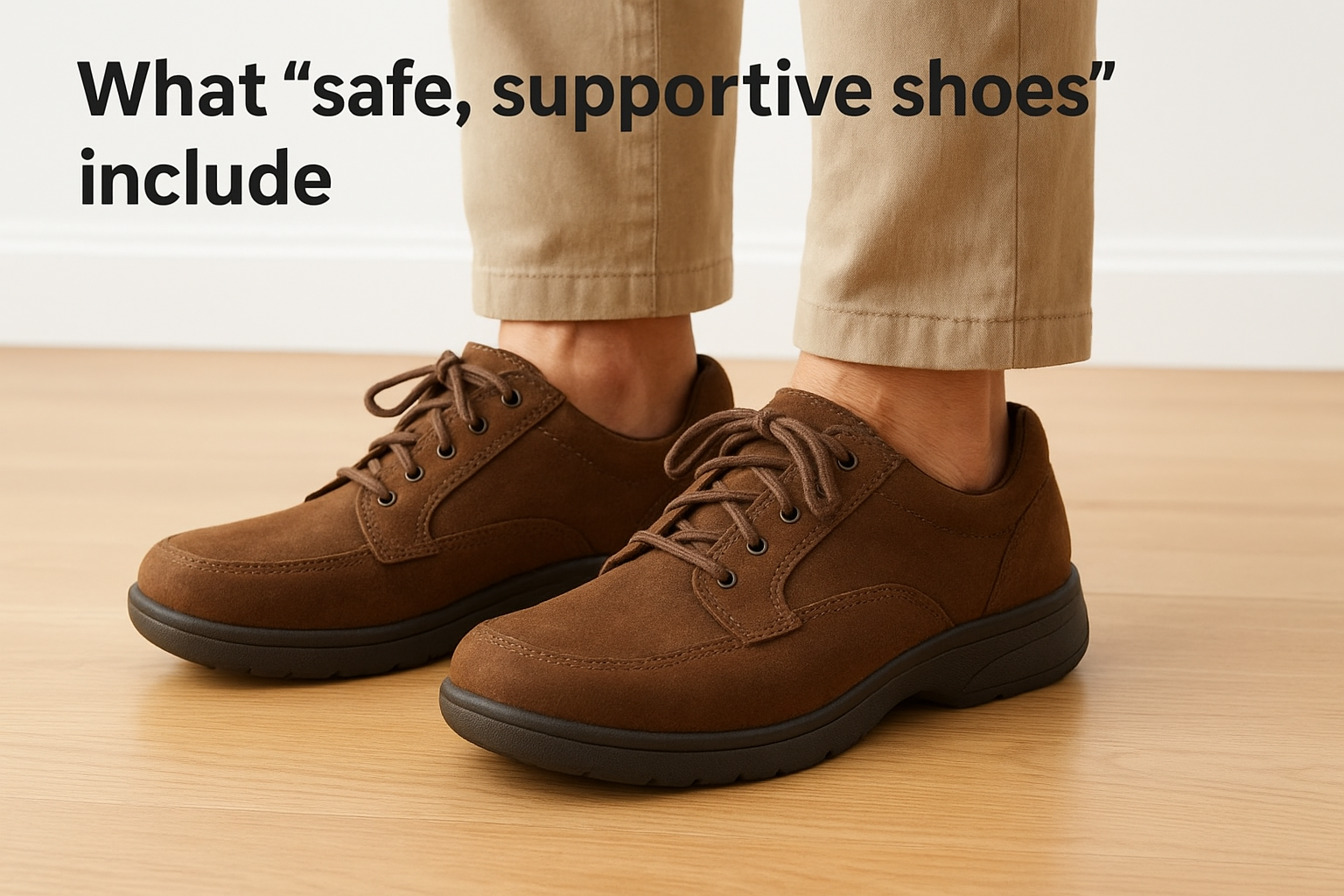
Shoes that fit poorly are one of the most common causes of blisters, calluses, and falls in older adults.
Why skipping barefoot time lowers injury risk
Walking barefoot, even briefly, increases your risk of cuts, punctures, and falls on hard floors. Wear supportive slippers or house shoes indoors at all times to protect your feet and avoid contact with sharp objects underfoot.
Easy movement habits that help balance and blood flow
Simple daily movements improve circulation and balance without overexertion. Try these while seated:
- Ankle circles: rotate each foot 10 times in both directions
- Toe raises: lift your toes slowly, hold two seconds, then lower
- Short walks: aim for several brief walks daily rather than one long session to keep blood moving steadily to your feet
Keep your feet comfortable and safe
These elderly foot care tips give you a practical foundation for protecting your feet at home every day. Starting with a podiatrist check, inspecting daily, maintaining hygiene, trimming nails correctly, and wearing supportive footwear together form a routine that prevents the most common and most serious age-related foot problems before they escalate.
Consistency matters more than perfection. You don’t need to overhaul your entire routine at once. Pick one habit, build it until it feels automatic, then add the next. Small, steady actions compound over time into real protection against infections, falls, and lost mobility.
Your feet carry you through daily life, and they deserve regular professional attention alongside your home efforts. If you notice anything unusual, or simply want a specialist to review your current foot health, schedule a same-day appointment at Achilles Foot and Ankle Center and get the care your feet need today.