
Few things stop you in your tracks quite like a gout flare-up. One moment you’re fine, the next, your big toe joint is swollen, hot, and so tender that even a bedsheet feels unbearable. If you’re searching for gout foot pain relief, you’re likely dealing with that exact scenario right now and need answers that actually work, not a biology lecture.
Gout is one of the most common conditions we treat at Achilles Foot and Ankle Center, and our podiatrists across Central Virginia see flare-ups at every stage, from a first-time attack to chronic, recurring episodes. We know what brings patients through our doors in a hurry, and we know what helps them get back on their feet.
This guide walks you through fast-acting steps to calm a gout flare in your foot, covering home strategies, medications, and when it’s time to see a specialist instead of toughing it out. Whether you’re mid-flare or preparing for the next one, you’ll leave with a clear plan.
What a gout flare in the foot feels like
A gout flare doesn’t build gradually the way muscle soreness does. The pain can go from zero to severe within hours, often catching you off guard in the middle of the night when your body temperature drops slightly and uric acid crystals are more likely to settle in your joints. Many people describe waking up and thinking they broke their foot, only to realize they hadn’t done anything at all.
Why the big toe is the most common target
Gout strikes the big toe joint, called the first metatarsophalangeal joint, in roughly 50 to 60 percent of first attacks. This happens because uric acid crystals tend to settle in the cooler, lower extremities of your body, and the big toe sits at the farthest point from your core. The crystals that form from excess uric acid in your blood are sharp and needle-like, and your immune system responds to them as if they’re a foreign invader, triggering intense inflammation.
Uric acid crystals can accumulate silently in a joint for years before a flare occurs, which is why a first attack often seems to come out of nowhere.
Your joint doesn’t just hurt during a flare. It becomes visibly swollen, warm to the touch, and deeply red or purple, with skin that can look stretched and shiny. Even light pressure, like a sock or the weight of a thin blanket, can feel intolerable.
Symptoms that separate gout from other foot pain
Knowing whether you’re dealing with gout or something else, like an infection or a stress fracture, matters for treatment. A gout flare typically causes intense pain that peaks within 12 to 24 hours and then slowly improves over several days without treatment. You may also notice that the pain eases completely between flares, leaving the joint feeling entirely normal.
Fever, chills, and general fatigue can accompany a severe gout attack, making it easy to confuse with an infected joint. If you have a fever alongside significant swelling, that combination warrants prompt medical attention rather than home management alone.
Step 1. Protect the joint and calm inflammation
The first thing to do when a flare starts is stop putting weight on the affected foot. Walking through the pain doesn’t toughen the joint; it worsens the inflammatory response and can extend how long the flare lasts. Your immediate goal for gout foot pain relief is to reduce movement and eliminate anything that irritates the joint further.
Rest, elevation, and ice
Rest the foot immediately and elevate it above your heart level if possible. Prop it on two or three pillows while lying down. This position reduces blood pooling in the joint and helps limit swelling.
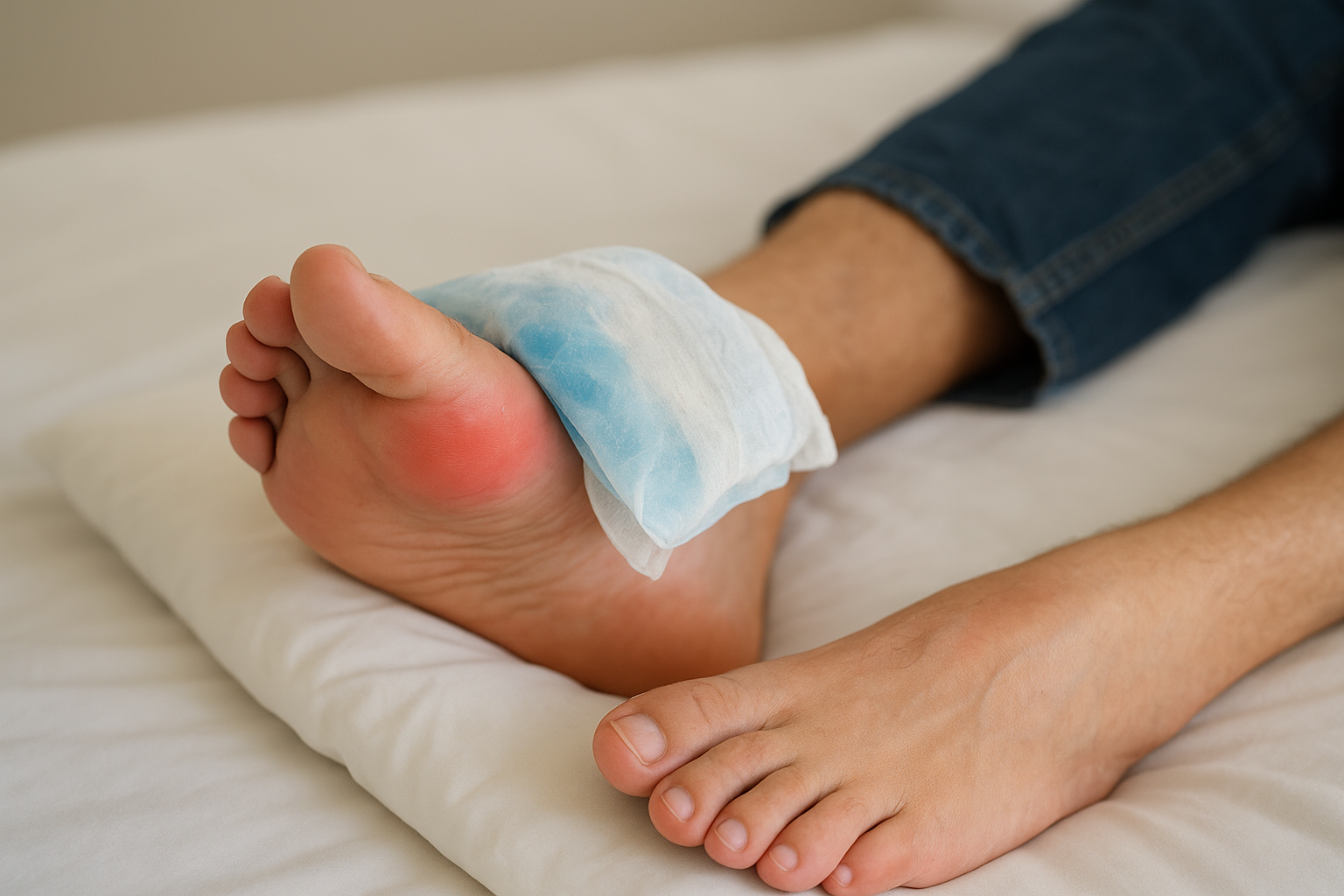
Apply ice to bring down inflammation, but do it correctly:
- Wrap ice or a cold pack in a thin cloth before applying it
- Apply for 20 minutes on, 20 minutes off
- Never place ice directly on skin, especially if you have diabetes or reduced sensation in your feet
Avoid heat packs during an active flare. Heat increases blood flow to an already inflamed joint and will intensify your pain rather than ease it.
Footwear during a flare
Loose footwear or no footwear is your best option while the joint is inflamed. A stiff shoe pressing against a swollen big toe joint makes every step significantly more painful. If you need to move around, a wide open sandal that keeps pressure off the joint works far better than any closed shoe during the worst days of a flare.
Step 2. Use the right pain meds safely
Medication is one of the most effective tools for gout foot pain relief, but the wrong choice can backfire. Aspirin, for example, is something many people reach for instinctively, yet it raises uric acid levels in your blood and can prolong or worsen a flare. Knowing which medications actually help is just as important as taking something quickly.
Over-the-counter options
Ibuprofen (Advil, Motrin) and naproxen sodium (Aleve) are the most appropriate over-the-counter choices during a gout flare. Both are NSAIDs that reduce inflammation at the joint level, which is the core driver of your pain. Take them with food to protect your stomach, and follow the dosage instructions on the label.
Avoid aspirin entirely during a gout flare. Even low-dose aspirin interferes with how your kidneys excrete uric acid and can make symptoms worse.
Prescription medications your doctor can prescribe
If over-the-counter NSAIDs aren’t enough, a podiatrist or physician can prescribe stronger anti-inflammatory options that work faster and more aggressively on acute flares. The three most common prescription approaches include:
- Prescription-strength NSAIDs: Higher doses of indomethacin or naproxen, taken short-term
- Colchicine: Most effective when started within the first 24 hours of a flare; reduces the immune response to uric acid crystals
- Oral corticosteroids: Prednisone is often used when NSAIDs are contraindicated, such as for patients with kidney disease
Your doctor will select the right option based on your kidney function, other medications, and overall health history.
Step 3. Hydrate and adjust food and drink now
What you eat and drink directly affects your uric acid levels, which means your choices in the next 24 to 48 hours can either shorten your flare or drag it out longer. This step is often overlooked in the rush to find gout foot pain relief, but it works alongside your medication to help your body clear excess uric acid faster.
Drink more water right away
Dehydration concentrates uric acid in your bloodstream, giving crystals more opportunity to form and deposit in your joints. Aim for 8 to 12 cups of water per day during an active flare, spreading intake evenly rather than drinking large amounts all at once. Plain water is the best option; avoid sugary sports drinks, which often contain fructose, a sugar that raises uric acid production.
Tart cherry juice has some evidence behind it for lowering uric acid levels, but it should supplement your water intake, not replace it.
Foods and drinks to cut immediately
Alcohol raises uric acid levels sharply, and beer in particular is especially problematic because it contains purines in addition to alcohol. High-purine foods such as organ meats, shellfish, red meat, and anchovies feed the uric acid spike that triggered your flare in the first place.
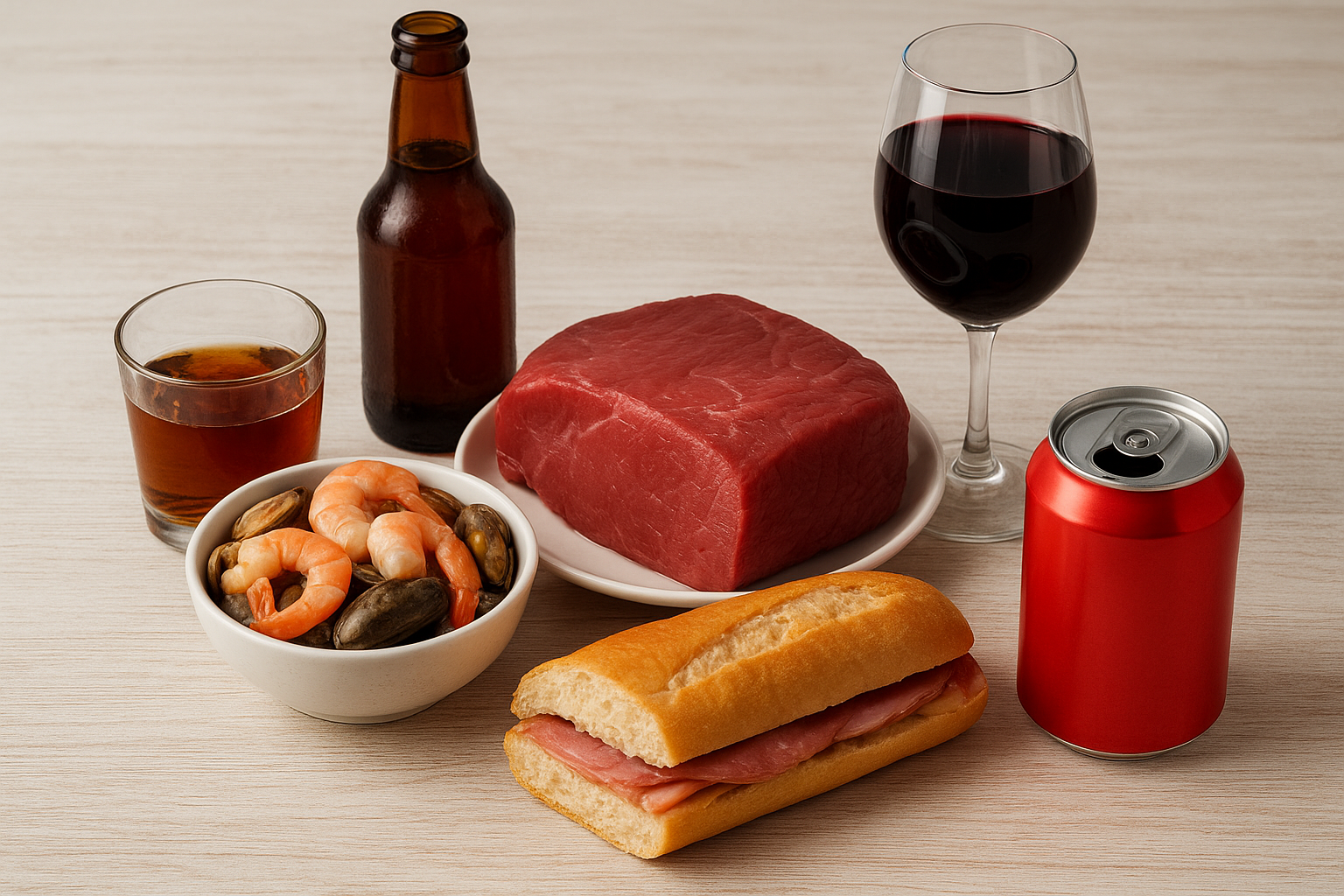
Avoid these during a flare:
- Beer, wine, and spirits
- Organ meats (liver, kidney)
- Shellfish and sardines
- Red meat in large portions
- Sugary sodas and fruit juices with added fructose
When to get urgent care or see a podiatrist
Home management works well for many gout flares, but some situations call for professional evaluation right away. Knowing the difference between a manageable flare and a warning sign keeps you from letting a serious problem linger too long without proper treatment.
Signs you need same-day care
Some symptoms indicate something beyond a standard gout attack and require prompt medical attention rather than home remedies alone. Go to urgent care or contact your podiatrist the same day if you notice any of the following:
- Fever above 101°F combined with a swollen, red joint
- No improvement after 48 hours of rest, ice, and over-the-counter NSAIDs
- Pain spreading beyond one joint into multiple areas of the foot
- Skin over the joint that appears blistered, broken, or draining fluid
- You have diabetes or peripheral neuropathy, since infection risk is significantly higher
A hot, swollen joint with fever can indicate septic arthritis, an infected joint that requires antibiotics and sometimes drainage, not gout management.
What a podiatrist can do that home treatment cannot
A podiatrist can confirm your diagnosis with imaging and bloodwork, ruling out fractures, infections, and other conditions that mimic gout. Beyond diagnosis, a specialist can prescribe colchicine or corticosteroids tailored to your health profile, provide in-office joint aspiration to remove crystals and relieve pressure directly, and develop a long-term plan to lower your uric acid levels and reduce how often flares occur. Consistent gout foot pain relief over the long term depends on managing the underlying cause, not just reacting to each attack.

Conclusion
A gout flare is brutal, but you have real tools to fight back. Protecting the joint early, choosing the right medications, and cutting high-purine foods and alcohol can all shorten how long a flare lasts and reduce its severity. Act within the first few hours of a flare and you give your body the best chance to recover faster than if you wait it out hoping the pain fades on its own.
Long-term gout foot pain relief depends on more than surviving each episode. Managing your uric acid levels consistently, identifying your personal triggers, and getting professional guidance when pain doesn’t respond to home treatment are all part of a plan that actually reduces how often flares happen in the first place.
If your flare isn’t improving, or this is your first attack and you want a confirmed diagnosis, the team at Achilles Foot and Ankle Center is ready to help. Book a same-day appointment and get the targeted care your foot needs.