

You push through a run or a workout, and your foot starts screaming at you halfway through. Maybe it’s a sharp sting in your heel, a dull ache across the top of your foot, or that burning sensation under your toes that won’t quit. Foot pain during exercise is one of the most common reasons active people in Central Virginia end up limping into our clinics instead of finishing their training plan.
The truth is, most exercise-related foot pain traces back to a handful of repeat offenders: overuse injuries like plantar fasciitis and stress fractures, poor footwear choices, weak or tight muscles, biomechanical issues like flat feet or overpronation, and nerve irritation. Figuring out which one applies to you is the first step toward actually fixing it instead of just icing it and hoping.
Below, we break down five specific causes behind that pain, along with relief tips and prevention strategies our podiatrists use with patients every day. Whether you’re a weekend runner or training for a marathon, you’ll walk away knowing what’s likely happening in your foot and what to do about it before it sidelines you for good.
1. Improper or worn-out footwear
Your shoes are the interface between your foot and the ground, and most people wear them long after they’ve stopped doing their job. Worn-out shoes lose cushioning and structural support around 300 to 500 miles into their life, even if the tread still looks fine. Running shoes that have gone flat, sneakers that fit too tight in the toe box, or old cross-trainers with zero arch support can all shift how force travels through your foot with every step, leading directly to foot pain during exercise.
How it causes foot pain
When midsole cushioning breaks down, your foot absorbs shock it was never meant to handle on its own, which strains the plantar fascia, Achilles tendon, and small stabilizing muscles. Shoes that are too narrow squeeze nerves between the metatarsals, while shoes with poor arch support let your foot roll inward or outward more than it should, stressing joints and soft tissue with every stride.
Warning signs to watch for
- Aching across the ball of the foot after runs or workouts
- Numbness or tingling in the toes
- Visible creasing, flattened soles, or worn-down outer heel edges on your shoes
- Blisters or hot spots in new places you haven’t felt before
Relief and prevention tips
Replace athletic shoes every 300 to 500 miles or every six months if you’re a regular exerciser, whichever comes first. Get fitted at a specialty store where staff can assess your gait pattern and arch type rather than guessing your size off a chart. If you have flat feet, high arches, or a history of foot problems, ask about custom orthotics to correct alignment issues generic insoles can’t fix.
Worn-out shoes are the single easiest cause of exercise foot pain to fix, yet the one most people ignore.
When to see a podiatrist
If switching to properly fitted shoes doesn’t ease your pain within two to three weeks, or if you notice persistent swelling, bruising, or numbness, it’s time for a professional evaluation to rule out a deeper structural issue.
2. Overuse and sudden increases in training
Ramping up mileage too fast, adding extra workout days, or switching from walking to running without a transition period puts stress on tissue that hasn’t had time to adapt. Sudden increases in training volume or intensity are behind a huge share of the overuse injuries we see, especially in people training for a race with a fixed deadline.
How it causes foot pain
Tendons, ligaments, and bone respond to load gradually. Bump your training too quickly and microtrauma accumulates faster than your body can repair it, inflaming tendons and stressing the small bones and connective tissue in your foot with every repetitive strike.
Your foot needs recovery time to adapt to new training loads, not just motivation to push through.
Warning signs to watch for
- Pain that builds gradually over days or weeks rather than appearing suddenly
- Soreness that worsens with activity and eases with rest
- Swelling along the top or side of the foot
Relief and prevention tips
Follow the 10% rule: increase weekly mileage or intensity by no more than 10% at a time. Build in rest days, cross-train on low-impact days, and prioritize sleep and nutrition to support tissue repair.
When to see a podiatrist
See a podiatrist if rest for a week doesn’t reduce your pain, or if you notice pinpoint tenderness on a specific bone, which can signal a stress fracture forming.
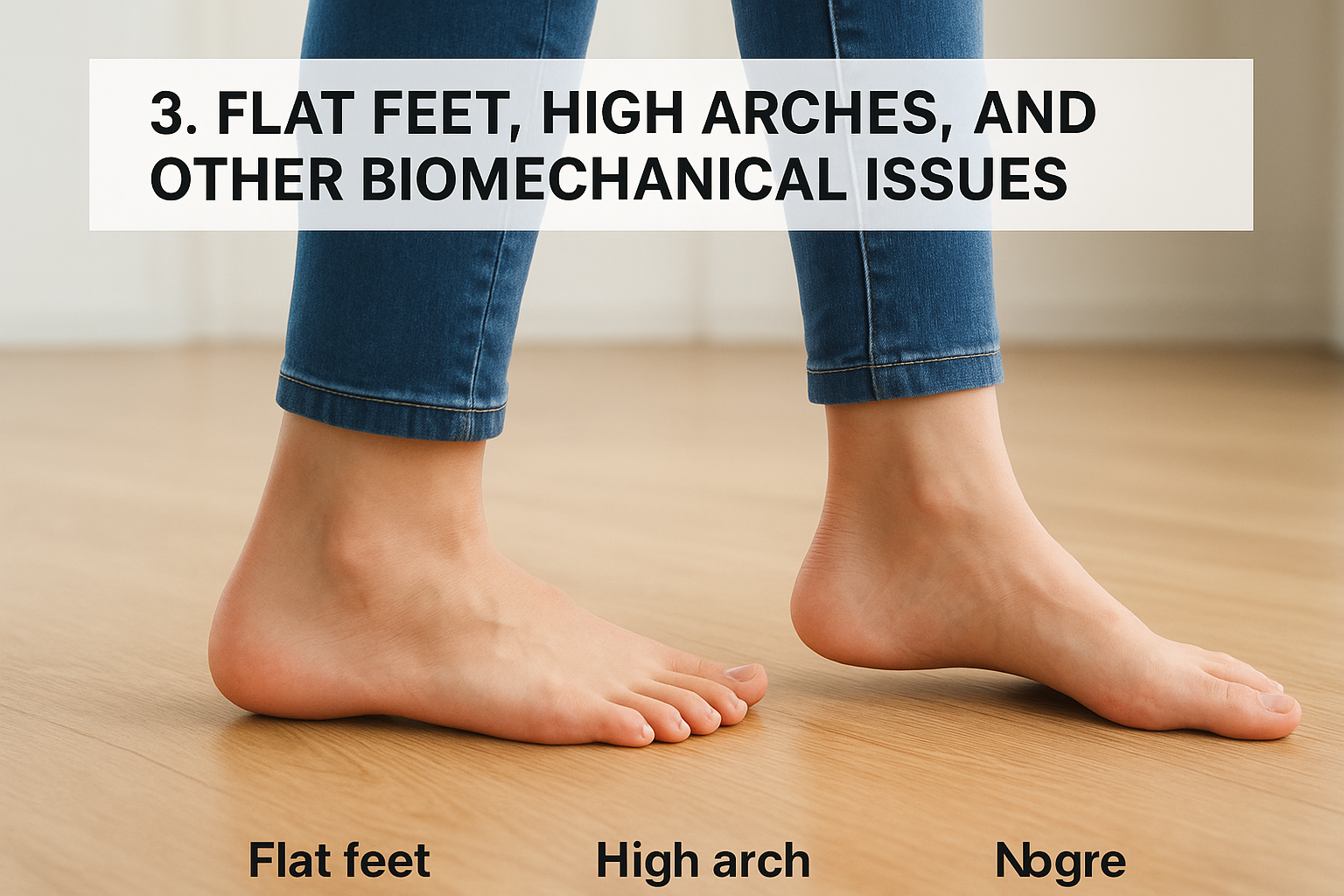
3. Flat feet, high arches, and other biomechanical issues
Some foot pain has nothing to do with your shoes or your training schedule and everything to do with the shape of your foot. Flat feet cause your arch to collapse under load, while high arches don’t absorb shock well at all, and both patterns change how weight distributes across your foot with every stride.
How it causes foot pain
Either extreme throws off your natural gait mechanics. Flat feet tend to overpronate, rolling inward and straining the arch, ankle, and shin. High arches shift weight to the heel and ball of the foot, concentrating pressure in smaller areas and often causing pain along the outer edge.
Your foot shape isn’t a flaw to fix, but it does dictate what kind of support you actually need.
Warning signs to watch for
- Uneven wear on the inside or outside edge of your shoe soles
- Arch pain that shows up specifically during or after exercise
- Ankles that feel unstable or roll easily during runs
Relief and prevention tips
A gait analysis at our clinic pinpoints exactly how your foot moves, guiding whether you need stability shoes, cushioned shoes, or custom orthotics.
When to see a podiatrist
If pain persists despite supportive footwear, or you notice recurring ankle rolls, get evaluated before it becomes a chronic issue.
4. Plantar fasciitis
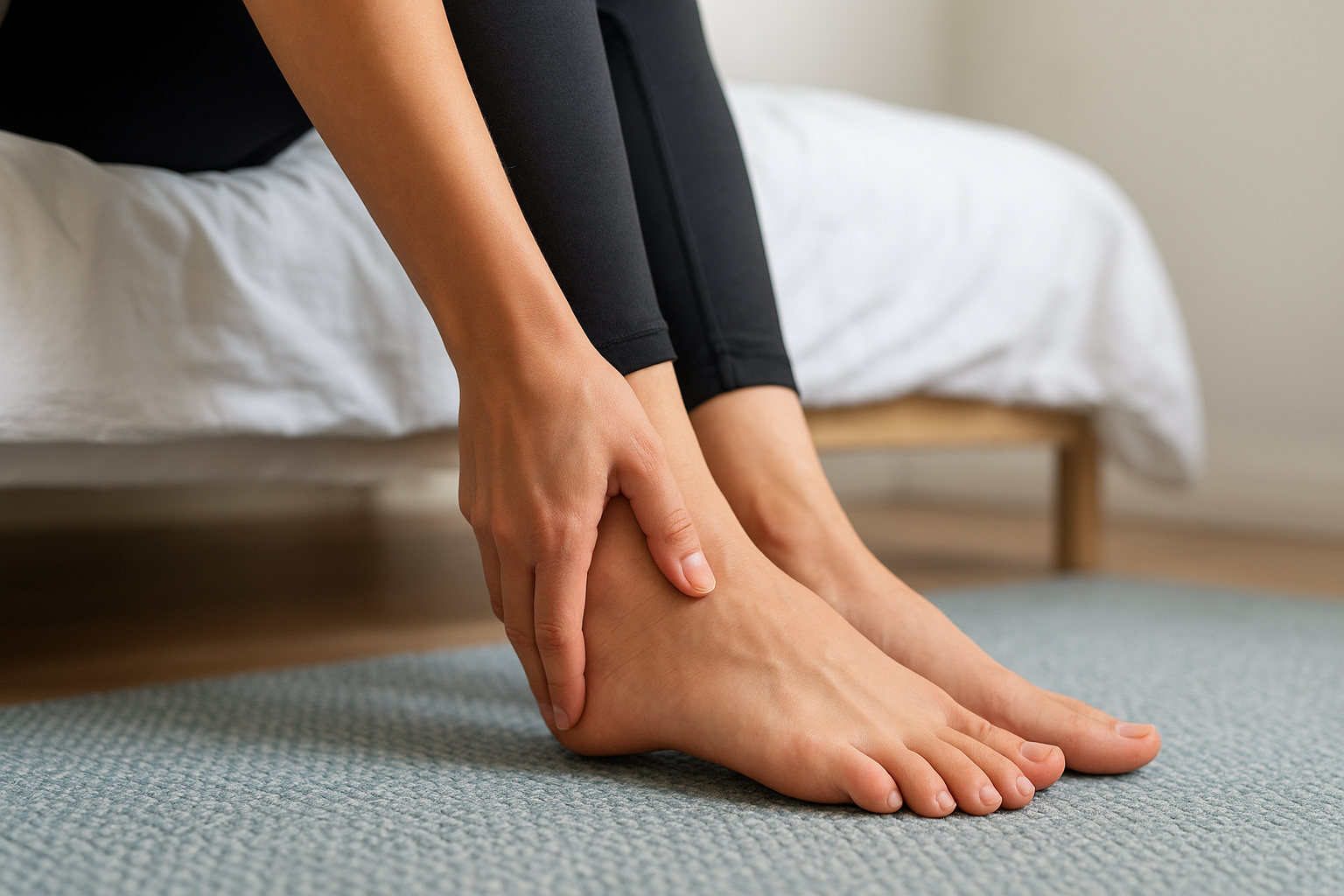
Plantar fasciitis is inflammation of the thick band of tissue running from your heel to your toes, and it’s the single most common cause of heel pain we treat in active patients. Runners, dancers, and anyone who spends hours on their feet in unsupportive shoes are especially prone to it, since repetitive strain gradually tears the fascia’s tiny fibers.
How it causes foot pain
Every step stretches the plantar fascia, and when it’s overloaded, micro-tears develop faster than the tissue can heal. Tight calf muscles and a tight Achilles tendon pull on the heel bone, adding even more tension to an already strained band of tissue.
Plantar fasciitis pain that’s worst with your first steps in the morning is a telltale sign, not a coincidence.
Warning signs to watch for
- Stabbing heel pain with your first steps out of bed
- Pain that eases during activity but returns afterward
- Tenderness when pressing the bottom of your heel
Relief and prevention tips
Stretch your calves and plantar fascia daily, ice the heel after activity, and add a night splint to keep tissue lengthened while you sleep.
When to see a podiatrist
See a podiatrist if pain lasts beyond two weeks despite stretching and rest, since chronic cases often need targeted therapy or injections.
5. Stress fractures
Stress fractures are tiny cracks in the bone that develop from repetitive impact rather than a single traumatic event, and they show up most often in the metatarsals, the long bones behind your toes. Runners who increase mileage too fast, dancers, and military recruits going through basic training are classic examples, but any exerciser who ignores early warning pain can end up with one.
How it causes foot pain
Bone remodels constantly, breaking down and rebuilding in response to stress. Push it faster than it can rebuild, and microscopic cracks form. Keep training on top of that damage, and the crack widens, causing sharp, localized pain that gets worse with continued activity.
A stress fracture starts as a whisper of pain and becomes a shout if you keep running through it.
Warning signs to watch for
- Pinpoint pain on a specific spot of bone, not a general ache
- Pain that worsens during exercise and lingers afterward
- Swelling or bruising over the top of the foot
Relief and prevention tips
Stop weight-bearing activity immediately and switch to swimming or cycling. Most stress fractures need four to eight weeks in a protective boot to heal properly.
When to see a podiatrist
Any suspected stress fracture warrants imaging and an evaluation right away, since walking on it delays healing and risks a complete break.
Getting back to pain-free movement
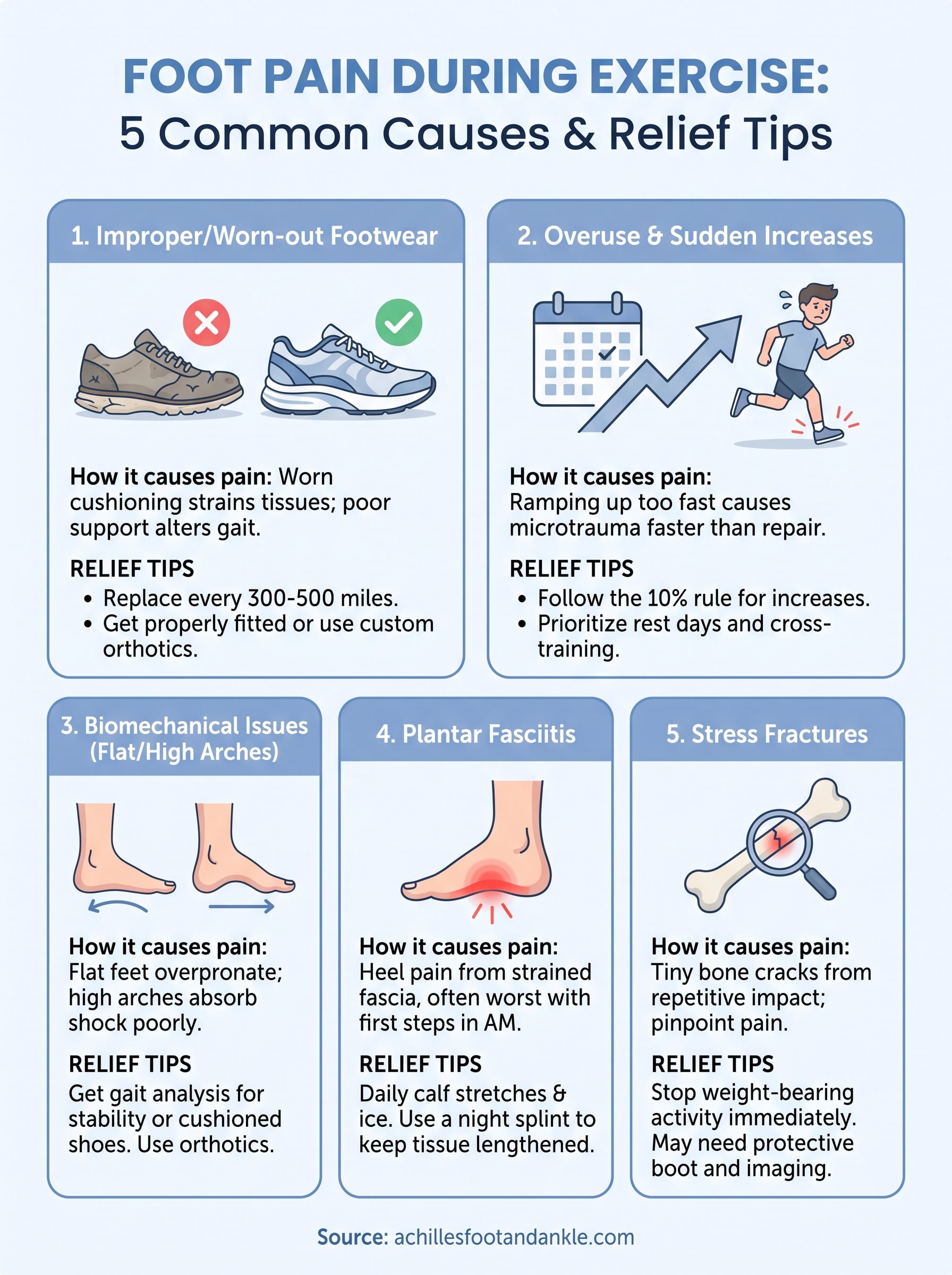
Foot pain during exercise almost always has a specific, identifiable cause, whether that’s worn-out shoes, a training load that ramped up too fast, your natural foot shape, plantar fasciitis, or a stress fracture. Ignoring the pain and hoping it fades rarely works, and pushing through it usually turns a minor issue into weeks of forced rest. The good news is that once you know what’s causing your pain, the fix is usually straightforward: better footwear, smarter training progression, targeted stretching, or a short recovery period to let tissue heal properly.
You don’t have to guess which cause applies to you or figure out treatment on your own. Our podiatrists across Central Virginia see these exact patterns every day and can get you a precise diagnosis instead of a shot in the dark. If your foot pain has lasted more than a couple of weeks or is getting worse, schedule a same-day appointment and let’s get you moving again without pain.