

A gout flare in the foot can wake you from a dead sleep, the joint at the base of your big toe swollen, hot, and so tender that even a bedsheet feels unbearable. If you’ve experienced this, you’re not alone. Understanding what triggers gout in feet starts with knowing how uric acid builds up in your bloodstream and crystallizes in the joints, and why certain foods, medications, and health conditions make some people more vulnerable than others.
At Achilles Foot and Ankle Center, our podiatrists across Central Virginia treat gout flare-ups regularly, from the initial diagnosis to long-term management plans that help patients reduce the frequency and severity of attacks. We see firsthand how the right knowledge can make a real difference in staying ahead of this condition.
This article breaks down the specific causes and triggers behind gout in the feet, explains who’s most at risk, and walks through practical prevention strategies you can start using now. Whether you’re dealing with your first flare or your fifth, this guide will help you understand what’s happening and what to do about it.
Why gout flares often start in the feet
Gout develops when uric acid levels in your blood rise too high, and the excess uric acid forms sharp, needle-like crystals that settle in your joints. You might wonder why the foot, and specifically the big toe, is almost always the first place these crystals show up rather than a shoulder or a hip. The answer comes down to two factors: temperature and mechanical stress, both of which are at their most extreme in your feet.
How lower body temperature drives crystal formation
Uric acid crystals form more readily in cooler tissue, and your feet sit at the far end of your circulatory system, making them the coldest part of your body at rest. When your core stays warm overnight, your toes and ankles can drop several degrees below your core temperature, which is exactly the condition that pushes dissolved uric acid past its crystallization point. This is a key reason why gout attacks often hit in the middle of the night, when you have been lying still for hours and circulation to your feet has slowed considerably.
Uric acid becomes less soluble at temperatures below about 35°C (95°F), which falls well within the normal range for the human foot during sleep.
Why the big toe joint takes the hit first
The joint at the base of your big toe, called the first metatarsophalangeal joint, handles an enormous amount of mechanical load every time you walk or stand. This repeated stress creates low-level inflammation in the joint lining that makes it a prime target for uric acid crystals to accumulate over time. Gravity also plays a role, as fluid carrying elevated uric acid naturally drains toward your lower extremities throughout the day.
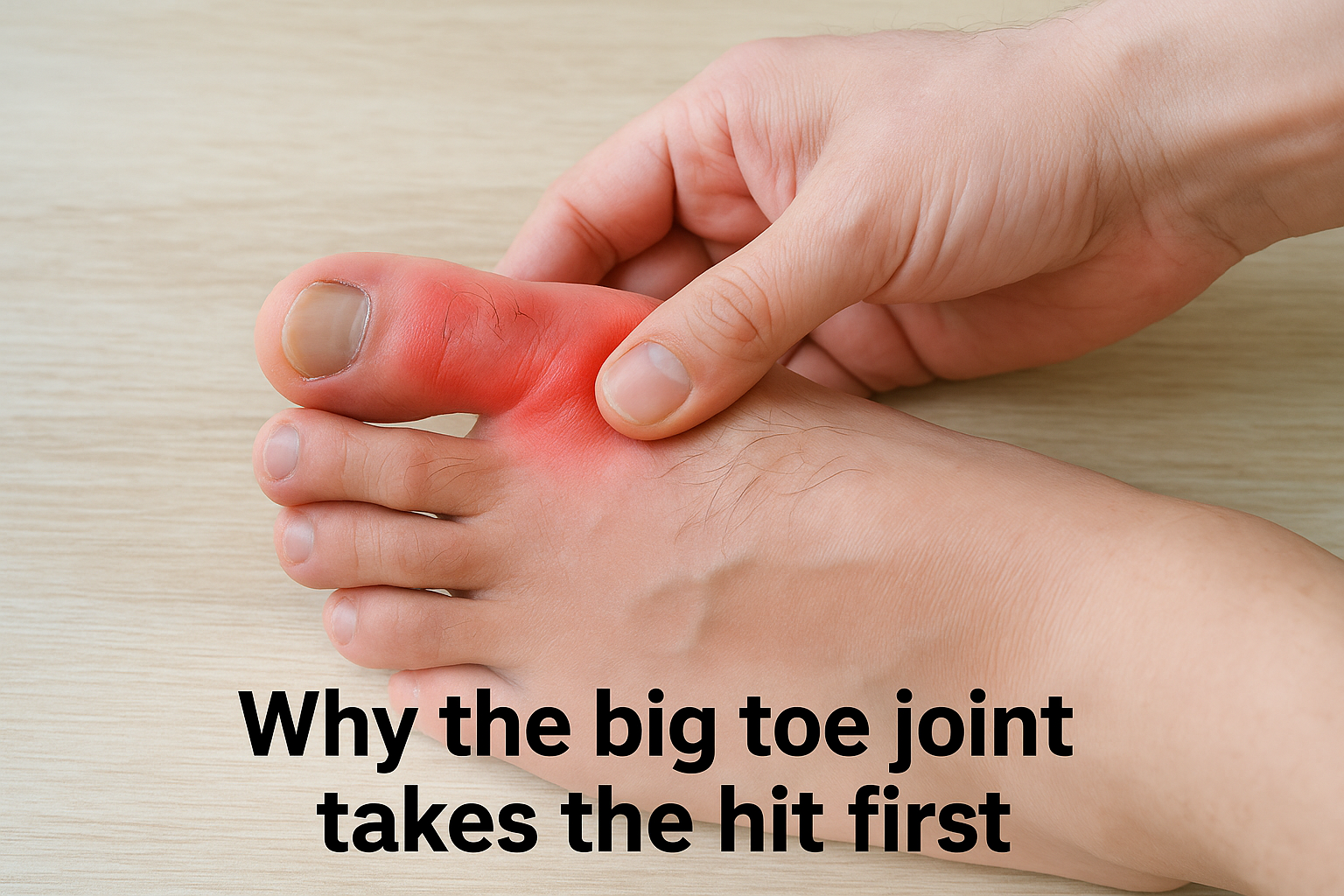
Recognizing what triggers gout in feet starts with understanding how your own anatomy sets the stage. Poor circulation, high mechanical impact, and cold temperatures combine in the foot in ways they simply do not in other joints, which is why more than half of all first-time gout attacks affect the big toe specifically.
The most common triggers of foot gout
Several factors can push uric acid levels above the threshold where crystals form in your joints. Knowing what triggers gout in feet puts you in a much better position to avoid the habits and conditions that set off a flare in the first place.
Foods and drinks that raise uric acid
Your diet is one of the most direct levers you have over uric acid levels. Purine-rich foods like red meat, organ meats, shellfish, and sardines break down into uric acid during digestion, flooding your bloodstream after a heavy meal. Alcohol, especially beer, both increases uric acid production and slows down how quickly your kidneys clear it, which makes a night of drinking a reliable flare trigger for many people. Sugary drinks containing fructose carry a similar risk that often surprises patients.
Dehydration also concentrates uric acid in your blood, so even skipping enough water on a hot day can tip the balance toward a flare.
Medical conditions and medications that contribute
Certain health conditions make your kidneys less efficient at filtering uric acid, including chronic kidney disease, high blood pressure, and type 2 diabetes. Diuretics, often prescribed for heart failure or hypertension, reduce how much uric acid your kidneys excrete, raising your blood levels over time. Sudden physical stress, such as a surgery, serious illness, or rapid weight loss, can also destabilize uric acid levels quickly and trigger an unexpected attack in your foot or ankle.
How to prevent gout flares in your feet
Understanding what triggers gout in feet gives you a real advantage when it comes to prevention. The strategies that work best target the root cause directly: keeping uric acid levels consistently low so that crystals never get a chance to form in your foot joints in the first place.
Adjust what you eat and drink
Cutting back on high-purine foods like red meat, organ meats, shellfish, and sardines makes a measurable difference in your blood uric acid levels over time. Replacing sugary drinks and alcohol, especially beer, with plain water is equally important, since both alcohol and fructose directly raise how much uric acid your body produces. Aim for at least eight glasses of water daily, because staying well-hydrated gives your kidneys the best chance to flush uric acid before it accumulates and crystallizes in your feet.

Swapping one sugary drink per day for water has been shown to reduce uric acid levels noticeably over several weeks.
The highest-risk items to limit include organ meats, shellfish, beer, spirits, and sodas sweetened with high-fructose corn syrup.
Manage your medications and health conditions
If you take diuretics or other medications that interfere with uric acid clearance, speak with your doctor about whether less aggravating alternatives are available. Controlling underlying conditions like high blood pressure, type 2 diabetes, and chronic kidney disease through consistent medical care also lowers your long-term gout risk considerably.
Maintaining a healthy body weight through gradual changes matters too, because rapid weight loss actually spikes uric acid levels and can trigger an attack rather than prevent one. Even modest weight reduction eases both uric acid production and the mechanical load on your feet.
What to do when a foot gout flare starts
When a gout attack hits, acting quickly can cut how long it lasts and how severe it gets. The first 24 hours matter most, so knowing your options in advance means you won’t be searching for answers while your foot is already throbbing.
Rest and protect the joint
Staying off your feet as much as possible during a flare reduces pressure on the inflamed joint and slows additional crystal irritation. Elevate your foot above heart level when you sit or lie down, since this helps reduce the swelling that builds rapidly in the affected area. Applying an ice pack wrapped in a cloth for 20-minute intervals can lower inflammation without damaging your skin from direct contact.
Keeping your foot elevated and iced during the first hours of a flare can meaningfully reduce total recovery time.
Medications that reduce pain and inflammation
Over-the-counter anti-inflammatory medications like ibuprofen or naproxen sodium are usually the first response during a flare, as they directly target the inflammation driving your pain. If your doctor has previously prescribed colchicine for gout attacks, taking it at the first sign of a flare gives you the best chance of a shorter episode.
Common options your doctor may recommend include:
- NSAIDs (ibuprofen, naproxen): reduce inflammation quickly
- Colchicine: most effective within the first 12 hours
- Corticosteroids: prescribed when other options aren’t tolerated
Even when you understand what triggers gout in feet, a flare that doesn’t improve within two to three days needs professional evaluation rather than continued self-management.
When to see a podiatrist for foot gout
Self-management works for mild or short flares, but certain warning signs indicate you need professional care rather than another round of over-the-counter medication. Even if you already know what triggers gout in feet, managing the condition long-term almost always benefits from working directly with a podiatrist who can confirm your diagnosis and build a treatment plan around your specific health history.
Signs a flare needs professional care
If your flare lasts more than three days without improvement, or the pain and swelling spread beyond the original joint, those are clear signals to call a podiatrist. Fever alongside a swollen foot joint can indicate an infected joint rather than a standard gout attack, and the two conditions require completely different treatments to resolve safely.
Delaying care for a suspected joint infection can lead to serious complications, so get evaluated promptly rather than waiting it out.
Signs that warrant a podiatrist visit include:
- Pain that does not respond to NSAIDs or colchicine within 48 to 72 hours
- Recurring flares more than twice per year
- Multiple joints affected at the same time
- Visible lumps (tophi) forming near your joints
What a podiatrist can offer
Your podiatrist can order blood tests and imaging to measure uric acid levels and assess joint damage, then prescribe urate-lowering therapy if the results support it. Medications like allopurinol work by reducing how much uric acid your body produces, which lowers flare frequency and protects your joints from the structural damage that repeated attacks cause over time.

A simple plan going forward
Gout in the foot is painful, but it’s also one of the more manageable chronic conditions when you know what you’re dealing with. Understanding what triggers gout in feet gives you a foundation to build habits that genuinely lower your risk, from cutting back on high-purine foods and alcohol to staying hydrated and keeping underlying conditions like high blood pressure under control.
Your two most effective tools are consistent daily habits and working with a medical professional who can monitor your uric acid levels over time. Waiting until the pain becomes unbearable before seeking care usually means more joint damage and more frequent flares down the road.
If you’re in Central Virginia and ready to get a clear diagnosis and a personalized treatment plan, book a same-day appointment with our podiatry team at Achilles Foot and Ankle Center and take the first step toward fewer flares and healthier feet.