

That ache in your heel after every run, the ankle that never quite feels stable since last season’s sprain, the numbness in your toes during long training sessions. These aren’t problems a general doctor typically solves well, and searching for a podiatrist for athletes near me is usually the right move once pain starts changing how you train. Foot and ankle injuries respond to sport-specific evaluation, not generic advice to rest and ice.
A sports podiatrist treats the mechanics that cause repeat injuries: gait abnormalities, stress fractures, tendon overuse, and ligament damage from cutting or jumping sports. They look at how you actually move, not just where it hurts, and build a treatment plan around getting you back to competition safely instead of just pain-free at rest.
This article walks through exactly what these specialists diagnose and treat, from Achilles tendinitis to turf toe, and explains why choosing a podiatrist with sports injury experience matters more than picking whoever’s closest. If you’re in Central Virginia, we’ll also cover what to expect from a visit and how our team at Achilles Foot and Ankle Center approaches athletic injury care across our locations.
Why athletes need a podiatrist who understands sports injuries
The mechanics behind athletic injuries
Running, jumping, and cutting put forces through your feet that walking never does, sometimes six to eight times your body weight on a single landing. A podiatrist trained in sports medicine looks past the symptom and runs a full biomechanical evaluation, checking how your arch loads, how your ankle rolls at push-off, and whether one leg compensates for the other. That kind of assessment catches the root cause behind recurring shin splints or a stress fracture that keeps coming back in the same spot, because it accounts for your specific sport-specific movement patterns instead of treating every foot the same way.
An athlete’s foot problem is rarely just about the foot; it’s about how the whole kinetic chain moves under load.
Why general practitioners often fall short
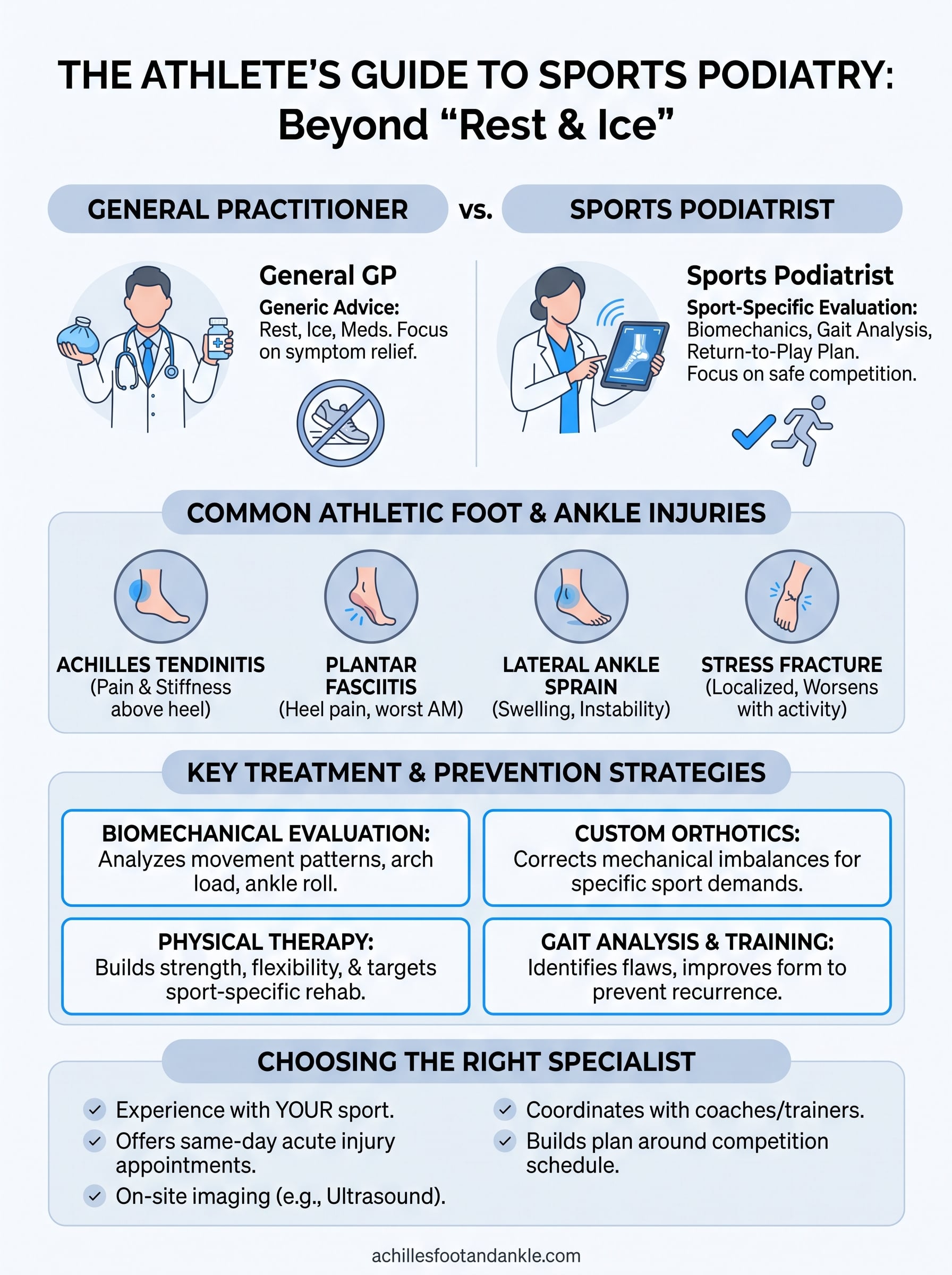
A family doctor or urgent care physician can rule out a fracture, but few have the training to map out a safe return-to-play timeline for a soccer player with a high ankle sprain or a distance runner with posterior tibial tendon dysfunction. Searching for a sports podiatrist near me instead of a generalist gets you someone who understands the difference between resting until pain stops and rehabbing until you can actually cut, sprint, and jump without reinjury, which is exactly what a podiatrist trained in sports medicine treats.
Here’s what separates dedicated athletic foot and ankle care from a standard office visit:
- Gait and video movement analysis, not just a physical exam
- Familiarity with sport-specific demands (cleats, court surfaces, repetitive impact)
- Treatment plans built around competition schedules, not just symptom relief
- Coordination with athletic trainers, coaches, or physical therapists when needed
Our team at Achilles Foot and Ankle Center builds every athletic foot and ankle injury treatment plan around this kind of specificity, because generic advice rarely gets an athlete back to full performance.
Common foot and ankle injuries a sports podiatrist treats
Every sport stresses the foot differently, but a handful of injuries show up again and again in athletic patients. Runners often develop plantar fasciitis or Achilles tendonitis in athletes from repetitive impact, while athletes in cutting sports like basketball and soccer face lateral ankle sprains and turf toe from sudden stops and pivots. Overtraining and worn-out footwear push many of these injuries into chronic territory long before an athlete books an appointment.
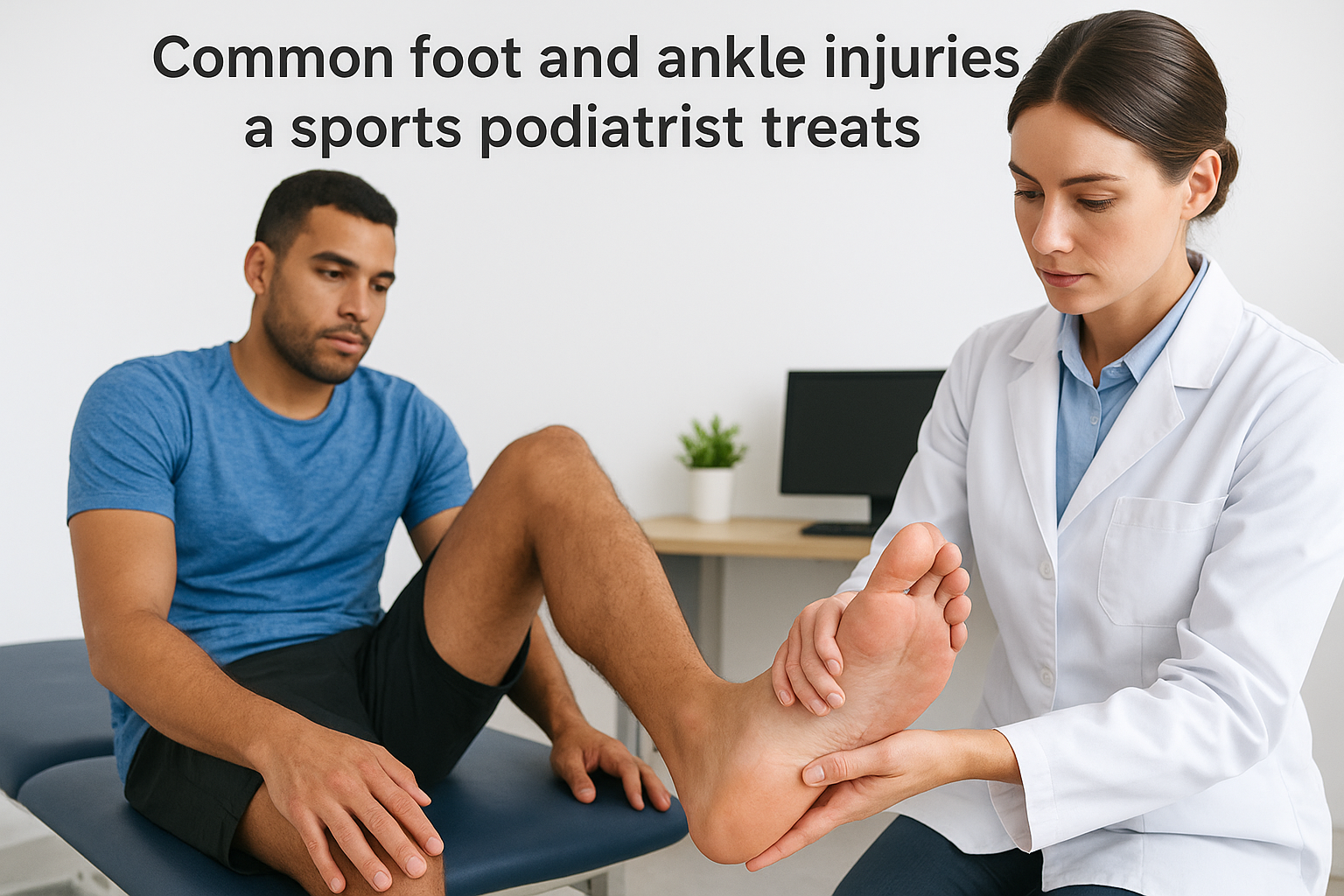
Ignoring a minor ankle sprain today often turns into chronic instability next season.
Stress fractures deserve special mention, since injuries in the metatarsals or navicular bone frequently get mistaken for a bruise and self-treated with rest instead of a real diagnostic workup, so it helps to know the warning signs of a foot stress fracture. Nerve compression issues like tarsal tunnel syndrome also mimic simple soreness, which is why a proper exam matters.
| Injury | Common In | Typical Symptom |
|---|---|---|
| Plantar fasciitis | Runners | Heel pain, worst in the morning |
| Achilles tendinitis | Runners, jumpers | Pain and stiffness above the heel |
| Lateral ankle sprain | Basketball, soccer | Swelling, instability |
| Turf toe | Football, soccer | Big toe pain, limited motion |
| Stress fracture | Distance runners | Localized pain that worsens with activity |
How to choose the right podiatrist for athletes near you
Credentials that actually matter for athletes
Start by checking whether the podiatrist has real experience treating sports injuries, not just general foot care. Board certification in foot and ankle surgery matters, and it helps to understand podiatrist credentials as well as a track record with athletes at your activity level, whether that’s a weekend runner or a competitive high schooler. Ask directly about their sports medicine background and how often they treat injuries specific to your sport.
The right podiatrist for an athlete treats performance, not just pain.
Questions to ask before booking
A quick phone call before your first visit tells you a lot. Look for a practice that offers same-day scheduling for acute injuries, on-site imaging so you’re not waiting days for answers, and a clear plan for coordinating with your trainer or physical therapist.
- Do you treat athletes regularly, and in which sports?
- Can you offer a same-day appointment for acute injuries?
- Is imaging available on-site?
- Will you communicate directly with my coach or trainer?
Asking these upfront saves weeks of frustration later, especially when a season is on the line.
What to expect during your first visit and treatment options
The initial exam
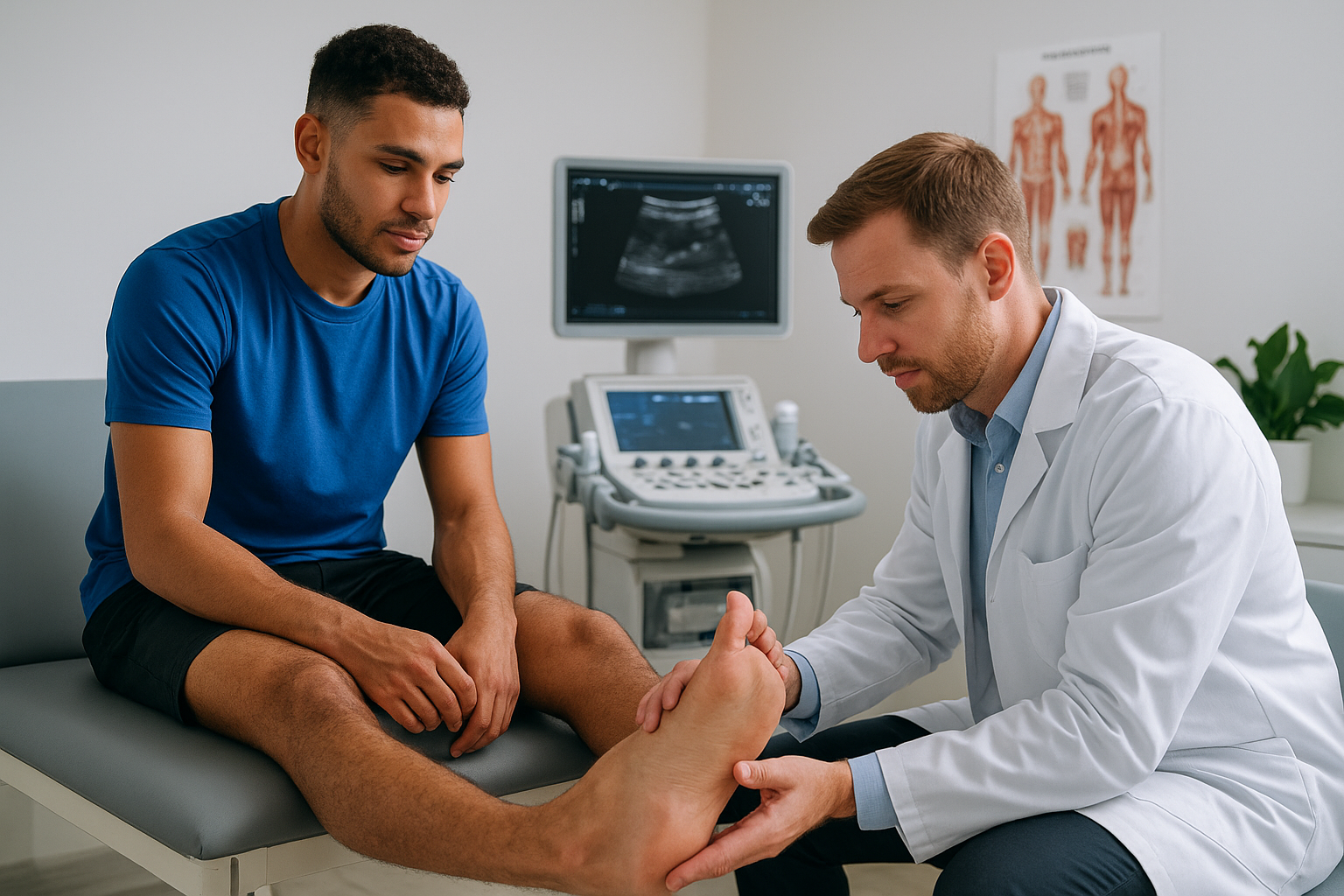
Your first appointment starts with a real conversation about your sport, training volume, and when the pain started, not just a quick look at your foot. Expect a hands-on physical exam paired with on-site digital imaging or ultrasound, since athletic injuries often need more than a visual check to confirm what’s actually torn, inflamed, or fractured. The podiatrist will also ask about your return-to-play timeline, meaning any upcoming meets, games, or tournaments that factor into treatment decisions.
Diagnosis without knowing your competition schedule is only half the picture.
Building your treatment plan
Most athletic injuries start with non-surgical treatment options before surgery ever comes up. Your provider might recommend:
- Custom orthotics to correct mechanical imbalances
- Physical therapy targeting strength and flexibility
- Bracing or taping for short-term stability
- Activity modification while healing continues
- Ultrasound-guided injections for stubborn inflammation
Surgery stays reserved for structural problems that won’t resolve with rehab, like a severe ligament tear or a stress fracture that isn’t healing. Whatever the plan, a good sports podiatrist explains the reasoning behind each step and adjusts it as your sport’s season demands change.
Tips for preventing future foot and ankle injuries
Prevention matters more than treatment once you’ve had one athletic injury, since the same mechanical flaw that caused it usually stays unless you address it directly. A podiatrist for athletes can spot warning signs, like uneven shoe wear or a subtle limp, months before they turn into a stress fracture or torn tendon. Strengthening the muscles that support your arch and ankle, stretching consistently, and replacing worn shoes every 300 to 500 miles all reduce your injury risk significantly.
The athletes who avoid repeat injuries are the ones who treat recovery as part of training, not an interruption to it.
Building injury prevention into your routine
A few habits, done consistently, prevent most of the overuse injuries podiatrists see:
- Warm up dynamically before every practice or race
- Rotate two pairs of shoes to vary impact patterns
- Get a running gait analysis annually, especially after any injury
- Wear custom orthotics if you have a known imbalance
- Cross-train to reduce repetitive impact on the same joints
Skipping these steps rarely causes problems immediately, but the cumulative stress adds up over a season. Regular check-ins with a sports podiatrist catch small issues before they sideline you completely.
Staying active and pain-free for the long run
Foot and ankle pain rarely fixes itself once you’re pushing through training cycles and competition schedules. Getting ahead of it with a podiatrist for athletes near me means catching mechanical issues before they become season-ending injuries, and treating recovery as part of your training instead of a setback. Whether you’re dealing with a nagging Achilles issue, a recurring ankle sprain, or numbness that shows up mid-run, the right specialist looks at how you move, not just where it hurts.
Generic advice to rest and hope for the best doesn’t get athletes back to full performance. A sport-specific treatment plan, built by someone who understands your activity level and your goals, does. If pain is already changing how you train, don’t wait for it to get worse. Schedule a same-day visit with our sports podiatrists and get a real diagnosis before your next practice or race.