

Foot pain has a way of derailing everything, from your morning run to standing at work all day. When you search for the best foot doctors podiatrist near me, you want more than a list of names. You want to know who actually treats your specific problem, how fast you can get seen, and whether they take your insurance. That search usually starts after weeks of ignoring heel pain or a nagging ankle sprain that never quite healed right.
This guide answers that search directly. We break down what separates a highly-rated podiatrist from someone who just handles routine nail trims, covering board certification, surgical experience, and the range of conditions a practice can actually treat, from bunions to diabetic wound care. You’ll also learn what questions to ask before booking, like same-day availability and whether imaging is done in-house.
Below, you’ll find a rundown of what to look for in a Central Virginia foot and ankle practice, including same-day appointment options and locations across Mechanicsville, Richmond, and the West End. Whether you need conservative care or surgical evaluation, this list points you toward trusted, local specialists ready to see you.
1. Achilles Foot and Ankle Center
Achilles Foot and Ankle Center tops this list because it’s the only dedicated Foot and Ankle Ambulatory Surgery Center in Central Virginia. That distinction matters when you’re comparing options: it means you get surgical-grade care without a trip to a hospital, plus a team that handles everything from a stubborn ingrown toenail to complex reconstructive work under one roof.
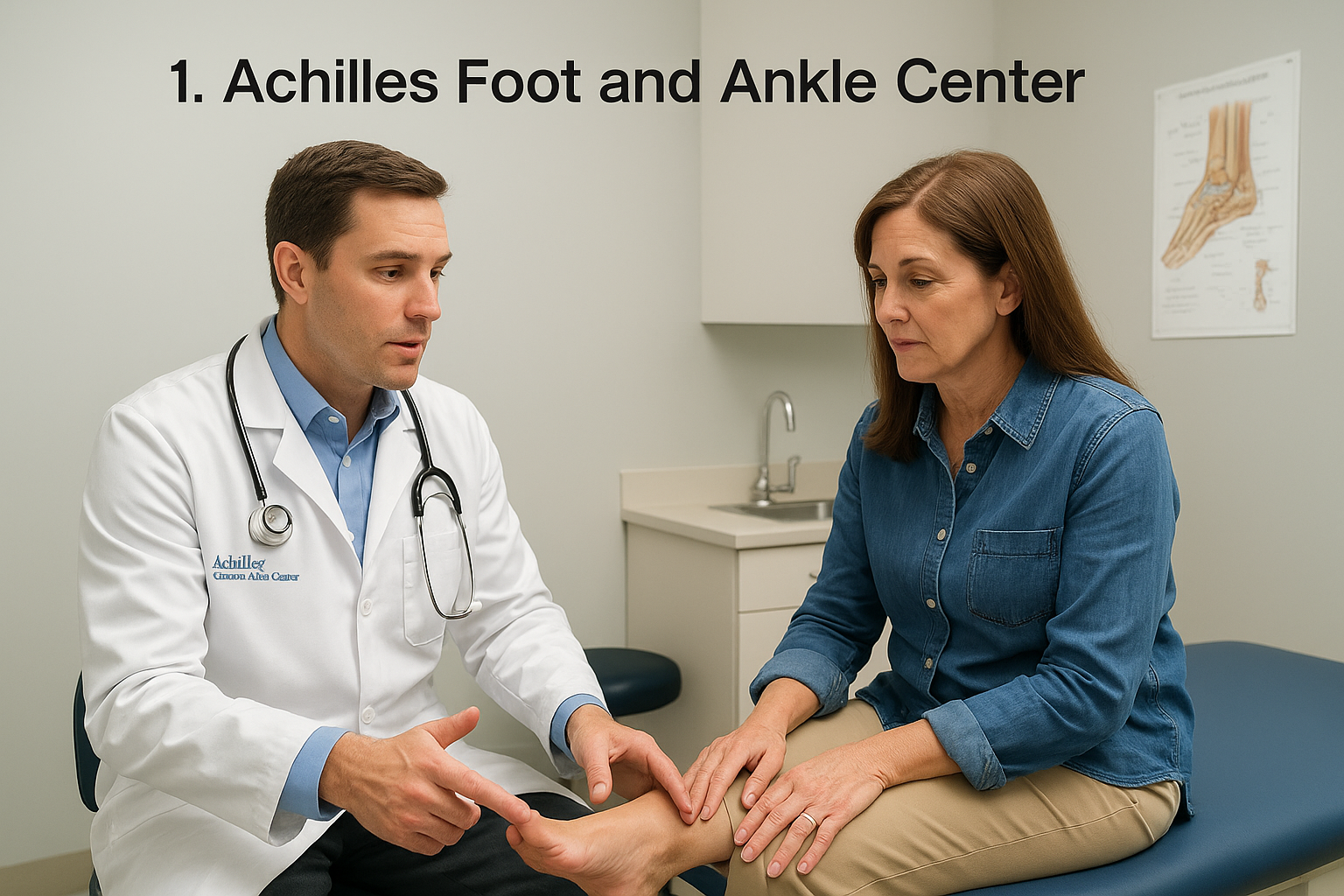
When a single practice covers routine care and surgery without a referral chain, you save weeks of waiting and multiple copays.
What they offer
The practice runs thirteen locations across Central Virginia, including Mechanicsville and the West End, so you’re rarely far from an appointment. Their scope covers sports injury treatment, heel and arch pain, nerve conditions like tarsal tunnel syndrome, toe deformities, and skin and nail issues. They also run dedicated programs for diabetic foot care, including custom diabetic shoes, and an advanced wound care and limb salvage service for patients facing slow-healing wounds. On the surgical side, you’ll find joint replacement, minimally invasive procedures, and reconstructive surgery, backed by digital imaging, ultrasound guidance, and fluoroscopy-guided injections done in-house.
Who it’s best for
This practice suits anyone who wants one provider capable of handling a condition from first diagnosis through recovery, whether that’s conservative treatment or surgery. It’s a strong fit for diabetic patients who need ongoing foot monitoring, athletes recovering from sprains or stress fractures, and older adults managing chronic wounds or arthritis-related pain. If you value concierge-style service without extra fees, and want a team that accepts all major insurance plans including Medicare and Medicaid, this is where to start.
How to book an appointment
Booking is straightforward. You can call your nearest of the thirteen locations directly, or use the Healow Patient Portal online to register and schedule. Same-day appointments are available for urgent issues like a sudden ankle injury or a wound that’s suddenly worsened, so you don’t have to wait days when pain shows up out of nowhere.
2. Hospital-affiliated podiatry departments
Many hospital systems in Central Virginia run their own podiatry departments, staffed by doctors who split time between clinic visits and hospital procedures. These departments handle foot and ankle care alongside a wider network of specialists, which can help if your case overlaps with vascular issues, endocrinology, or orthopedic trauma.
What they offer
Hospital-based podiatry typically includes diagnostic imaging, lab work, and referrals to other departments under one system. You’ll find coordinated specialist care for complex cases, plus access to inpatient surgery if a condition requires hospitalization rather than an outpatient procedure. The tradeoff is often longer wait times and more paperwork, since you’re moving through a larger institution rather than a focused foot and ankle practice.
Bigger systems mean more specialists on call, but rarely faster appointments.
Who it’s best for
This option suits patients whose foot problem is tied to a broader medical issue, like uncontrolled diabetes with vascular complications, or someone already being treated at that hospital for another condition. It’s less ideal if you’re simply searching for a local foot doctor for a sprained ankle or plantar fasciitis and want to be seen quickly.
How to book an appointment
You’ll usually need a referral from your primary care doctor, then schedule through the hospital’s central scheduling line or online portal. Expect the process to take longer than calling a dedicated podiatry practice directly.
3. Independent local podiatry practices
Small, single- or multi-doctor practices scattered throughout Central Virginia round out your options if you want a local foot doctor without the ties of a large hospital system or a big multi-location group. These offices often run lean, with one or two podiatrists handling a smaller patient base directly.
What they offer
Expect general podiatry services here: nail and skin care, orthotics fittings, injections for heel pain, and treatment for common sprains. Some independent offices perform minor in-office procedures, but few maintain surgical suites or advanced imaging on-site, so you may get referred elsewhere for anything beyond routine care.
A smaller practice can mean a familiar face at every visit, but it often means fewer services under one roof.
Who it’s best for
These practices fit patients with straightforward, non-urgent needs, like ongoing toenail issues, mild arch pain, or someone who prefers a highly-rated podiatrist they’ve seen for years over a larger, more clinical setup. If your condition is complex or you need surgery, you’ll likely end up referred to a practice with in-house surgical capability anyway.
How to book an appointment
Booking usually happens by phone, since many independent offices skip online scheduling entirely. Availability can be limited, especially for same-day visits, so call early in the day if your issue feels urgent.
4. Urgent care and walk-in foot clinics
Urgent care centers and walk-in clinics fill the gap when a foot or ankle problem hits outside office hours, or when you can’t wait days for a scheduled visit. These clinics treat general medical issues alongside foot injuries, so the provider you see might not be a podiatrist at all, just a physician trained to stabilize the problem and point you toward specialized follow-up care.
What they offer
Expect basic X-rays, splinting, wound cleaning, and pain management for acute injuries like a rolled ankle or a puncture wound. Most walk-in clinics can’t handle chronic conditions like plantar fasciitis or bunions that need ongoing management, and they rarely offer the surgical evaluation a dedicated foot and ankle center provides.
Urgent care stops the bleeding, literally and figuratively, but it’s rarely the last stop for a real foot problem.
Who it’s best for
This route works for sudden injuries after hours, like a suspected fracture on a Saturday night, when you need someone searching "foot doctor near me" to find fast, immediate attention rather than a full treatment plan.
How to book an appointment
Most locations accept walk-ins with no appointment needed. Some let you check estimated wait times online first, which saves you from sitting in a crowded waiting room longer than necessary.
5. Telehealth podiatry consultations
Video visits with a podiatrist have become a real option for patients who just need guidance, not hands-on treatment. You describe your symptoms, show the affected area on camera, and get a professional opinion on whether you need to come in or can manage the issue at home.
What they offer
Telehealth works well for initial screenings, medication questions, follow-up check-ins after surgery, and reviewing lab or imaging results already on file. A podiatrist can look at a photo of a swollen toe or a slow-healing wound and tell you whether it’s urgent or something to watch. What it can’t do is replace a physical exam for suspected fractures, infections needing debridement, or any condition requiring hands-on manipulation.
A video call can tell you if something’s serious, but it can’t set a bone or drain an infection.
Who it’s best for
This fits patients juggling busy schedules, rural residents far from a local foot doctor, or anyone managing a chronic condition who just needs a quick check-in rather than a full office visit. It’s also useful for a second opinion before committing to surgery.
How to book an appointment
Most practices now offer virtual scheduling through their patient portal, with visits booked days sooner than in-person slots. Confirm your insurance covers telehealth podiatry before the visit, since coverage still varies by plan and provider.
6. Diabetic foot care and wound care specialists
Diabetes changes how your feet heal, and a small blister can turn into a serious wound within days if nobody catches it early. Specialists who focus on diabetic foot care and wound care track circulation, nerve function, and skin integrity in a way general practices often can’t, because that’s the entire focus of their work.

A wound that won’t heal on its own needs a specialist watching it, not just a bandage and hope.
What they offer
These specialists offer neurological testing, vascular screening, custom diabetic shoes, and offloading devices that take pressure off active wounds. Many run limb salvage programs designed to avoid amputation, using debridement, advanced dressings, and sometimes hyperbaric oxygen therapy for wounds that stall out. Regular nail and callus care also falls under this umbrella, since minor skin breaks are often where trouble starts for a diabetic patient.
Who it’s best for
This fits anyone with diagnosed diabetes, especially those with existing neuropathy, poor circulation, or a history of ulcers. If you’ve noticed numbness, discoloration, or a sore that hasn’t closed in over two weeks, this is the searching for a foot doctor near me scenario where waiting costs you the most.
How to book an appointment
Call directly and mention the wound or diabetic diagnosis when scheduling, since most practices prioritize these cases for faster evaluation. Bring your current blood sugar logs and any prior imaging to your first visit.
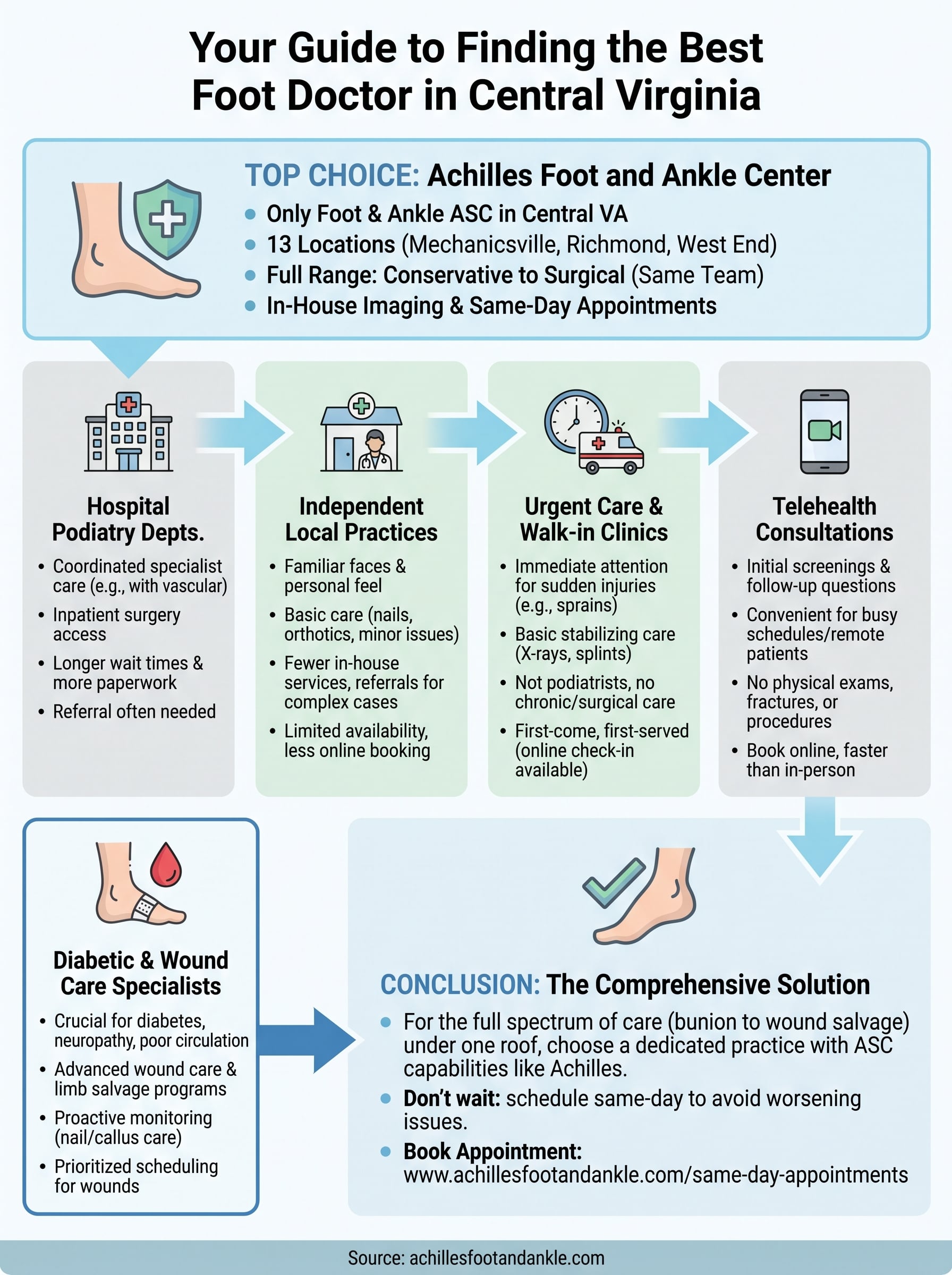
Choosing the right foot doctor for you
Your choice comes down to what your foot actually needs right now. A rolled ankle at midnight sends you to urgent care. A diabetic wound that won’t close needs a wound care specialist, not a general practice. But for most people searching best foot doctors podiatrist near me, the answer is a practice that covers the full range, conservative treatment, imaging, and surgery, without bouncing you between referrals and waiting rooms.
That’s the gap Achilles Foot and Ankle Center fills. Thirteen locations across Central Virginia, in-house imaging, and a surgery center mean you get diagnosed and treated by the same team, whether that’s a stubborn bunion or a wound that needs limb salvage care. You won’t find that combination at a walk-in clinic or a small independent office.
Don’t let heel pain or a lingering sprain turn into something worse. Schedule a same-day appointment with a Central Virginia podiatrist and get answers from a specialist who can treat you today.