Swollen feet make every morning harder. Laces that won’t stretch, seams that dig into sensitive skin, and shoes that fit fine at 9am but feel like a vice by 3pm. If you’re managing diabetes, that daily struggle isn’t just uncomfortable, it’s a real risk for blisters, pressure sores, and infections that are slow to heal, which is why preventing diabetic foot problems starts with what you put on your feet. Diabetic velcro shoes solve this by giving you adjustable width throughout the day, without sacrificing the support your feet need.
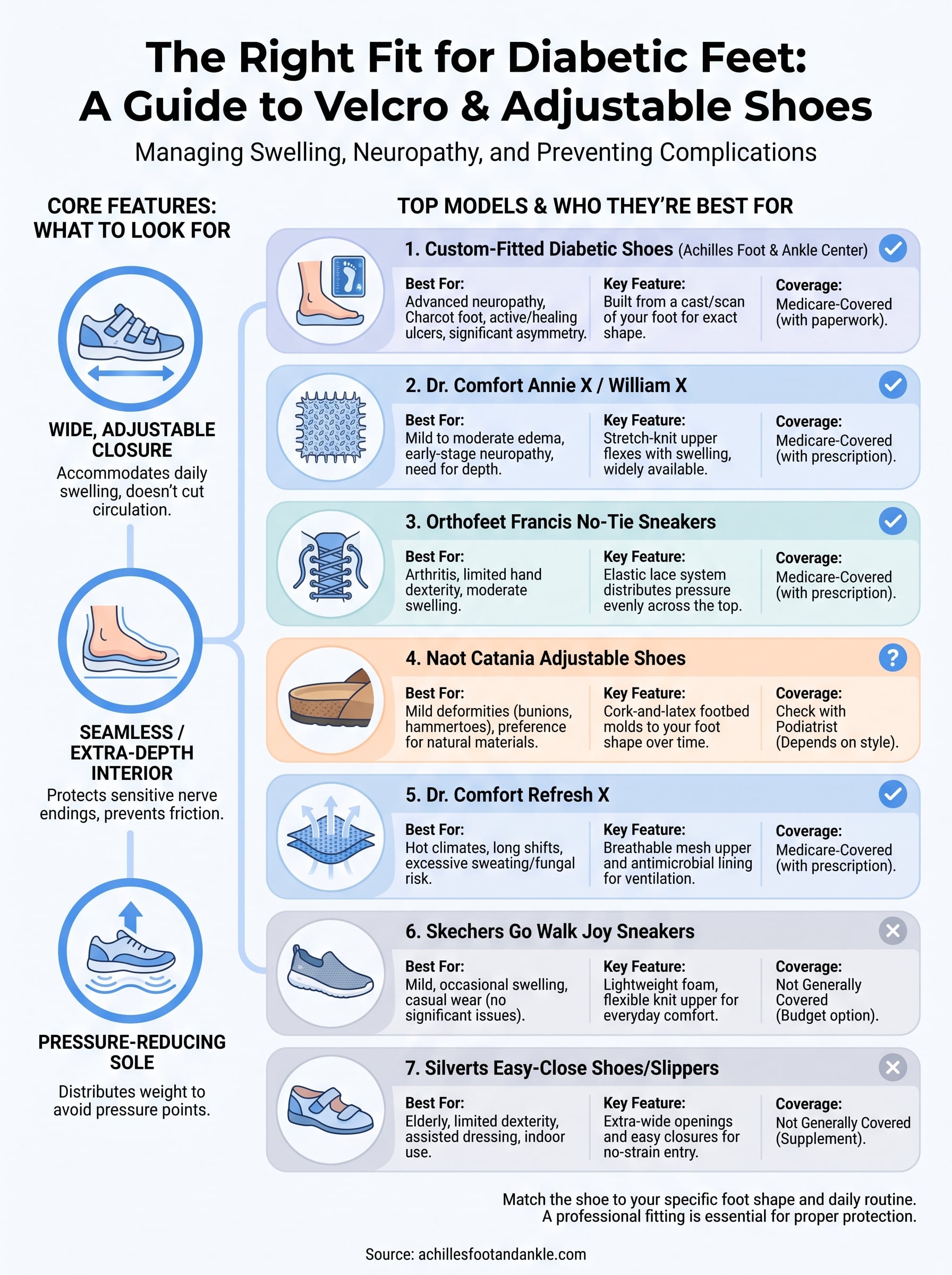
The right pair should check a few specific boxes: a wide, adjustable closure that accommodates swelling without cutting off circulation, a seamless or extra-depth interior that won’t rub sensitive nerve endings, and a sole built to reduce pressure points. Not every "diabetic-friendly" shoe on the market actually delivers on all three.
We’ve narrowed the field down to seven models that consistently perform well for patients dealing with edema, neuropathy, or general foot sensitivity. Each one is broken down by fit, materials, and who it works best for, so you can match a shoe to your specific foot shape and daily routine. If you’re still unsure after reading, our podiatrists at Achilles Foot and Ankle Center can fit you for Medicare-covered therapeutic shoes under your insurance plan.
1. Custom-fitted diabetic shoes from Achilles Foot and Ankle Center
When off-the-shelf options fail to accommodate serious swelling or foot deformities, a custom-molded fit becomes the only real solution. Through its diabetic shoes and inserts program, Achilles Foot and Ankle Center builds diabetic shoes around a cast or 3D scan of your actual foot, not a generic last, so the shoe follows your foot’s shape instead of forcing your foot into the shoe’s shape. This approach matters most for patients with Charcot foot, bunions, hammertoes, or uneven swelling between feet, situations where standard diabetic velcro shoes simply can’t flex enough to work safely.
Key features
Every pair starts with a podiatrist evaluation, so the shoe addresses your specific pressure points rather than a generic risk profile. Features typically include:
- Extra-depth toe boxes to clear hammertoes and bunions without rubbing
- Seamless, moisture-wicking linings to reduce friction on fragile skin
- Wide, multi-strap velcro closures that adjust independently across the foot
- Removable, pressure-distributing insoles that pair with custom orthotics
- Firm heel counters and rocker soles to reduce strain during walking
A shoe fitted to your foot’s exact shape prevents pressure sores that a generic diabetic shoe can’t.
Who it’s best for
Patients with advanced neuropathy, active or healing foot ulcers, Charcot deformity, or significant asymmetry between their two feet get the most benefit here. If you’ve already tried drugstore diabetic shoes and still develop redness, blisters, or sores, that’s usually a sign your feet need a custom fit rather than another generic pair. This option also suits patients recovering from foot or ankle surgery who need a controlled, protective fit during the healing period.
Fit and sizing
Fitting starts with an in-office exam where a podiatrist checks circulation, sensation, and foot structure before taking measurements. Because the shoe is built around your foot rather than sized off a chart, adjustments happen throughout the process rather than after the fact. Most patients need one or two follow-up visits to fine-tune strap tension and insole thickness once they’ve worn the shoes for a few days.
Price and insurance coverage
Custom diabetic shoes cost more upfront than retail options, but under Medicare’s foot care coverage rules the Therapeutic Shoe Bill covers one pair of diabetic shoes and up to three pairs of custom inserts per year for qualifying patients with diabetes and documented foot complications. Achilles Foot and Ankle Center works directly with Medicare and most major insurance plans to handle the paperwork and verify your benefits before you commit. You can schedule a fitting for diabetic shoes directly through their diabetic foot care services in Richmond to find out what your plan covers.
2. Dr. Comfort Annie X and William X diabetic shoes
Dr. Comfort built the Annie X and William X lines specifically for feet that swell throughout the day, using a stretchable knit upper instead of rigid leather panels. These are widely available diabetic velcro shoes, sold through medical supply stores and podiatry offices across the country, and they’ve become a go-to recommendation for patients who need something off-the-shelf but still protective.
Key features
Both models share a construction built around comfort and adjustability rather than style compromises:
- Stretch-knit uppers that flex with swelling instead of resisting it
- Wide, single-strap velcro closure across the forefoot
- Seam-free interior lining to protect thin or fragile skin
- Removable diabetic insoles compatible with custom orthotics
- Lightweight, cushioned outsole for reduced impact
A stretchable upper adapts to your foot’s swelling instead of fighting it all day.
Who it’s best for
People with mild to moderate edema who don’t need a fully custom shoe but still require depth and a forgiving fit will do well here, especially when paired with compression socks for ankle swelling. Runners of the Annie X and William X models also appeal to patients with early-stage neuropathy who want a soft, seamless interior without the wait time of a custom order. If your swelling is severe or your foot shape is significantly asymmetrical, a custom-molded option is still the safer choice.
Fit and sizing
Sizing runs true but generous in width, available in medium, wide, and extra-wide options for both men’s lasts and women’s diabetic velcro shoes. The knit upper stretches roughly half a size beyond its labeled width, which gives some cushion for late-day swelling without needing to size up. Most patients find their standard shoe size works, though anyone between widths should size up rather than down.
Price and insurance coverage
Retail pricing typically falls between $130 and $160 per pair before insurance. Because these qualify as Medicare-covered diabetic shoes, patients with documented diabetes and foot complications often pay little to nothing out of pocket when a podiatrist handles the fitting and paperwork.
3. Orthofeet Francis no-tie sneakers
Orthofeet designed the Francis sneaker around elastic laces instead of traditional velcro straps, but it solves the same problem: a fit that adjusts without pinching swollen or sensitive feet. Instead of tightening across one strap, the elastic lace system distributes pressure evenly across the entire top of the foot, which many patients with neuropathy find more comfortable than a single velcro band pressing down in one spot.
Key features
The Francis pairs its no-tie closure with a cushioning system built specifically for diabetic feet:
- Elastic, stretchable lacing that expands with swelling throughout the day
- Anatomical arch support built into a cushioned, multi-layer footbed
- Extra-depth design that accommodates orthotics or thicker diabetic socks
- Padded, seam-free interior collar to reduce rubbing at the ankle
- Lightweight sole with shock-absorbing foam for reduced joint impact
An elastic closure spreads pressure across your whole foot instead of concentrating it under one strap.
Who it’s best for
Patients who struggle with the fine motor coordination needed for velcro straps, including those with arthritis or limited hand strength, often prefer this slip-on style. It also suits people with moderate swelling who want a shoe they can put on quickly without fussing with adjustments each morning. If you need precise, independent tightening across different parts of your foot, a multi-strap velcro shoe still gives you more control than this design.
Fit and sizing
Orthofeet offers the Francis in medium, wide, and extra-wide widths, with half sizes available for a more exact fit. The elastic lacing stretches enough to absorb typical daily swelling, so most patients don’t need to size up beyond their usual shoe size. Anyone with significant width differences between feet should still get measured before ordering.
Price and insurance coverage
Retail price runs around $130 to $150 per pair. These sneakers qualify under Medicare’s diabetic shoe benefit when prescribed by a podiatrist, meaning eligible patients typically pay little out of pocket.
4. Naot Catania adjustable shoes
Naot built the Catania around a two-strap velcro system paired with a cork-and-latex footbed that molds to your foot over time, a feature more common in orthopedic sandals than closed shoes. This makes it one of the more distinctive diabetic velcro shoes on the market, since the footbed actually breaks in and reshapes itself around bunions, hammertoes, or other pressure points instead of staying rigid.
Key features
The Catania leans on natural materials and a forgiving footbed rather than heavy synthetic cushioning:
- Dual adjustable velcro straps across the instep for independent tightening
- Cork and latex footbed that molds to foot shape with wear
- Soft leather or nubuck upper that flexes without cracking
- Removable footbed compatible with custom orthotic devices made from a mold of your foot
- Shock-absorbing rubber outsole with reinforced arch support
A footbed that molds to your foot over time fits better every week you wear it, not just on day one.
Who it’s best for
People with mild deformities like bunions or mild hammertoes, who want a shoe that adapts gradually rather than one that’s rigidly extra-depth from the start, tend to do best in the Catania, though it’s worth comparing it against dedicated shoes for bunions. It also suits patients who prefer natural materials over synthetic mesh and don’t mind a slightly firmer initial fit while the footbed breaks in. Those with active ulcers or severe swelling should look toward a custom-molded shoe instead, since the Catania’s adjustment happens over weeks, not instantly.
Fit and sizing
Naot runs true to size for most feet, with a medium width as standard and limited wide options depending on the style year. Sizing up half a size helps patients with moderate swelling or thicker diabetic socks avoid a tight fit before the footbed molds. Expect a short break-in period of one to two weeks before the shoe feels fully comfortable.
Price and insurance coverage
Retail pricing runs from $170 to $200 per pair, higher than most diabetic shoe brands due to the leather construction. Coverage under Medicare’s therapeutic shoe benefit depends on whether the specific style is coded as diabetic footwear, so confirm eligibility with your podiatrist before ordering.
5. Dr. Comfort Refresh X diabetic shoes
Dr. Comfort’s Refresh X targets a specific problem: feet that swell and sweat by mid-afternoon, especially in warmer climates or during long shifts on your feet. A breathable mesh upper paired with a moisture-wicking lining sets it apart from leather-based diabetic velcro shoes, giving swollen feet room to expand without trapping heat against sensitive skin.
Key features
The Refresh X focuses on airflow and adjustability working together rather than one at the expense of the other:
- Breathable mesh upper that ventilates while still supporting the foot
- Wide, adjustable velcro strap across the instep for independent tightening
- Antimicrobial, moisture-wicking lining to reduce fungal and skin risk
- Extra-depth toe box that accommodates orthotics or diabetic socks
- Cushioned, shock-absorbing outsole to ease pressure on the forefoot
Ventilated materials keep swollen feet cooler and drier, cutting down on the skin breakdown that heat and moisture cause.
Who it’s best for
Patients who notice their feet swell more in heat, humidity, or after standing for long stretches tend to benefit most from this design. It also suits people prone to fungal infections or excessive sweating, since the antimicrobial lining addresses a risk that solid leather shoes don’t manage as well. If you need a rigid, structured shoe for a serious deformity, though, this lighter build isn’t the right fit.
Fit and sizing
Sizing runs consistent with standard Dr. Comfort lasts, available in medium, wide, and extra-wide widths for both men and women. Mesh construction stretches slightly with wear, so most patients keep their usual size rather than sizing up. Anyone with pronounced swelling by evening should still try shoes on later in the day for the most accurate fit.
Price and insurance coverage
Retail pricing lands between $130 and $155 per pair. These shoes qualify under Medicare’s diabetic shoe benefit, so eligible patients with a podiatrist’s prescription often pay minimal out-of-pocket costs.
6. Skechers Go Walk Joy sneakers
Skechers built the Go Walk Joy as an everyday walking shoe, not a certified diabetic shoe, but its stretch-knit upper and velcro strap options make it a popular budget pick for patients who need adjustable width without a medical price tag. This model works well as a backup or transitional pair, something to wear on lighter days when a full diabetic shoe feels like overkill.
Key features
Go Walk Joy relies on lightweight foam and a flexible upper rather than the reinforced structure found in medical-grade diabetic velcro shoes:
- Stretch-knit upper that flexes with mild swelling
- Adjustable velcro strap on select styles for a custom fit
- Air-cooled memory foam insole for cushioning
- Lightweight, flexible outsole for everyday walking
A comfortable everyday sneaker isn’t the same as a medical diabetic shoe, and knowing why diabetic shoes matter for foot health makes that difference clear.
Who it’s best for
These sneakers suit patients with mild, occasional swelling and no active skin breakdown, ulcers, or significant deformity. Casual wearers who want a comfortable, adjustable shoe for errands or short walks find the Go Walk Joy fits the bill without needing a prescription. Anyone with neuropathy, healing wounds, or moderate to severe edema should stick with a certified diabetic shoe instead, since this model lacks the extra depth and seamless lining those conditions require.
Fit and sizing
Sizing runs true to standard Skechers lasts, with wide widths available in most styles but no extra-wide option. The knit upper stretches modestly, so patients with noticeable swelling by afternoon should try them on later in the day. Half sizes are limited, so sizing up is usually the safer call if you’re between sizes.
Price and insurance coverage
Retail pricing sits low, typically $50 to $65 per pair, but these sneakers aren’t coded as diabetic footwear and generally don’t qualify under Medicare’s therapeutic shoe benefit. Treat this option as an affordable extra pair, not a replacement for insurance-covered diabetic shoes.
7. Silverts easy-close adjustable shoes and slippers
Silverts built its adjustable shoes and slippers around one goal: getting a shoe on and off without bending, straining, or fighting a stiff closure. That focus makes this brand a common choice for patients with limited dexterity, arthritis in the hands, or caregivers who help someone dress each morning. Unlike most diabetic velcro shoes on this list, several Silverts styles come as slippers rather than outdoor sneakers, which suits patients who spend most of their day at home or in assisted living.
Key features
Silverts prioritizes ease of entry and gentle materials over athletic performance:
- Extra-wide velcro openings that fold back completely for easy entry
- Soft, stretchable fabric uppers that flex around swelling and bunions
- Non-skid, lightweight soles suited for indoor and light outdoor wear
- Seamless interior construction to protect fragile or thin skin
- Adjustable closures usable one-handed, without needing to bend over
A shoe that’s easy to put on matters just as much as one that fits well once it’s on.
Who it’s best for
These shoes suit elderly patients, anyone with arthritis or reduced hand strength, and people recovering from surgery who can’t bend to adjust laces or narrow straps, and they sit alongside other podiatrist-approved shoes for seniors. They also work well for caregivers managing footwear for a family member with dementia or limited mobility, since the wide opening makes assisted dressing faster and safer. If you need a durable outdoor walking shoe for daily errands, though, look toward the Dr. Comfort or Orthofeet options instead.
Fit and sizing
Silverts runs generously wide by design, with most styles available in medium, wide, and extra-wide options. The stretch fabric accommodates significant swelling without needing to size up, though patients with narrow feet may find the fit loose. Slipper styles typically run true to standard shoe size.
Price and insurance coverage
Retail pricing ranges from $35 to $70 per pair, depending on the style. Most Silverts products aren’t coded as diabetic footwear, so they generally fall outside Medicare’s therapeutic shoe benefit and work best as a comfortable, affordable supplement to insurance-covered diabetic shoes.
Finding the right pair for your feet
No single shoe on this list works for every foot, and that’s the point. Diabetic velcro shoes range from budget sneakers for mild swelling to fully custom builds for Charcot foot and active ulcers, so match the shoe to what your feet actually deal with day to day, not what’s cheapest or most convenient. If you’re not sure where you land, that uncertainty is exactly why a podiatrist fitting matters more than guessing off a product page.
Redness, blisters, or sores after wearing any shoe on this list mean it’s the wrong fit, full stop, and it’s time for a professional exam rather than a different retail pair. Swollen or sensitive feet deserve a real evaluation of your circulation, sensation, and foot shape before you commit to a shoe you’ll wear daily. Skip the trial and error and see a podiatrist today for a diabetic shoe fitting so you walk out in shoes that actually protect your feet.