

That thick, hardened patch on your heel or the ball of your foot isn’t just annoying. It can crack, catch on socks, and eventually hurt more than the shoes that caused it. Once a callus gets past the point where a pumice stone helps, most people start searching for a callus removal foot doctor instead of grabbing another drugstore pad that barely scratches the surface.
Here’s the short answer: a podiatrist visit for callus removal is quick, low-pain, and usually costs far less than people expect, especially when insurance covers it as a medical issue rather than cosmetic care. A doctor uses a sterile scalpel to shave down dead, compacted skin in minutes, then checks for the underlying cause, whether that’s foot mechanics, footwear, or a bone deformity, so the callus doesn’t just come right back.
Below, we’ll walk through what actually happens during a professional callus removal treatment, realistic pricing with and without insurance, how much discomfort to expect, and the warning signs that mean you shouldn’t wait to get it looked at, especially if you have diabetes or poor circulation.
Why you should let a foot doctor handle callus removal
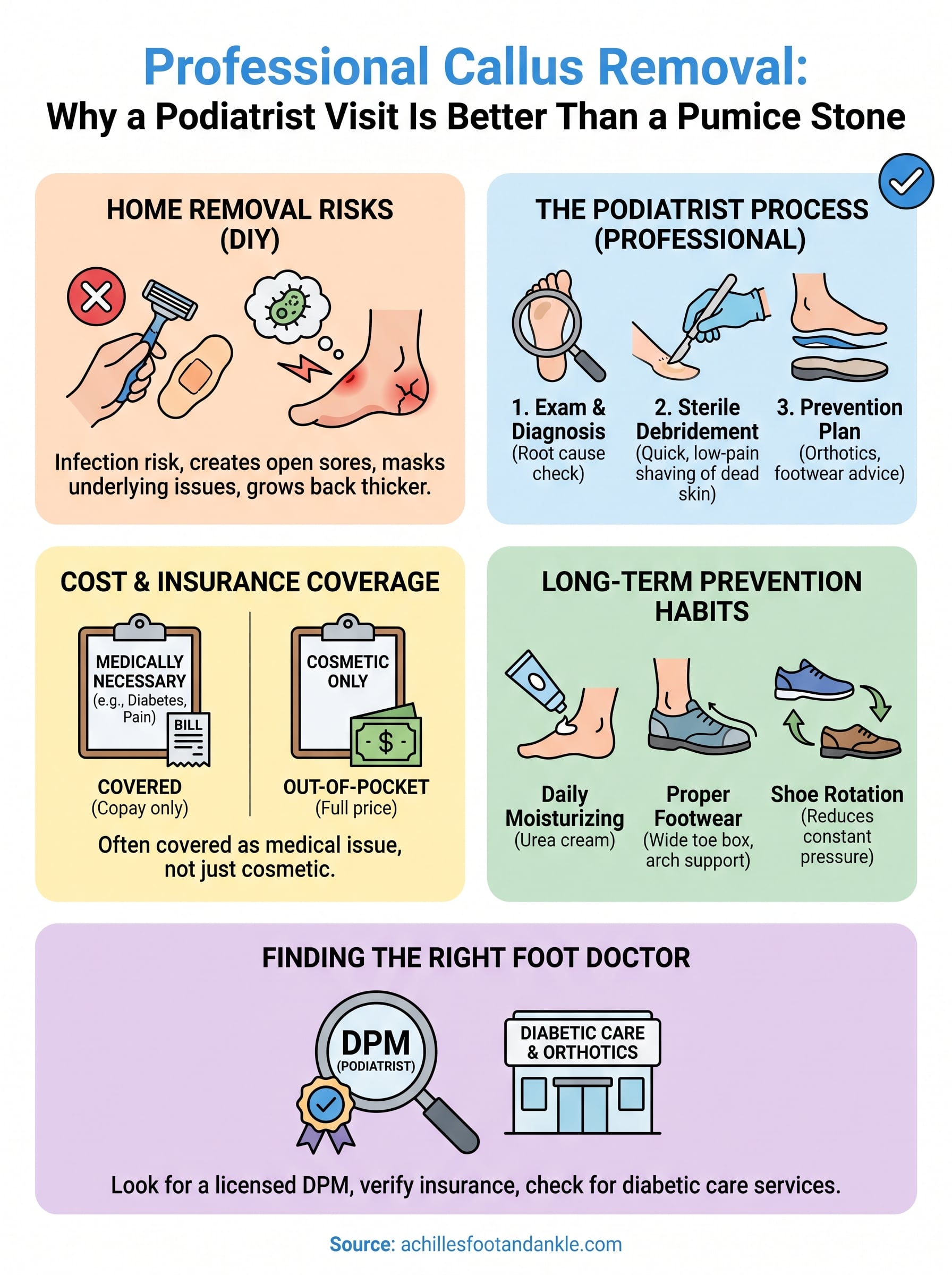
Grabbing a razor blade, a pair of nail scissors, or a medicated corn pad from the pharmacy feels like the fastest fix, but trying to remove a callus at home is where a lot of foot problems start, not end. A callus forms because your body is protecting itself from repeated pressure or friction, and if you shave it down without addressing that pressure, it grows back thicker within weeks. Cutting too deep introduces infection risk, especially if the tools aren’t sterile, and that risk climbs sharply if you have diabetes, poor circulation, or numbness in your feet.
The hidden risks of DIY callus removal
Over-the-counter acid pads and blades don’t know where healthy skin ends and dead skin begins. A slip can turn a thick patch of skin into an open wound, and wounds on the foot heal slower than almost anywhere else on the body because of reduced blood flow and constant pressure from walking. Common problems people run into with home treatment include:
- Cutting too deep and creating an open sore
- Using the same blade on multiple spots and spreading bacteria
- Masking pain from an underlying bone spur or bunion instead of treating it
- Triggering an infection that goes unnoticed until it’s already serious
When a callus is more than skin deep
Sometimes a callus is a symptom, not just a nuisance. Persistent thickened skin in the same spot, especially under the ball of the foot, often points to a bone deformity, an uneven gait, or footwear that’s putting pressure in the wrong place. Diabetics face an added layer of danger, since nerve damage can hide pain signals that would normally warn you something’s wrong, and reduced circulation slows healing if skin does break down. That’s exactly why our foot care program for people with diabetes exists separately from routine callus treatment.
A callus that keeps coming back isn’t a skin problem, it’s a signal your foot is asking for a mechanical fix.
What a podiatrist can do that a pumice stone can’t
A trained foot doctor doesn’t just remove the callus, they figure out why it’s there. Using sterile instruments and a trained eye, they can spot the difference between a simple pressure callus and something like a plantar wart or early ulcer that needs different treatment entirely. That diagnostic step is the real value of professional care, and it’s the reason a five-minute office visit beats months of temporary fixes at home.
What happens during a podiatrist callus removal visit
Walking into a podiatrist office visit for a callus feels a lot less clinical than most people expect. You’ll usually be in and out within thirty minutes, and the actual removal takes only a few minutes of that time. First, the doctor examines the callus and asks about your shoes, activity level, and any pain patterns, since that history often points straight to the cause.
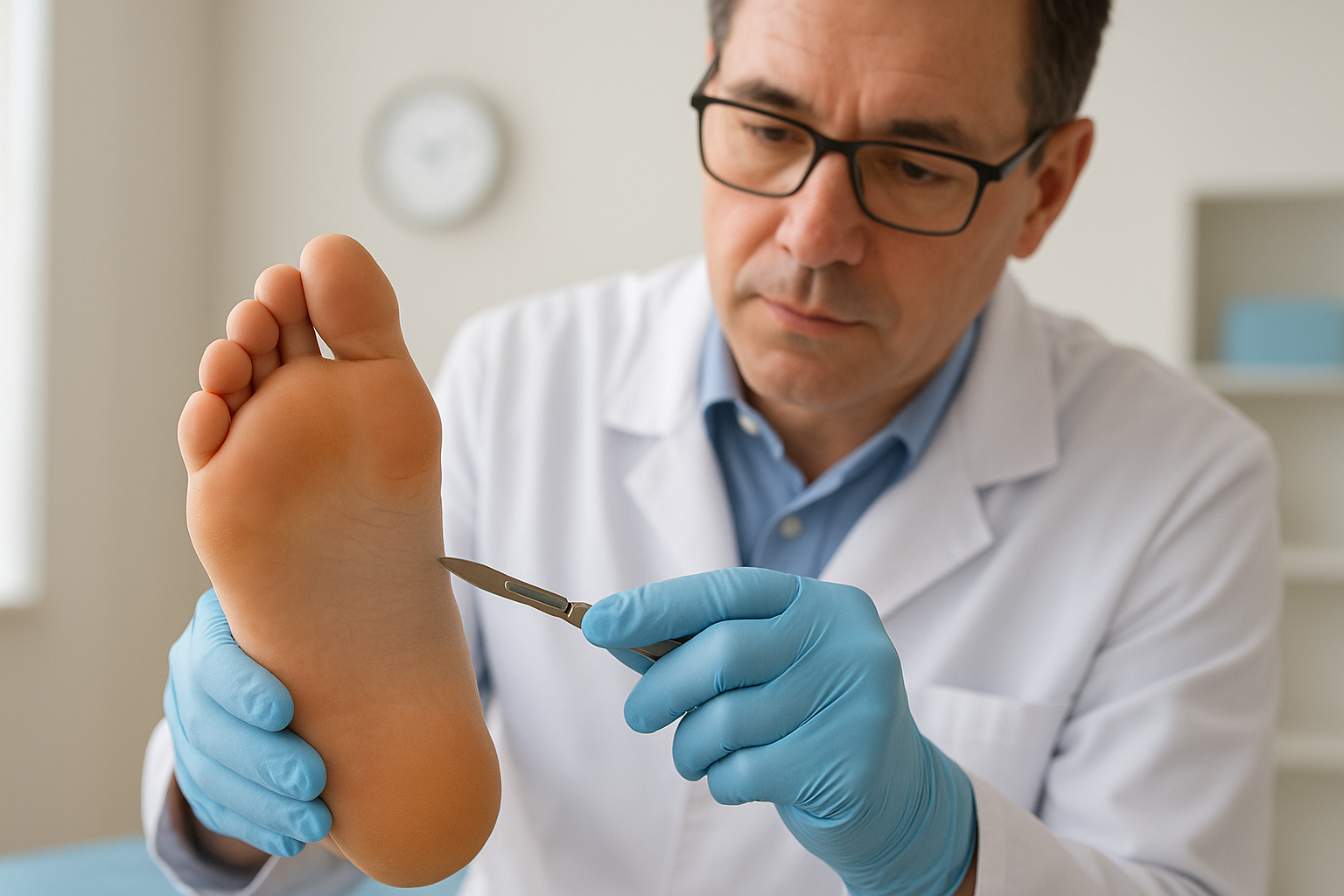
The exam and diagnosis
Before any tool touches your skin, the podiatrist checks the callus location, thickness, and shape. A callus centered under a metatarsal head suggests one mechanical issue, while one on the side of the big toe suggests another. Sometimes they’ll press gently to check for a hidden wart underneath, since warts and calluses look similar but need completely different treatment.
The debridement process
Once the diagnosis is clear, the doctor uses a sterile scalpel to shave the built-up dead skin down in thin, controlled layers. This step is called debridement, and it’s precise enough that healthy skin stays untouched.
Most patients say the shaving itself feels like pressure, not pain, since dead skin has no nerve endings.
After debridement, many practices finish with a quick pass of a rotary tool to smooth the edges.
Follow-up recommendations
Finally, the visit isn’t complete without a plan to stop the callus from returning. That plan might include:
- Custom orthotics to redistribute pressure
- Padding or offloading pads for high-friction spots
- A referral for shoe fitting advice
- A short course of physical therapy if gait is the culprit
Going home with a plan, not just smoother skin, is what separates a real fix from a temporary one.
How much callus removal costs and what insurance covers
Pricing for a callus removal foot doctor visit varies more than people expect, mostly because insurance treats it differently depending on why you’re there. If a callus is flagged as a medical issue tied to diabetes, a bone deformity, or pain that affects walking, most insurance plans, including Medicare, cover the visit and the procedure as part of routine podiatric care, and it helps to know how the foot care coverage rules and frequency limits work. If you’re removing a callus purely for cosmetic reasons with no medical complaint attached, expect to pay out of pocket.
Generally, a straightforward in-office debridement runs somewhere between $75 and $150 when you’re paying cash for a podiatry visit, though prices shift based on your region and whether imaging or additional treatment is needed. With insurance, most patients pay just a standard copay, often $20 to $50, once the deductible is met.
| Scenario | Typical Cost |
|---|---|
| Cash pay, no insurance | $75 to $150 |
| Insured, medical necessity documented | Copay only ($20 to $50) |
| Medicare with qualifying condition | Often fully covered |
| Cosmetic removal, no medical need | Full cash price |
Medicare specifically covers callus removal when it’s tied to a systemic condition like diabetes, and coverage details are outlined on Medicare.gov. Documentation matters here, so mention any pain, numbness, or difficulty walking during your visit rather than downplaying it.
The word you use at check-in, medical versus cosmetic, often decides what you owe.
Searching callus removal near me and calling ahead to confirm what your specific plan covers saves you from a surprise bill. Most practices, including ours, will verify insurance before your appointment so there are no guessing games once you’re in the chair.
How to find the right foot doctor for callus removal
Typing callus removal near me into a search bar gets you a list, but not every name on that list is the right fit, so it pays to see which foot doctors rank highest nearby. You want a podiatrist, not a general practitioner or a nail salon offering "medical pedicures," since only a podiatrist is trained to spot the difference between a harmless callus and a warning sign of something deeper. Credentials matter here more than convenience.
What to check before booking
Before you commit to an appointment, run through a short checklist so you’re not walking into an unfamiliar office blind:
- Confirm the provider is a licensed podiatrist, and understand what a DPM degree actually means, not just a general foot care clinic
- Ask if they accept your specific insurance plan and verify coverage ahead of time
- Look for same-day or urgent appointment slots if your callus is painful or cracked
- Check whether they offer diabetic foot care if that applies to you
- Read recent patient reviews focused on comfort and communication during procedures
Why location and access still matter
A foot doctor near me search should also weigh practical things like parking, wait times, and whether the office is close enough for a quick follow-up if needed. Central Virginia residents have an advantage here, since Achilles Foot and Ankle Center runs thirteen locations across the region, including Mechanicsville and the West End, so you’re rarely far from same-day care.
The right foot doctor isn’t just nearby, they’re equipped to treat the cause, not just the callus.
Once you’ve narrowed it down, scheduling a visit takes just a few minutes online, and most offices will confirm your coverage before you even walk in.
How to keep calluses from coming back after treatment
Getting a callus shaved down feels great, but that relief fades fast if you go back to the same shoes and the same walking pattern that caused it. Keeping corns and calluses from forming again is the part most people skip, and it’s the reason so many patients end up back in the chair every few months for another round of callus removal. A callus is your skin’s response to repeated friction, so unless you change the pressure, the skin keeps rebuilding the same defense.
Fixing the root cause
Since footwear is behind most calluses, start there before anything else. Orthotics made for your own foot shape redistribute weight away from the spot that’s taking the brunt of every step, and they’re often the single most effective long-term fix a podiatrist can offer. Picking shoes with a wider toe box, better arch support, or a slightly higher heel-to-toe drop can also take pressure off problem areas without any device at all.
Treating the callus without fixing the pressure is like mopping a floor while the faucet keeps running.
Daily habits that make a real difference
Between office visits, small habits keep thickened skin from creeping back:
- Moisturize daily with a urea-based cream to keep skin pliable
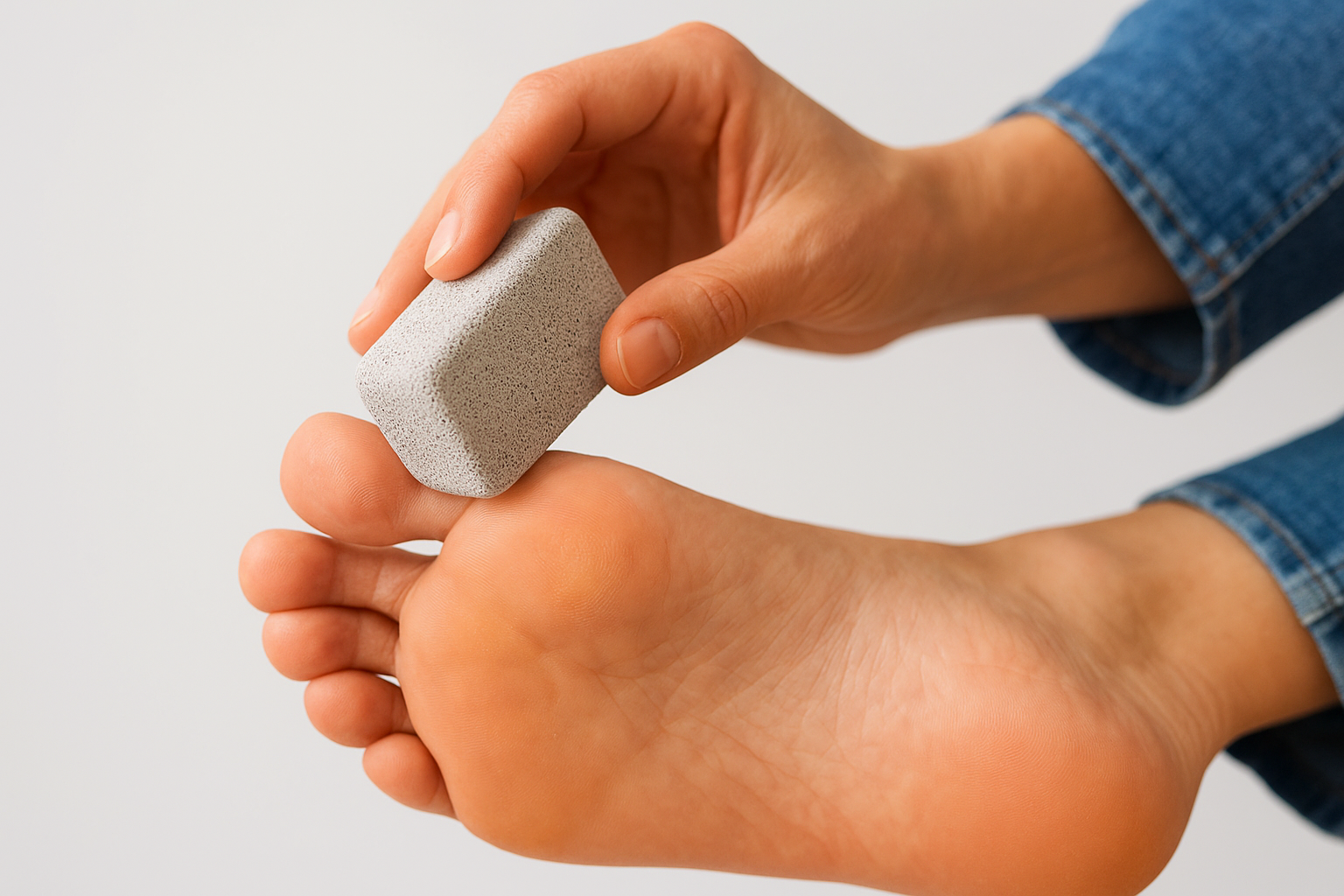
- Use a pumice stone gently, only on already-softened skin, never on cracked or broken skin
- Rotate shoes so the same pressure points don’t take a beating every single day
- Check feet weekly if you have diabetes or reduced sensation
Consistency matters more than intensity here. Skipping the pumice stone for two weeks undoes most of the progress a podiatrist visit gave you, so treat these habits as maintenance, not an optional extra.
Giving your feet the care they need
A thick callus is your body’s way of flagging a pressure problem, not just a cosmetic one. Shaving it down at home might buy you a few days of smooth skin, but without fixing the mechanics behind it, that patch comes right back thicker than before. A callus removal foot doctor gives you both, the quick relief of a clean debridement and a real plan, whether that’s orthotics, better shoes, or diabetic foot care, so you’re not stuck redoing this every month.
If you’ve been putting off treatment because it seems like a hassle, remember it’s usually a thirty-minute visit and a low copay, not a big production. Don’t wait for a crack or an infection to force the issue. Reserve a same-day visit with our Central Virginia podiatrists and get that callus handled properly, for good this time.