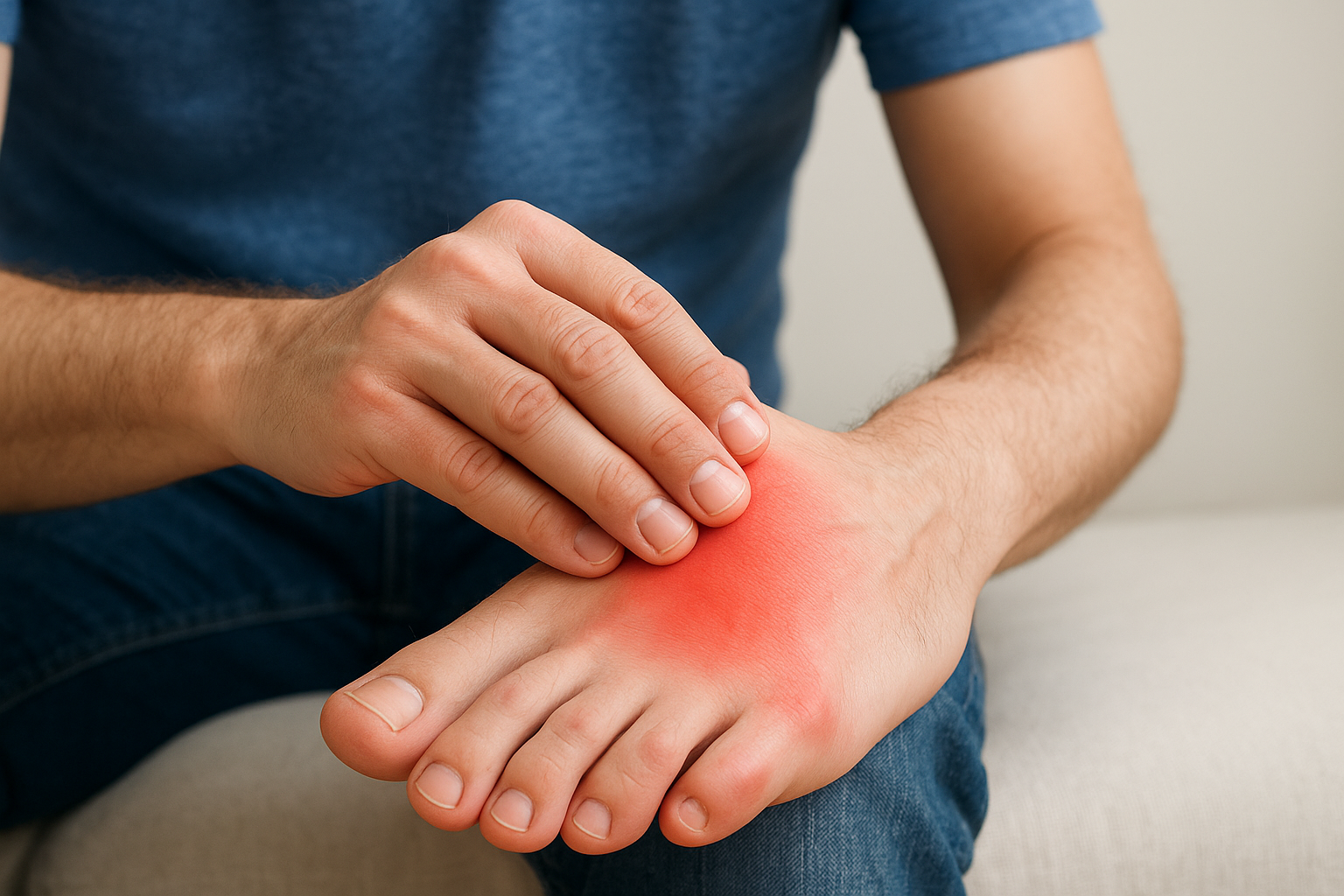
That ache across the top of your foot doesn’t just show up for no reason, and it rarely goes away on its own if you keep ignoring it. Whether it’s a dull throb after your morning run or a sharp pain every time your shoe laces press down, what causes foot pain on top usually comes down to a handful of specific culprits: overuse injuries, nerve compression, arthritis, or stress fractures in the small bones that make up your midfoot.
If you’re dealing with top of foot pain when walking or notice swelling that gets worse by the end of the day, you’re looking for answers, not guesses. This article breaks down the most common conditions behind this type of pain, including tendon inflammation, extensor tendonitis, and nerve entrapment, and explains what symptoms typically go with each one.
We’ll also walk through pain on top of the foot causes tied to arch problems and swelling, plus when conservative care like rest and orthotics is enough versus when it’s time to see a podiatrist. Our team at Achilles Foot and Ankle Center diagnoses these issues daily, so you’ll get a clear, practical picture of what’s likely going on with your foot.
Why the top of your foot hurts
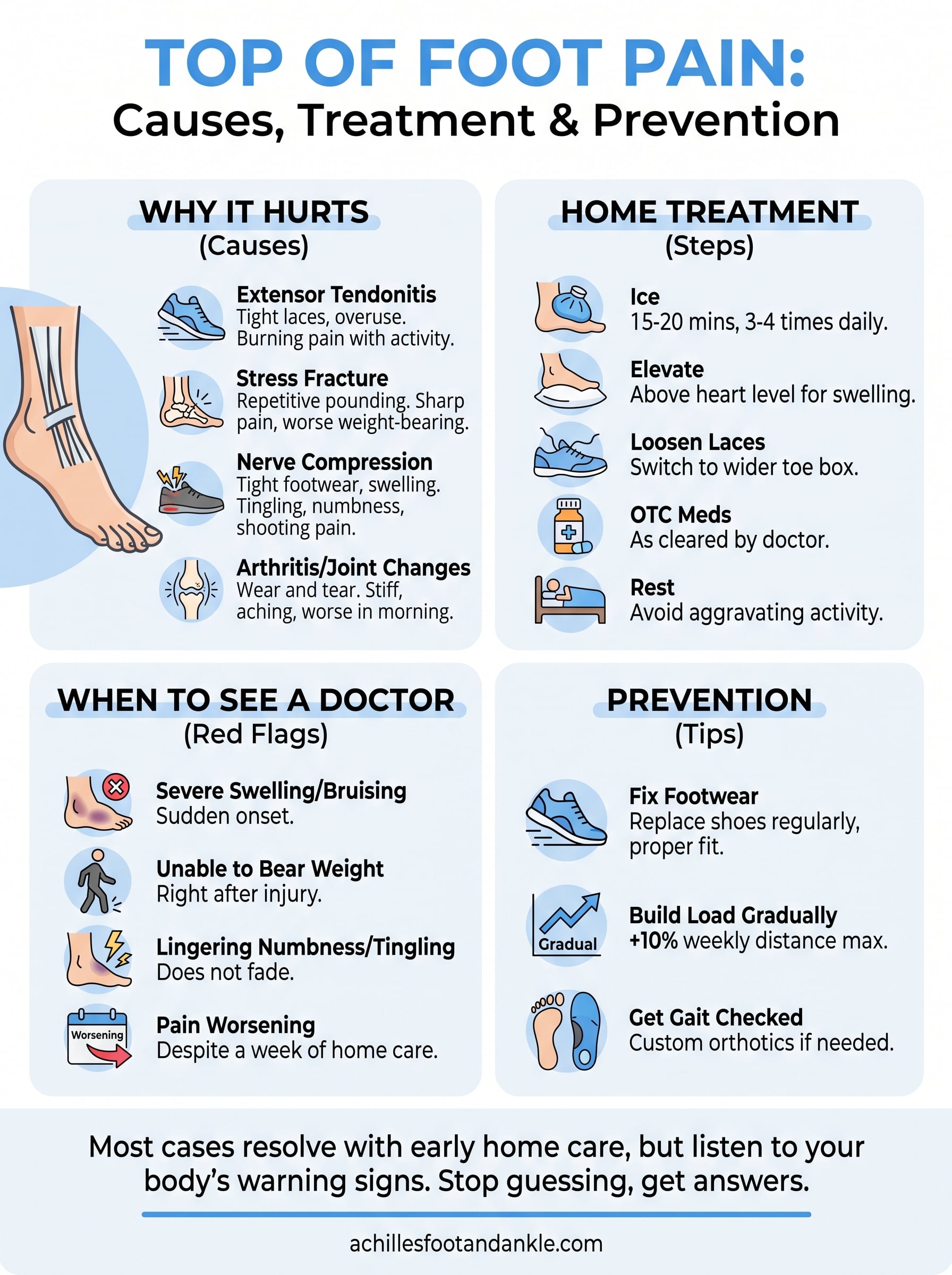
Most cases of top of foot pain trace back to one of four things: an inflamed tendon, a stressed bone, a pinched nerve, or joint changes from arthritis. Your foot has to absorb thousands of pounds of force every day, and the tendons and bones running across the top don’t have much cushioning to protect them. When you understand what causes pain on the top of your foot, you can usually match your symptoms to a likely source before you ever step into a clinic.
Extensor tendonitis
The extensor tendons run from your shin down across the top of your foot to your toes, and they’re the tendons you feel tighten when you point your foot up. Tight laces, worn-out shoes, or a sudden jump in running mileage irritate these tendons, causing swelling and a burning or aching pain that worsens with activity and eases with rest.
Extensor tendonitis is the single most common reason people search for what causes pain on top of the foot after starting a new workout routine.
Stress fractures
The second metatarsal, the long bone leading to your second toe, is especially prone to hairline fractures from repetitive pounding, which is why it helps to know how to spot and treat a stress fracture early. This explains a lot of cases involving pain on top of foot above arch, since that bone sits right in that region. Pain builds gradually and gets sharper with weight-bearing.
Nerve compression
Tight footwear or swelling can pinch the deep peroneal nerve, producing tingling, numbness, or a shooting pain across the top of the foot that spreads toward the toes, the hallmark of nerve pain on top of the foot.
Arthritis and joint changes
Osteoarthritis in the midfoot joints, one of several types of arthritis in the feet, causes stiffness, bony bumps, and aching that’s worse in the morning or after long periods of standing.
| Cause | Typical Trigger | Pain Pattern |
|---|---|---|
| Extensor tendonitis | Tight laces, running | Burns with activity, eases at rest |
| Stress fracture | Repetitive impact | Sharp, worsens with weight-bearing |
| Nerve compression | Tight shoes, swelling | Tingling, numbness, shooting pain |
| Midfoot arthritis | Joint wear over time | Stiff, worse in morning |
How to treat pain on top of your foot at home
Mild cases of top of foot pain often respond well to a few days of smart self-care you can do at home, especially when the pain follows a clear trigger like new shoes or a longer run. Rest and ice are the first things to try, since they calm the inflammation driving most tendon and joint pain. Swap tight, lace-up sneakers for a looser pair, and skip any activity that reproduces the ache until it settles down.
Rest, ice, and better-fitting shoes solve more cases of top of foot pain than any other single treatment.
First-line home care steps
- Ice the top of your foot for 15-20 minutes, three to four times a day, especially after activity.
- Loosen your laces or switch to shoes with a wider, softer toe box.
- Elevate your foot above heart level when you notice pain and swelling on top of foot at the end of the day.
- Take an over-the-counter anti-inflammatory if your doctor has cleared you to use one.
- Stretch your calves and ankles gently once acute pain has faded.
Cushioned insoles or custom orthotics help redistribute pressure away from irritated tendons and can prevent a minor flare-up from becoming a chronic problem. Give home treatment about a week. If pain sharpens, spreads, or swelling gets worse instead of better, that’s your signal to stop guessing and get it checked.
When top of foot pain signals something serious
Home care handles most mild cases, but some symptoms mean you shouldn’t wait a week to see if things improve. Severe swelling that shows up suddenly, especially paired with bruising or an inability to bear weight, points toward a possible fracture rather than simple tendon irritation, and those are signs foot swelling needs a doctor. If you can’t put weight on your foot at all right after an injury, treat that as a red flag and get imaging done rather than icing it and hoping.
If you can’t bear weight on your foot after an injury, don’t wait, get it imaged.
Numbness or tingling that spreads and doesn’t fade after you change shoes suggests nerve compression that’s progressing, not resolving, which is one of the clearest red flags that foot numbness is serious. Left alone, this can lead to permanent nerve damage in the foot, so it’s worth a same-day evaluation rather than a wait-and-see approach.
Warning signs that need prompt evaluation
- Pain that gets worse despite a full week of rest and ice
- Swelling that spreads beyond the top of the foot or into the ankle
- Skin that’s warm, red, or discolored, which can signal infection or a vascular issue
- Fever alongside foot pain, particularly in patients with diabetes
- Any open wound near the painful area, given how quickly foot infections can escalate
Diabetic patients deserve extra caution here. Reduced sensation can mask a fracture or infection until it’s advanced, which is exactly why our diabetic foot care program focuses on catching these issues early. When any of these signs show up, skip the guesswork and get a same-day appointment instead of pushing through the pain.
How to prevent top of foot pain from returning
Once your foot calms down, the real work starts: keeping the pain from coming back the next time you lace up. Most repeat cases trace back to the same triggers, worn shoes, sudden mileage jumps, or ignoring early warning signs, so fixing those habits matters more than any single treatment.

Fix your footwear first
Shoes that fit poorly across the top of the foot put steady pressure on the exact tendons and nerves that flare up in the first place. Replace running shoes every 300 to 500 miles, and choose a wider toe box if you’ve had extensor tendonitis or nerve compression before. Lace your shoes loosely across the top of the foot rather than cinching them tight, and skip flat, unsupportive shoes for long walks or workdays on your feet.
Shoes that fit your foot, not just your shoe size, prevent more flare-ups than any stretch or brace ever will.
Build load gradually
Sudden increases in activity are the top cause of repeat stress fractures and tendon flare-ups, so it pays to follow a few tips for preventing stress fractures when you run. Add no more than 10 percent to your weekly running or walking distance, and rotate between high-impact and low-impact days.
Get your gait checked
If pain keeps returning despite better shoes and pacing, an underlying alignment issue may be driving it. A custom orthotics fitting can correct pressure patterns before they turn into chronic pain, giving your foot the support it never had to begin with.
Listening to what your foot is telling you
Pain on top of the foot is rarely random. It’s your body flagging a tendon under strain, a bone that’s had enough impact, or a nerve that’s being pinched by something as simple as a shoelace. Knowing what causes foot pain on top gives you a real starting point instead of a guessing game, whether you’re dealing with a dull ache after a long walk or sharp pain that stops you mid-stride.
Simple home care resolves plenty of cases, but it only works if you catch the problem early and respect the warning signs that call for more than rest and ice. Swelling that spreads, numbness that lingers, or pain that won’t budge after a week deserves a professional look, not another few days of waiting.
If your foot has been sending you signals you’ve been putting off, stop guessing and get answers. Schedule a same-day visit with our podiatrists and get back to walking pain-free.