Foot pain doesn’t wait for open enrollment, and neither should you when you’re searching for a podiatrist that accept medical near me. Maybe you’re on Medicaid, maybe your plan card just says "Medical" instead of "Medicare," and you’re not sure which local foot doctors actually take it. That confusion costs people real time while a bunion, an ulcer, or a sprained ankle gets worse.
Here’s the short answer: yes, podiatrists who accept Medicaid do exist in Central Virginia, and finding one comes down to knowing what to ask and where to look. Medicaid coverage for podiatry varies by state and by plan, so a clinic that takes it in Richmond might have different rules than one two counties over. The trick is verifying acceptance before you book, not after you’ve already driven across town.
This article breaks down what "accepts Medical" actually means for foot and ankle care, how Medicaid coverage typically works for podiatry visits, and what questions to ask a local clinic before your first appointment. We’ll also cover what to expect if you’re dealing with diabetic foot issues, chronic pain, or an injury that needs prompt attention.
Why it matters to confirm Medical acceptance beforehand
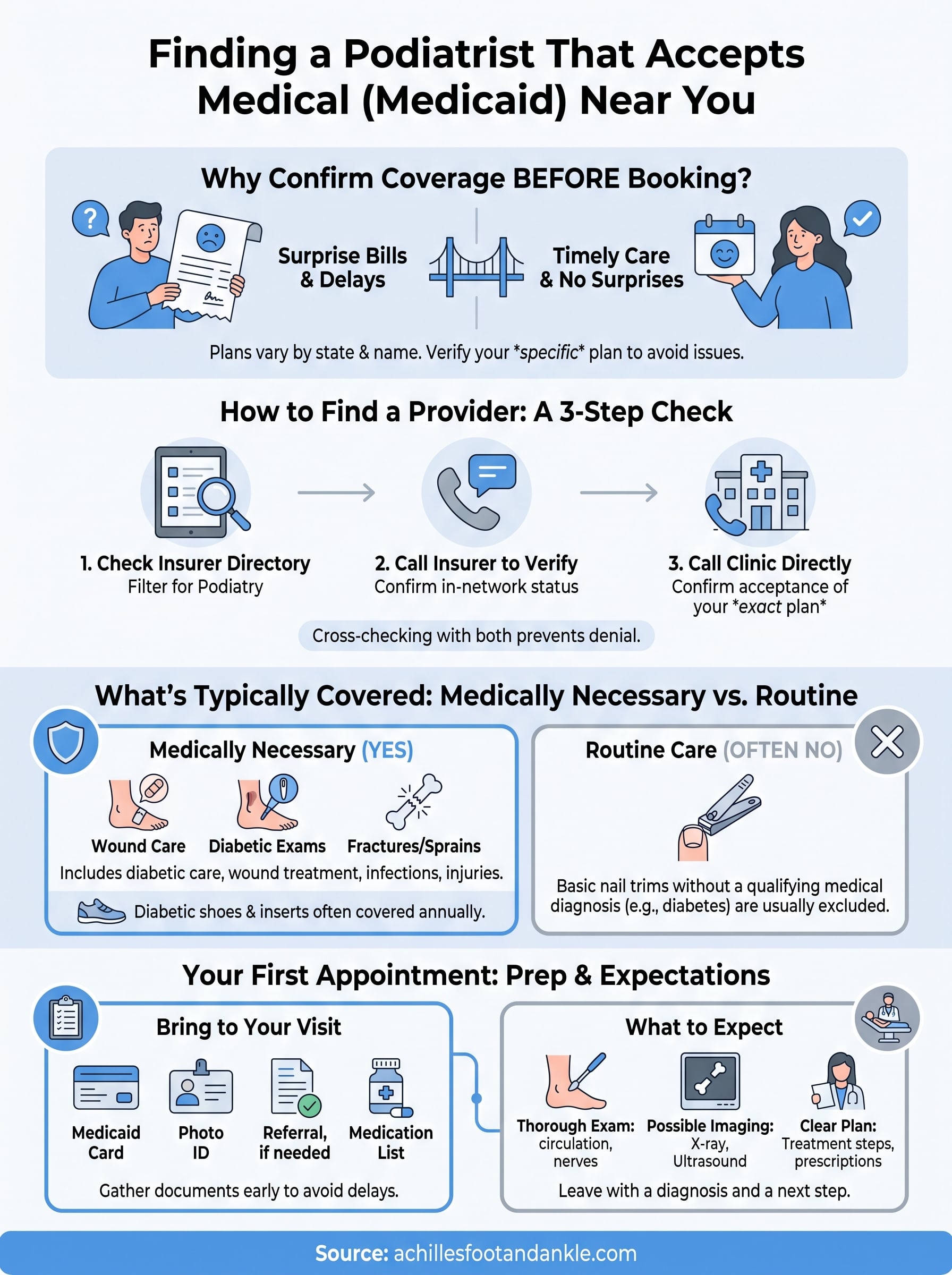
Skipping the verification step is how patients end up with a bill they never expected. Insurance plans that use the word "Medical" instead of "Medicaid" or "Medicare" can mean different things depending on your state exchange, your employer, or your managed care organization. A podiatry office might accept one Medicaid managed care plan but not another, even though both show up under the same general label on your insurance card. Calling ahead and confirming your specific plan before you schedule saves you from a surprise denial after the visit is already done.
Beyond the billing headache, timing matters medically too. Foot problems tied to diabetes, poor circulation, or nerve damage rarely improve on their own, and a delay caused by insurance confusion can turn a minor wound into a limb-threatening infection. Patients searching for a podiatrist near me that takes Medicaid are often dealing with exactly these urgent conditions, not routine toenail trims. Getting the insurance question settled quickly means you get into a treatment chair sooner rather than later.
Confirming coverage before you book isn’t paperwork, it’s the first step in actual treatment.
Referrals add another layer worth checking. Some Medicaid managed care plans require a referral from your primary care doctor before they’ll pay for a podiatry visit, while others let you self-refer to a specialist. Ask the clinic’s front desk these three things when you call:
- Do you currently accept my specific Medicaid plan (not just "Medicaid" broadly)?
- Do I need a referral from my primary care physician first?
- Are there any services, like custom orthotics or diabetic shoes, that require separate prior authorization?
Answering these upfront keeps you from losing an appointment slot to a paperwork problem, and it puts you in a better position to focus on the actual care your feet need.
How to find a podiatrist near you that accepts Medical
Start with your insurance company’s own directory rather than a general web search. Most Medicaid managed care organizations publish an online provider directory that lets you filter specifically for podiatry, and it’s updated more often than a random review site. Call the number on the back of your card if the online list looks outdated or confusing, since front-line reps can confirm whether a clinic near you is currently in-network.
Next, cross-check that answer directly with the clinic. Directories lag behind real-world changes, so a practice listed as in-network might have dropped your specific plan months ago. A quick phone call asking "do you accept [your exact plan name]" avoids the mismatch between what the insurer’s website says and what the front desk actually bills.
The fastest way to find a podiatrist near you that takes Medicaid is to verify with both the insurer and the office, not just one.
Finally, widen your search if your first few calls come up empty. Central Virginia has practices spread across cities like Richmond, Mechanicsville, and Midlothian, so a local clinic just a few miles further out might take your plan even if the closest one doesn’t, and it helps to review the best-reviewed foot doctors within a five-mile radius before you start dialing.
Use this quick checklist when comparing options:
- Confirm the plan name matches exactly, not just "Medicaid" generally
- Ask about wait times for new patients
- Check whether the location offers same-day urgent visits
- Verify they treat your specific condition, like diabetic wounds or sports injuries
What foot and ankle care Medical typically covers
Medicaid foot care benefits usually split into two buckets: medically necessary care and routine care. Medically necessary treatment includes things like diabetic foot exams, wound care for ulcers, removal of an infected ingrown toenail, and treatment for fractures or sprains. Routine services, like a basic nail trim with no underlying medical condition, often get denied unless you have a documented diagnosis such as diabetes or peripheral vascular disease that puts you at higher risk.

Diabetic patients get the broadest coverage. Most Medicaid plans pay for therapeutic shoes and inserts through a diabetic shoe program once a year, along with regular foot exams to catch nerve damage or poor circulation before it turns into a wound. Achilles Foot and Ankle Center’s preventive care for diabetic feet is built around exactly this kind of coverage.
If your foot problem is tied to diabetes, nerve damage, or circulation, there’s a good chance Medicaid already covers the visit.
Surgical coverage depends on necessity, not preference. A bunion correction procedure tied to documented pain and mobility loss typically qualifies, while a purely cosmetic request usually doesn’t.
| Service Type | Typically Covered | Often Excluded |
|---|---|---|
| Diabetic foot exams | Yes | – |
| Diabetic shoes/inserts | Yes (annual) | – |
| Wound/ulcer treatment | Yes | – |
| Routine nail trimming | Only with diagnosis | Without medical need |
| Cosmetic bunion surgery | No | Cosmetic-only requests |
Understanding this split helps you ask sharper questions before you book.
What to expect at your first appointment
Your first visit starts with paperwork, so bring what the front desk needs before you even sit down in the waiting room. Pack your Medicaid card, a photo ID, your referral if your plan requires one, and a list of current medications. Having this ready cuts down on delays and gets you into the exam room faster, especially if you found the practice through a podiatrist near me that accepts Medicaid search and this is your first time at that specific office.
The exam itself
Notice how thorough a good first exam feels compared to a rushed checkup. The podiatrist will ask about your symptoms, review your medical history, and physically check circulation, sensation, and joint movement in your foot and ankle. If you’re diabetic, expect a monofilament test for nerve damage and a visual check for early skin breakdown. Foot and ankle imaging like digital X-ray or ultrasound might happen the same day if the doctor suspects a fracture, tendon tear, or deeper structural issue.
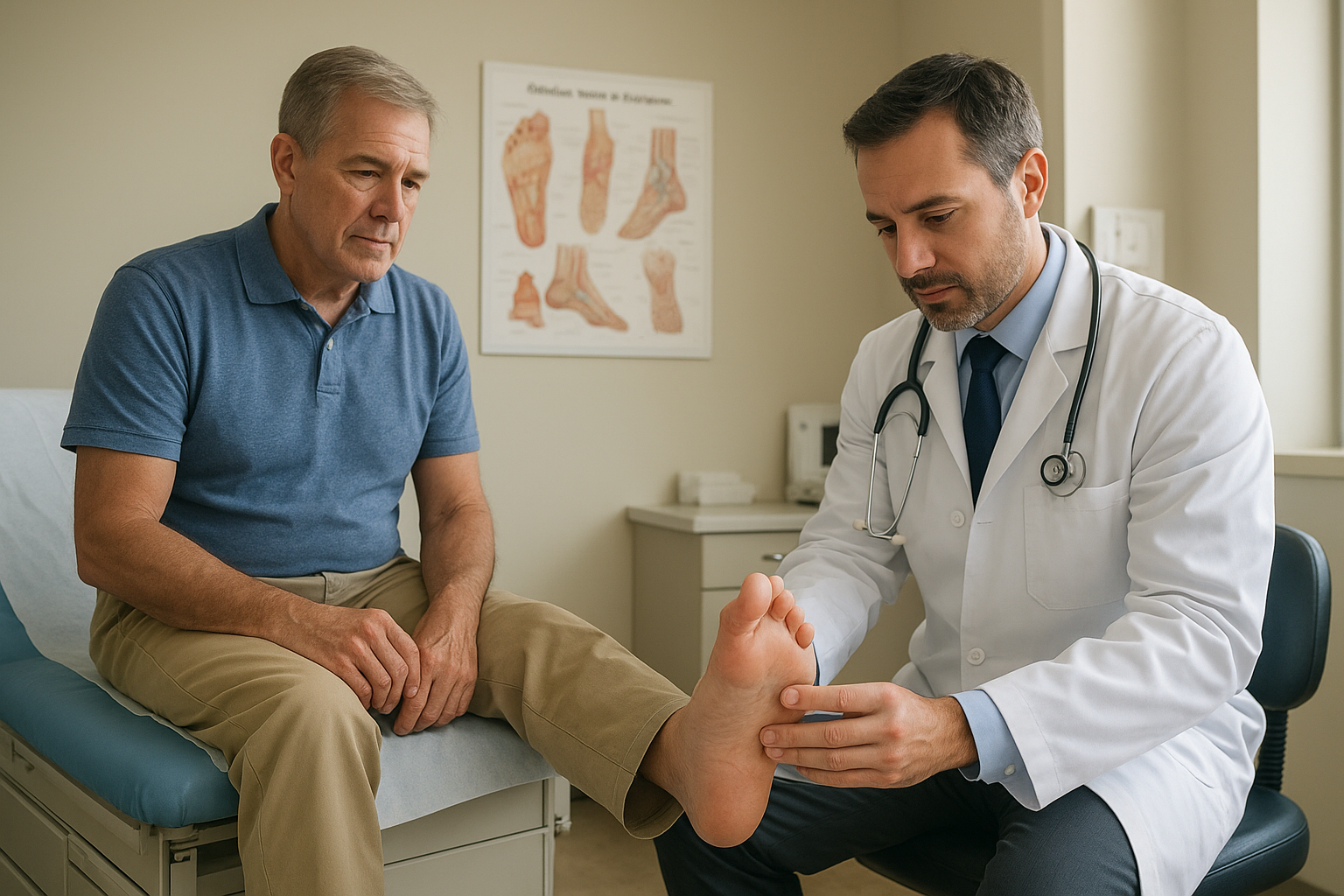
A solid first appointment gives you a diagnosis and a plan, not just a referral to come back later.
Leaving with a plan
Questions matter more at this visit than any other, since it sets the direction for your treatment. Plan to leave with a clear next step: a treatment schedule, a prescription, custom orthotics paperwork, or a referral for advanced wound care if needed. Practices with same-day appointment options often handle urgent issues, like an infected ingrown toenail or a sudden sprain, right during that first visit instead of scheduling you weeks out.
Getting the care your feet need
Finding a podiatrist that accept medical near me doesn’t have to mean weeks of phone tag or a surprise bill after the fact. Confirm your exact plan with both your insurer and the clinic, ask about referrals up front, and bring the right paperwork to your first visit. That preparation turns a confusing insurance search into a straightforward path toward treatment, whether you’re dealing with a diabetic wound, a nagging heel pain, or a fresh ankle sprain.
Getting these questions answered early means you spend your energy on healing instead of untangling coverage after the fact. Central Virginia patients have real options here, and waiting only gives a minor issue more time to turn into a bigger one.
If you’re ready to get seen quickly, schedule a same-day visit with our Central Virginia podiatrists and get your feet the attention they need now, not next month.