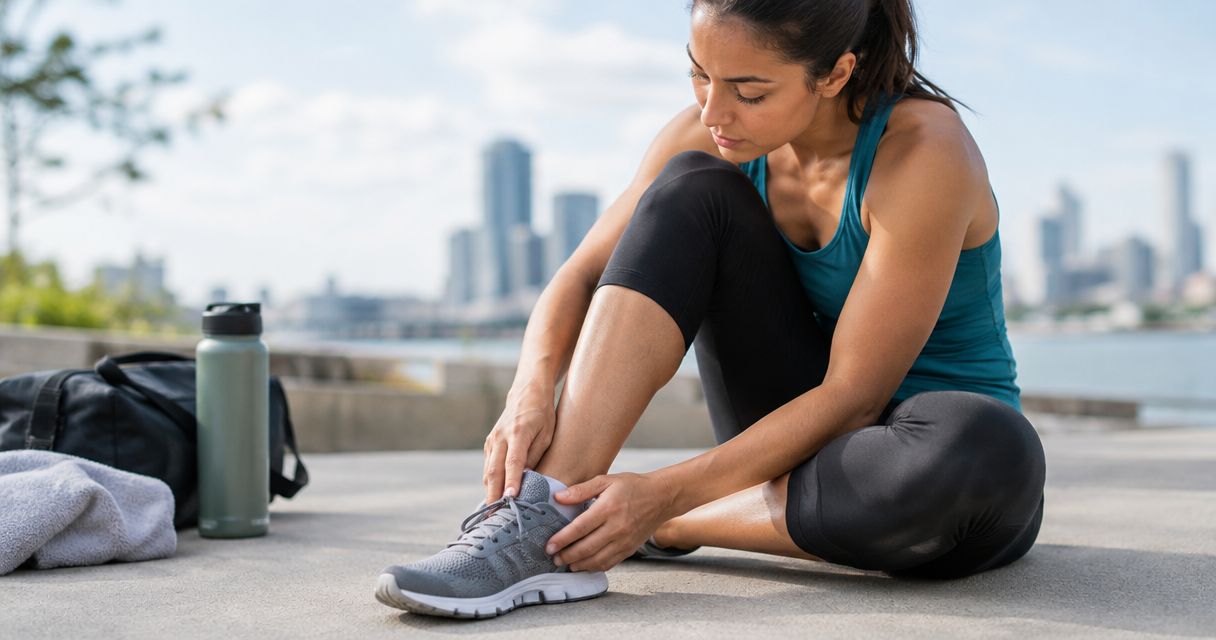
Foot pain doesn’t wait for a convenient moment. It shows up when you’re walking the dog, standing at work, or simply getting out of bed. The good news? Many common causes of foot discomfort respond well to foot exercises for pain relief that you can do right in your living room. No special equipment required, just a few minutes of your time.
At Achilles Foot and Ankle Center, our podiatrists regularly recommend targeted stretches and strengthening movements as part of a comprehensive treatment plan. These exercises can help manage conditions like plantar fasciitis, general soreness, and stiffness while improving your overall foot mobility. They’re also an excellent complement to professional care when you need it.
Below, you’ll find five effective exercises our team suggests to patients across Central Virginia. Each one is simple to perform, backed by clinical practice, and designed to fit into your daily routine. Let’s get your feet moving toward relief.
1. Short-foot exercise
The short-foot exercise strengthens your intrinsic foot muscles, the small stabilizers that support your arch and improve how your foot distributes weight. This movement is one of the most effective foot exercises for pain relief when plantar fasciitis or flat feet cause discomfort. You’ll perform it seated at first, then progress to standing once you master the technique.
What it targets and why it helps
This exercise activates the muscles along your arch that often weaken from wearing supportive shoes or from chronic pain patterns. When you strengthen these intrinsic muscles, you reduce strain on your plantar fascia and create better shock absorption during walking. Your foot becomes more stable, which decreases compensatory pain in your ankles, knees, and lower back.
How to do it with the right form
Sit in a chair with your foot flat on the floor. Without curling your toes or lifting your heel, draw the ball of your foot toward your heel by shortening your arch. Your foot should appear slightly narrower. Hold this position for five seconds, then relax. You should feel tension along your arch, not cramping in your toes.
The key is creating the arch lift without gripping your toes, which takes practice but produces the best results.
Sets, reps, and how often to do it
Start with 10 repetitions per foot, holding each contraction for five seconds. Perform this exercise twice daily, ideally morning and evening. Once you can complete three sets of 10 without fatigue, progress to doing it while standing.
Common mistakes that make foot pain worse
Many people curl their toes instead of engaging the arch muscles, which creates cramping and misses the target area. Avoid lifting your heel off the ground or rolling your ankle inward. These compensations prevent proper muscle activation and can increase pain rather than relieve it.
When to stop and when to see a podiatrist
Stop if you feel sharp pain, severe cramping that doesn’t resolve quickly, or numbness spreading through your foot. Schedule an appointment at Achilles Foot and Ankle Center if your pain worsens after two weeks of consistent exercise or if you notice swelling and redness developing.
2. Toe spread and press
Toe spread and press works your toe flexors and extensors, the muscles that control individual toe movement. This exercise improves foot dexterity and helps relieve tension that builds up from wearing tight shoes or from conditions like hammertoes. You’ll perform it barefoot while seated or lying down.
What it targets and why it helps
This movement strengthens the muscles between your toes and increases the range of motion in your toe joints. When you actively spread and press your toes, you reduce stiffness and improve circulation to the front of your foot. Better toe control translates to more stable push-off during walking.
How to do it with the right form
Sit with your foot relaxed. Spread all five toes apart as wide as possible, then press them flat against the floor. Hold the spread position for five seconds, then press down for another five seconds. Your toes should move independently without your foot rolling or your arch collapsing.
Focus on quality movement rather than speed, letting each toe activate fully.
Sets, reps, and how often to do it
Complete 10 repetitions per foot once or twice daily. This exercise works well as part of a larger foot exercises for pain relief routine. Consistency matters more than intensity with this movement.
Modifications for limited toe control or cramping
If your toes cramp, reduce the hold time to three seconds and increase rest between repetitions. You can also perform the spread without the press until your muscles adapt. Gentle pressure builds control without triggering spasms.
When to stop and when to see a podiatrist
Stop if you experience sharp joint pain or if your toes turn blue or numb. Contact Achilles Foot and Ankle Center if cramping persists despite modifications or if you cannot move individual toes at all.
3. Calf raises with straight knee
Calf raises with a straight knee strengthen your gastrocnemius muscle, the larger calf muscle that connects to your Achilles tendon and heel. This exercise addresses foot pain by reducing strain on your plantar fascia and improving your push-off strength during walking. You’ll perform it standing near a wall or counter for balance support.
What it targets and why it helps
This movement builds strength in your gastrocnemius, which absorbs shock and controls how your heel contacts the ground. When this muscle weakens, your foot and ankle compensate poorly, creating excessive stress on your arch and heel. Stronger calves mean better foot mechanics and less pain during daily activities.
How to do it with the right form
Stand with your feet hip-width apart, keeping your knees completely straight. Rise onto the balls of your feet, lifting your heels as high as possible. Hold at the top for two seconds, then lower with control. Your weight should stay evenly distributed across all your toe joints, not just your big toes.
Keep your knees locked throughout the movement to fully engage the gastrocnemius.
Sets, reps, and how often to do it
Complete 15 repetitions for three sets, resting 30 seconds between sets. Perform this exercise every other day to allow recovery time. This frequency supports steady strength gains without overloading your tendons.
Progressions and regressions for pain and balance
If you experience pain, hold onto a counter with both hands for full support and reduce your range of motion. Progress by using one hand, then fingertips only. Advanced versions include single-leg raises once you complete 20 repetitions easily with proper form.
When to stop and when to see a podiatrist
Stop immediately if you feel sharp Achilles pain or sudden cramping in your calf. Contact Achilles Foot and Ankle Center if swelling develops around your heel or if pain persists beyond 48 hours after exercise.
4. Bent-knee heel raises
Bent-knee heel raises target your soleus muscle, the deeper calf muscle that lies beneath your gastrocnemius. This exercise complements straight-knee calf raises as part of complete foot exercises for pain relief by strengthening a muscle that works differently during everyday movement. You’ll perform it with knees slightly bent throughout the motion.
What it targets and why it helps
Your soleus activates most during walking and standing with bent knees, making it essential for foot stability during normal daily activities. Strengthening this muscle reduces heel pain and improves your ability to absorb impact when your knee flexes. Better soleus strength means less strain on your Achilles tendon and plantar fascia.
How to do it with the right form
Stand with your feet hip-width apart and bend your knees to approximately 45 degrees. Keep this knee bend constant as you rise onto the balls of your feet. Lower with control, maintaining the bent-knee position throughout. Your heels should lift as high as possible without straightening your legs.
The bent knee position isolates your soleus, so maintain that angle for maximum benefit.
Sets, reps, and how often to do it
Complete 15 repetitions for three sets with 30 seconds rest between sets. Perform this exercise every other day, alternating with your straight-knee calf raises. This schedule prevents overtraining while building balanced calf strength.
How to choose bodyweight vs step edge raises
Start with flat-ground bodyweight raises until you complete 20 repetitions easily. Progress to standing on a step edge once your strength improves, which increases range of motion and challenge. Choose bodyweight if you experience Achilles sensitivity or heel pain.
When to stop and when to see a podiatrist
Stop if you feel sharp pain in your heel or deep aching in your calf. Contact Achilles Foot and Ankle Center if you notice swelling behind your ankle or if pain prevents normal walking for more than two days.
5. Single-leg balance with reach
Single-leg balance with reach challenges your foot stability and proprioception, the sense that tells your brain where your foot is in space. This exercise trains the muscles and ligaments that keep your ankle from rolling and helps prevent injuries during walking on uneven surfaces. You’ll perform it standing near a wall for safety while reaching in multiple directions.
What it targets and why it helps
This movement activates your peroneal muscles along the outside of your lower leg and the small stabilizers throughout your foot and ankle. When you balance on one leg while reaching, you force these muscles to work harder than during normal walking. Better balance reduces your injury risk and improves confidence during daily activities.
How to do it with the right form
Stand on one foot near a wall. Keep your standing knee slightly bent and reach your free leg forward, then to the side, then behind you. Touch the ground lightly with your toes at each position. Your standing foot should stay flat with your weight centered over your arch. Complete all reaches on one side before switching.
Focus on controlled movement rather than reaching as far as possible.
Sets, reps, and how often to do it
Complete 8 reaches per direction on each foot for two sets. Perform this exercise three times weekly on non-consecutive days. This frequency allows your balance systems to adapt without creating fatigue that increases fall risk.
Safer progressions before you add hops
Start with fingertip wall support until you maintain balance for 30 seconds easily. Progress to no support, then add arm movements overhead. Only attempt single-leg hops after you complete three sets without touching the wall. Rushing progressions increases ankle sprain risk.
When to stop and when to see a podiatrist
Stop if you feel sharp ankle pain or repeated instability that causes falls. Contact Achilles Foot and Ankle Center if your ankle gives out frequently during normal walking or if swelling develops after these foot exercises for pain relief.
Next steps if your foot still hurts
Consistent practice of these foot exercises for pain relief reduces discomfort for many people within two to four weeks. However, persistent or worsening pain signals the need for professional evaluation. Your body is telling you something requires attention beyond home care. Some conditions need advanced treatments that only a podiatrist can provide, and early intervention prevents complications.
Achilles Foot and Ankle Center offers comprehensive diagnostic services and treatment options when exercises alone don’t provide relief. Our podiatrists use advanced imaging technology to identify underlying conditions causing your pain. We create individualized treatment plans that combine physical therapy, custom orthotics, injection therapy, or surgical options when appropriate for your situation.
Schedule an appointment at Achilles Foot and Ankle Center if your symptoms persist beyond four weeks of consistent exercise, if sharp pain develops during movement, or if swelling and redness appear. Our thirteen convenient locations across Central Virginia make getting professional care easy and accessible. Don’t let foot pain limit your daily activities any longer.