

That painful spot on your foot might be a corn, but not all corns are the same. Understanding the difference between hard corn vs soft corn matters because each type forms in a different location, looks different, and may require a different treatment approach. Mistaking one for the other (or ignoring either) can lead to worsening discomfort and, in some cases, infection.
Hard corns typically develop on the tops or sides of toes, while soft corns show up between them, and that’s just the starting point. Their texture, underlying causes, and risk factors also vary, which means a one-size-fits-all remedy rarely works. People with diabetes or circulation problems face additional risks that make proper identification even more important.
At Achilles Foot and Ankle Center, our podiatrists across Central Virginia diagnose and treat corns daily, from straightforward cases to those complicated by underlying health conditions. This article breaks down exactly how hard and soft corns differ, what causes each type, and when home care isn’t enough, so you can take the right next step for your feet.
What hard and soft corns are
A corn is a thickened patch of skin that your body builds up in response to repeated friction or pressure. Unlike a callus, which spreads across a broad, flat area, a corn has a concentrated, cone-shaped core that points inward and presses on the sensitive tissue underneath. That inward-pointing core is what produces the sharp, aching, or burning pain you feel when you walk or put direct pressure on the spot.
Hard corns
Hard corns, known medically as heloma durum, are dense, dry, and clearly defined. They form most often on the tops or outer edges of toes, particularly the little toe or the tops of the middle toes, though they can also appear on the ball of the foot. The overlying skin typically looks yellowish or grayish, and if you press the center you will feel a firm, waxy plug just beneath the surface.
Your body creates a hard corn when repeated pressure or friction from a poorly fitting shoe, a bone spur, or a toe deformity like a hammertoe forces the skin to protect itself by thickening. Over time, that thickened layer dries out and condenses into a hard, inward-pointing plug. The corn has no roots, but its core can dig deep enough to irritate the bursa, nerves, or even the bone directly beneath it.
A hard corn sitting over a bony prominence will often not resolve on its own without addressing the structural issue driving the pressure.
Soft corns
Soft corns, medically called heloma molle, look and feel nothing like their hard counterparts. They develop almost exclusively between the toes, most commonly in the web space between the fourth and fifth toes, where skin stays persistently moist from trapped sweat. That moisture keeps the thickened tissue soft and rubbery rather than dense, giving the corn a whitish, macerated appearance that is sometimes mistaken for a fungal infection or a blister.
The mechanics behind a soft corn involve bone-to-bone pressure between adjacent toes rather than external shoe pressure alone. When two toe bones press repeatedly against each other, the skin between them thickens as a defensive response. Because the web space stays damp, the tissue never dries and hardens the way it would on the top of a toe. This combination of thickened skin and constant moisture makes soft corns significantly more prone to bacterial infection than hard corns, a risk that matters most for people with diabetes or compromised circulation.
Recognizing which type of corn you are dealing with is the foundation of effective care. The hard corn vs soft corn distinction starts with these basic differences in location and tissue texture, and it extends into meaningful differences in how each type should be treated and monitored.
Why hard vs soft corns matter
The hard corn vs soft corn distinction is not just academic. Treating the wrong type incorrectly can slow healing, irritate surrounding skin, or steer you toward a product that does nothing for your actual problem. Knowing which type you have shapes every decision that follows, from the kind of padding you select to whether you need a podiatrist involved at all. Missing that identification step is one of the most common reasons people spend weeks on home remedies that never work.
Infection risk differs between the two
Soft corns carry a notably higher infection risk than hard corns. Their location in the moist web space between toes creates an environment where bacteria thrive, and the already-softened, macerated skin breaks down more easily under continued pressure. If a soft corn develops a small crack or open area, you may not notice it quickly because the tissue already appears white and damaged by moisture.
For people with diabetes or peripheral vascular disease, even minor skin breakdown between the toes can escalate into a serious infection quickly and requires prompt medical evaluation rather than home treatment.
Hard corns sit in drier locations, which reduces bacterial risk but introduces a different concern. A thick, inward-pointing core pressing on an underlying nerve or bony prominence produces pain that intensifies with every step and will not improve until someone addresses the pressure source driving it.
Treatment approaches are not interchangeable
Debridement, protective padding, and proper footwear adjustments address hard corns effectively, and correcting an underlying structural issue like a hammertoe may be what finally resolves the problem for good. The dense, dry tissue in a hard corn responds to techniques that would be actively counterproductive on a soft corn.
Soft corns need moisture control as the first priority, along with toe-separating materials that reduce the bone-to-bone friction causing the thickening. Using a standard oval corn pad designed for hard corns on a soft corn typically traps additional moisture in an already damp space, making the condition worse rather than better.
How to tell a hard corn from a soft corn
Identifying which type you have does not require a medical degree, but it does require looking at a few specific details. Location, texture, and color each give you reliable clues, and checking all three together produces a much clearer picture than examining just one. The hard corn vs soft corn difference becomes obvious once you know what to look for.
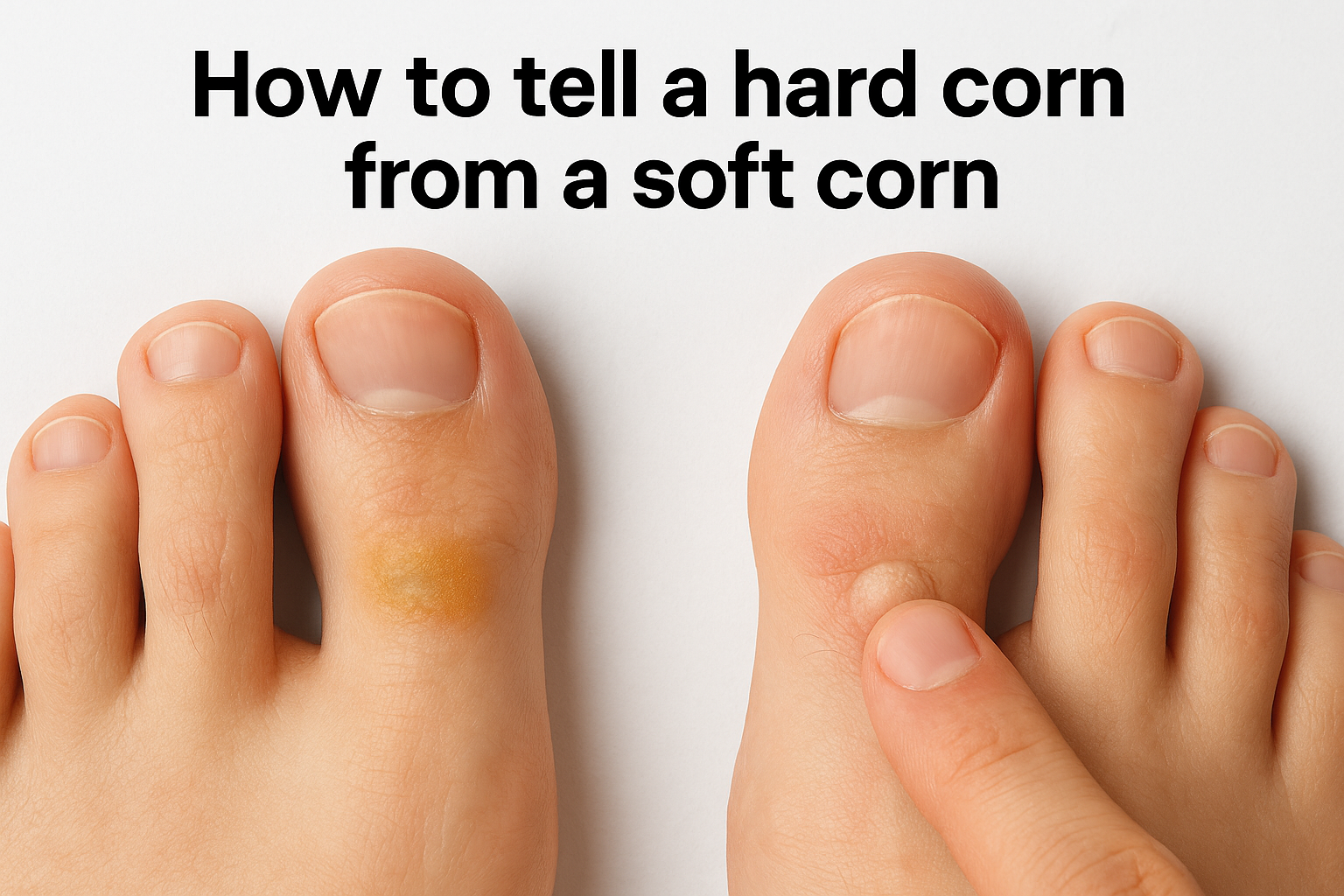
Check location first
Location is the fastest and most reliable starting point. Hard corns appear on the tops, tips, or outer edges of your toes, or occasionally on the ball of your foot where a shoe applies direct pressure. Soft corns develop almost exclusively between the toes, typically in the narrow web space where skin stays persistently damp. If your painful spot sits between two toes, you are almost certainly dealing with a soft corn.
Common locations at a glance:
- Hard corn: top of toe, outer edge of little toe, tip of toe, ball of foot
- Soft corn: between the fourth and fifth toes, or any adjacent web space
Look at the texture and color
After confirming location, examine the skin’s appearance closely. Hard corns look yellowish or grayish and feel dry and rough to the touch, with a clearly defined edge where the thickened skin ends and normal skin begins. Soft corns appear whitish and waterlogged, with a rubbery texture that results from constant moisture trapped in the web space.
If you mistake a soft corn for a fungal infection because of its pale, macerated appearance, you may delay the correct treatment and allow the underlying pressure problem to worsen.
| Feature | Hard Corn | Soft Corn |
|---|---|---|
| Color | Yellow or gray | White or pale |
| Texture | Dry, dense | Soft, rubbery |
| Surface moisture | Dry | Consistently moist |
Press gently to test the core
Apply light pressure directly to the center of the thickened area. A hard corn produces a sharp, focused pain that reflects its dense, inward-pointing core pressing on deeper tissue beneath it.
Soft corns typically cause a broader, more diffuse soreness under pressure, consistent with irritated skin spread across a moist web space rather than a concentrated plug driving into one specific point.
How to treat hard and soft corns safely
Because the hard corn vs soft corn distinction directly determines which treatment works, starting with the right approach saves you time and prevents you from accidentally making things worse. Both types respond to conservative care in most cases, but the methods diverge quickly once you account for where each corn forms and why.
Treating hard corns
Start by reducing the external pressure causing the corn. Switching to shoes with a wider toe box and more cushioning removes the friction that builds the thickened tissue in the first place. Once pressure is reduced, a non-medicated foam or gel pad placed around the corn protects the area during daily activity without squeezing adjacent tissue.
Avoid over-the-counter corn plasters containing salicylic acid if you have diabetes, poor circulation, or any loss of sensation in your feet, since these products can cause chemical burns on fragile skin.
After soaking your foot in warm water for 10 minutes, you can gently file the softened skin with a pumice stone. Work in one direction, remove only a small amount of tissue at a time, and stop immediately if you see any pink or raw skin beneath the surface. A podiatrist can perform safe, precise debridement when home filing is not sufficient, and may also recommend orthotics or address an underlying hammertoe or bone spur driving the problem.
Treating soft corns
Soft corns require moisture control before anything else. Keeping the web space between your toes dry reduces the maceration that keeps the tissue soft and susceptible to breakdown. Apply a small amount of absorbent foot powder between your toes after bathing and change socks made from moisture-wicking materials daily.
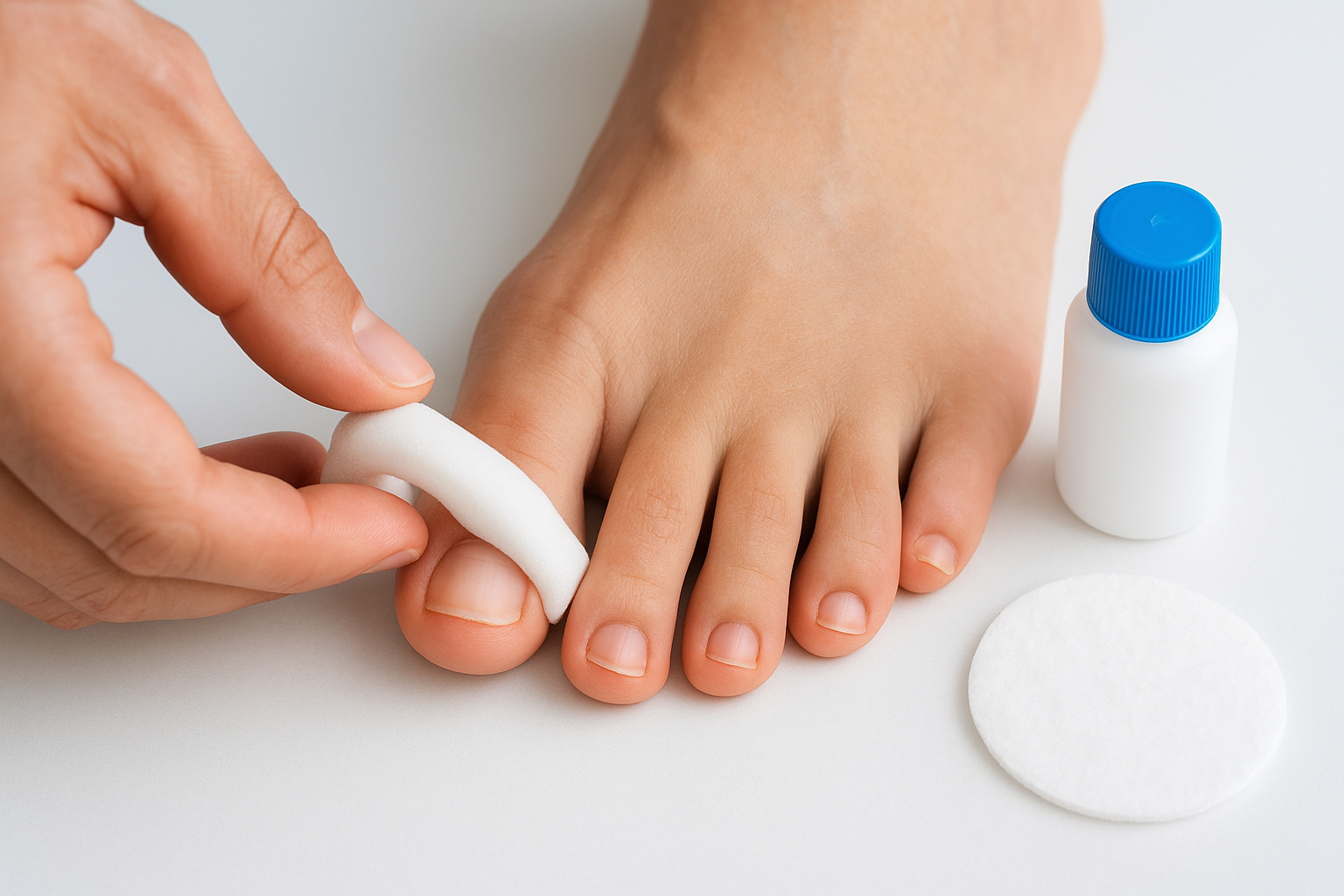
Place a lamb’s wool or foam toe separator between the affected toes to cushion the bone-to-bone contact causing the corn. Unlike the oval pads used for hard corns, separators spread the load without trapping additional moisture. If the corn appears cracked, raw, or shows signs of infection, see a podiatrist promptly rather than continuing home treatment.
How to prevent corns from coming back
Once you clear a corn, the original pressure source is the real problem to address. Whether you dealt with a hard corn vs soft corn, prevention comes down to removing whatever forced your skin to thicken in the first place. Without that step, the corn will almost certainly return in the same spot.
Choose the right footwear
Shoe fit is the single most controllable factor in corn prevention. Look for shoes with a [wide toe box](https://achillesfootandankle.com/how-to-prevent-corns-and-calluses/) that lets each toe rest without pressing against the shoe lining or an adjacent toe. Avoid pointed-toe styles and heels over two inches, both of which concentrate pressure exactly where corns form most often.
Key footwear guidelines to follow:
- Size up if you’re between sizes rather than forcing your foot into a tighter fit
- Replace shoes that show uneven wear patterns, which signals abnormal pressure distribution
- Break in new shoes gradually to avoid creating fresh friction points
Custom orthotics prescribed by a podiatrist redistribute pressure across your entire foot, which significantly reduces the friction that drives corn formation over time.
Keep skin clean and dry
Moisture control is the priority for preventing soft corns, but dry, cracked skin on the tops of toes also increases friction that feeds hard corn development. Wash your feet daily, dry thoroughly between each toe, and apply a light foot powder to web spaces if you tend to sweat heavily.
Switching to moisture-wicking socks made from merino wool or synthetic performance fabrics reduces sweat accumulation compared to standard cotton socks. Change your socks daily and avoid wearing the same pair of shoes two days in a row, giving each pair enough time to dry out completely between uses.
Address structural issues early
Toe deformities like hammertoes or bunions create fixed bony prominences that press against shoes or adjacent toes with every step. These problems will keep generating corns regardless of how carefully you choose footwear, because the pressure source is built into your foot’s structure. A podiatrist can evaluate whether padding and orthotics are sufficient or whether a corrective procedure is the right path forward.
Key takeaways and when to get care
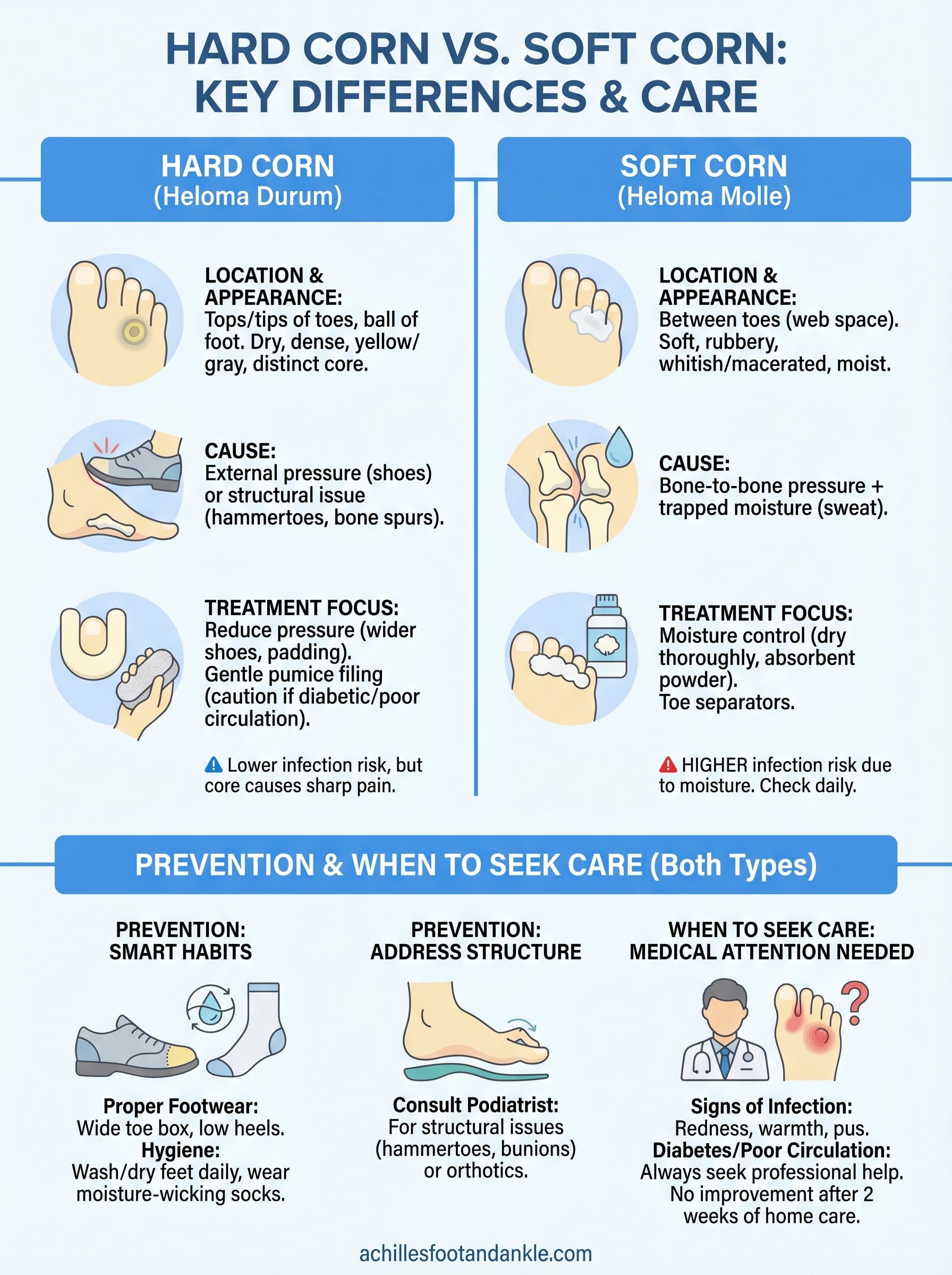
The hard corn vs soft corn distinction shapes everything from how you pad your foot to how seriously you need to treat the infection risk. Hard corns form on dry, exposed surfaces from external shoe pressure, while soft corns develop between moist toes from bone-to-bone friction. Each type requires a targeted approach, and using the wrong remedy wastes time or makes things worse.
Most corns respond to conservative care when you catch them early and remove the pressure source driving them. You should see a podiatrist if a corn shows signs of infection, is not improving after two weeks of home care, or if you have diabetes, poor circulation, or any numbness in your feet. Underlying structural issues like hammertoes will keep producing corns until a specialist addresses the root cause.
If your corn is painful or not responding to home treatment, book a same-day appointment at Achilles Foot and Ankle Center and get the right care fast.