

Foot surgery is scheduled, and now the real work begins. Understanding how to prepare for foot surgery goes beyond just showing up at the right time, it means taking deliberate steps at home, managing your medications correctly, and planning the logistics so your recovery starts on solid ground.
At Achilles Foot and Ankle Center, our surgical team has guided thousands of patients through this process at our state-of-the-art Foot and Ankle Surgery Center in Central Virginia. We’ve seen firsthand that patients who prepare well tend to recover faster and with fewer complications.
This guide covers everything you need to know before your procedure: pre-operative medical instructions, home modifications for a safe recovery environment, and a practical checklist for the day of surgery. Whether you’re having bunion correction, ankle reconstruction, or another foot procedure, these steps will help you feel ready and confident.
What to confirm with your surgeon first
Before you focus on how to prepare for foot surgery at home, you need clear answers from your surgical team. This conversation eliminates confusion and ensures you follow the correct pre-operative protocol. Schedule a pre-surgical consultation at least one week before your procedure so you have time to make necessary arrangements.
Your surgeon needs to know about every medication, supplement, and herbal remedy you currently take. Some substances increase bleeding risk or interfere with anesthesia, and you’ll receive specific instructions about which ones to stop and when.
Medical history and current medications
Bring a written list of all medications with exact dosages to your consultation. Include prescription drugs, over-the-counter pain relievers, vitamins, and supplements like fish oil or ginkgo biloba. Your surgeon will tell you which medications to discontinue before surgery and which ones to continue.
"Patients who provide complete medication lists avoid potentially dangerous drug interactions during surgery."
Ask about blood thinners specifically. If you take aspirin, warfarin, or other anticoagulants, your doctor needs to coordinate with your primary care physician about temporarily stopping or adjusting these medications. The timing varies based on the drug and your medical condition.
Procedure details and recovery expectations
Confirm the exact surgical procedure you’re having and what it involves. Ask how long the surgery will take, what type of anesthesia you’ll receive, and whether you’ll need crutches, a walking boot, or a wheelchair afterward. This information determines what equipment you need to arrange before surgery day.
Find out your weight-bearing status immediately after the procedure. Some surgeries allow partial weight-bearing with assistance, while others require complete non-weight-bearing for several weeks. This detail affects everything from bathroom access to stair navigation at home. Get specific instructions about elevation requirements, ice application, and pain management for the first 48 hours.
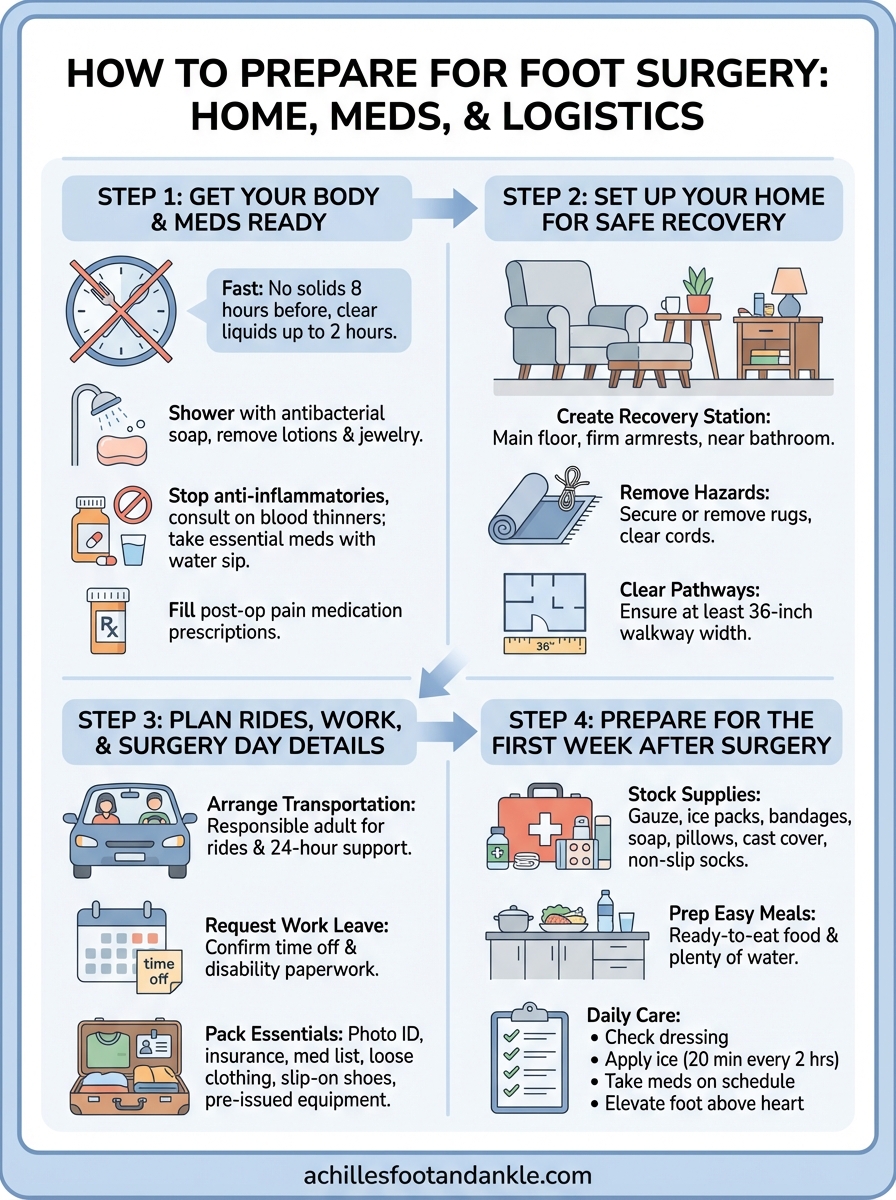
Step 1. Get your body and meds ready
Physical preparation in the days leading up to surgery directly impacts your surgical outcome and recovery speed. Your body needs to be in optimal condition to handle anesthesia, heal tissue, and fight off potential infections. Start following your pre-operative instructions exactly as prescribed, typically 7 to 10 days before your scheduled procedure.
Pre-surgery fasting and hygiene
You must stop eating solid foods at least 8 hours before your surgery time, though your surgical team may give you different timing based on your specific procedure. Clear liquids are usually allowed up to 2 hours before, but confirm these details during your pre-surgical consultation.
Take a thorough shower the night before and the morning of surgery using antibacterial soap. Focus on cleaning your entire body, not just your foot, to reduce bacterial load on your skin. Do not apply lotions, creams, or nail polish to your feet or legs. Remove all jewelry, including toe rings and ankle bracelets.
"Patients who follow pre-surgical hygiene protocols reduce their infection risk by up to 60%."
Medication adjustments
Stop taking anti-inflammatory medications (ibuprofen, naproxen, aspirin) seven days before surgery unless specifically instructed otherwise. These drugs thin your blood and increase bleeding during the procedure. Continue taking blood pressure medications, thyroid medications, and other essential prescriptions with a small sip of water on surgery morning.
Fill your post-operative pain medication prescriptions before surgery day so they’re ready when you return home.
Step 2. Set up your home for safe recovery
Your home environment needs to accommodate limited mobility and reduced balance for at least the first few weeks after foot surgery. Creating a safe space before your procedure prevents falls, reduces strain, and allows you to focus on healing rather than navigating obstacles. Spend the day before surgery making these modifications so everything is ready when you return home.
Create a recovery station
Set up a dedicated recovery area on the main floor of your home where you can spend most of your time. Choose a comfortable chair or couch with firm armrests that make it easier to stand up without putting weight on your operated foot. Position this furniture near a bathroom to minimize walking distance.

"Patients who establish a main-floor recovery station reduce fall risk by 40% compared to those attempting stairs multiple times daily."
Stock your recovery station with these essentials:
- Medications and water bottle within arm’s reach
- Phone charger and entertainment (books, remote controls, laptop)
- Ice packs stored in a nearby cooler
- Elevated footrest (pillows, ottoman, or foam wedge)
- Grabber tool for retrieving dropped items
Remove hazards and clear pathways
Walk through your home and eliminate tripping hazards like loose rugs, electrical cords, and pet toys. Secure area rugs with non-slip backing or remove them entirely during your recovery period. Clear at least 36 inches of walkway width in all paths you’ll use with crutches or a walker.
Step 3. Plan rides, work, and surgery day details
Logistics planning prevents last-minute stress and ensures you have proper support in place when you need it most. You cannot drive yourself home after surgery due to anesthesia effects, and you’ll need help for at least the first 24 to 48 hours. Start making these arrangements two weeks before your procedure to give everyone involved adequate notice.
Transportation and support person
Arrange for a responsible adult to drive you to and from the surgery center, stay during the procedure, and remain with you for the first 24 hours at home. This person must be physically capable of helping you move safely and alert enough to monitor your condition. The surgical center will not release you without confirmed transportation and supervision.
"Patients who arrange 24-hour post-surgical supervision experience fewer complications and medication errors during the critical first day."
Work leave and disability paperwork
Request time off work at least three weeks before surgery. Most foot procedures require one to six weeks of recovery, depending on the complexity. Ask your employer about short-term disability coverage if your absence will be extended, and submit necessary paperwork before your surgery date.
Surgery day essentials
Pack these items the night before:
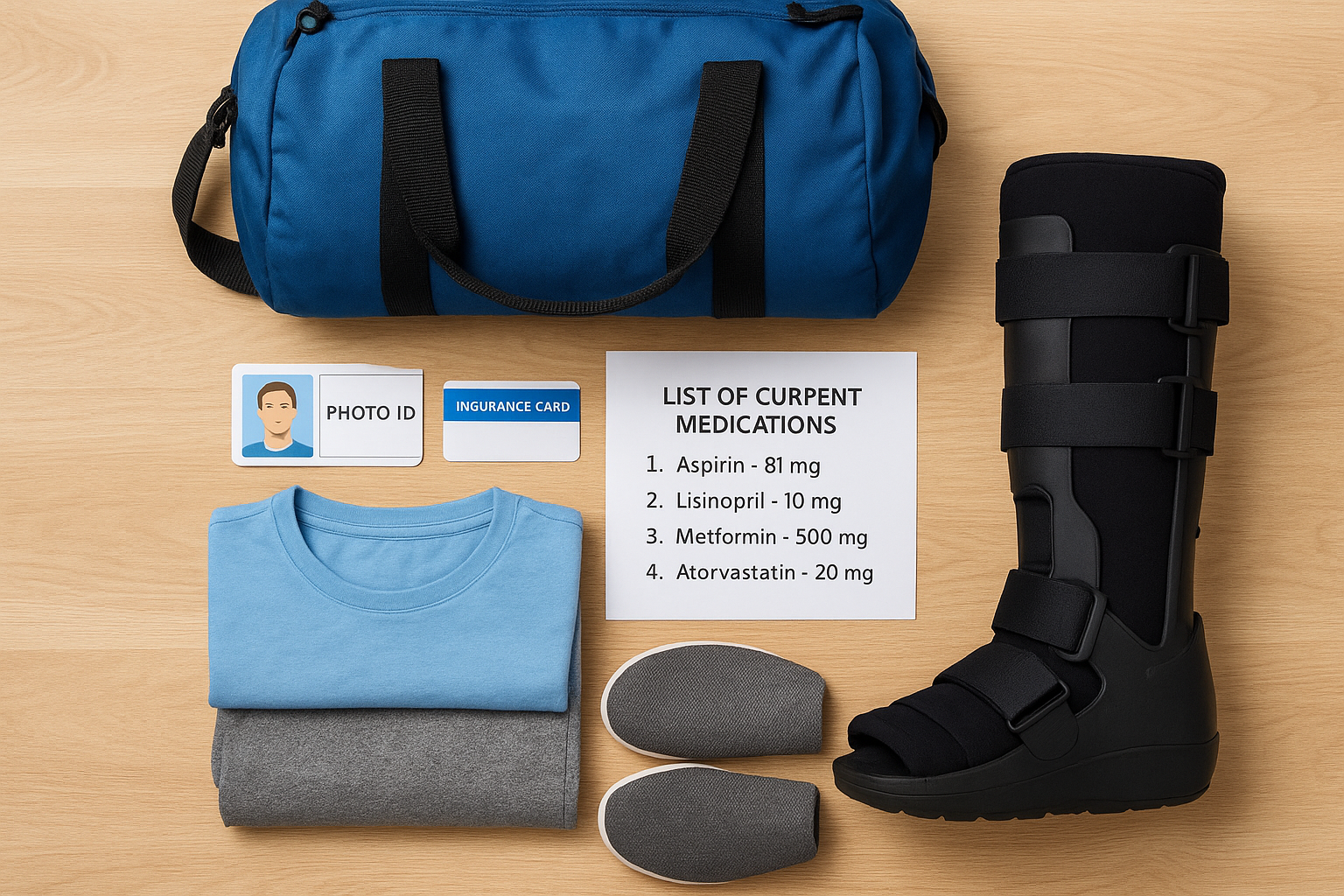
- Photo ID and insurance cards
- List of current medications with dosages
- Loose-fitting clothing and slip-on shoes
- Walking boot or medical equipment if pre-issued
Step 4. Prepare for the first week after surgery
Stocking up on recovery supplies before surgery means you won’t need to send someone to the pharmacy while you’re dealing with post-operative pain. The first week requires constant wound care, elevation, and ice application, so having everything organized and accessible prevents unnecessary stress. Purchase these items at least three days before your procedure.
Essential recovery supplies
Gather these medical supplies and place them at your recovery station:
- Gauze pads and medical tape for dressing changes
- Ice packs (at least 3 to rotate throughout the day)
- Elastic bandage wraps if prescribed
- Antibacterial soap for wound cleaning
- Extra pillows for elevation (foot should be above heart level)
- Plastic bags or cast cover for showering
- Non-slip socks with grip bottoms
Stock your kitchen with easy-to-prepare meals and plenty of water. You won’t feel like cooking, so ready-to-eat protein sources, fruits, and whole grains support healing without requiring preparation effort.
"Patients who maintain proper elevation and ice application for the first 72 hours experience 50% less swelling and faster recovery times."
Daily care checklist
Follow this routine for the first seven days to optimize how to prepare for foot surgery recovery:
- Check your surgical dressing twice daily for bleeding or discharge
- Apply ice for 20 minutes every 2 hours while awake
- Take pain medication on schedule, not just when pain intensifies
- Elevate your foot above heart level whenever sitting or lying down
When you feel ready
Understanding how to prepare for foot surgery gives you control over your recovery outcome before the procedure even begins. The steps you take now, from medication adjustments to home modifications, directly affect your comfort level, healing speed, and complication risk during the weeks ahead. Each preparation decision you make builds a stronger foundation for successful recovery and faster return to your normal daily activities.
Your surgical team at Achilles Foot and Ankle Center has the expertise and advanced facilities to handle your procedure with precision and care. Our state-of-the-art Foot and Ankle Surgery Center in Central Virginia provides the technology and specialized care you need for optimal results, backed by years of experience guiding patients through successful recoveries.
Questions about your specific procedure or recovery timeline deserve detailed answers directly from your surgeon. Schedule an appointment with our team to discuss your preparation plan, review your complete medical history, and confirm every detail before surgery day. We offer same-day appointments for urgent concerns and accept all major insurance plans throughout Central Virginia.