

Your feet carry you through roughly 100,000 miles over a lifetime, yet they’re often the most neglected part of your body. Finding reliable tips for healthy feet shouldn’t require a medical degree, but knowing which habits actually make a difference can feel overwhelming with so much conflicting advice out there.
Whether you’re dealing with occasional discomfort, managing diabetes, or simply want to prevent future problems, daily foot care matters more than most people realize. Small changes in how you wash, dry, and protect your feet can prevent infections, reduce pain, and keep you moving comfortably for years to come.
At Achilles Foot and Ankle Center, our podiatrists across Central Virginia see firsthand how preventative care transforms foot health. We’ve compiled ten practical steps, from choosing the right shoes to exercises that strengthen your arches, so you can take better care of your feet starting today.
1. Start with a podiatry plan, not guesswork
Self-diagnosing foot problems online leads to wasted time and can make conditions worse. The most effective tips for healthy feet start with getting professional guidance before pain becomes chronic. Your podiatrist can identify issues early, recommend preventative measures tailored to your lifestyle, and create a treatment plan that addresses your specific needs rather than generic advice.
Tip 1: Get evaluated early when pain or swelling persists
You should schedule an appointment if pain lasts longer than a week despite rest and home care. Persistent discomfort signals that something beyond minor strain needs attention. Swelling that doesn’t improve with elevation, bruising that spreads, or difficulty walking without limping all warrant a professional evaluation.
Early intervention prevents minor foot problems from becoming chronic conditions that limit your mobility.
Minor aches can escalate into stress fractures, tendinitis, or arthritis if left untreated. Your podiatrist will examine your gait, check joint flexibility, and often use imaging to diagnose the root cause before recommending treatment options.
Tip 2: If you have diabetes or neuropathy, check in sooner
Diabetes reduces blood flow and sensation in your feet, making injuries easy to miss. You need regular podiatry visits every three to six months, even without obvious symptoms, because nerve damage hides problems that could lead to ulcers or infections. Neuropathy also means you might not feel cuts, blisters, or pressure sores forming.
Your podiatrist will check for circulation issues, test sensation in your feet, and examine your skin for early signs of breakdown that you might overlook at home.
When to call a podiatrist right away
Contact a podiatrist immediately if you notice signs of infection like warmth, redness, pus, or fever. Sudden numbness, sharp shooting pain, or inability to bear weight also require urgent care. Open wounds that won’t heal, especially for diabetic patients, need professional treatment within 24 hours to prevent complications.
2. Keep your feet clean, dry, and moisturized
Daily hygiene prevents most common foot problems, yet many people overlook the details that matter most. Proper washing and drying techniques stop bacterial and fungal growth before it starts, while strategic moisturizing keeps skin from cracking without creating infection risks. These tips for healthy feet form the foundation of preventative care you can implement immediately.
Tip 3: Wash daily and dry carefully between toes
You need to wash your feet with soap and warm water every day, paying special attention to areas between your toes where bacteria thrive. Scrub gently with a washcloth to remove dead skin and dirt that accumulates throughout the day. Dry thoroughly between each toe after washing because trapped moisture creates the perfect environment for athlete’s foot and other fungal infections.
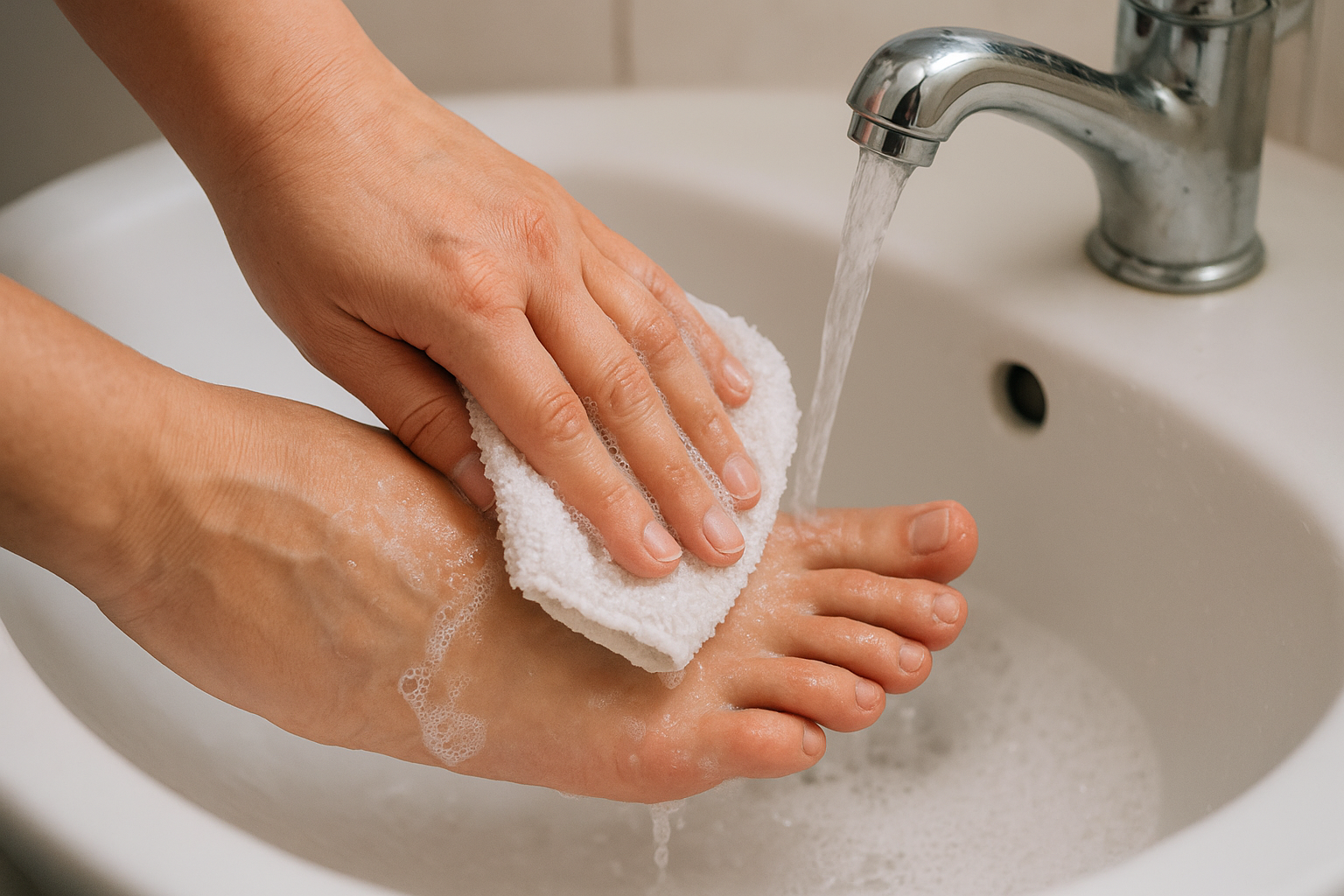
Fungi need warm, damp spaces to multiply, making wet skin between your toes an ideal breeding ground.
Pat your feet dry instead of rubbing to avoid irritating sensitive skin. Focus extra time on drying the webbing between toes where moisture lingers longest.
Tip 4: Moisturize heels and soles, but skip lotion between toes
Apply moisturizer to your heels, soles, and tops of your feet to prevent dry, cracked skin that can become infected. Choose fragrance-free lotions that absorb quickly without leaving residue. Never apply lotion between your toes, as excess moisture in these tight spaces promotes fungal growth and breaks down skin integrity.
When to call a podiatrist right away
Contact your podiatrist if you develop persistent athlete’s foot symptoms that don’t improve with over-the-counter treatments after two weeks. Cracked heels that bleed, ooze fluid, or become infected also require professional care.
3. Trim nails and manage skin the safe way
Poor nail and skin care causes painful problems that most people can avoid with simple techniques. Learning the correct way to trim nails and manage calluses prevents infections, ingrown toenails, and skin damage that can become serious complications. These tips for healthy feet focus on safe methods that protect your feet while keeping them comfortable and healthy.
Tip 5: Trim toenails straight across to prevent ingrowns
Cut your toenails straight across without rounding the corners to prevent painful ingrown nails that burrow into surrounding skin. Leave nails long enough that the edges don’t dig into adjacent skin, typically about even with the tip of your toe. Use proper nail clippers designed for toenails rather than scissors or fingernail clippers, which lack the strength to cut through thicker nails cleanly.
Rounded edges push nails into the skin as they grow, creating pressure and inflammation that leads to infection.
Trim nails after bathing when they’re softer and easier to cut without splitting. File rough edges smooth to prevent snags that can tear skin or catch on socks.
Tip 6: Treat calluses and corns gently, never with blades
Remove thick calluses by soaking your feet in warm water, then gently filing with a pumice stone or foot file while skin is still damp. Apply pressure in one direction rather than sawing back and forth to avoid irritation. Never use razor blades, corn removal pads with medication, or sharp tools to cut away hardened skin because you risk deep cuts that become infected quickly.
When to call a podiatrist right away
Schedule an appointment if you notice signs of an ingrown toenail like redness, swelling, or drainage along the nail edge. Calluses that crack deeply, bleed, or cause severe pain also need professional treatment.
4. Wear shoes and socks that protect your feet
Footwear choices directly impact your comfort, stability, and risk of injury throughout each day. Selecting properly fitted shoes and moisture-managing socks prevents blisters, reduces pressure points, and supports healthy foot mechanics. These tips for healthy feet help you make smarter choices when buying and wearing shoes so you avoid common problems that develop from poor fit or improper materials.
Tip 7: Choose shoes that fit your foot shape and activity
Buy shoes in the afternoon when your feet are naturally more swollen to ensure comfortable fit throughout the day. Look for footwear with a wide toe box that doesn’t squeeze your toes together, adequate arch support for your foot type, and cushioning appropriate for your activity level. Replace athletic shoes every 300 to 500 miles of use because worn-out cushioning stops absorbing impact properly, putting stress on your joints and ligaments.
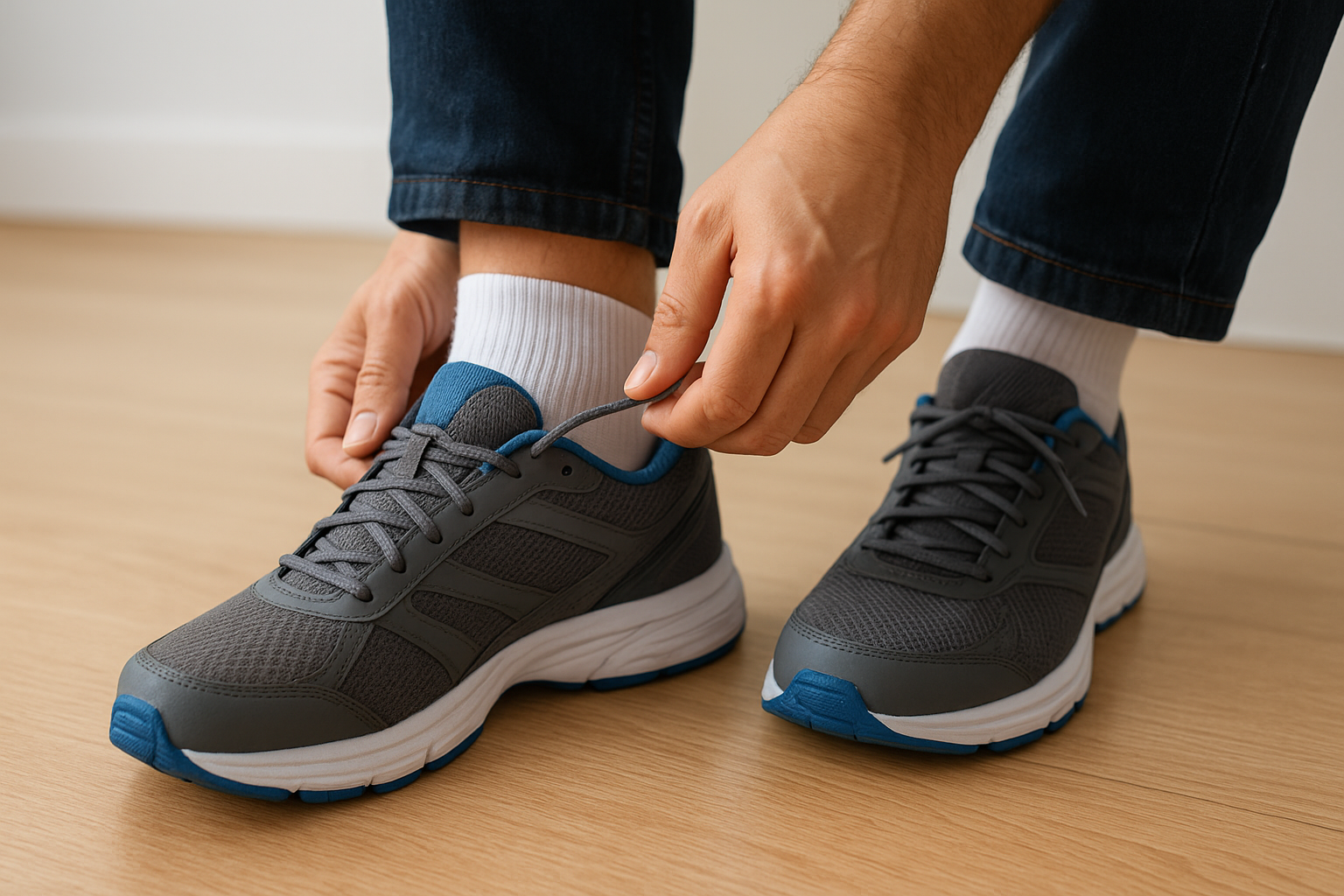
Shoes that fit your left foot perfectly might feel tight on your right, so always try both shoes and walk around before buying.
Tip 8: Use the right socks and rotate shoes to control moisture
Wear moisture-wicking socks made from synthetic blends or merino wool rather than cotton, which traps sweat against your skin and creates friction. Change socks during the day if they become damp from sweat or weather. Alternate between at least two pairs of shoes daily to allow each pair 24 hours to dry completely, preventing bacterial buildup and material breakdown.
When to call a podiatrist right away
Contact your podiatrist if you develop persistent blisters that won’t heal or recurring hot spots despite changing shoes. Numbness, tingling, or sharp pain when wearing properly fitted shoes also requires evaluation.
5. Build strength and prevent everyday injuries
Strong feet handle daily stress better and recover faster from minor strains. Building foot and ankle stability through targeted exercises reduces your risk of sprains, plantar fasciitis, and other common injuries that sideline active lifestyles. These final tips for healthy feet focus on strengthening muscles, protecting vulnerable areas, and responding quickly to problems before they worsen.
Tip 9: Do simple foot and ankle strength and mobility work
Practice toe curls, ankle circles, and calf raises for five minutes daily to maintain flexibility and strength that supports proper walking mechanics. Pick up marbles or a towel with your toes to work the small muscles in your feet that stabilize your arch. Stretch your calves and Achilles tendons before and after exercise to prevent tightness that pulls on your heel and foot structures.
Regular strengthening exercises prevent 30 to 50 percent of common overuse injuries by improving how your feet absorb impact.
Tip 10: Avoid going barefoot and handle blisters fast
Wear protective footwear even indoors on hard surfaces to cushion impact and prevent puncture wounds from hidden objects. Cover new blisters immediately with clean bandages after draining them with a sterilized needle if necessary, then keep the area dry and monitor for infection signs.
When to call a podiatrist right away
Contact your podiatrist if you experience persistent weakness, instability, or repeated ankle sprains that suggest ligament damage. Blisters that develop pus, increasing redness, or warmth also need immediate professional care.
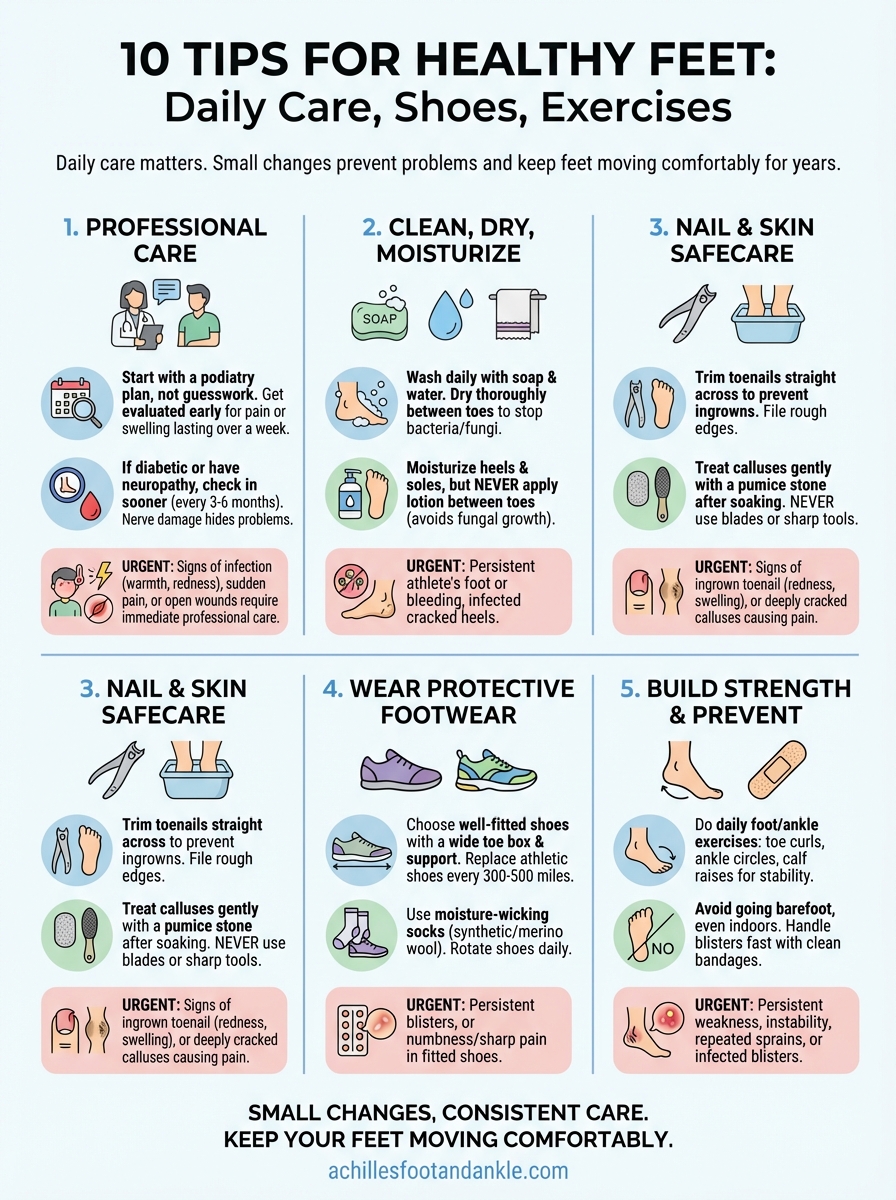
A simple way to keep your feet on track
Implementing these tips for healthy feet doesn’t require dramatic lifestyle changes or expensive equipment. Start with one or two habits that address your biggest concerns, whether that’s upgrading your footwear, establishing a daily washing routine, or scheduling regular podiatry checkups. Small, consistent actions prevent most common foot problems before they develop into chronic conditions that limit your mobility.
Your feet deserve the same attention you give to the rest of your body, especially since they support your weight and movement every single day. Professional guidance makes the difference between guessing at solutions and following a treatment plan designed specifically for your needs. If you’re experiencing pain, notice changes in your foot health, or simply want to establish preventative care habits, schedule a same-day appointment with our podiatrists across Central Virginia to get personalized recommendations that keep you moving comfortably.