

Burning soles, tingling toes, or an ache that shows up for no clear reason can be more than tired feet after a long day. Before you blame your shoes, it’s worth asking what vitamin deficiency causes foot pain, because nutrient shortfalls are a common and often overlooked trigger, especially if the pain shows up in both feet at once.
The short answer: low B12 and vitamin D levels are the most frequent culprits, but deficiencies in B6, folate, and even magnesium can also irritate the nerves and bones in your feet, leading to numbness, tingling, or a deep burning sensation that gets worse at night. Each vitamin affects your feet differently, so pinpointing the right one matters for getting relief.
In this article, we’ll walk through the specific vitamins tied to foot pain, how each deficiency shows up in your feet, and when it’s time to stop guessing and get checked out. As podiatrists who see these cases regularly at Achilles Foot and Ankle Center, we’ll also cover when foot pain points to something beyond nutrition, like peripheral neuropathy, and what steps to take next.
Why vitamin deficiency foot pain shouldn’t be ignored
Brushing off tingling toes as "just getting older" or blaming a new pair of shoes is easy, but that instinct can cost you real function down the road. Untreated nerve damage from a vitamin shortfall doesn’t stay mild. It tends to creep upward, spreading from the toes to the ankles and eventually the lower legs, and the longer it goes unaddressed, the harder it becomes to reverse.
Nerve damage can become permanent
Once peripheral nerves lose their protective myelin coating from chronic B12 or B6 deficiency, they don’t always bounce back even after you correct the vitamin levels. This is why catching which vitamin deficiency causes foot pain early matters so much. Patients who wait months or years before mentioning the burning or numbness to a doctor often see only partial improvement once treatment starts, while those caught in the first few months tend to recover fully.
A tingling foot today can mean a permanent nerve problem tomorrow if the underlying vitamin deficiency goes untreated.
It’s often a sign of something bigger
Deficiency-related foot pain rarely travels alone. Low B12 frequently signals an absorption problem like pernicious anemia, celiac disease, or the aftereffects of gastric bypass surgery. Low vitamin D can point to limited sun exposure, kidney issues, or a diet that’s missing key nutrients entirely. Ignoring the foot symptom means you’re also ignoring whatever’s driving the deficiency in the first place, and that underlying cause keeps working against your health in the background.
Falls and injuries become more likely
Numbness and reduced sensation in your feet raise your risk of tripping, stepping on something sharp without noticing, or developing a wound that goes unnoticed until it’s infected. This is especially dangerous for older adults and anyone with diabetes, where a small cut can turn into a serious complication fast. According to the Centers for Disease Control and Prevention, falls are a leading cause of injury among older adults, and nerve-related foot numbness is one of the risk factors that gets overlooked most often.
Getting ahead of the problem protects more than your comfort. It protects your mobility, your independence, and in some cases your ability to catch a more serious condition before it advances further.
How to identify which vitamin is behind your foot pain
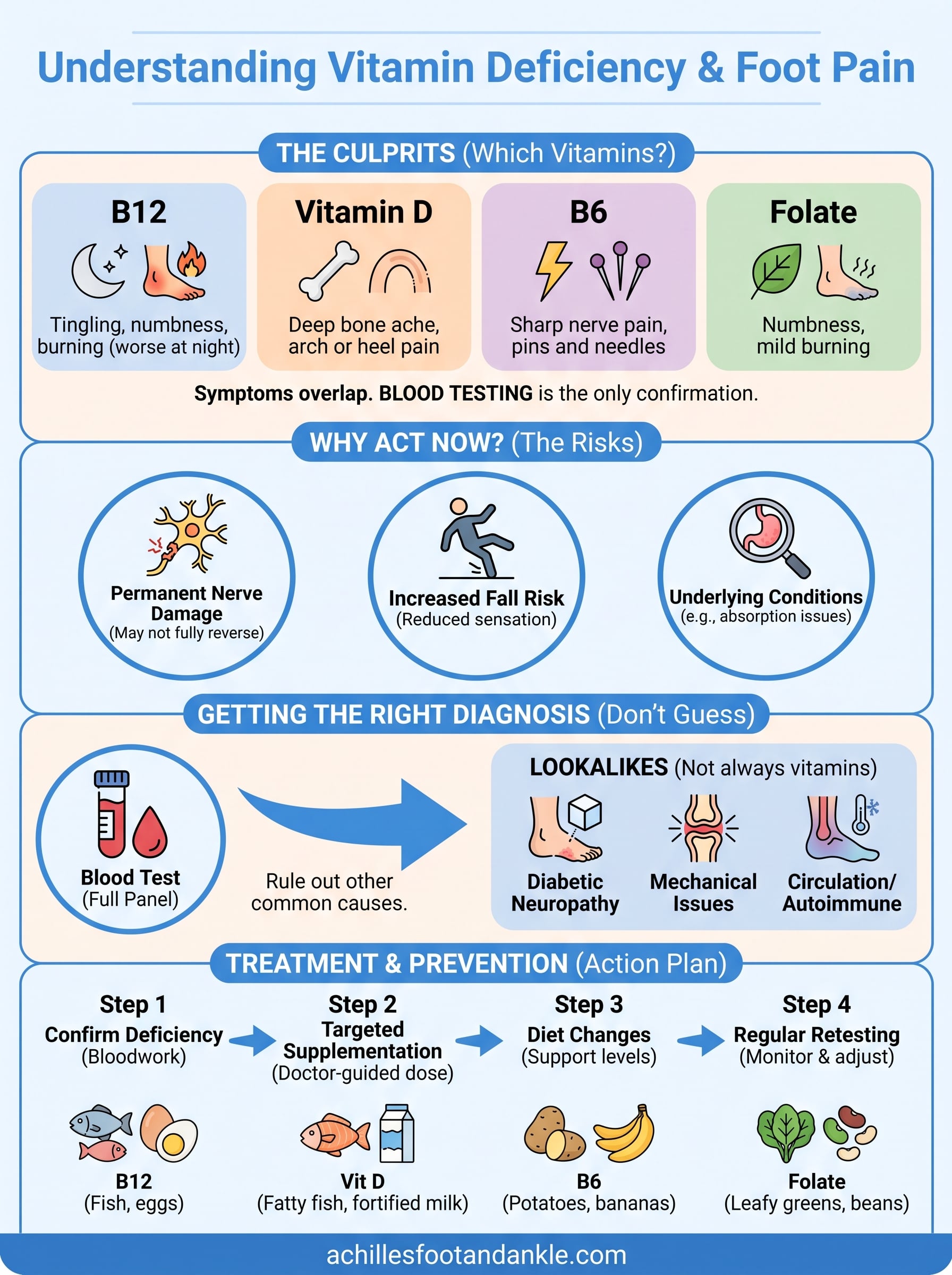
Guessing which vitamin is causing your foot pain rarely works, since the symptoms overlap so much between B12, B6, D, and folate shortfalls. Blood testing is the only reliable way to confirm which nutrient is low, but paying attention to the pattern of your symptoms can help you describe things clearly to your doctor and speed up the diagnosis.
Match your symptoms to a likely vitamin
Each deficiency tends to produce a slightly different feeling in your feet. Use this table as a starting point, not a diagnosis:

| Vitamin | Common foot symptoms | Other clues |
|---|---|---|
| B12 | Tingling, numbness, burning at night | Fatigue, pale skin, memory issues |
| Vitamin D | Deep bone ache, arch or heel pain | Muscle weakness, frequent fractures |
| B6 | Sharp nerve pain, pins and needles | Cracked lips, mood changes |
| Folate | Numbness, mild burning | Anemia symptoms, mouth sores |
Symptoms can point you in the right direction, but only a blood test tells you which vitamin is actually low.
Get tested before you self-treat
Loading up on random supplements before you know what’s actually low wastes money and can backfire. Too much B6, for example, can cause the same nerve damage you’re trying to fix. Request a full panel that includes B12, folate, and vitamin D levels, and ask your doctor to check for underlying causes like celiac disease or a B12 absorption issue if your levels come back low without an obvious dietary explanation.
Other conditions that mimic vitamin deficiency foot pain
Foot pain that feels like a vitamin problem isn’t always one. Several other conditions produce the exact same burning, tingling, or numbness, so ruling out nutrient deficiency is only half the diagnostic picture. Diabetic peripheral neuropathy is the most common lookalike, since high blood sugar damages nerves in a pattern that’s nearly identical to a B12 or B6 shortfall, right down to the nighttime burning in the soles.
Structural and nerve-compression causes
Others stem from mechanical problems rather than nutrition. Tarsal tunnel syndrome, where a nerve gets compressed near the ankle, can cause tingling and numbness that mimics a deficiency almost exactly. Morton’s neuroma, plantar fasciitis, and even a pinched nerve in the lower back can send pain signals down into the foot that feel like something is wrong with the foot itself, even though the actual source is somewhere else entirely.
If your vitamin levels come back normal but the burning or numbness persists, the cause is likely mechanical, not nutritional.
Circulation and autoimmune conditions
Poor blood flow from peripheral artery disease can also cause aching, cramping, or coldness in the feet that gets confused with nerve-related deficiency pain. Autoimmune conditions like lupus or rheumatoid arthritis sometimes announce themselves first through foot and joint pain before other symptoms show up. Thyroid disorders belong on this list too, since an underactive thyroid slows nerve function in ways that overlap heavily with what a B12 deficiency looks like.
Because so many conditions overlap in symptoms, a podiatrist exam paired with bloodwork gives you a far more complete answer than guessing based on symptoms alone.
How to treat and prevent deficiency-related foot pain
Once bloodwork confirms which vitamin is low, treatment usually starts with targeted supplementation rather than guesswork. Correcting B12 often means injections at first if levels are severely low, followed by oral supplements or nasal sprays for maintenance. Vitamin D typically gets corrected with a high-dose prescription for a few weeks, then a lower daily dose to keep levels steady long term.
Diet changes that support nerve health
Food alone rarely reverses a severe deficiency, but it keeps levels from dropping again once you’ve corrected them. Build your plate around these sources:

- B12: eggs, fish, poultry, and fortified cereals
- Vitamin D: fatty fish, egg yolks, and fortified milk
- B6: chickpeas, potatoes, and bananas
- Folate: leafy greens, beans, and citrus fruit
Correcting the deficiency stops the damage from spreading, but it doesn’t undo nerve injury that’s already happened.
Monitor and retest regularly
Supplementing without follow-up testing is a common mistake. Retest your levels every three to six months until they stabilize, since dosing needs often change once your body starts absorbing the vitamin properly again. If you have an absorption issue like celiac disease or a history of gastric bypass, plan on lifelong monitoring rather than a one-time fix.
Prevention matters just as much as treatment. Anyone on metformin, a strict vegan diet, or long-term acid-reducing medication should get B12 checked annually, since these are the most common drivers of deficiency we see in patients who thought their diet was already balanced.
When it’s time to talk to a podiatrist
Burning, numbness, or tingling in your feet is never something to wait out. Whether the cause turns out to be low B12, low vitamin D, or a mechanical issue like tarsal tunnel syndrome, the fix starts with an accurate diagnosis, not a guess based on symptoms you read online. Waiting only gives nerve damage more time to set in, and that’s the one part of this equation you can’t always reverse.
Our team at Achilles Foot and Ankle Center sees these cases every week across Central Virginia, and we know how to sort a vitamin deficiency from the conditions that mimic it. We’ll check your bloodwork, examine your feet directly, and build a treatment plan that actually matches what’s going on. Don’t let tingling toes turn into a permanent problem. Schedule a same-day appointment and get answers this week, not months from now.