Corns and calluses might seem minor, but anyone who’s dealt with them knows how much persistent foot pain can disrupt your daily routine. These thick, hardened patches of skin develop from repeated friction and pressure, often caused by shoes that don’t fit right or small habits you might not even notice. The good news? Learning how to prevent corns and calluses is straightforward once you know what to focus on.
At Achilles Foot and Ankle Center, our podiatrists treat corns and calluses across our Central Virginia locations every single day. We’ve seen firsthand how a few simple adjustments can keep these problems from coming back. That hands-on experience is exactly what shaped the five practical tips below.
Whether you’re dealing with recurring calluses or want to stop corns before they start, these steps will help you protect your feet and stay comfortable. Let’s walk through what actually works, and why each tip matters for long-term foot health.
1. Get a podiatrist check for repeat trouble spots
If corns and calluses keep coming back in the same spots, that pattern is telling you something important. Repeated pressure points in predictable areas usually signal an underlying structural cause, such as an uneven gait or a toe deformity that keeps shifting weight onto the wrong parts of your foot. A podiatrist can pinpoint that cause before minor skin thickening turns into chronic pain.
What this prevents and why it works
Treating a corn or callus at home only removes the surface buildup. It does nothing to address the pressure pattern that caused it in the first place. A podiatrist can identify the mechanical or structural factors driving the problem and build a targeted plan around them. Knowing how to prevent corns and calluses long-term often starts with this single step.
If the same spot keeps hardening no matter what you do, your skin is responding to a cause that over-the-counter products cannot fix.
Regular check-ins also allow your podiatrist to catch early changes in skin thickness before they progress into painful corns, which shortens your recovery window considerably.
Who benefits most
People with diabetes or poor circulation benefit most from a professional evaluation, since even small skin changes can escalate into serious complications when left unmonitored. That said, anyone experiencing recurring corns or calluses that return within weeks of removal should make an appointment sooner rather than later.
- Athletes in high-impact sports
- People with bunions or hammertoes
- Anyone whose home treatments stop working after a short time
What to expect at the visit
Your podiatrist will examine your foot structure and gait, often using digital imaging or pressure mapping to see exactly where your foot absorbs excess load. They’ll then recommend a specific combination of treatments that might include custom orthotics, protective padding, or care for a toe deformity that’s redirecting pressure onto vulnerable areas.
Follow-up instructions will typically include footwear guidance and a schedule for monitoring your pressure points over the coming weeks.
2. Choose shoes that fit your feet, not just the size
Your shoes are the single most controllable factor in corn and callus formation. Most people pick shoes by standard size, but sizing varies considerably between brands, and a poor fit creates exactly the repeated friction that builds hard skin over time.
Fit checklist for toe box, width, and heel
Check these three things before buying any new shoe. Getting each one right is one of the most direct ways to prevent friction before it starts:
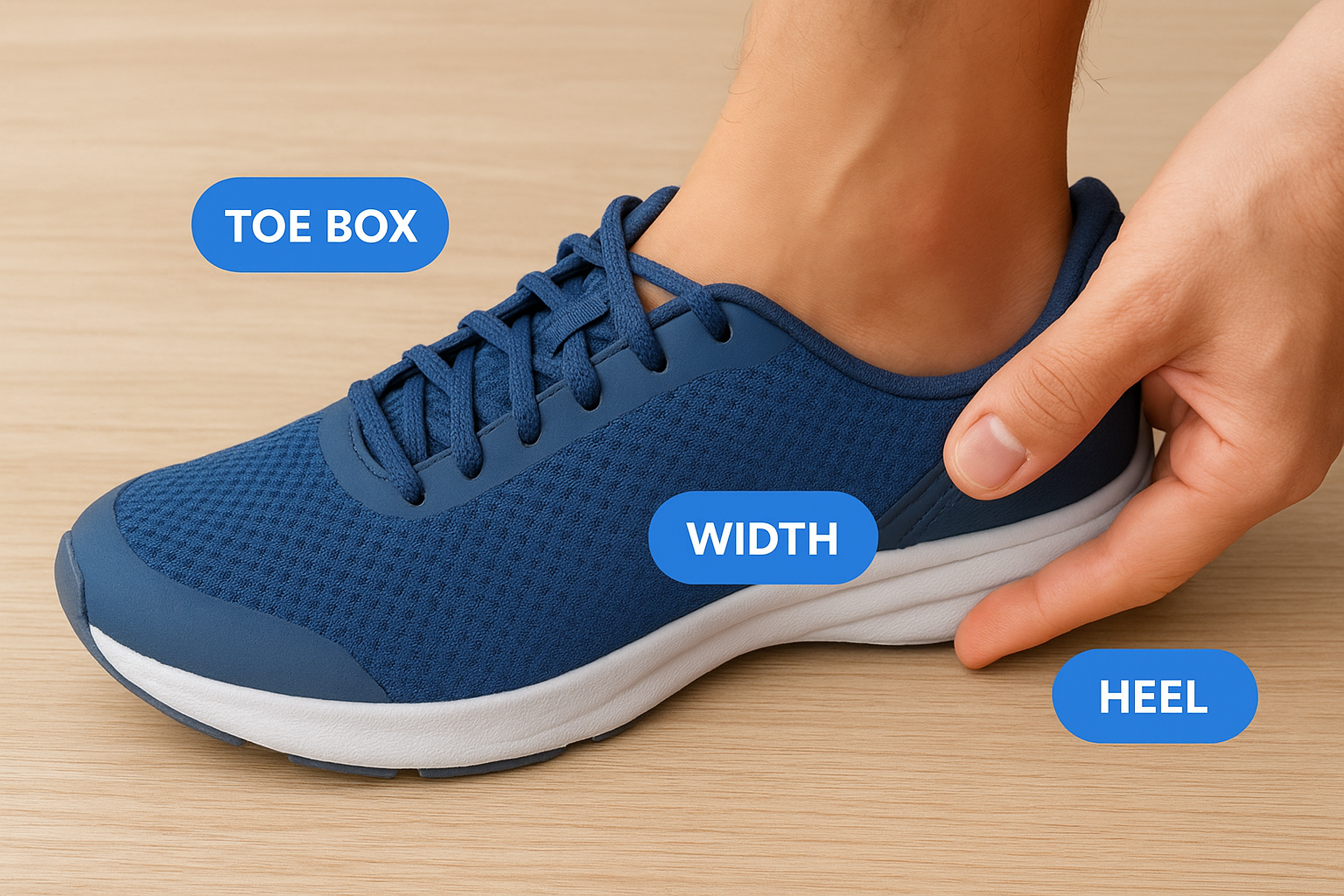
- Toe box: at least a thumb’s width of space between your longest toe and the shoe’s end
- Width: no side pinching when you’re standing upright
- Heel: a firm hold with no slipping when you walk
If your toes feel compressed or your heel lifts with each step, that shoe will create friction problems regardless of how well it fits elsewhere.
How to break in shoes without creating friction
New shoes need gradual introduction. Start with 30 to 60-minute sessions before wearing them all day. This gives the shoe material time to soften around your foot’s specific shape and reduces the risk of rubbing on vulnerable spots.
When to replace shoes and insoles
Most shoes lose meaningful cushioning after 300 to 500 miles of wear. Worn insoles stop redistributing pressure evenly, which concentrates load on the same spots repeatedly. Tracking shoe age and visible wear patterns is a simple habit that fits directly into knowing how to prevent corns and calluses before they return.
3. Use socks and padding to reduce friction fast
The right socks and padding give your skin immediate protection against the friction that builds hard skin over time. Knowing how to prevent corns and calluses often comes down to the small daily choices you make before putting on your shoes.
Best sock materials and features for high-friction feet
Choose socks made from moisture-wicking materials like merino wool or synthetic blends. Wet skin increases friction, so keeping your feet dry lowers your risk considerably. Look for these key features when shopping:
- Seamless toe construction
- Extra cushioning at the heel and ball of the foot
- A snug fit with no bunching or excess fabric
Padding options for common pressure points
Moleskin, gel pads, and silicone toe sleeves reduce direct pressure on vulnerable spots. Apply them to areas where you notice redness or early thickening before a corn fully forms.
Catching a pressure point early with the right padding can stop a corn from developing altogether.
When to avoid over-the-counter medicated removers
Medicated corn removers contain salicylic acid, which damages healthy surrounding skin if used incorrectly. If you have diabetes, neuropathy, or poor circulation, skip these products entirely and contact a podiatrist instead.
4. Keep skin soft with a simple weekly foot routine
Soft, well-moisturized skin resists friction better than dry skin. A consistent weekly routine gives your feet the maintenance they need to avoid hard skin buildup.
Daily habits that prevent hard skin buildup
Wash your feet daily with mild soap and dry them thoroughly between the toes. Moisture trapped in that area increases your risk of skin breakdown.
Apply a foot-specific moisturizer each night to keep skin pliable. Soft skin handles repeated pressure without hardening the way dry skin does.
Safe exfoliation and moisturizing steps
Use a pumice stone or foot file once or twice a week on damp skin to remove surface buildup without damaging healthy tissue.
Follow immediately with a urea-based moisturizer, which penetrates deeper than standard lotions and softens thickened skin more effectively.
Consistent exfoliation paired with moisturizing is one of the most practical ways to approach how to prevent corns and calluses from returning.
Special precautions for diabetes and poor circulation
If you have diabetes or poor circulation, skip sharp tools and aggressive scrubbing entirely. Stick to gentle daily moisturizing and visual skin checks, and contact your podiatrist if you notice any new thickening or discoloration.
5. Reduce pressure with orthotics and biomechanical fixes
Sometimes better shoes and socks aren’t enough because the problem starts in how your foot moves, not just what covers it. Orthotics and biomechanical corrections address that root cause directly.
Signs you need support beyond better shoes
If you notice consistent pressure buildup in the same spot despite proper footwear, your foot mechanics may be the real issue. Common signs include uneven wear patterns on your shoe soles or persistent redness under the ball of your foot.
How orthotics and inserts change pressure patterns
Custom orthotics redistribute your body weight across a wider surface area, reducing concentrated load on specific spots. Over-the-counter inserts can help with mild cases, but custom-fitted devices address your exact pressure map far more precisely.
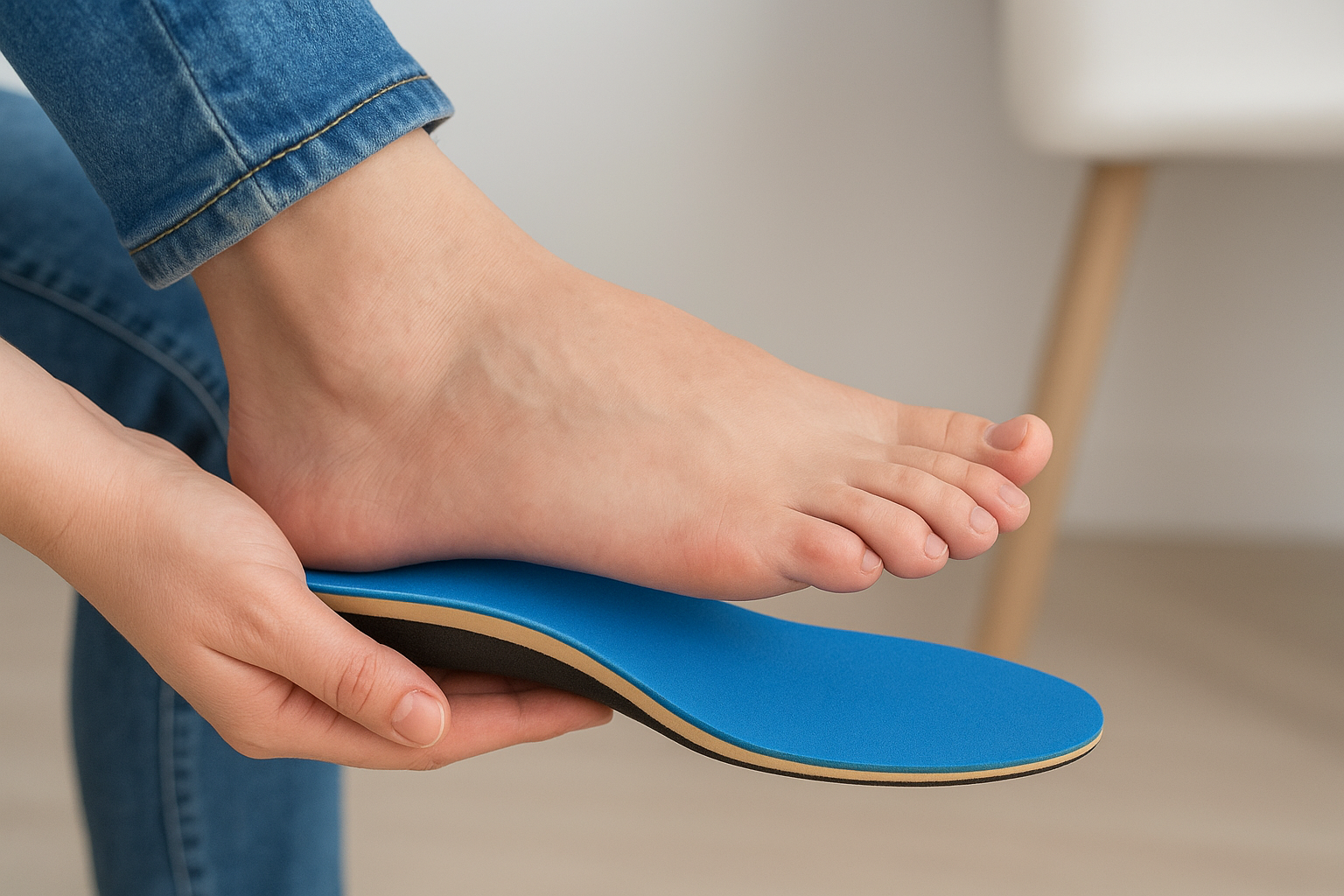
Redistributing pressure is one of the most effective long-term strategies for how to prevent corns and calluses from returning in the same spots.
When toe deformities or gait issues need treatment
Conditions like bunions or hammertoes shift weight onto parts of your foot that weren’t designed to absorb it. Your podiatrist can recommend targeted interventions, from splinting and stretching to surgical correction, that fix the mechanical cause rather than just its symptoms.
Key takeaways
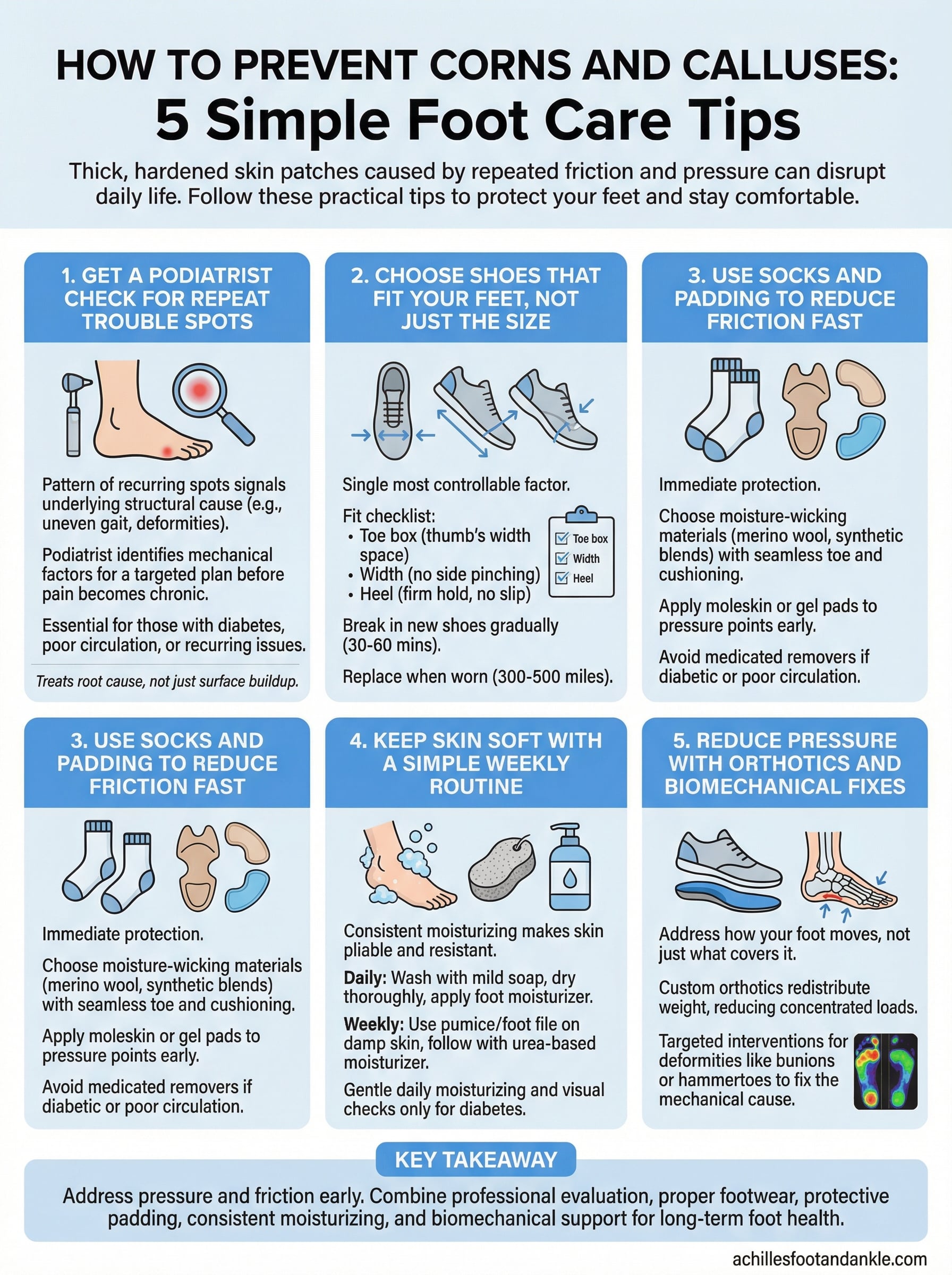
Knowing how to prevent corns and calluses comes down to addressing pressure and friction before your skin has a chance to harden. The five tips above work best together: professional evaluation catches structural causes, proper footwear eliminates unnecessary rubbing, and the right socks and padding give you immediate daily protection.
Your foot care routine also plays a significant role. Consistent moisturizing and safe exfoliation keep skin pliable enough to resist repeated pressure, while orthotics and biomechanical corrections fix the mechanical root causes that home care cannot reach.
Small, consistent habits protect your feet far better than reacting after a corn or callus has already formed. If you have recurring trouble spots, diabetes, or a structural foot condition, a podiatrist visit is the most direct path to lasting relief. Schedule a same-day appointment at Achilles Foot and Ankle Center and get a personalized plan built around your feet.