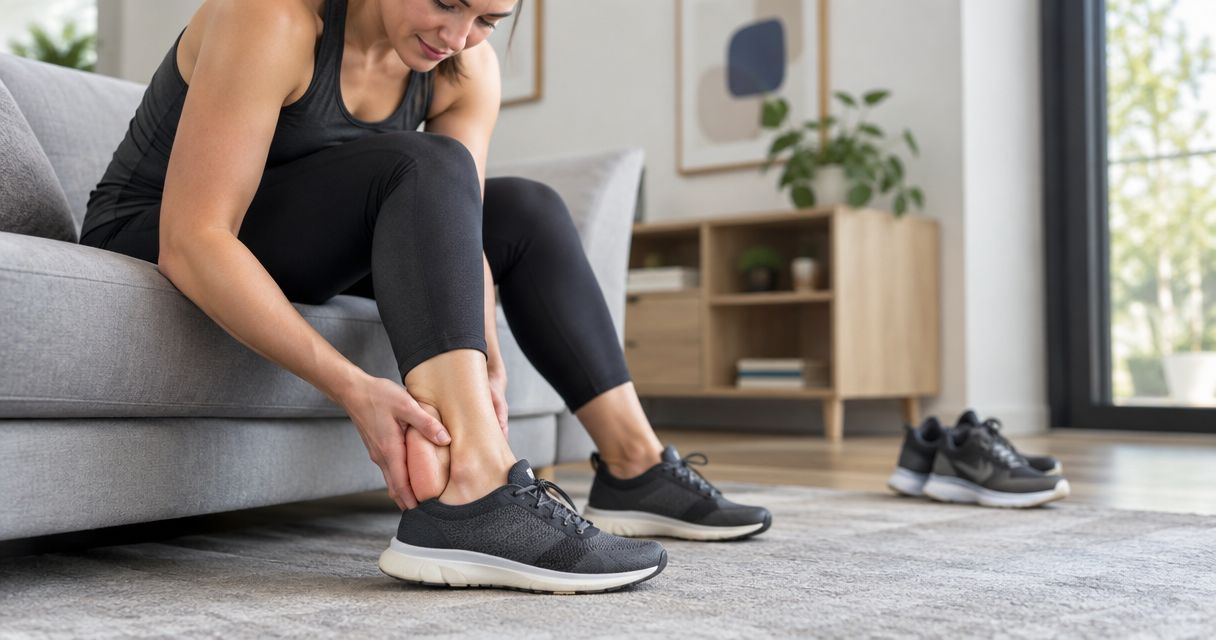

That sharp, stabbing pain under your heel first thing in the morning, it’s hard to ignore. Heel spurs, bony calcium deposits that form along the underside of the heel bone, affect roughly 10% of the population at some point. And while many people assume surgery is the only fix, the reality is that most heel spurs respond well to conservative care. If you’re wondering how to treat heel spurs naturally, you’re already headed in the right direction.
At Achilles Foot and Ankle Center, our podiatrists across Central Virginia see heel spurs regularly, and we often recommend at-home strategies as a first line of treatment. Simple changes to your daily routine can reduce inflammation, ease pressure on the affected area, and help you get back on your feet without medication or procedures.
Below, we’ll walk you through five natural remedies you can start using today. These are the same approaches our team discusses with patients in the clinic, backed by what we see work in real-world practice. Whether your pain is mild or keeping you off your feet entirely, these methods are worth trying before considering more invasive options.
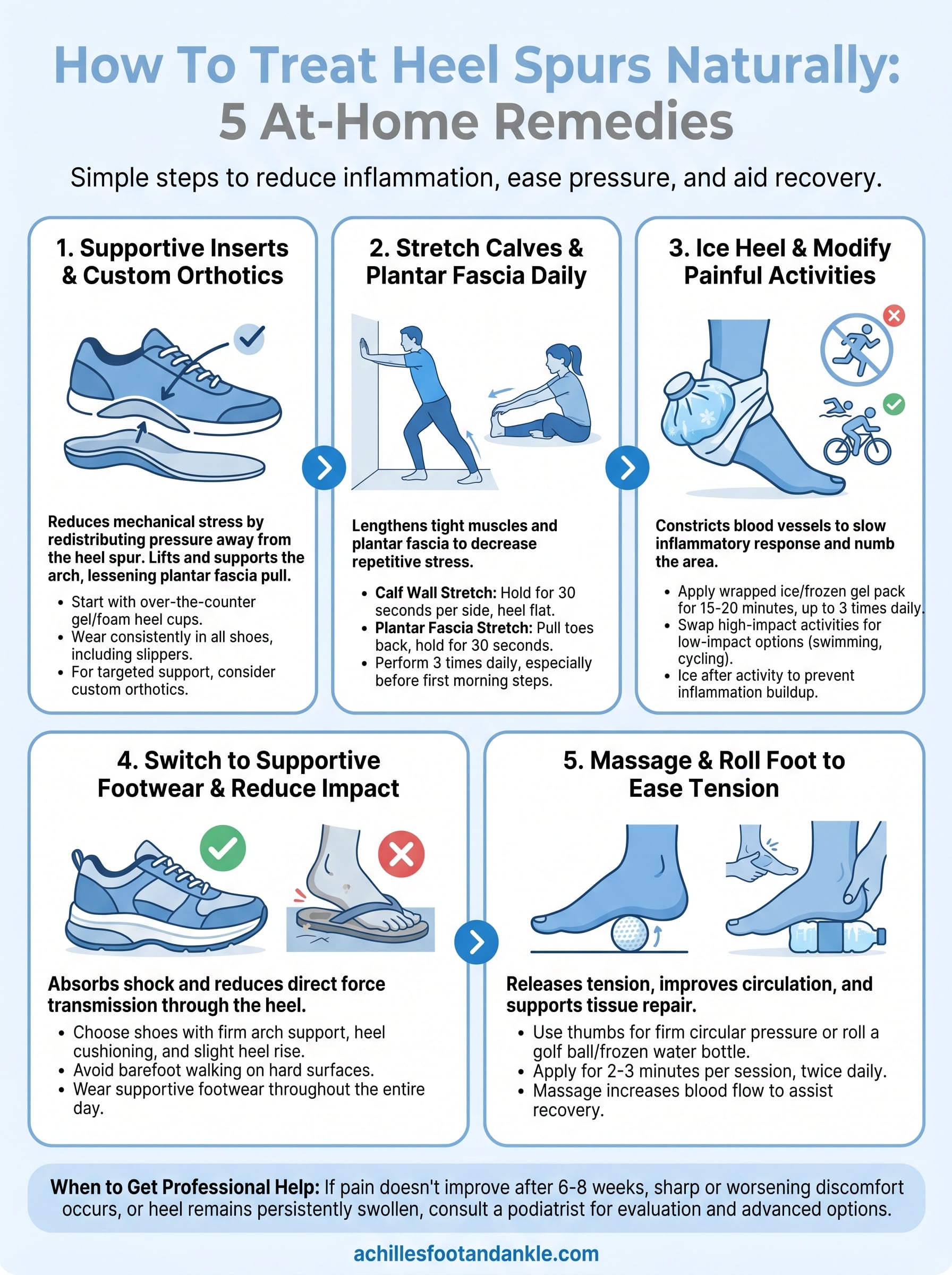
1. Use supportive inserts and custom orthotics
One of the most effective ways to treat heel spurs naturally is to address the mechanical stress on your heel. Heel spurs typically develop because the plantar fascia, the thick band of tissue running along the bottom of your foot, repeatedly pulls on the heel bone. Supportive inserts and orthotics reduce that pulling force by redistributing pressure away from the spur.
Why it helps heel spur pain
When you walk or stand on a hard surface without arch support, your plantar fascia absorbs most of the impact directly at the heel. A well-cushioned insert lifts and supports your arch, which reduces the strain at the attachment point where the spur formed. Less tension on that tissue means less inflammation and pain with every step you take.
Exactly how to do it
Start with an over-the-counter gel or foam heel cup, available at most pharmacies. Place it inside your everyday shoes so it sits under the heel and slightly raises the back of your foot. If you try several inserts and still feel significant pain, ask a podiatrist about custom orthotics, which are molded to the exact shape of your foot and provide far more targeted support than off-the-shelf options.
How often and how long
Wear your inserts every time you put on shoes, including slippers at home. Walking barefoot on hard floors is one of the most common reasons heel spur pain flares in the morning. Most people notice meaningful pain reduction within four to eight weeks of consistent use, though some cases take longer depending on the severity of the spur.
Consistency is what makes orthotics work. Wearing them on and off produces far less relief than wearing them every single day.
When to see a podiatrist
If you have been using inserts for six to eight weeks without noticeable improvement, schedule a professional evaluation. A podiatrist can assess your foot mechanics and gait to determine whether a prescription orthotic or an additional treatment approach is the right next step for you.
2. Stretch your calves and plantar fascia daily
Tight calf muscles and a stiff plantar fascia increase the pull on your heel bone with every step you take. Daily stretching directly targets this tension, making it one of the most accessible strategies for how to treat heel spurs naturally without any equipment or cost.
Why it helps heel spur pain
When your calf muscles are tight, your plantar fascia compensates by pulling harder on the heel attachment point. Consistent stretching lengthens both structures, reducing the repetitive stress that drives inflammation at the spur site.
Exactly how to do it
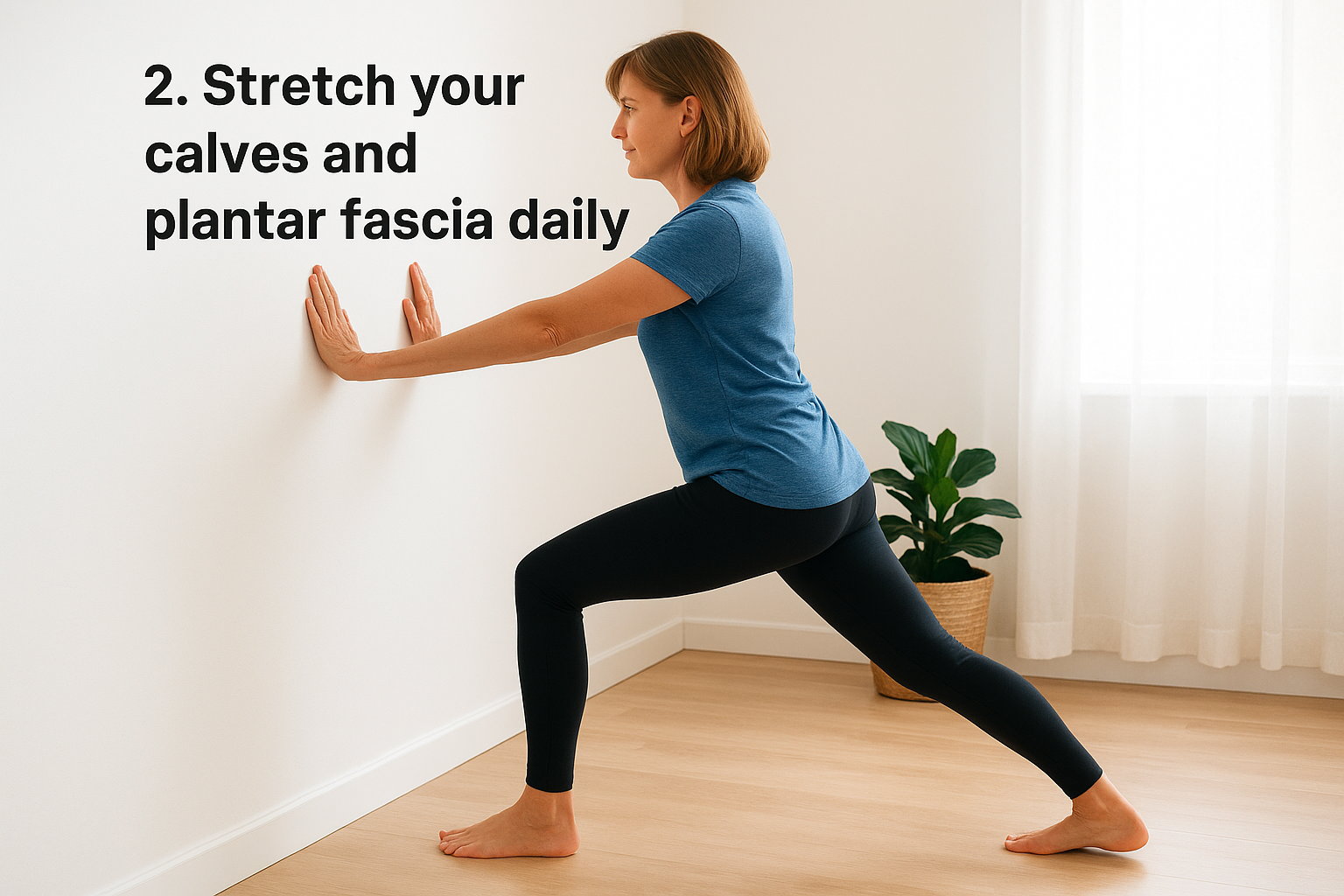
Two stretches deliver the best results for most people. First, the calf wall stretch: stand facing a wall, place both hands on it, step one foot back, keep that heel flat on the floor, and hold for 30 seconds per side. Second, the plantar fascia stretch: sit down, cross one foot over your knee, pull your toes back toward your shin, and hold for 30 seconds.
How often and how long
Stretch three times daily, especially before your first steps in the morning and before standing after long periods of sitting. Most patients see noticeable improvement within three to six weeks of staying consistent.
Stretching before you put weight on your feet each morning can significantly cut that first-step pain.
When to see a podiatrist
If stretching causes sharp or worsening discomfort, stop and book an evaluation. A podiatrist can check whether a plantar fascia tear or another underlying condition is preventing your progress.
3. Ice your heel and modify painful activities
When inflammation flares up in your heel, reducing it quickly breaks the pain cycle before it becomes your daily normal. Ice therapy combined with pulling back on high-impact activities gives your irritated tissue time to recover and is one of the most straightforward ways to treat heel spurs naturally at home.
Why it helps heel spur pain
Heel spurs cause pain primarily because of inflammation in the surrounding soft tissue, not the bone deposit itself. Applying ice constricts blood vessels and slows the inflammatory response, which reduces swelling and temporarily numbs the area. Cutting back on activities that repeatedly load the heel stops that inflammation from cycling back before it settles down.
Exactly how to do it
Wrap a bag of ice or a frozen gel pack in a thin towel and apply it to the bottom of your heel. Never put ice directly on your skin. At the same time, swap high-impact activities like running or jumping for lower-impact options such as swimming or cycling while your heel recovers.
Icing after activity, not just when pain spikes, helps keep inflammation from building up over time.
How often and how long
Ice your heel for 15 to 20 minutes per session, up to three times daily. Scale back high-impact movement until your pain drops to a consistently low level.
When to see a podiatrist
If your heel stays swollen or bruised for more than a week despite icing and rest, schedule an evaluation. Persistent swelling can indicate a stress fracture or plantar fascia tear that requires professional care.
4. Switch to supportive footwear and reduce impact
The shoes you wear every day play a direct role in how much strain lands on your heel with each step. Worn-out soles and flat, unsupportive shoes keep your plantar fascia under constant tension, which is one of the primary reasons heel spurs develop in the first place. Knowing how to treat heel spurs naturally starts with what you put on your feet.
Why it helps heel spur pain
Shoes with firm arch support and adequate heel cushioning absorb shock before it reaches the spur site. Without that buffer, every step transmits force directly through the heel bone and the surrounding inflamed tissue, keeping the pain cycle going.
Exactly how to do it
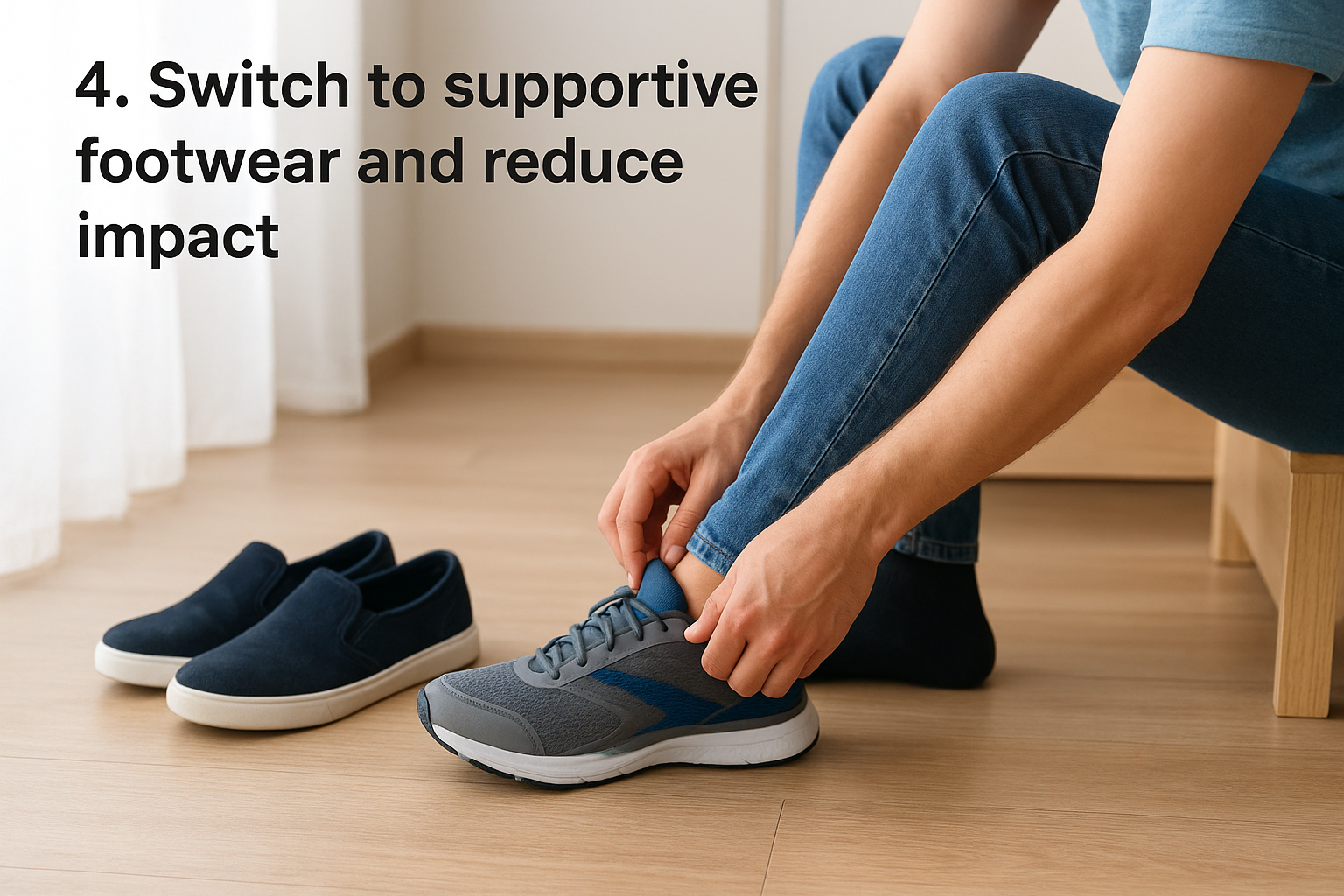
Replace flat shoes, flip-flops, and worn-out sneakers with options that have a slight heel rise, structured arch support, and a cushioned midsole. Athletic or walking shoes from brands that specialize in motion control work well for most people. Avoid going barefoot on hard surfaces like tile or hardwood floors throughout the day.
The right shoe does more for heel spur recovery than almost any other single change you can make.
How often and how long
Wear supportive footwear throughout the entire day, not just during exercise. Most people notice a reduction in daily pain within three to six weeks of making the switch consistently.
When to see a podiatrist
If new supportive shoes bring no relief after four to six weeks, a podiatrist can evaluate your foot structure and recommend custom orthotics or gait analysis to identify what else may be driving your pain.
5. Massage and roll your foot to ease tension
Tight tissue along the bottom of your foot keeps pulling on your heel with every step you take. Regular massage and rolling release that tension directly, improving circulation and reducing the stiffness that makes heel spur pain worse throughout the day.
Why it helps heel spur pain
The plantar fascia stiffens under repeated load without adequate recovery time. Manual pressure increases blood flow to the inflamed area, which supports tissue repair and softens the tightness amplifying pain at the spur site. This makes massage one of the most accessible ways to approach how to treat heel spurs naturally, with no special equipment required.
Exactly how to do it
Use both thumbs to apply firm circular pressure along your arch and heel for two to three minutes. For a deeper release, try one of these options:
- Roll a golf ball slowly under your foot from heel to arch
- Use a frozen water bottle to combine rolling with cold therapy at the same time
Rolling with a frozen water bottle addresses both muscle tension and inflammation in a single session.
How often and how long
Massage or roll your foot for two to three minutes per session, twice daily. Most people notice meaningful loosening within two to four weeks of consistent use.
When to see a podiatrist
Stop if massage creates sharp or shooting pain rather than the typical release discomfort. That kind of response can signal a partial plantar fascia tear or nerve irritation that direct pressure would worsen, and a podiatrist can confirm what is actually happening.
When it’s time to get help
The five strategies above cover the core of how to treat heel spurs naturally, and many people get significant relief by sticking with them consistently. But natural remedies have limits, and pushing through pain that keeps escalating can turn a manageable condition into a longer recovery. If your pain has not improved after six to eight weeks of consistent home care, your heel is noticeably swollen, or you cannot put weight on your foot without sharp discomfort, it is time to bring in a professional.
A podiatrist can confirm whether a heel spur is actually the source of your pain or whether something else, like a plantar fascia tear or stress fracture, is driving your symptoms. Early intervention tends to produce faster results than waiting until the pain becomes severe. The team at Achilles Foot and Ankle Center works with patients across Central Virginia to find the right treatment path for each individual case. Schedule a same-day appointment and get a clear answer on what your heel actually needs.