The right insole can mean the difference between a good day on your feet and a painful one. Whether you’re dealing with flat feet, high arches, plantar fasciitis, or general foot fatigue, over-the-counter arch supports are often the first line of defense before more advanced treatment becomes necessary. But with dozens of options on the market, finding honest arch support insoles reviews you can actually trust takes some effort.
At Achilles Foot and Ankle Center, our podiatrists treat thousands of patients across Central Virginia for arch-related pain and biomechanical issues. We see firsthand what works, what doesn’t, and what people wish they’d known before buying. That clinical perspective shapes everything in this guide. We’ve evaluated 12 of the most popular arch support insoles available today, assessing each one for support quality, materials, durability, and the specific foot types they serve best. Our goal is to help you make an informed decision, not just pick whatever has the most stars online.
Below, you’ll find detailed breakdowns of each insole, including who it’s best suited for, where it falls short, and how it compares to the rest. If you’re someone with persistent arch or heel pain, this list gives you a solid starting point. And if an insole alone isn’t cutting it, we’ll point you toward next steps for professional care that can address the root cause.
1. Achilles Foot and Ankle Center Custom Orthotics
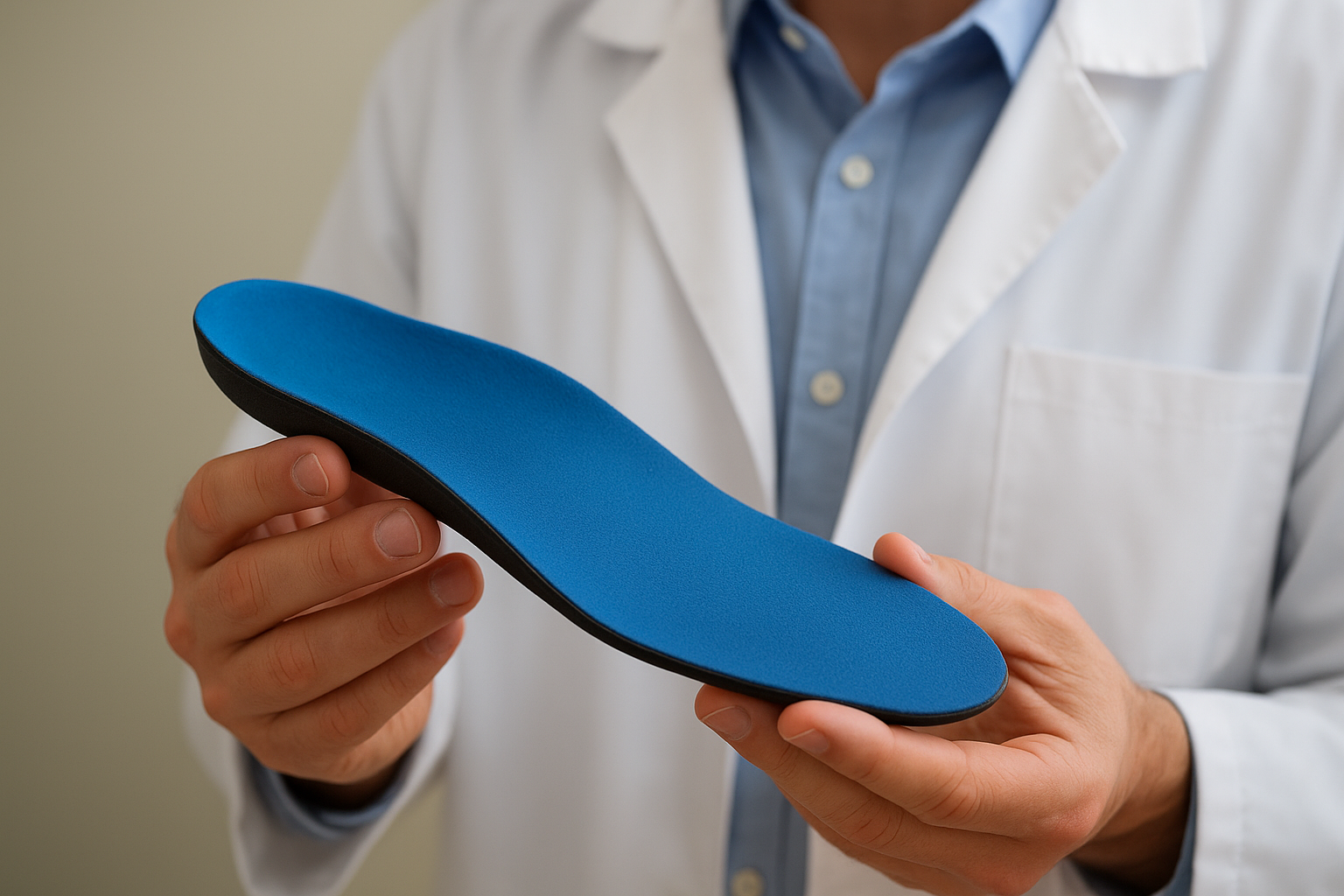
Before diving into any over-the-counter product in this arch support insoles reviews guide, it’s worth starting with the gold standard: custom orthotics prescribed by a licensed podiatrist. At Achilles Foot and Ankle Center, our orthotics are not generic inserts pulled off a shelf. They are prescription devices fabricated specifically around your foot’s measurements, pressure patterns, and biomechanical needs, which is something no store-bought product can replicate.
Support and Design
Custom orthotics from Achilles Foot and Ankle Center begin with a comprehensive biomechanical evaluation by one of our podiatrists. We use digital gait analysis, pressure mapping, and hands-on physical assessment to capture exactly how your foot functions under load. From there, a cast or 3D scan of your foot goes to a specialized orthotic lab, where technicians fabricate the device from materials chosen specifically for your diagnosis, whether that’s a semi-rigid polypropylene shell for structural correction or a softer accommodation layer for diabetic or sensitive feet.
Custom orthotics address the root cause of your pain rather than masking the symptom, which is why they consistently outperform over-the-counter alternatives for complex or chronic conditions.
The finished orthotic fits precisely inside your shoe and can transfer between footwear. Many patients also receive multiple pairs tailored for different activities, such as dress shoes, athletic footwear, or work boots, depending on their lifestyle and diagnosis.
Best For
Custom orthotics are the right choice when over-the-counter insoles have not resolved your pain after a few weeks of consistent use, or when your podiatrist identifies a structural issue requiring precise correction. They work well for:
- Plantar fasciitis that hasn’t responded to stretching or store-bought support
- Flat feet or fallen arches causing knee, hip, or lower back pain
- High arches that create excessive pressure on the ball and heel
- Diabetic foot complications requiring pressure offloading
- Post-surgical recovery requiring specific biomechanical support
For mild foot fatigue or added comfort during occasional activity, an over-the-counter option may serve you fine. But for anything persistent, recurrent, or structurally driven, a custom device is the more effective long-term solution.
Typical Price Range
Custom orthotics from Achilles Foot and Ankle Center typically range from $300 to $600 per pair, depending on materials and the complexity of your prescription. Most major insurance plans, including Medicare and many commercial plans, provide partial or full coverage when a podiatrist deems them medically necessary. Our front office team can verify your benefits before you commit to anything.
2. PowerStep Pinnacle Insoles
PowerStep is one of the most frequently cited brands in any arch support insoles reviews roundup, and the Pinnacle is their flagship product. It sits at the midpoint between a rigid prescription orthotic and a soft comfort insert, giving you meaningful structural support without the cost of a custom device. That balance is what makes it so popular across a wide range of users.
Support and Design
The Pinnacle features a semi-rigid polypropylene arch shell that holds its shape under load, which separates it from flimsy foam alternatives that compress flat within weeks. On top, a dual-layer construction pairs a firm supportive base with a plush antimicrobial top cover to reduce moisture and odor during extended wear. The deep heel cup positions your foot correctly from the start of each step and reduces the inward rolling motion that commonly drives plantar fasciitis and arch strain.
The semi-rigid shell is what genuinely separates the PowerStep Pinnacle from budget insoles that rely on foam alone and lose their structure quickly.
Best For
The Pinnacle performs well for people dealing with mild to moderate overpronation, plantar fasciitis, and general arch fatigue from long hours on their feet. It fits most athletic and casual shoes that have a standard removable insole. Specific use cases where it tends to deliver include:
- Daily walking and light running
- Jobs that require standing on hard floors for extended shifts
- General arch discomfort without a diagnosed structural deformity
Typical Price Range
You can typically find the PowerStep Pinnacle in the $25 to $40 range depending on the retailer and size. That makes it one of the stronger value options in the OTC category. If your pain continues after several weeks of consistent use, your foot likely needs more targeted care than any over-the-counter insert can provide.
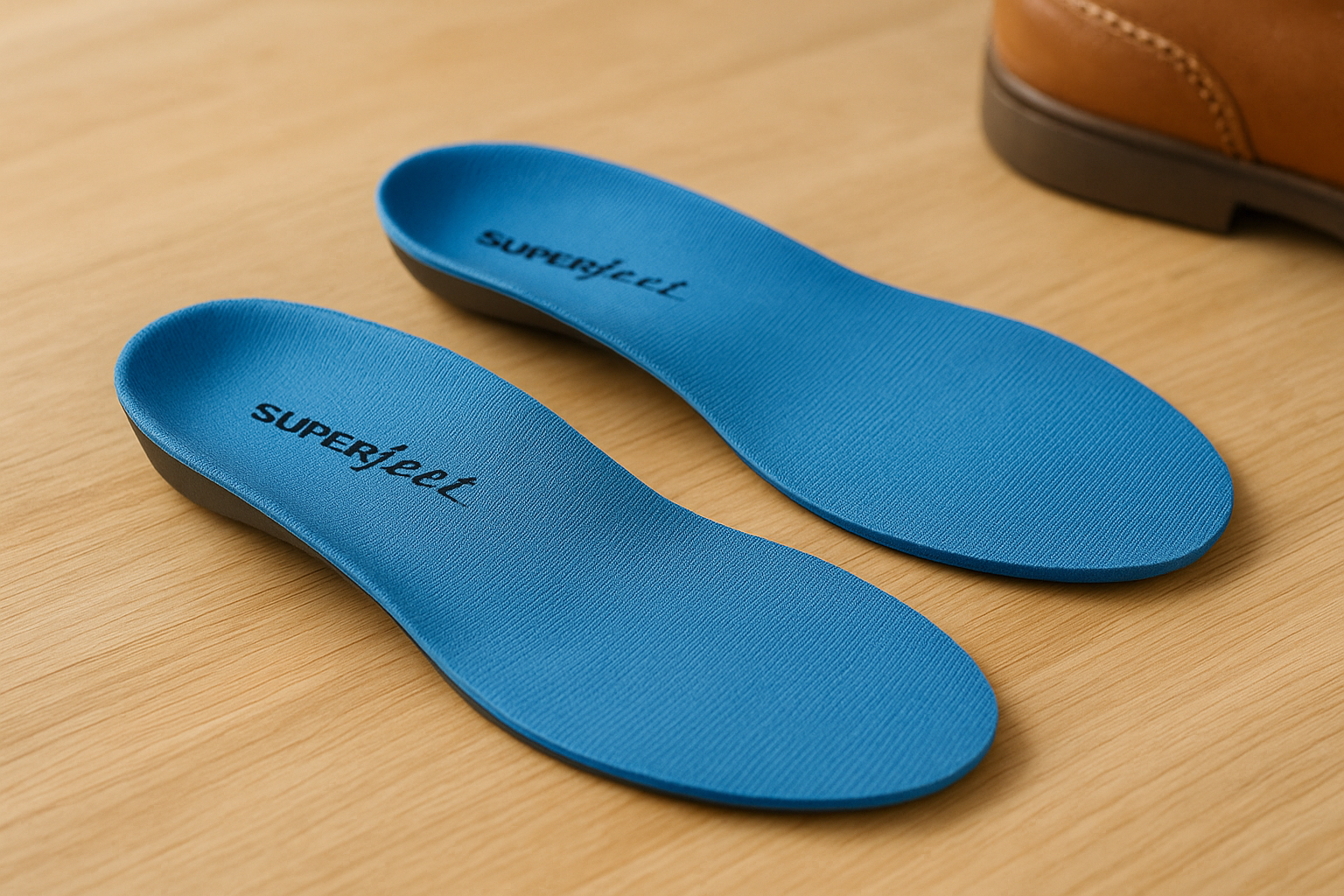
3. Superfeet All-Purpose Support High Arch
Superfeet appears consistently across arch support insoles reviews for good reason. Their All-Purpose Support High Arch insole targets people with higher-than-average arches who need consistent contact between the insole and their midfoot, something most generic store-bought insoles fail to provide. Unlike neutral or low-arch designs, this insole positions its support peak further back, which aligns more closely with how a true high arch distributes weight across the foot.
Support and Design
The All-Purpose High Arch uses Superfeet’s signature biomechanical shape, which includes a deep heel cup and a high-profile arch that contacts the midfoot earlier in your stride than most OTC competitors. The base is a stabilizer cap made from a rigid composite material that resists compression through months of regular use.
A foam top layer adds enough cushioning for extended daily wear without softening the structural correction underneath your foot. This combination holds its shape considerably longer than foam-only alternatives, which tend to flatten within weeks of daily use.
A high-profile arch that collapses under load quickly provides no real structural benefit, and that’s exactly where Superfeet’s stabilizer cap design earns its reputation.
Best For
This insole works best for people with confirmed high arches who routinely find that standard insoles fail to make contact with their midfoot at all. It fits well in:
- Athletic and walking shoes with removable factory insoles
- Casual everyday footwear with extra interior depth
- Occupational shoes worn during standing-heavy shifts
Typical Price Range
Superfeet All-Purpose High Arch insoles typically run between $50 and $60, placing them in the mid-to-upper tier of the OTC market. That price reflects genuine material quality and above-average durability. If you find that even this level of structural support isn’t resolving your discomfort after consistent use, scheduling a custom orthotic evaluation with a podiatrist is a practical next step.
4. Superfeet Hike Support
The Superfeet Hike Support takes a different approach than the All-Purpose High Arch covered above. While both share Superfeet’s core biomechanical philosophy, the Hike Support is engineered specifically for trail and hiking footwear, where your feet face uneven terrain, added boot weight, and prolonged impact over long distances. If your daily activity involves serious time on trails or inside heavier boots, this insole deserves a close look in any arch support insoles reviews comparison.
Support and Design
The Hike Support uses a reinforced stabilizer cap with a slightly higher heel cup than Superfeet’s standard designs, giving your heel more containment as you move across uneven ground. The arch profile sits at a moderate-to-high level and is shaped to work within the tighter interior dimensions of most hiking boots, which typically offer less volume than athletic shoes. A foam top layer provides enough cushioning to handle rocky terrain without allowing the structural base to compress and flatten underfoot after repeated use.
Insoles designed for trail use need to maintain their structure under lateral forces and irregular ground contact, which is exactly what the Hike Support’s stabilizer cap addresses.
Best For
This insole fits best for people who spend significant time hiking, backpacking, or working in heavy-duty boots. Common use cases include:
- Trail hiking and multi-day backpacking trips
- Work boots worn in construction or outdoor labor
- Winter boots that need additional arch reinforcement
Typical Price Range
The Superfeet Hike Support typically costs between $50 and $65, depending on size and retailer. That pricing aligns with Superfeet’s broader lineup and reflects the durable materials used throughout. If you return from every hike with persistent arch or heel pain, a podiatrist evaluation is the appropriate next step rather than simply cycling through another insole.
5. Currex RunPro Insoles
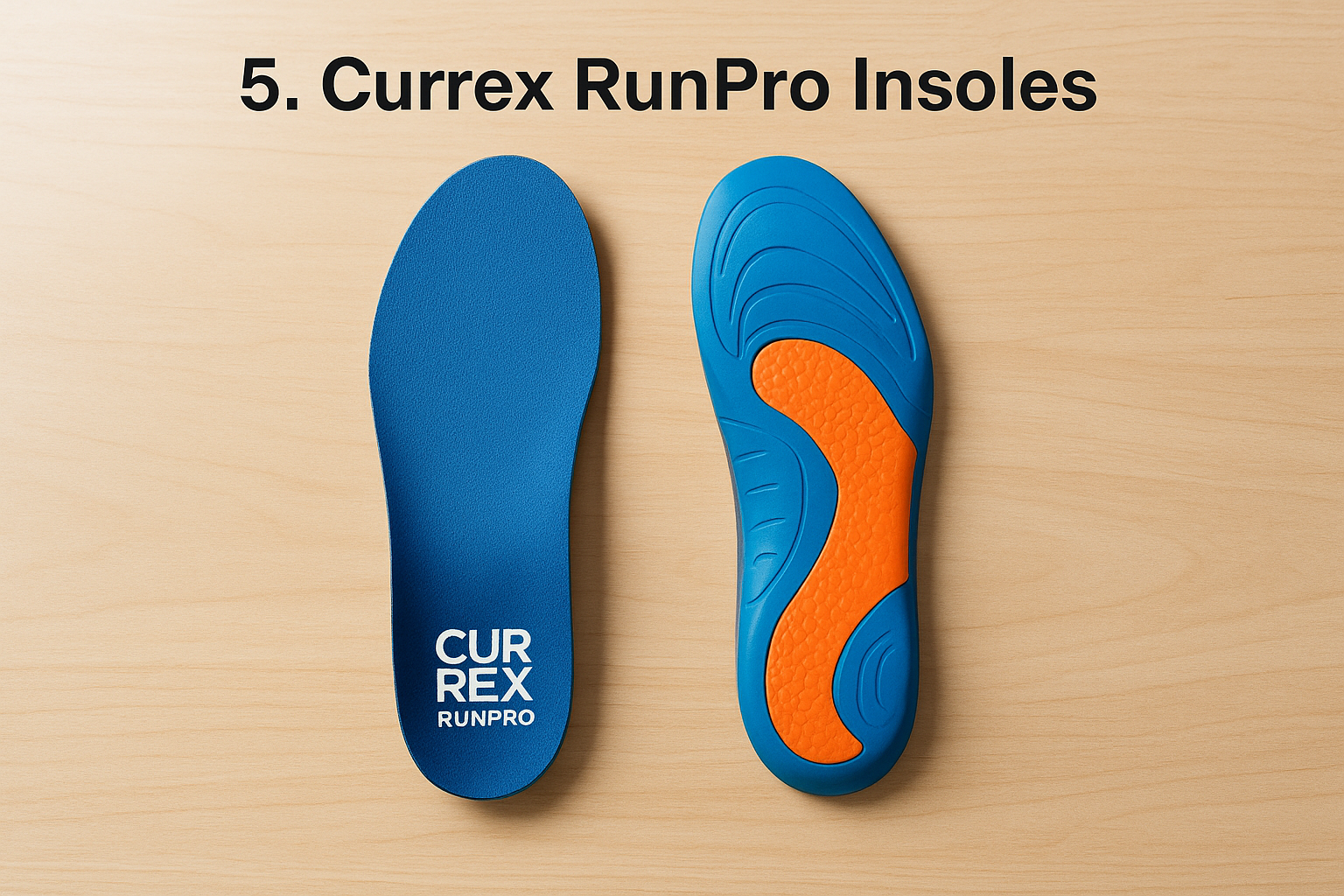
Currex takes a different approach than most brands covered in this arch support insoles reviews guide. Instead of offering one standard arch profile for everyone, they build the RunPro in three distinct arch height profiles: low, medium, and high. That means before you buy, you need to identify your arch type, which Currex guides you through on their product page. Getting the right profile makes a noticeable difference in how the insole performs during running.
Support and Design
The RunPro uses a dynamic shell base that flexes through your gait cycle rather than remaining completely rigid. This design choice reflects Currex’s philosophy that running requires a responsive, moving support structure rather than a locked-down one. The shell absorbs and redirects energy with each foot strike, which reduces cumulative fatigue over long running distances more effectively than a fully rigid base would.
A moisture-wicking top cover keeps the surface dry during extended runs, and the thin profile fits most performance running shoes without requiring you to remove the factory insole. The heel cup is moderately deep and centers your heel well throughout impact.
The three-profile system is what separates the RunPro from single-size-fits-all running insoles, provided you select the correct arch height for your foot.
Best For
The RunPro performs best for dedicated runners logging consistent weekly mileage who experience arch fatigue, mild overpronation, or plantar fasciitis during or after runs. It fits narrow to standard-width running shoes well and handles high-impact repetitive activity better than general-purpose insoles.
Typical Price Range
The Currex RunPro typically runs between $50 and $65 depending on your profile selection and retailer. If your running-related arch pain persists despite using a properly fitted insole, a podiatrist evaluation should be your next move.
6. Sole Active Medium Insoles
Sole is a smaller brand than some others featured in this arch support insoles reviews guide, but their Active Medium insole has earned a loyal following among people who want a heat-moldable fit without paying custom orthotic prices. The "medium" in the name refers to arch height, placing it between low and high profiles and making it accessible to a broad range of foot types.
Support and Design
The Active Medium features a thermoplastic base that softens when heated in a standard oven, allowing you to step in and create a mold that conforms to your specific arch contour. The process takes roughly three minutes and produces a fit noticeably more personalized than any standard fixed-shape OTC insole. A polyurethane foam top layer absorbs shock during activity without compromising the structural integrity of the molded base underneath.
The heat-molding step is what separates the Sole Active Medium from fixed-shape competitors, giving you a semi-custom fit at a fraction of the cost of a prescription device.
Best For
This insole suits people who fall into a neutral to medium arch range and want support that adapts to their foot rather than forcing their foot into a predetermined shape. It fits well in a variety of footwear, including:
- Athletic shoes and trail runners
- Casual everyday footwear
- Low-volume work shoes
Typical Price Range
The Sole Active Medium typically costs between $45 and $55, depending on size and retailer. That price reflects the heat-moldable technology built into the base, which justifies a premium over standard foam alternatives. If persistent arch pain continues after molding and wearing the insole consistently, scheduling a podiatrist visit is the right next move.
7. Dr. Scholl’s Stability Support Insoles
Dr. Scholl’s is the most widely recognized name in the OTC insole category, and the Stability Support insole represents their attempt to move beyond basic cushioning into genuine structural correction. In any arch support insoles reviews comparison, this product draws attention because it’s broadly available at pharmacies and mass retailers, making it one of the most accessible options on this list for people who need support quickly.
Support and Design
The Stability Support features a reinforced arch stabilizer built into a semi-flexible base that targets mild to moderate overpronation. Unlike Dr. Scholl’s basic comfort insoles, this model includes a structured heel cup designed to reduce inward roll at initial contact and through mid-stance. The top layer uses a thin foam covering that holds up reasonably well for light to moderate daily activity, though it compresses faster than premium options from brands like Superfeet or Currex under heavier use.
Wide retail availability makes this insole easy to find and replace when needed, but that convenience comes with a trade-off in overall durability compared to mid-tier competitors.
Best For
The Stability Support works for people who need everyday arch support without committing to a higher-priced product. It fits best in:
- Standard athletic and walking shoes
- Light work footwear with removable factory insoles
- Casual daily wear for mild arch discomfort
Typical Price Range
You can typically find Dr. Scholl’s Stability Support insoles for $15 to $25, placing them firmly in the budget tier of the OTC market. That low entry point makes them a reasonable starting point, but if your arch or heel pain doesn’t improve within a few weeks of consistent use, the next appropriate step is a professional podiatric evaluation rather than simply buying another pair.
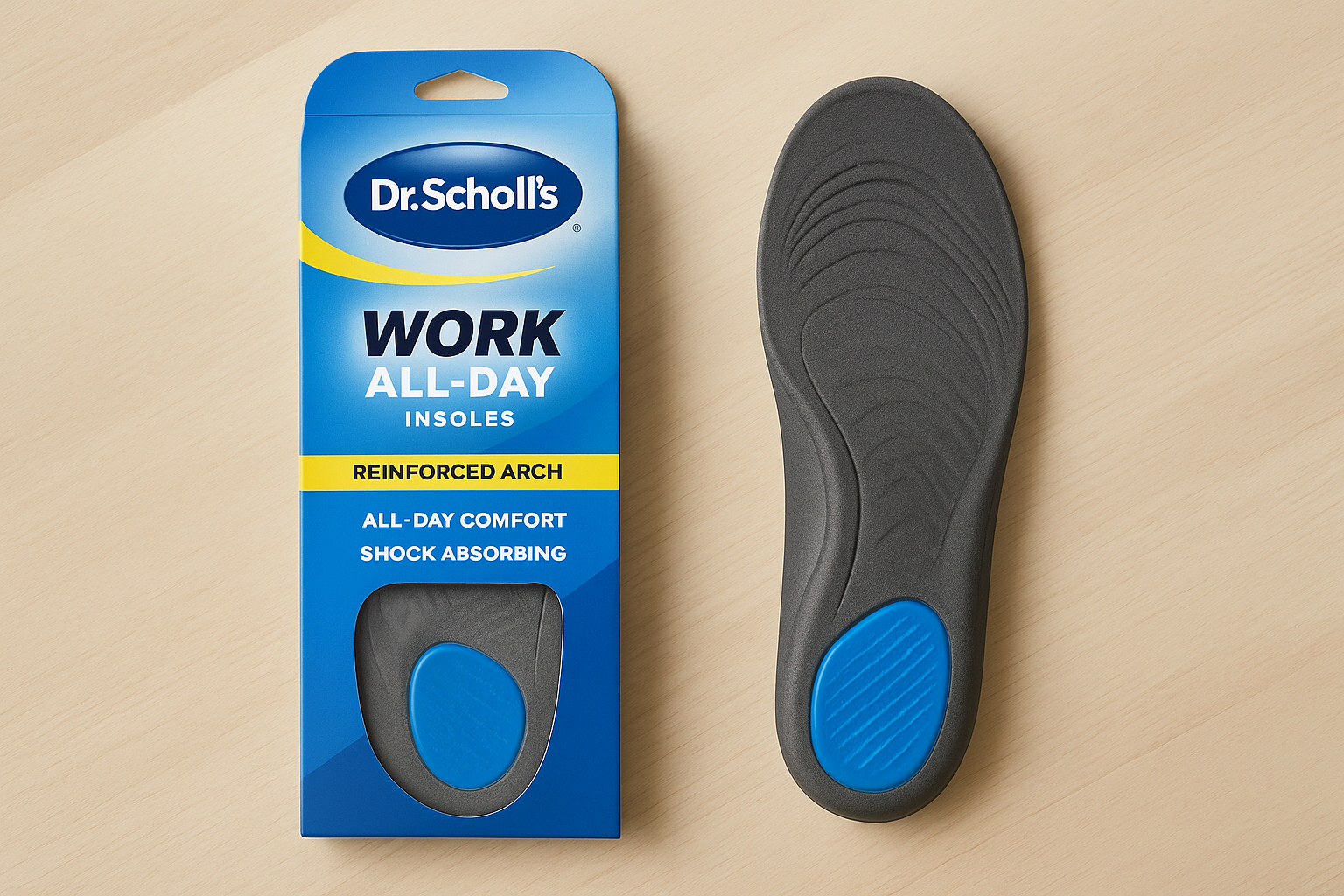
8. Dr. Scholl’s Work All-Day Insoles
Dr. Scholl’s Work All-Day insole takes a different approach than the Stability Support reviewed above. Where the Stability Support focuses on overpronation correction for general daily wear, the Work All-Day targets people who spend long shifts on hard floors, specifically in work environments like retail, healthcare, warehousing, and food service. In the broader landscape of arch support insoles reviews, this product fills a specific gap for workers whose footwear options are limited by safety standards or dress codes.
Support and Design
The Work All-Day features a reinforced arch channel built into a dual-layer foam construction. The lower layer provides firm structural support that resists compression through extended standing shifts, while an energy-absorbing top layer cushions each step to reduce fatigue accumulating in your arch, heel, and forefoot over the course of a long workday. A gel heel pad targets the impact zone where hard floor contact is most concentrated, distributing pressure more evenly across the rear foot.
The gel heel pad combined with the firm base makes a meaningful difference for workers who stand on concrete for eight or more hours at a stretch.
Best For
This insole works well for people whose jobs require prolonged standing or walking on hard surfaces without the flexibility to choose heavily cushioned footwear. It fits reliably in:
- Work boots and slip-resistant shoes
- Closed-toe occupational footwear
- Casual athletic shoes worn during long shifts
Typical Price Range
Dr. Scholl’s Work All-Day insoles typically cost between $15 and $30 depending on retailer and size. That price makes them accessible for workers who replace insoles frequently due to daily wear. If persistent foot or arch pain continues despite wearing these consistently, a podiatrist evaluation is your most productive next step.
9. Spenco Polysorb Cross Trainer Insoles
Spenco has been manufacturing insoles for decades, and their Polysorb Cross Trainer sits comfortably in the mid-range tier of any thorough arch support insoles reviews comparison. This insole targets people who move between different types of physical activity or need a reliable everyday option that handles both gym sessions and extended walking without requiring them to swap insoles between shoes.
Support and Design
The Polysorb Cross Trainer uses a 4-way stretch nylon top cover that reduces friction and keeps the surface comfortable against your sock during dynamic movement. The base incorporates Spenco’s Total Support shape, which includes a structured arch bridge and a deep heel cup that centers your foot from the first step. A polyurethane foam cushioning compound absorbs impact across both the heel and forefoot while resisting the compression that causes cheaper foam insoles to flatten within weeks of regular use.
The polyurethane foam base retains its shock-absorbing properties considerably longer than standard EVA foam, which makes a noticeable difference over months of consistent cross-training use.
Best For
This insole performs well for people who cross-train regularly or rotate between activities like gym workouts, casual walking, and light trail use. It fits reliably in:
- Athletic training shoes and cross-trainers
- Casual walking shoes with removable factory insoles
- Low-volume gym footwear worn during high-repetition exercise
Typical Price Range
The Spenco Polysorb Cross Trainer typically costs between $25 and $40 depending on size and retailer. That price reflects solid value given the material quality and durability built into the base. If your arch discomfort continues after consistent use, a podiatrist evaluation will give you a clearer picture of what your feet actually require rather than guessing at another insole swap.
10. Spenco RX Comfort Insoles
Where the Polysorb Cross Trainer reviewed above prioritizes performance across mixed activities, the Spenco RX Comfort takes a different angle entirely. This insole focuses on everyday comfort and cushioning for people whose primary concern is reducing general foot fatigue rather than correcting pronation or maximizing athletic performance. In that narrower role, it holds up well against comparable options in this arch support insoles reviews guide.
Support and Design
The RX Comfort uses a contoured foam base with a moderate arch profile that suits neutral to mildly low arches comfortably. Unlike the firmer structural shells found in Superfeet or PowerStep products, the RX Comfort leans more heavily on cushioning compounds that absorb impact at the heel and forefoot while providing gentle midfoot contact rather than aggressive correction. A soft top cover reduces friction during extended wear and stays comfortable against your sock throughout the day.
The RX Comfort trades structural rigidity for cushioning depth, which makes it appropriate for comfort-first users but less suitable for anyone needing meaningful biomechanical correction.
Best For
This insole suits people with neutral arches who primarily want to reduce foot fatigue from daily walking, standing, or casual activity. It fits reliably in:
- Everyday casual shoes and sneakers
- Light walking footwear with standard interior volume
- Comfortable dress shoes with removable insoles
Typical Price Range
The Spenco RX Comfort typically costs between $20 and $35 depending on size and retailer. That positions it as a mid-budget option that prioritizes cushioning over correction. If you experience persistent arch or heel discomfort even while wearing a comfort-focused insole consistently, a podiatrist evaluation will give you a clearer path forward than cycling through another product.
11. WalkHero Arch Support Insoles
WalkHero is a budget-friendly brand that appears frequently in online arch support insoles reviews, particularly among buyers seeking orthopedic-style support at a lower price point. The insoles come in multiple arch profiles and target people dealing with flat feet, plantar fasciitis, and general arch discomfort during daily activity.
Support and Design
The WalkHero arch support insole uses a semi-rigid polypropylene shell that provides a firm base for moderate arch correction. This shell includes a deep heel cup to stabilize your rear foot and reduce inward rolling during walking. A foam top layer adds surface cushioning, though it compresses more quickly than the premium materials found in higher-priced competitors like Superfeet or PowerStep. The overall profile runs on the thicker side, which means it fits better in shoes with extra interior depth rather than low-volume or tight-fitting footwear.
The semi-rigid shell gives WalkHero more structural integrity than basic foam insoles, but the foam top layer’s durability lags behind mid-tier competitors under heavy daily use.
Best For
WalkHero insoles work well for people who need entry-level orthopedic support without spending above $30. They fit reliably in footwear with standard or extra interior volume, including:
- Casual sneakers and walking shoes with removable factory insoles
- Wide-toe box footwear with additional interior depth
- Everyday shoes worn during light standing or casual walking
Typical Price Range
WalkHero arch support insoles typically cost between $20 and $30 depending on size and retailer. That budget price makes them an accessible starting point for people testing whether structured OTC support resolves their discomfort before committing to a higher-priced product.
If your arch or heel pain continues after consistent use, a podiatrist evaluation will identify whether your feet require a more targeted and lasting solution than any over-the-counter insole can deliver.
12. EasyFeet Arch Support Insoles
EasyFeet is a direct-to-consumer brand that shows up regularly in budget-tier arch support insoles reviews, often drawing attention from buyers who want orthopedic-style support at a competitive price point. The insoles come in a single arch profile aimed at moderate arch correction and target people dealing with flat feet, plantar fasciitis, and daily arch fatigue.
Support and design
The EasyFeet insole uses a semi-rigid base shell combined with a foam cushioning layer on top. The arch profile sits at a moderate height and includes a deep heel cup that helps reduce inward rolling during walking and standing. The top cover material stays relatively comfortable against your sock during light use, though it tends to wear down faster than the cushioning found in mid-tier products like the Spenco Polysorb or PowerStep Pinnacle under heavier daily activity.
The foam top layer is where EasyFeet’s budget price shows most clearly, compressing noticeably faster than competitors that use higher-density polyurethane cushioning compounds.
Best for
EasyFeet insoles work best for people with mild arch discomfort who want to test structured OTC support before committing to a higher-priced product. They fit reliably in footwear with standard interior volume, including:
- Casual sneakers and walking shoes with removable factory insoles
- Everyday shoes worn during light activity or moderate standing
- Wide-toe box footwear with extra interior depth
Typical price range
EasyFeet arch support insoles typically cost between $20 and $28 depending on size and retailer, placing them firmly in the budget tier of the OTC market. That low price point makes them a reasonable entry point for first-time insole users, but if your arch or heel pain continues after consistent wear, a professional podiatric evaluation is your most effective next step rather than purchasing another pair.
Your Next Step
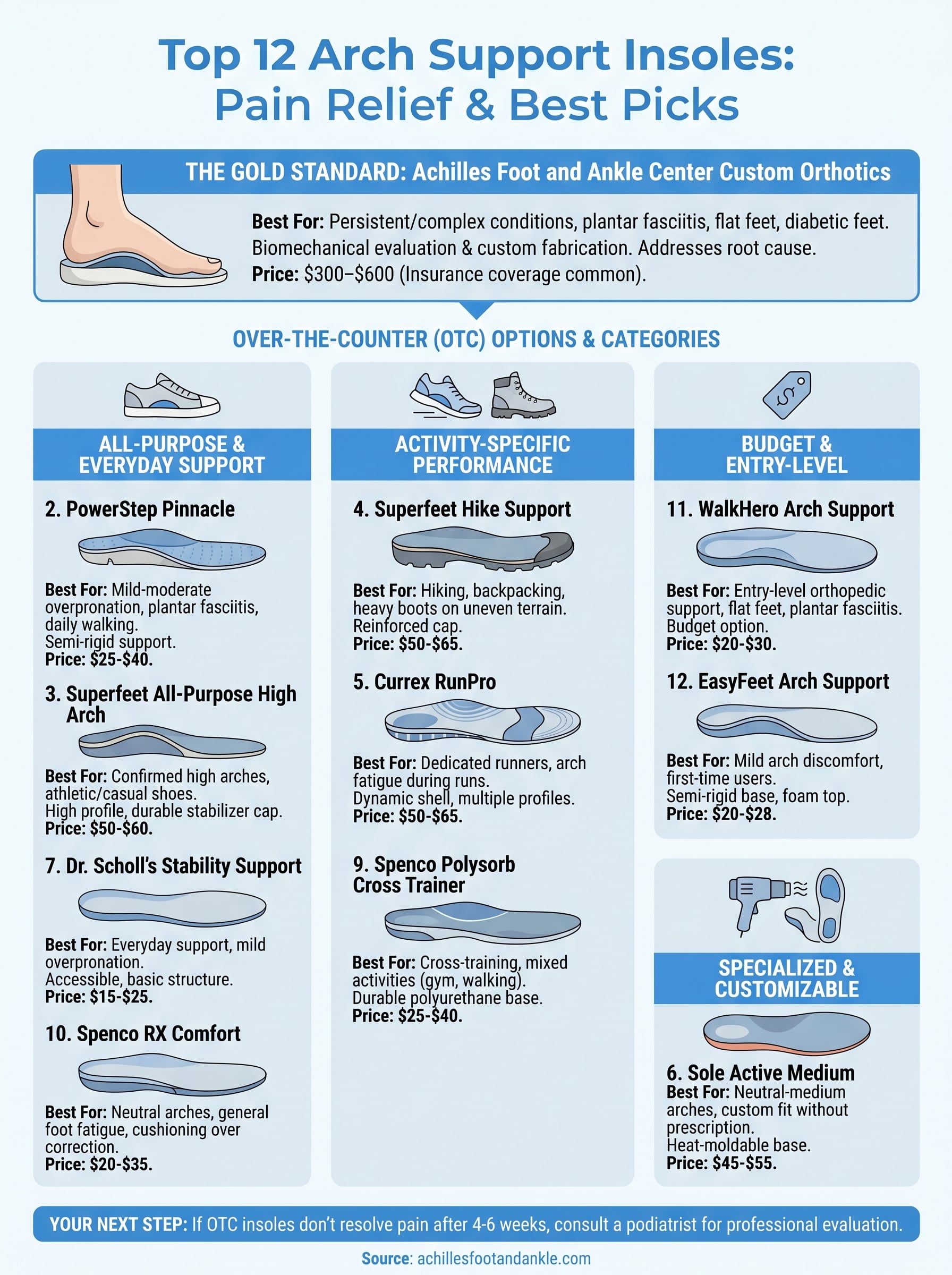
This arch support insoles reviews guide gives you a solid foundation for choosing a product that fits your foot type, activity level, and budget. From budget-friendly options like EasyFeet and WalkHero to performance-focused picks like the Currex RunPro and Superfeet Hike Support, there is a meaningful option for most people at every price point.
That said, over-the-counter insoles have real limits. If you’ve tried a quality product consistently for four to six weeks and your arch, heel, or ankle pain hasn’t improved, the problem likely goes beyond what a store-bought insert can fix. Persistent or recurring pain is your body telling you something structural needs attention, and that’s exactly what a podiatrist evaluates.
Our team at Achilles Foot and Ankle Center is ready to assess your foot mechanics and recommend the right solution, whether that’s a custom orthotic or another treatment path. Schedule a same-day appointment and get a clear answer fast.