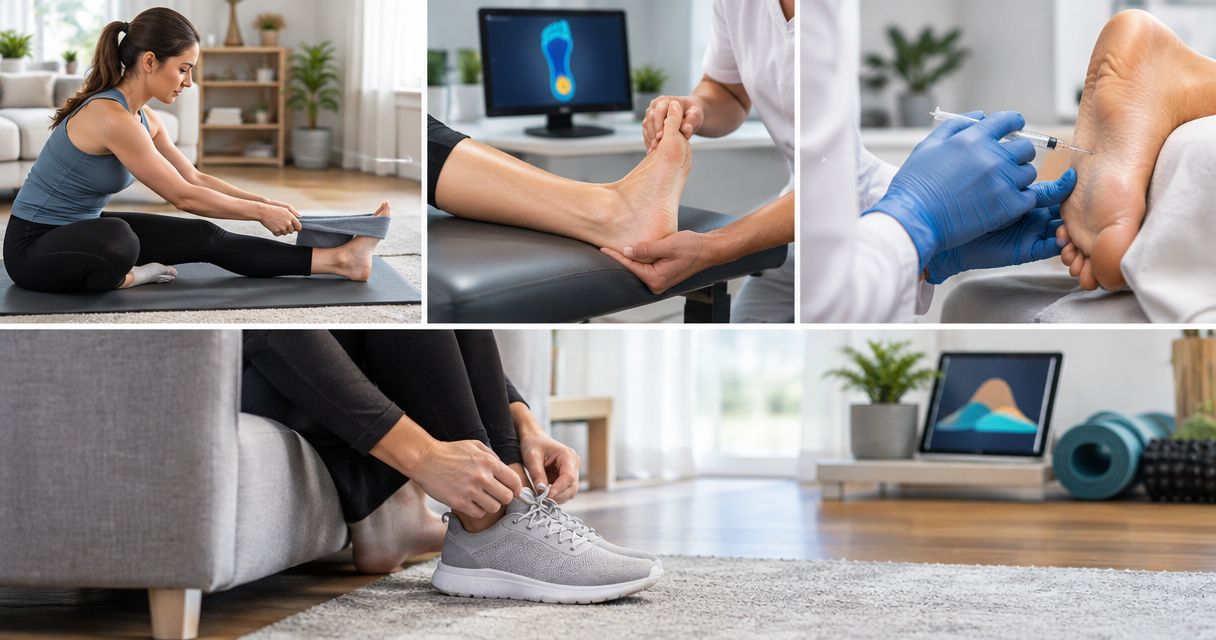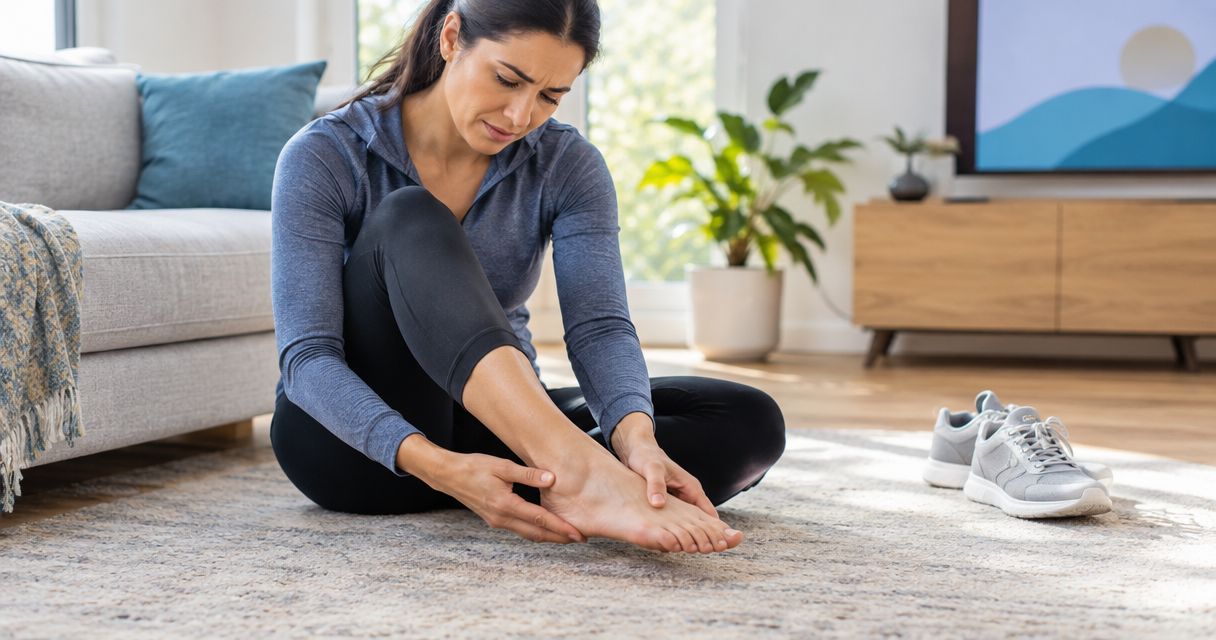
Flat feet affect roughly 18 million adults in the United States, and if you’re one of them, you already know the daily toll it takes, sore arches, aching heels, and fatigue that climbs from your feet into your knees and lower back. The right foot arch support for flat feet can make a significant difference, but with dozens of insoles and orthotics on the market, figuring out which ones actually work is its own challenge. Not all arch supports are created equal, and the wrong choice can sometimes make things worse.
At Achilles Foot and Ankle Center, our podiatrists treat flat feet and overpronation across our thirteen Central Virginia locations every single day. We see firsthand what works, from custom-molded orthotics prescribed in our clinics to quality over-the-counter options that provide real, measurable relief for mild to moderate cases. That clinical experience is exactly what shaped this list.
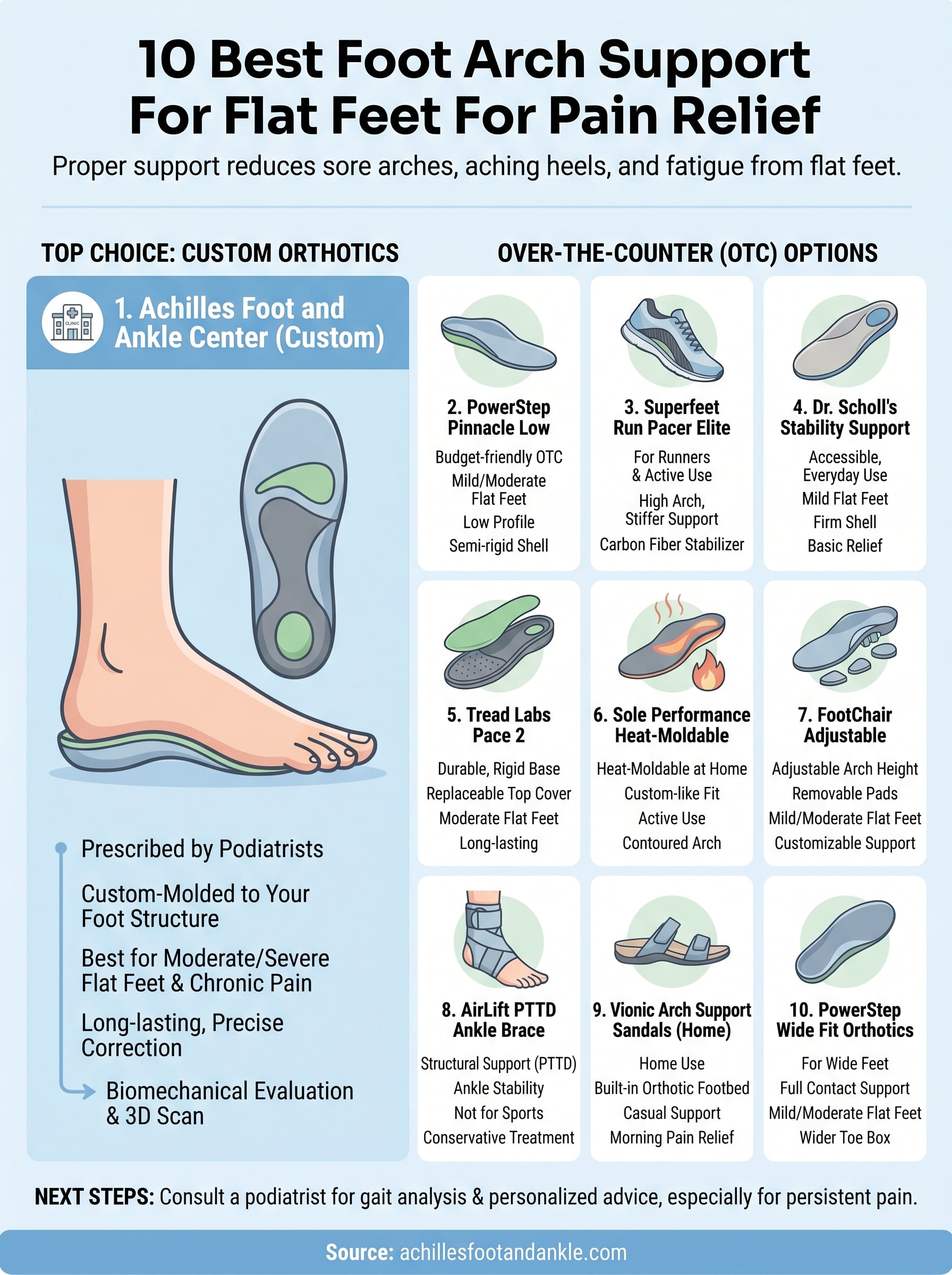
Below, we break down the 10 best arch supports for flat feet currently available, covering everything from rigid orthotic insoles to cushioned everyday options. Each pick includes what it does well, where it falls short, and who it’s best suited for. Whether you’re managing foot pain from prolonged standing, recovering from a sports injury, or just trying to get through your day more comfortably, this guide will help you make a smarter, more informed choice.
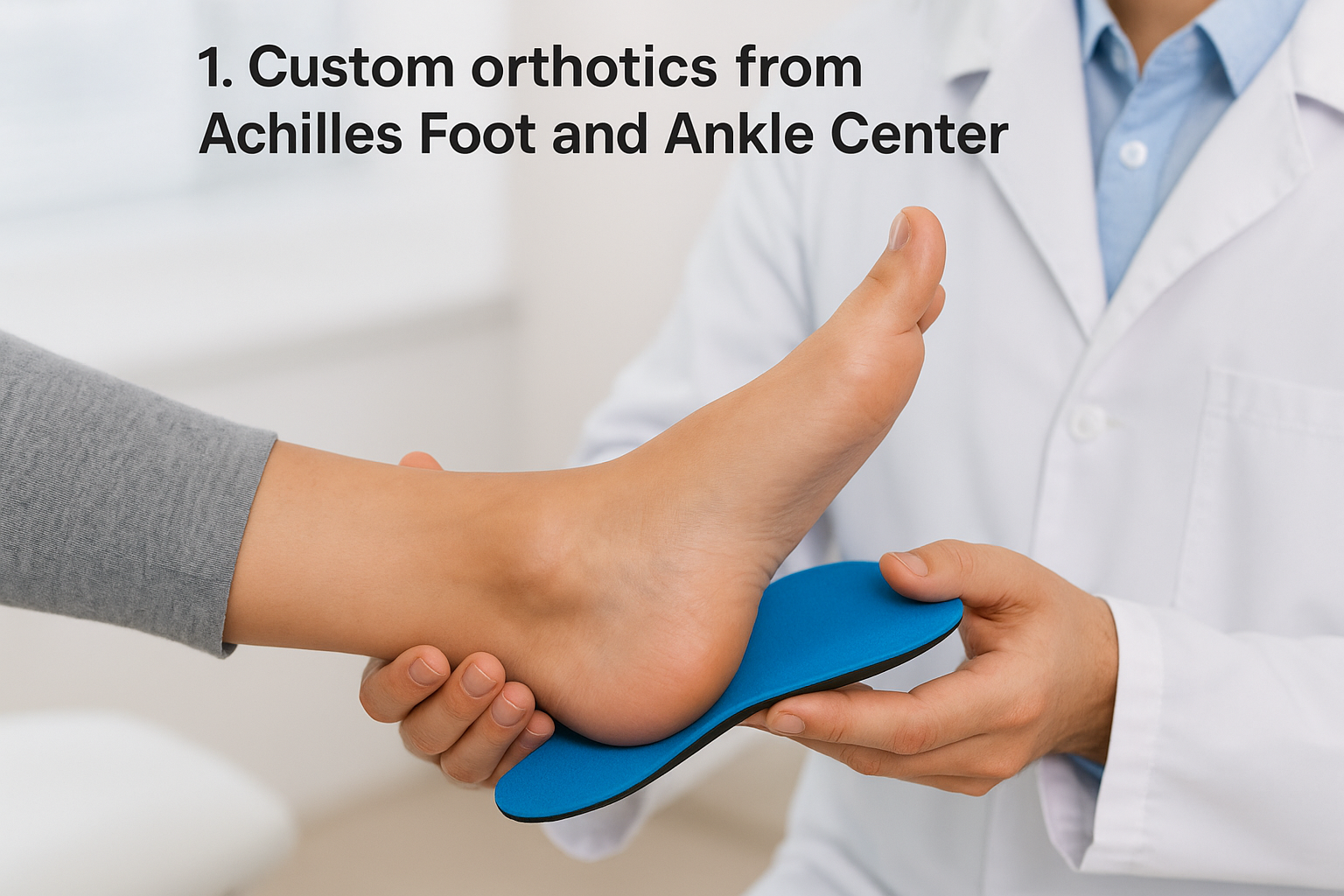
1. Custom orthotics from Achilles Foot and Ankle Center
When it comes to foot arch support for flat feet, nothing outperforms a custom orthotic prescribed by a licensed podiatrist. Over-the-counter insoles work by offering generalized support across a range of foot shapes, but a custom device is designed specifically around your foot’s exact structure, weight distribution, and gait pattern. That precision is what separates them from every other option on this list.
What it is and how it supports flat feet
Custom orthotics are medical devices fabricated from a detailed cast or 3D scan of your foot. Your podiatrist at Achilles Foot and Ankle Center uses that data to design an insert that corrects your specific alignment issues, distributing pressure more evenly, controlling overpronation, and placing your arch in a biomechanically sound position. Unlike rigid drugstore inserts that force your foot into a fixed position, a well-fitted custom orthotic works with your natural movement.
A custom orthotic does not just cushion your foot. It actively corrects the way your foot functions with every step you take.
The materials used vary based on your needs. Rigid orthotics made from carbon fiber or hard plastic are common for patients with significant overpronation, while semi-rigid or soft varieties suit athletes or individuals with sensitive feet from conditions like diabetes.
Best for
Custom orthotics from Achilles Foot and Ankle Center work best for patients dealing with moderate to severe flat feet, chronic heel pain, plantar fasciitis, posterior tibial tendon dysfunction, or foot pain connected to arthritis. They are also a strong choice if you have tried multiple over-the-counter options without lasting relief. Patients who spend long hours on their feet at work, including nurses, teachers, and warehouse workers, often see the most dramatic improvement.
What to expect at an orthotics visit
Your visit starts with a full biomechanical evaluation, where your podiatrist examines your gait, foot structure, and any areas of pain or pressure. From there, a mold or digital scan captures the exact contour of your foot. Most patients receive their finished orthotics within two to three weeks, followed by a fitting appointment to confirm comfort and alignment. Your provider may make minor adjustments at that visit or a follow-up to dial in the fit.
Price range and insurance notes
Custom orthotics typically range from $300 to $600 per pair without insurance. Achilles Foot and Ankle Center accepts all major insurance plans, and many plans cover orthotics when a documented medical diagnosis supports the need. Medicare and Medicaid may also cover them under qualifying conditions. Your front desk team can verify your specific benefits before your appointment.
2. PowerStep Pinnacle Low insoles
The PowerStep Pinnacle Low is one of the more reliable over-the-counter insoles for flat feet, offering structured support at a fraction of the cost of custom orthotics. It sits in a useful middle ground between a basic cushioned insert and a true corrective device, making it a practical first step if you are exploring foot arch support for flat feet on a budget.
How it supports flat feet
The Pinnacle Low features a low-profile semi-rigid shell that cups the heel and lifts the arch without adding excessive bulk inside your shoe. This design helps control overpronation by guiding your foot toward a more neutral position with each stride. The dual-layer cushioning on top of the shell absorbs impact at the heel and forefoot, reducing the fatigue that comes with prolonged standing or walking.
If you overpronate significantly, the low-profile arch height may not provide enough correction on its own.
Best for
This insole works well for people with mild to moderate flat feet who need everyday support in low-profile footwear like athletic sneakers, casual shoes, or work boots with limited interior space. It also suits those who are new to structured insoles and want to test corrective support before committing to a custom device.
Potential drawbacks
The Pinnacle Low’s reduced arch height can fall short for individuals with severe flatfoot or significant posterior tibial tendon dysfunction. It also wears down faster than firmer options, so frequent replacement every four to six months is common with daily use.
Price range and where to buy
PowerStep Pinnacle Low insoles typically retail between $30 and $45 per pair and are widely available on Amazon and at major retail pharmacies. They come in multiple sizes, so check the sizing chart carefully before ordering online.
3. Superfeet Run Pacer Elite insoles
The Superfeet Run Pacer Elite is built primarily for runners, but its structured stabilizer cap makes it a strong option for anyone searching for effective foot arch support for flat feet during athletic activity. It pairs a carbon fiber base with multi-layer foam cushioning to deliver both mechanical correction and energy return in a single insole.
How it supports flat feet
The Run Pacer Elite uses a high-profile arch design combined with a deep heel cup to control rear foot motion and reduce overpronation throughout the gait cycle. A carbon fiber stabilizer cap runs beneath the arch, providing firm, lightweight structure that resists compression even under repeated high-impact loading. This setup prevents your foot from collapsing inward with each stride, which is the core mechanical issue in flat feet.
A carbon base holds its corrective shape far longer than foam-only alternatives, meaning you get consistent support well into the insole’s lifespan.
Best for
This insole suits runners and active individuals with mild to moderate flat feet who need reliable correction inside running shoes or training footwear. It also works well if you’ve noticed knee or hip discomfort that your podiatrist has traced back to overpronation patterns.
Potential drawbacks
The high arch profile can feel aggressive for users who have never worn structured insoles, particularly during the first two to three weeks of adjustment. It also runs on the stiffer side, which may not suit individuals who need extra cushioning for conditions like plantar fasciitis or sensitive forefeet.
Price range and where to buy
Superfeet Run Pacer Elite insoles typically retail between $60 and $75 per pair. You can purchase them through Amazon or at specialty running and athletic footwear stores.
4. Dr. Scholl’s Stability Support insoles
Dr. Scholl’s Stability Support insoles offer one of the most accessible entry points into structured foot arch support for flat feet. You can find them at nearly every major pharmacy or grocery store in the United States, making them a practical first option when you need relief without waiting for a specialty order or a clinical appointment.
How it supports flat feet
The Stability Support insole uses a firm contoured arch lift that targets mild overpronation by pushing the arch into a slightly elevated position during standing and walking. Beneath the top fabric layer, a reinforced plastic shell spans the midfoot to prevent the arch from collapsing under body weight. The deep heel cup adds rear-foot stability, which helps reduce the inward rolling motion responsible for much of the pain flat-footed individuals experience throughout the day.
Consistent heel containment is one of the most underrated features in any insole, as it anchors the rear foot before your arch ever touches down.
Best for
These insoles work well for everyday casual and work shoes when you need basic arch support without adding significant bulk inside your footwear. They suit individuals with mild flat feet who spend moderate amounts of time on their feet and are not yet ready to commit to a custom orthotic or premium insole.
Potential drawbacks
The plastic shell can feel noticeably rigid during the first week of wear, especially if you are transitioning from a cushioned-only insert. The top cushioning layer is also thinner than premium options, so comfort may drop off during extended standing shifts or long walks on hard surfaces.
Price range and where to buy
Dr. Scholl’s Stability Support insoles typically retail between $15 and $22 per pair, available at Amazon and at major retail pharmacies nationwide.
5. Tread Labs Pace 2 insoles
The Tread Labs Pace 2 is a firm, biomechanically focused insole built around a medically validated arch support system developed alongside the American Podiatric Medical Association. For anyone searching for reliable foot arch support for flat feet, this product stands out because of its unusual combination of a rigid polypropylene base and a replaceable top cover, which lets you extend the life of the support shell well beyond a typical insole lifespan.
How it supports flat feet
The Pace 2 uses a high-density polypropylene arch support that maintains its corrective shape under sustained pressure, unlike foam-based insoles that lose their structure within months. The deep heel cup locks your rear foot in place while the arch lift pushes against the medial longitudinal arch to reduce inward rolling. This two-point stabilization approach targets overpronation at both the heel and arch simultaneously, which is where most flat-footed individuals experience their greatest mechanical breakdown.
A rigid base that holds its shape through heavy daily use delivers more consistent correction than any foam alternative at a similar price point.
Best for
Tread Labs Pace 2 insoles are best suited for individuals with moderate flat feet who need durable everyday support inside walking shoes, work boots, or casual sneakers. They are a strong choice for people who go through insoles quickly and want a longer-lasting investment.
Potential drawbacks
The rigid base requires a genuine break-in period of one to two weeks, and some users find it uncomfortable in thinner shoes with limited interior depth. It is also less suited for runners who need cushioned impact absorption during high-repetition activity.
Price range and where to buy
Tread Labs Pace 2 insoles retail between $75 and $90 per pair and are available through Amazon.
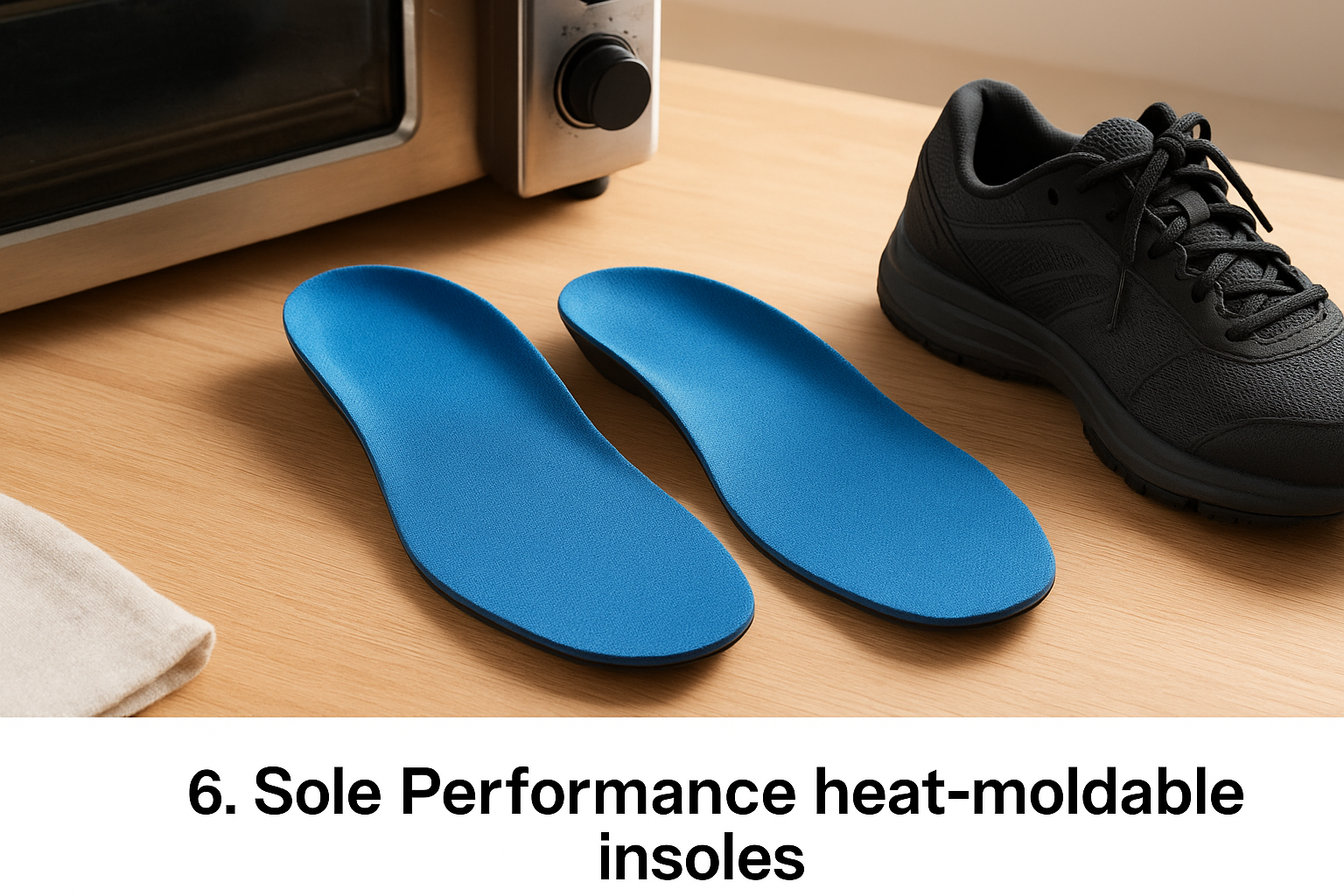
6. Sole Performance heat-moldable insoles
The Sole Performance insole takes a different approach to foot arch support for flat feet by using heat molding technology that allows the insert to conform to your unique foot shape at home, using nothing more than a standard oven and your own body heat. This positions it in a unique category between a generic over-the-counter insole and a clinically prescribed custom device.
How it supports flat feet
Sole Performance insoles use a thermoplastic base that softens when heated and hardens into a custom-like shape as it cools around your foot structure. This process creates an arch contour and heel cup that matches your specific anatomy rather than a standardized mold. The result is better contact between the insole and your arch, which distributes pressure more evenly and reduces the midfoot collapse that drives chronic flat-foot pain during extended activity.
A molded fit that matches your actual arch contour delivers more targeted support than any pre-shaped insole available off the shelf.
Best for
These insoles work well for active individuals with mild to moderate flat feet who want a fit closer to custom without scheduling a clinical appointment. Your best use cases are hiking boots, trail running shoes, and everyday athletic footwear where a snug, contoured fit makes a meaningful difference in performance and comfort throughout the day.
Potential drawbacks
The molding process demands careful attention to timing and temperature, and a poorly executed mold can leave your arch undersupported from day one. You also get only a limited number of effective remolds before the thermoplastic material loses its ability to reshape properly.
Price range and where to buy
Sole Performance insoles typically retail between $45 and $60 per pair and are available through Amazon. They come in multiple size ranges, so review the sizing guide before purchasing to confirm a correct fit inside your specific footwear.
7. FootChair adjustable arch supports
The FootChair adjustable arch support is one of the few over-the-counter options that lets you modify the amount of arch support you receive after purchase. It comes with removable pads that slip under the arch layer, allowing you to dial the support level up or down depending on your symptoms and footwear. This adjustability makes it a genuinely versatile choice within the category of foot arch support for flat feet.
How it supports flat feet
FootChair uses a polypropylene shell paired with a metatarsal pad system to control overpronation and reduce midfoot collapse. The shell maintains a firm, corrective arch position during standing and walking, while the interchangeable pads let you customize the contact and pressure your arch receives without replacing the entire insert. This design gives you a level of fine-tuning that fixed-profile insoles simply cannot match.
The ability to incrementally increase arch height as your foot adjusts is especially useful for first-time orthotic users who are not yet accustomed to structured support.
Best for
These arch supports work well for individuals with mild to moderate flat feet who want a semi-customizable solution for everyday shoes or walking footwear. They also suit users who have sensitive arches and need to build tolerance gradually before committing to higher-profile support.
Potential drawbacks
The interchangeable pad system adds a small amount of volume inside your shoe, which can feel snug in lower-profile footwear. The top cover material also tends to wear down faster than the shell itself, so you may need to replace covers before the support base loses its corrective structure.
Price range and where to buy
FootChair adjustable arch supports retail between $50 and $65 per pair and are available on Amazon.
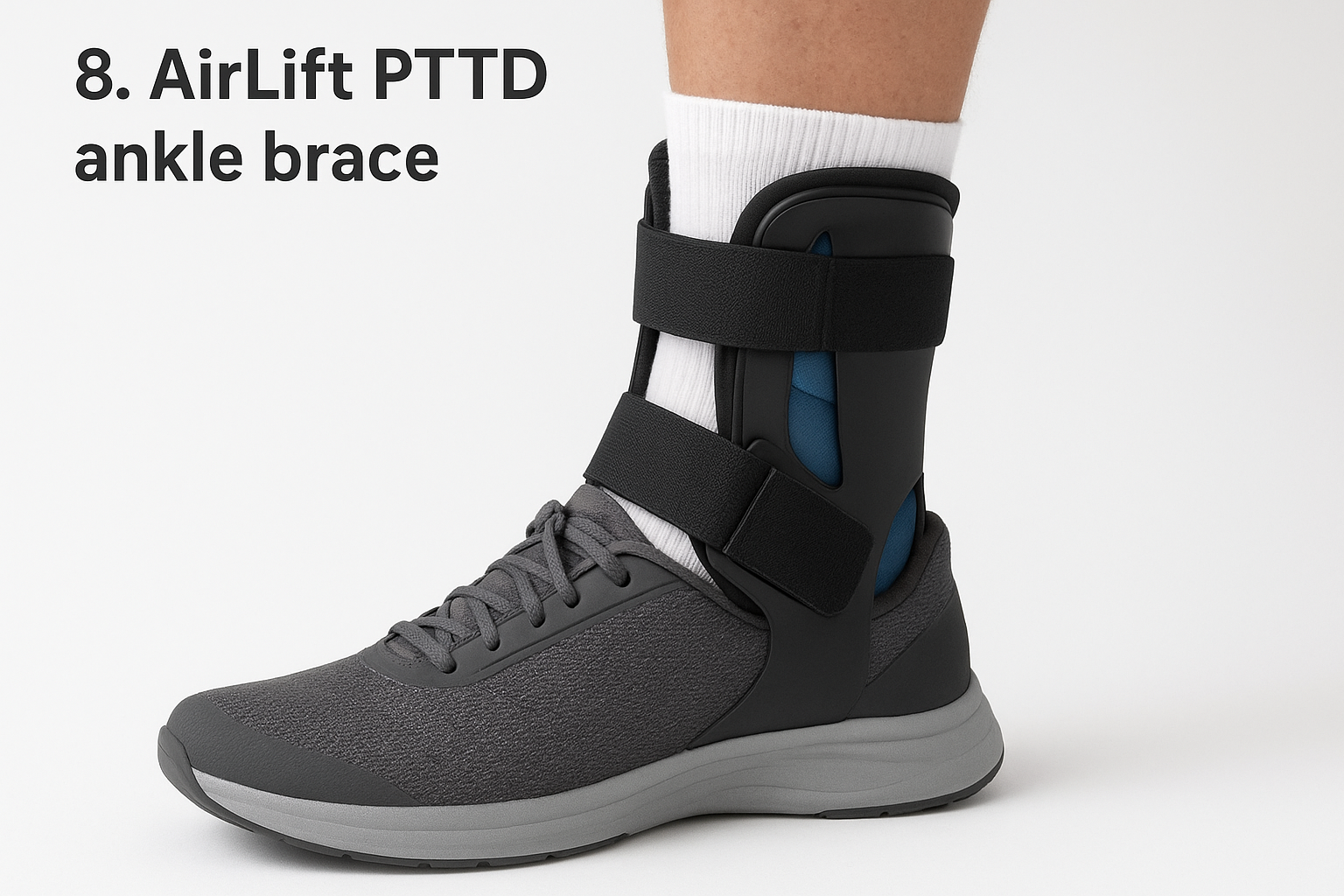
8. AirLift PTTD ankle brace
The AirLift PTTD ankle brace addresses flat feet at the structural level rather than simply cushioning the arch from below. It is specifically designed for individuals with posterior tibial tendon dysfunction (PTTD), a condition where the tendon responsible for holding up your arch weakens or tears, causing your foot to progressively collapse inward.
How it supports flat feet
The AirLift PTTD brace uses bilateral air bladders on each side of the ankle to stabilize the rear foot and resist the inward rolling motion that drives flatfoot progression. A rigid outer shell locks your ankle in a neutral position while the air chambers distribute pressure evenly across the ankle joint, reducing the strain placed on your posterior tibial tendon with each step. This combination of mechanical control and pressure distribution makes it a uniquely effective foot arch support for flat feet driven by tendon insufficiency rather than simple biomechanical variance.
Bracing the ankle directly, rather than just supporting the arch from the footbed, is the more effective intervention when tendon dysfunction is the underlying cause of your flat foot.
Best for
This brace works best for patients with diagnosed or suspected PTTD who need ankle-level support during daily activity or recovery. Your podiatrist may recommend it as part of a conservative treatment plan before considering surgical intervention.
Potential drawbacks
The brace adds significant bulk around the ankle, which limits it to wider footwear like supportive sneakers or work boots. It is also not suited for athletic activity and may feel restrictive during prolonged standing without adequate break-in time.
Price range and where to buy
The AirLift PTTD ankle brace typically retails between $60 and $85 and is available on Amazon.
9. Vionic arch support sandals for home
Most arch support conversations focus on what you wear outside, but your foot mechanics at home matter just as much. Walking barefoot or in flat slippers on hard floors eliminates any structural support your feet receive during the day, undoing progress made by your daytime footwear. Vionic arch support sandals fill that gap by delivering biomechanically engineered footbed support in a casual slip-on sandal you can wear around the house.
How it supports flat feet
Vionic sandals feature a built-in orthotic footbed developed with podiatric input, using a firm EVA midsole paired with a contoured arch that positions your foot in a neutral alignment. The deep heel cup stabilizes your rear foot from the moment you step in, preventing the inward rolling that drives much of the chronic discomfort associated with flat feet. This design delivers meaningful foot arch support for flat feet even during low-intensity activity like moving between rooms.
Losing arch support the moment you get home creates a daily cycle of mechanical stress that slows recovery and increases overall pain load.
Best for
These sandals are ideal for individuals with mild to moderate flat feet who experience morning heel pain or arch soreness after spending time barefoot indoors. They also work well for patients recovering from plantar fasciitis who need consistent support throughout the entire day, not just during outdoor activity.
Potential drawbacks
Vionic sandals offer less corrective structure than a rigid insole or custom orthotic, so they are not a substitute for daytime support in cases of severe flatfoot or PTTD. The open design also limits their use to indoor environments only.
Price range and where to buy
Vionic arch support sandals typically retail between $80 and $130 per pair and are available on Amazon.
10. PowerStep Wide Fit orthotics insoles
The PowerStep Wide Fit orthotic insole brings the same structured support found in the standard Pinnacle line into a wider footbed designed for individuals whose flat feet come paired with a broader forefoot or wider toe box needs. Many people with flat feet also have wider feet, and standard-width insoles can create pressure points across the ball of the foot that undermine any arch correction they provide. This insole addresses that gap directly.
How it supports flat feet
The Wide Fit uses a semi-rigid arch shell combined with a deep heel cup to control overpronation and reduce midfoot collapse during standing and walking. The wider forefoot platform means the insole makes full contact with your foot across its entire surface rather than leaving the outer edges of a wide foot unsupported. This full-contact design improves pressure distribution significantly for individuals who have struggled with narrower insoles.
Full-contact support across the entire footbed is a critical feature for effective foot arch support for flat feet in individuals with wider foot structures.
Best for
These insoles work best for individuals with mild to moderate flat feet and wide feet who need structured everyday support inside wide-fit sneakers, casual shoes, or work footwear. They are also a solid option for patients who have found standard insoles uncomfortable across the ball of the foot despite a correct arch fit.
Potential drawbacks
The arch height remains moderate, so severe flat feet or significant posterior tibial tendon dysfunction will likely need a custom orthotic for adequate correction. The cushioning layer also compresses faster than firmer options with heavy daily use.
Price range and where to buy
PowerStep Wide Fit orthotics typically retail between $35 and $50 per pair and are available on Amazon.
Next steps
Every option on this list offers real value depending on your situation, but the right foot arch support for flat feet ultimately depends on the severity of your condition, your activity level, and what your foot structure actually needs. Over-the-counter insoles work well for mild cases, but if you have been cycling through products without lasting relief, that is a clear signal your feet need a more precise solution.
A podiatrist can assess your gait, arch type, and biomechanics in ways no product description can replicate, and that assessment often reveals the exact source of your pain rather than just the symptoms. At Achilles Foot and Ankle Center, our specialists across thirteen Central Virginia locations can evaluate your flat feet and determine whether custom orthotics, bracing, or another treatment approach will give you the most effective, lasting relief. Book a same-day appointment today and take the first concrete step toward pain-free movement.