
You’re mid-stride, hitting your pace, and then it hits, a sharp ache, a dull throb, or a burning sensation that stops your run short. Foot pain during running is one of the most common complaints we hear from patients at Achilles Foot and Ankle Center, and it affects everyone from casual joggers to experienced marathoners. The frustrating part? The cause isn’t always obvious, and pushing through without answers often makes things worse.
Your feet absorb two to three times your body weight with every running step. That kind of repetitive force can expose weaknesses in your bones, soft tissues, and joints, sometimes gradually, sometimes all at once. Knowing what’s behind the pain matters because the right response depends entirely on the cause. A stress fracture and plantar fasciitis, for example, require very different treatment approaches.
Below, we break down eight common causes of foot pain that runners deal with, explain what each one feels like, and walk you through your options for treatment and prevention. As podiatric specialists with thirteen locations across Central Virginia, our team at Achilles Foot and Ankle Center diagnoses and treats these conditions daily, so this list comes from real clinical experience, not guesswork.
1. Stress fracture or stress reaction
A stress fracture is a small crack in a bone caused by repetitive impact rather than a single injury. A stress reaction is the earlier stage, where the bone is under enough strain to cause pain but hasn’t cracked fully yet. Both require you to stop running and get evaluated before the damage progresses further.
Where the pain shows up
You’ll feel pinpointed, localized pain over a specific bone, most often in the metatarsals (the long bones across the mid-foot), the navicular, or the heel. The pain sharpens as your run continues and typically eases within minutes of stopping activity.
Clues that point to this diagnosis
The clearest sign is sharp tenderness when you press directly on the bone itself. Stress fracture pain builds over several weeks rather than appearing suddenly. Mild swelling may develop over the sore spot, and unlike general muscle soreness, the discomfort does not improve as you warm up. It gets worse.
If pressing on a specific point of your foot produces sharp, localized pain, that’s a strong reason to stop running and seek imaging evaluation before your next workout.
Common running and footwear triggers
The main contributors include:
- Rapid mileage increases of more than 10% per week
- Worn-out shoes with depleted cushioning
- Running consistently on hard surfaces like concrete
- High-arched, rigid foot structure that sends more force directly into bone
- Low bone density, which is especially common in female distance runners
What to do this week
Stop all running immediately and limit weight-bearing activity as much as you can manage. Ice the area for 15 to 20 minutes several times daily. Over-the-counter pain relievers can reduce discomfort, but they don’t promote bone healing and should never become a reason to push through pain.
When to see a podiatrist
See a podiatrist as soon as possible if you suspect a stress fracture. Standard X-rays often miss early stress fractures, so an MRI or bone scan may be necessary to confirm the injury. A podiatrist can fit you with a protective boot, build a graded return-to-running plan, and identify any gait or footwear factors contributing to the problem.
2. Plantar fasciitis
Plantar fasciitis is the most common cause of heel pain in runners and one of the leading sources of foot pain during running overall. It involves inflammation of the plantar fascia, a thick band of tissue running along the bottom of your foot that connects your heel bone to your toes.
Where the pain shows up
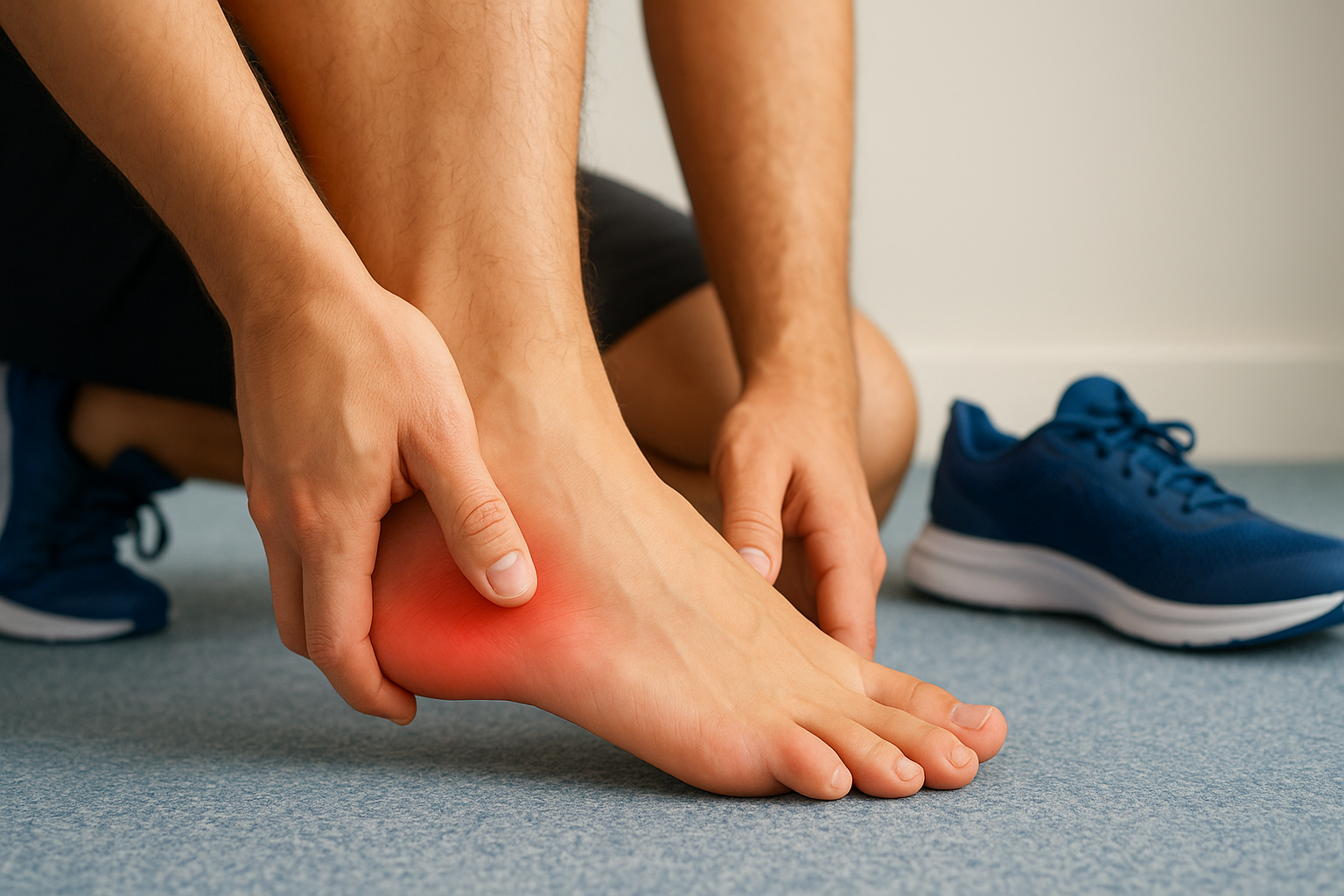
You’ll feel pain at the bottom of your heel, usually near the inside edge where the fascia attaches. Some runners also notice a dull ache spreading into the arch during longer efforts or after extended time on their feet.
Clues that point to this diagnosis
The most reliable sign is sharp heel pain with your first few steps in the morning. After walking a few minutes, the pain typically eases, then returns after long periods of standing or at the end of a run.
If your heel pain is worst right after you get out of bed, plantar fasciitis is the most likely explanation.
Common running and footwear triggers
- Sudden mileage increases without adequate recovery
- Shoes with poor arch support or worn-out cushioning
- Tight calf muscles and limited ankle flexibility
- Flat feet or high arches that shift load distribution
What to do this week
Stretch your calf muscles and plantar fascia each morning before your first steps out of bed. Wearing supportive footwear immediately upon waking reduces the stress placed on the fascia before it warms up.
When to see a podiatrist
See a podiatrist if your heel pain persists beyond two to three weeks of self-care. Custom orthotics, physical therapy, and targeted injections can resolve cases that don’t respond to at-home treatment.
3. Heel fat pad syndrome
The fat pad under your heel acts as natural shock absorption with every footstrike. When this tissue becomes thinned or damaged, each step sends force directly into the heel bone without that protective cushioning in between. Heel fat pad syndrome is less talked about than plantar fasciitis, but it causes real foot pain during running, particularly in older runners or those logging high mileage on hard surfaces.
Where the pain shows up
You’ll feel deep, bruised pain at the center of your heel, directly underfoot rather than at the inside edge. The discomfort tends to spread across the base of the heel rather than focusing at one precise spot the way plantar fasciitis does.
Clues that point to this diagnosis
Unlike plantar fasciitis, heel fat pad pain does not ease after you warm up. Pain stays consistent throughout your run and often worsens when you walk barefoot on hard floors at home.
If your heel pain feels like a deep bruise and barefoot walking makes it worse, heel fat pad syndrome is worth discussing with a podiatrist.
Common running and footwear triggers
- Minimal or zero-drop shoes that offer little heel cushioning
- High mileage on concrete or asphalt
- Age-related fat pad thinning, which becomes more common after age 40
What to do this week
Switch to shoes with generous heel cushioning and add a heel cup insert. Reducing your weekly mileage while the tissue recovers prevents the condition from progressing.
When to see a podiatrist
See a podiatrist if heel pain continues beyond two weeks despite cushioning changes. Custom orthotics with deep heel cups provide targeted relief for patients with significant fat pad deterioration.
4. Metatarsalgia
Metatarsalgia refers to pain and inflammation in the ball of your foot, centered around the heads of your metatarsal bones. It develops when too much pressure concentrates in the forefoot, often from running form, footwear, or foot structure that loads these bones unevenly.
Where the pain shows up
You’ll feel sharp, aching, or burning pain across the ball of your foot, roughly at the base of your toes. The discomfort often feels like you’re stepping on a pebble that isn’t there, and it worsens the longer you run.
Clues that point to this diagnosis
Foot pain during running tends to flare up during toe-off, the phase where your foot pushes off the ground. Pain increases when you walk barefoot on hard surfaces but eases when you’re off your feet and resting.
If the ball of your foot burns or aches specifically during push-off, metatarsalgia is a likely contributor.
Common running and footwear triggers
- Narrow or stiff-soled shoes that compress the forefoot
- High-heeled running shoes that shift weight forward
- A high-arched foot that places excess load on metatarsal heads
- Sudden increases in speed work or hill training
What to do this week
Switch to shoes with a wider toe box and added forefoot cushioning. Metatarsal pads placed just behind the ball of the foot redistribute pressure away from the sore area effectively.
When to see a podiatrist
See a podiatrist if forefoot pain persists beyond two weeks despite footwear changes. Custom orthotics with metatarsal support can correct the load distribution problem long-term.
5. Morton’s neuroma
Morton’s neuroma involves thickening of the tissue around a nerve running between your toes, most often between the third and fourth. The nerve becomes irritated and enlarged, producing sharp, radiating pain that many runners describe as electric or burning.
Where the pain shows up
You’ll feel pain between your toes or in the ball of your foot, typically between the third and fourth toes. The sensation often radiates into the toes themselves, producing numbness, tingling, or a burning feeling that can start mid-run and intensify as your mileage adds up.
Clues that point to this diagnosis
The hallmark of Morton’s neuroma is a feeling that something is bunched up inside your shoe, even when nothing is there. Squeezing the ball of your foot from side to side often reproduces the burning or electric sensation immediately.
If squeezing across the ball of your foot triggers a shooting pain into your toes, Morton’s neuroma is a strong possibility.
Common running and footwear triggers
- Narrow toe boxes that compress the forefoot and pinch the nerve
- Shoes with thin soles that offer minimal forefoot cushioning
- High-arched feet that increase pressure between metatarsal heads
What to do this week
Switching to shoes with a wider toe box gives the affected nerve immediate relief. Adding a metatarsal pad just behind the ball of your foot reduces nerve compression during each footstrike.
When to see a podiatrist
See a podiatrist if foot pain during running continues despite footwear changes. Ultrasound-guided injections and custom orthotics resolve most cases without surgery.
6. Extensor tendon irritation on top of the foot
The extensor tendons run along the top of your foot and control how you lift your toes and foot during each stride. When these tendons become irritated or inflamed, you get foot pain during running that sits right where your shoelaces cross, making even lacing up your shoes uncomfortable.
Where the pain shows up
You’ll feel aching or burning pain along the top of your foot, often following the line of one or more tendons from mid-foot toward the toes. The pain can flare up during the swing phase of your stride when your foot lifts off the ground and the tendons do the most work.
Clues that point to this diagnosis
Tenderness appears when you press along the top of your foot between the ankle and toes. Flexing your foot upward against light resistance typically recreates the pain immediately, which helps distinguish this from bone-related problems.
If the top of your foot is sore specifically where your laces sit, your shoe fit is likely the first thing to fix.
Common running and footwear triggers
- Laces tied too tightly, which compresses tendons against the underlying bone
- Shoes with a stiff upper that creates pressure points
- Rapid increases in uphill running, which loads the extensors more aggressively
What to do this week
Loosen your laces and try relacing your shoes to skip the eyelet directly over the sore spot. Apply ice for 15 minutes after each run to reduce swelling.
When to see a podiatrist
See a podiatrist if pain along the top of your foot persists beyond two weeks. A podiatrist can rule out bone stress injury and recommend custom orthotics or targeted physical therapy if the tendon irritation doesn’t resolve with footwear adjustments.
7. Posterior tibial tendon pain
The posterior tibial tendon runs along the inside of your ankle and supports your arch with every footstrike. When this tendon becomes inflamed, it produces foot pain during running that many runners confuse with a basic ankle sprain. Left untreated, it can progress to a collapsed arch and lasting structural damage.
Where the pain shows up
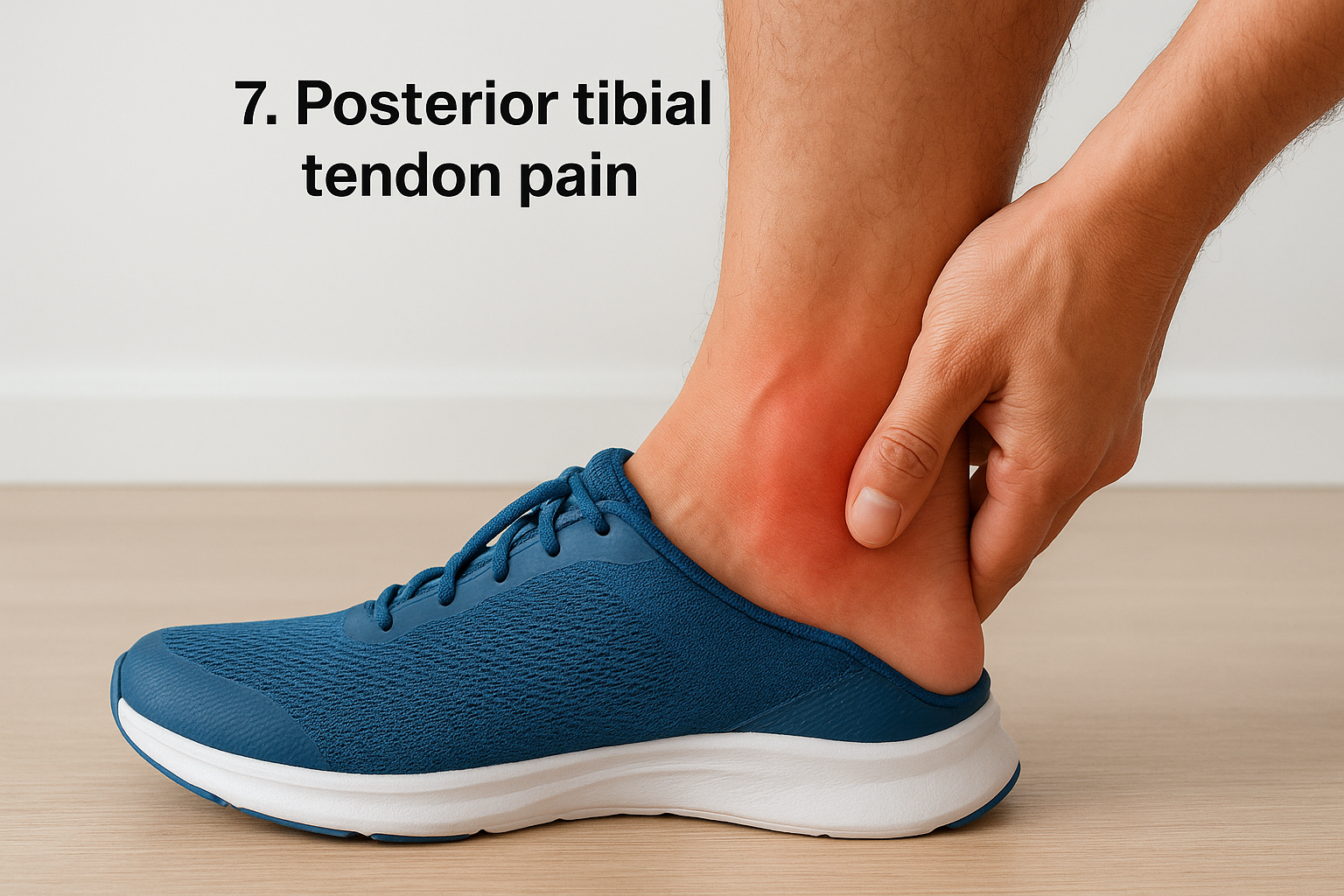
You’ll feel aching or sharp pain along the inside of your ankle and into your arch. The discomfort typically worsens as your mileage climbs and flares more on routes with turns or uneven ground than on flat, straight paths.
Clues that point to this diagnosis
Tenderness tracks along the tendon from behind your inner ankle bone down toward your arch. Try a single-leg heel raise on the affected side. If that movement produces significant pain or feels much weaker than the other side, the posterior tibial tendon is likely the source.
If single-leg heel raises feel noticeably weaker or more painful on one side, stop running and get the tendon evaluated before the problem advances.
Common running and footwear triggers
- Flat feet or overpronation that repeatedly overloads the tendon
- Shoes with poor or worn-out medial support
- Rapid mileage increases on uneven terrain
What to do this week
Cut your running volume immediately and ice the inner ankle for 15 minutes after any activity. Switching to shoes with firm medial arch support reduces tendon strain while you recover.
When to see a podiatrist
See a podiatrist if inner ankle pain persists beyond one to two weeks. Custom orthotics and physical therapy work well when you catch posterior tibial tendon dysfunction early.
8. Peroneal tendon pain
The peroneal tendons run along the outer side of your ankle, connecting the lower leg muscles to the bones of your foot. These tendons stabilize your ankle during each footstrike and help control your foot’s outward movement. When they become irritated or inflamed, they produce foot pain during running that many runners dismiss as a minor issue until it becomes something more serious.
Where the pain shows up
You’ll feel aching or sharp pain along the outer edge of your ankle, sometimes extending into the outer mid-foot. The discomfort typically intensifies on uneven terrain or during downhill running, when your ankle works harder to stabilize each landing.
Clues that point to this diagnosis
Tenderness appears when you press directly behind the bony prominence on the outside of your ankle. Turning your foot outward against light resistance typically reproduces the pain, which helps distinguish a tendon problem from a joint or bone issue.
If the outside of your ankle feels consistently sore after trail or hill runs, get it evaluated before the tendon sustains a partial tear.
Common running and footwear triggers
- A history of lateral ankle sprains that left the joint less stable
- Shoes with heavy outer heel wear
- Abrupt increases in trail or hill running volume
What to do this week
Reduce your running volume immediately and avoid surfaces that demand heavy ankle stabilization. Ice the outer ankle for 15 minutes after any activity to manage inflammation.
When to see a podiatrist
See a podiatrist if outer ankle pain lasts beyond one to two weeks. Custom orthotics and bracing resolve most peroneal tendon problems when caught early, but an untreated tendon can tear and require surgical repair.
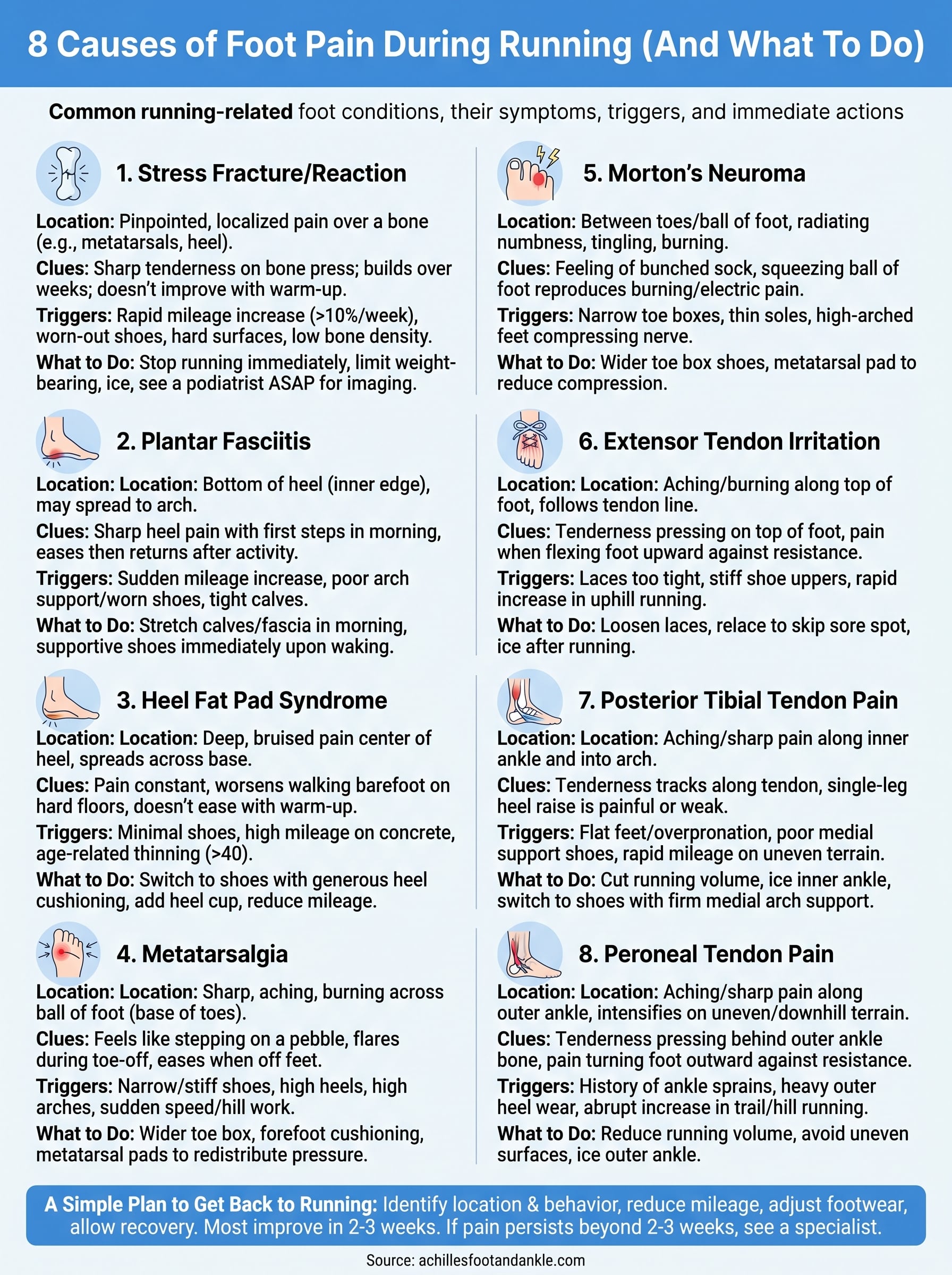
A simple plan to get back to running
Most cases of foot pain during running follow a clear pattern: the pain starts small, gets ignored, and eventually forces a longer break than the original problem required. The good news is that all eight conditions covered here respond well to early intervention. The earlier you address what’s causing the pain, the faster you return to full training.
Your first step is identifying the location and behavior of your pain, using the descriptions above as a guide. Then reduce your mileage, adjust your footwear, and give the affected tissue time to recover. Most runners see meaningful improvement within two to three weeks of making those changes.
If your pain persists beyond two to three weeks, does not follow a predictable pattern, or forces you to alter your stride, it’s time to see a specialist. Schedule a same-day appointment at Achilles Foot and Ankle Center and get a clear diagnosis before the problem becomes harder to fix.